Library
Browse and search books
1 novel found
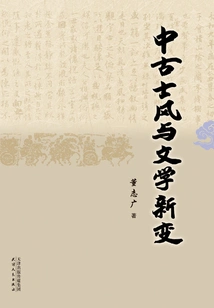
中古士风与文学新变
Dong Zhiguang
This book uses scholarly ethics as the starting point to explore new issues in the medieval period, mainly for two reasons: First, the true state of people's inner world can be expressed through language and words, and can also be revealed through behavioral tolerance; the former promotes the emergence of literature, and the latter leads to the formation of scholarly ethics. Although literature and scholarly ethics have different forms of existence, because they both originate from people's hearts, the internal relationship between them has always been close. Secondly, from the late Eastern Han Dynasty to the Qi and Liang Dynasties, the development of medieval literature went through multiple stages. Whenever it entered a new stage, the same or similar characteristics would gradually form in different works, and this characteristic was almost invariably consistent with the mainstream scholarly style at that time. Fully grasping the points of convergence between the two will not only help us accurately and clearly describe the evolution trajectory of medieval literature, but also help us elucidate the complex reasons for its changes from a deeper level.
This book uses scholarly ethics as the starting point to explore new issues in the medieval period, mainly for two reasons: First, the true state of people's inner world can be expressed through language and words, and can also be revealed through behavioral tolerance; the former promotes the emergence of literature, and the latter leads to the formation of scholarly ethics. Although literature and scholarly ethics have different forms of existence, because they both originate from people's hearts, the internal relationship between them has always been close. Secondly, from the late Eastern Han Dynasty to the Qi and Liang Dynasties, the development of medieval literature went through multiple stages. Whenever it entered a new stage, the same or similar characteristics would gradually form in different works, and this characteristic was almost invariably consistent with the mainstream scholarly style at that time. Fully grasping the points of convergence between the two will not only help us accurately and clearly describe the evolution trajectory of medieval literature, but also help us elucidate the complex reasons for its changes from a deeper level.