Library
Browse and search books
2 novels found
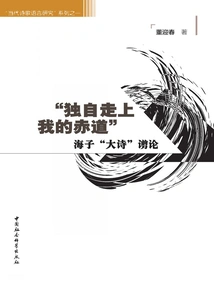
“独自走上我的赤道”:海子“大诗”谫论
Dong Yingchun
At present, the study of Haizi's "small poems", that is, his "lyric poems", can be said to be a kind of outstanding scholarship, but the academic circle pays little attention to his long poems ("big poems"). Based on this, this book discusses Haizi's ten long poems, combines Haizi's short poems and related commentaries, and constructs the spiritual trajectory of the formation of Haizi's "big poems" poetic thoughts, in the hope that the era can re-understand Haizi's poetics and cultural value. This book not only interprets Haizi as a poet, but also interprets the ideas contained in Haizi's long poems and their influence on contemporary theoretical construction, allowing readers to appreciate the spiritual value and life implications of the unity of poetry, philosophy, and divinity pursued by Haizi's poems.
At present, the study of Haizi's "small poems", that is, his "lyric poems", can be said to be a kind of outstanding scholarship, but the academic circle pays little attention to his long poems ("big poems"). Based on this, this book discusses Haizi's ten long poems, combines Haizi's short poems and related commentaries, and constructs the spiritual trajectory of the formation of Haizi's "big poems" poetic thoughts, in the hope that the era can re-understand Haizi's poetics and cultural value. This book not only interprets Haizi as a poet, but also interprets the ideas contained in Haizi's long poems and their influence on contemporary theoretical construction, allowing readers to appreciate the spiritual value and life implications of the unity of poetry, philosophy, and divinity pursued by Haizi's poems.
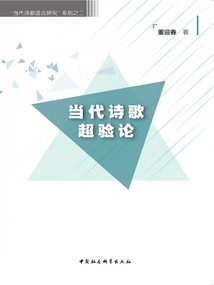
Transcendentalism in Contemporary Poetry
Literature当代诗歌超验论
Dong Yingchun
Transcendence, in the author's view, is both an aesthetic attitude and a philosophical thinking. The exploration of "transcendental" poetics aims to effectively unify the aesthetic and philosophical cognition of poetry and construct a symbolic poetics that integrates the ontology (language) and totality (poetry) of literature and art. In response to "non-poetic" writing trends such as universal assimilation and homogeneity, this book focuses on exploring the discourse characteristics and expressive possibilities of transcendental writing in poetry. , In order to provide reference for the development of contemporary poetry. By analyzing the works of poets such as Haizi, Changyao, Luofu, Xichuan, and Tan Yantong, the rationale and possibility of "transcendental" poetry writing are outlined, thereby presenting the literary attitudes and theoretical interests advocated by the author at the level of language ontology consciousness, as well as "transcendental" writing that integrates poetry, spirituality, and divinity.
Transcendence, in the author's view, is both an aesthetic attitude and a philosophical thinking. The exploration of "transcendental" poetics aims to effectively unify the aesthetic and philosophical cognition of poetry and construct a symbolic poetics that integrates the ontology (language) and totality (poetry) of literature and art. In response to "non-poetic" writing trends such as universal assimilation and homogeneity, this book focuses on exploring the discourse characteristics and expressive possibilities of transcendental writing in poetry. , In order to provide reference for the development of contemporary poetry. By analyzing the works of poets such as Haizi, Changyao, Luofu, Xichuan, and Tan Yantong, the rationale and possibility of "transcendental" poetry writing are outlined, thereby presenting the literary attitudes and theoretical interests advocated by the author at the level of language ontology consciousness, as well as "transcendental" writing that integrates poetry, spirituality, and divinity.