Library
Browse and search books
2 novels found
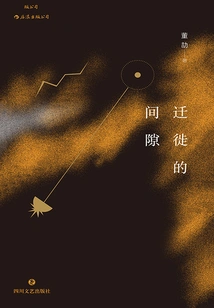
Migration Gap
General Fiction迁徙的间隙
Dong Jie
The narrator "I" is obsessed with traveling through different time and space, reconstructing the memories of the growth of young girls in the small town in the "migration gaps" again and again: childhood friends disappearing in the pipeline, open-air past events that ended in vain, the Lego town that is difficult to reach, Tutu people who have abandoned history... ... Reading this book will be an adventure about imagination. It breaks the limitations of geography, horizon, logic, and time, ranging from "a new solution to the formation of the universe" to as small as "an ant who is accustomed to everything". The author's rich and exquisite imagination is refreshing: the well of polyphonic people, theology of loss , Construction Site Canteen Ceremony Guide, "Out-of-Print Collection", Iterative Journey... "This is an extraordinary perspective. It is different from any angle of peeking outside through the porthole, but becomes the belly of the aircraft and supports its trajectory - in other words, the screen connects us who have nothing to do with this aircraft. The communication tools are connected and grant us some false initiative. If we also seem to be flying, if we are the perpetrators of flight, then there is no such thing as passively accepting the passing of time and space. Although this is our illusion, it still has a vigorous gravity. "
The narrator "I" is obsessed with traveling through different time and space, reconstructing the memories of the growth of young girls in the small town in the "migration gaps" again and again: childhood friends disappearing in the pipeline, open-air past events that ended in vain, the Lego town that is difficult to reach, Tutu people who have abandoned history... ... Reading this book will be an adventure about imagination. It breaks the limitations of geography, horizon, logic, and time, ranging from "a new solution to the formation of the universe" to as small as "an ant who is accustomed to everything". The author's rich and exquisite imagination is refreshing: the well of polyphonic people, theology of loss , Construction Site Canteen Ceremony Guide, "Out-of-Print Collection", Iterative Journey... "This is an extraordinary perspective. It is different from any angle of peeking outside through the porthole, but becomes the belly of the aircraft and supports its trajectory - in other words, the screen connects us who have nothing to do with this aircraft. The communication tools are connected and grant us some false initiative. If we also seem to be flying, if we are the perpetrators of flight, then there is no such thing as passively accepting the passing of time and space. Although this is our illusion, it still has a vigorous gravity. "
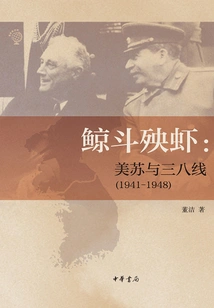
鲸斗殃虾:美苏与三八线(1941—1948)
Dong Jie
Whales fight with shrimps. This is an ancient Korean proverb, which means "when big whales fight, small shrimps suffer", but it has become a true portrayal of the post-war fate of the Korean Peninsula. The division of the Korean Peninsula began when the United States and the Soviet Union implemented a partition and occupation policy on North Korea under the name of trusteeship, using the 38th Parallel as the boundary. The competition between the United States and the Soviet Union for the "power vacuum zone" became increasingly fierce on a global scale, which eventually led to the outbreak of the Cold War. The United States and the Soviet Union turned from cooperation to confrontation on the Korean Peninsula. The confrontation between the United States and the Soviet Union on the Korean issue was actually a confrontation between two ideologies and political systems. The Korean Peninsula thus became a "battlefield" for direct ideological confrontation between the United States and the Soviet Union. The United States and the Soviet Union adopted different occupation policies, which had a profound impact on the political, economic, and social development of the northern and southern parts of the Korean Peninsula. After more than three years of occupation by the United States and the Soviet Union, two political and economic entities with completely different development directions emerged in the northern and southern parts of the Korean Peninsula. The division of the Korean Peninsula is no longer a geographical division, but a more profound political system division. The fate of the Korean Peninsula's division was doomed from the day the United States and the Soviet Union occupied North Korea, and the emergence of two different political and economic entities paved the way for the outbreak of the Korean War in the future.
Whales fight with shrimps. This is an ancient Korean proverb, which means "when big whales fight, small shrimps suffer", but it has become a true portrayal of the post-war fate of the Korean Peninsula. The division of the Korean Peninsula began when the United States and the Soviet Union implemented a partition and occupation policy on North Korea under the name of trusteeship, using the 38th Parallel as the boundary. The competition between the United States and the Soviet Union for the "power vacuum zone" became increasingly fierce on a global scale, which eventually led to the outbreak of the Cold War. The United States and the Soviet Union turned from cooperation to confrontation on the Korean Peninsula. The confrontation between the United States and the Soviet Union on the Korean issue was actually a confrontation between two ideologies and political systems. The Korean Peninsula thus became a "battlefield" for direct ideological confrontation between the United States and the Soviet Union. The United States and the Soviet Union adopted different occupation policies, which had a profound impact on the political, economic, and social development of the northern and southern parts of the Korean Peninsula. After more than three years of occupation by the United States and the Soviet Union, two political and economic entities with completely different development directions emerged in the northern and southern parts of the Korean Peninsula. The division of the Korean Peninsula is no longer a geographical division, but a more profound political system division. The fate of the Korean Peninsula's division was doomed from the day the United States and the Soviet Union occupied North Korea, and the emergence of two different political and economic entities paved the way for the outbreak of the Korean War in the future.