Library
Browse and search books
15 novels found
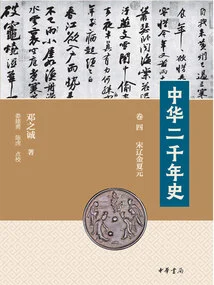
中华二千年史(卷四 宋辽金夏元)
Deng Zhicheng
"Two Thousand Years of History of China" is Deng Zhicheng's most famous and representative work. This book was originally a lecture notes for his lectures at Peking University, and its original name was "Lecture Notes on the General History of China". Originally there were only two volumes, the first and the middle volumes. In the early 1930s, this incomplete lecture was selected as a type of "University Series", renamed "Two Thousand Years of History of China", and published publicly. In the early 1950s, Mr. Deng continued the second volume, and the whole book was completed, which took more than 20 years and more than 2 million words. Starting from the unification of China by the Qin Dynasty to the end of the Qing Dynasty in the Revolution of 1911, it spans more than two thousand years. It can be said to be the first general history after "Tongjian". The purpose of the whole book is to look at the historical facts of the rise and fall of the past dynasties from beginning to end, to recognize their successes and failures, to identify the characters, and to review strategies for future generations to learn from. This is quite similar to the legacy of "Tongjian". The historian's awareness and Spring and Autumn writing style revealed in the book are also inspired by the spirit of "Tongjian", which reflects Deng Zhicheng's overall awareness and ability to corroborate historical facts as a historian.
"Two Thousand Years of History of China" is Deng Zhicheng's most famous and representative work. This book was originally a lecture notes for his lectures at Peking University, and its original name was "Lecture Notes on the General History of China". Originally there were only two volumes, the first and the middle volumes. In the early 1930s, this incomplete lecture was selected as a type of "University Series", renamed "Two Thousand Years of History of China", and published publicly. In the early 1950s, Mr. Deng continued the second volume, and the whole book was completed, which took more than 20 years and more than 2 million words. Starting from the unification of China by the Qin Dynasty to the end of the Qing Dynasty in the Revolution of 1911, it spans more than two thousand years. It can be said to be the first general history after "Tongjian". The purpose of the whole book is to look at the historical facts of the rise and fall of the past dynasties from beginning to end, to recognize their successes and failures, to identify the characters, and to review strategies for future generations to learn from. This is quite similar to the legacy of "Tongjian". The historian's awareness and Spring and Autumn writing style revealed in the book are also inspired by the spirit of "Tongjian", which reflects Deng Zhicheng's overall awareness and ability to corroborate historical facts as a historian.
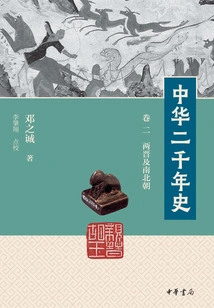
中华二千年史(卷二 两晋及南北朝)
Deng Zhicheng
"Two Thousand Years of History of China" is Deng Zhicheng's most famous and representative work. This book was originally a lecture notes for his lectures at Peking University, and its original name was "Lecture Notes on the General History of China". Originally there were only two volumes, the first and the middle volumes. In the early 1930s, this incomplete lecture was selected as a type of "University Series", renamed "Two Thousand Years of History of China", and published publicly. In the early 1950s, Mr. Deng continued the second volume, and the whole book was completed, which took more than 20 years and more than 2 million words. Starting from the unification of China by the Qin Dynasty to the end of the Qing Dynasty in the Revolution of 1911, it spans more than two thousand years. It can be said to be the first general history after "Tongjian". The purpose of the whole book is to look at the historical facts of the rise and fall of the past dynasties from beginning to end, to recognize their successes and failures, to identify the characters, and to review strategies for future generations to learn from. This is quite similar to the legacy of "Tongjian". The historian's awareness and Spring and Autumn writing style revealed in the book are also inspired by the spirit of "Tongjian", which reflects Deng Zhicheng's overall awareness and ability to corroborate historical facts as a historian.
"Two Thousand Years of History of China" is Deng Zhicheng's most famous and representative work. This book was originally a lecture notes for his lectures at Peking University, and its original name was "Lecture Notes on the General History of China". Originally there were only two volumes, the first and the middle volumes. In the early 1930s, this incomplete lecture was selected as a type of "University Series", renamed "Two Thousand Years of History of China", and published publicly. In the early 1950s, Mr. Deng continued the second volume, and the whole book was completed, which took more than 20 years and more than 2 million words. Starting from the unification of China by the Qin Dynasty to the end of the Qing Dynasty in the Revolution of 1911, it spans more than two thousand years. It can be said to be the first general history after "Tongjian". The purpose of the whole book is to look at the historical facts of the rise and fall of the past dynasties from beginning to end, to recognize their successes and failures, to identify the characters, and to review strategies for future generations to learn from. This is quite similar to the legacy of "Tongjian". The historian's awareness and Spring and Autumn writing style revealed in the book are also inspired by the spirit of "Tongjian", which reflects Deng Zhicheng's overall awareness and ability to corroborate historical facts as a historian.
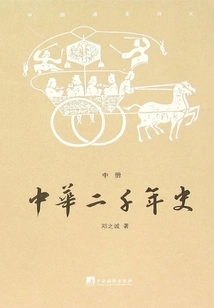
中华二千年史(中)
Deng Zhicheng
Deng Zhicheng began to write "General History of China" for teaching needs. In 1934, the Commercial Press included it in the "University Series" and renamed it "Two Thousand Years of History of China". Twenty years later, the author continued to compile the Ming and Qing Dynasty parts, and the whole book was completed, with 2.7 Million words. It is unique among similar historical works. From the unification of the Qin Dynasty to the Revolution of 1911 and the fall of the Qing Dynasty, it narrates the Three Kingdoms, the Jin and the Southern and Northern Dynasties, the Sui, Tang, and Five Dynasties, the Song, Liao, Jin, Xia, and Yuan Dynasties, etc. It is finally completed in 5 volumes and 9 volumes. It is truly a magnificent masterpiece. The book combines several genres such as chronicle style, chronological style, biographical style, and chapter style. The chronicle style is the backbone of the book, compiling historical facts, institutions, academics, literature, customs, religions, etc. Of each dynasty, supplemented by charts, using simplicity to control complexity, with clear entries and rich content.
Deng Zhicheng began to write "General History of China" for teaching needs. In 1934, the Commercial Press included it in the "University Series" and renamed it "Two Thousand Years of History of China". Twenty years later, the author continued to compile the Ming and Qing Dynasty parts, and the whole book was completed, with 2.7 Million words. It is unique among similar historical works. From the unification of the Qin Dynasty to the Revolution of 1911 and the fall of the Qing Dynasty, it narrates the Three Kingdoms, the Jin and the Southern and Northern Dynasties, the Sui, Tang, and Five Dynasties, the Song, Liao, Jin, Xia, and Yuan Dynasties, etc. It is finally completed in 5 volumes and 9 volumes. It is truly a magnificent masterpiece. The book combines several genres such as chronicle style, chronological style, biographical style, and chapter style. The chronicle style is the backbone of the book, compiling historical facts, institutions, academics, literature, customs, religions, etc. Of each dynasty, supplemented by charts, using simplicity to control complexity, with clear entries and rich content.
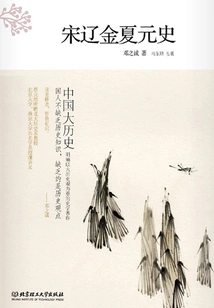
中国大历史:宋辽金夏元史
Deng Zhicheng
"History of Song, Liao, Jin, Xia and Yuan" tells the history of the Song, Liao, Jin, Xia and Yuan periods, a period of continuous integration between multiple ethnic groups. The book combines several genres such as chronicle style, chronological style, biographical style, and chapter style. The chronicle style is the backbone of the book, compiling historical facts, institutions, academics, literature, customs, religions, etc. Of each dynasty, supplemented by charts, using simplicity to control complexity, with clear entries and rich content. In 1934, the Commercial Press included it in the "University Series".
"History of Song, Liao, Jin, Xia and Yuan" tells the history of the Song, Liao, Jin, Xia and Yuan periods, a period of continuous integration between multiple ethnic groups. The book combines several genres such as chronicle style, chronological style, biographical style, and chapter style. The chronicle style is the backbone of the book, compiling historical facts, institutions, academics, literature, customs, religions, etc. Of each dynasty, supplemented by charts, using simplicity to control complexity, with clear entries and rich content. In 1934, the Commercial Press included it in the "University Series".
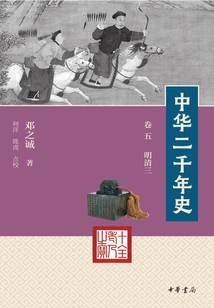
中华二千年史(卷五 明清三)
Deng Zhicheng
"Two Thousand Years of History of China" is Deng Zhicheng's most famous and representative work. This book was originally a lecture notes for his lectures at Peking University, and its original name was "Lecture Notes on the General History of China". Originally there were only two volumes, the first and the middle volumes. In the early 1930s, this incomplete lecture was selected as a type of "University Series", renamed "Two Thousand Years of History of China", and published publicly. In the early 1950s, Mr. Deng continued the second volume, and the whole book was completed, which took more than 20 years and more than 2 million words. Starting from the unification of China by the Qin Dynasty to the end of the Qing Dynasty in the Revolution of 1911, it spans more than two thousand years. It can be said to be the first general history after "Tongjian". The purpose of the whole book is to look at the historical facts of the rise and fall of the past dynasties from beginning to end, to recognize their successes and failures, to identify the characters, and to review strategies for future generations to learn from. This is quite similar to the legacy of "Tongjian". The historian's awareness and Spring and Autumn writing style revealed in the book are also inspired by the spirit of "Tongjian", which reflects Deng Zhicheng's overall awareness and ability to corroborate historical facts as a historian.
"Two Thousand Years of History of China" is Deng Zhicheng's most famous and representative work. This book was originally a lecture notes for his lectures at Peking University, and its original name was "Lecture Notes on the General History of China". Originally there were only two volumes, the first and the middle volumes. In the early 1930s, this incomplete lecture was selected as a type of "University Series", renamed "Two Thousand Years of History of China", and published publicly. In the early 1950s, Mr. Deng continued the second volume, and the whole book was completed, which took more than 20 years and more than 2 million words. Starting from the unification of China by the Qin Dynasty to the end of the Qing Dynasty in the Revolution of 1911, it spans more than two thousand years. It can be said to be the first general history after "Tongjian". The purpose of the whole book is to look at the historical facts of the rise and fall of the past dynasties from beginning to end, to recognize their successes and failures, to identify the characters, and to review strategies for future generations to learn from. This is quite similar to the legacy of "Tongjian". The historian's awareness and Spring and Autumn writing style revealed in the book are also inspired by the spirit of "Tongjian", which reflects Deng Zhicheng's overall awareness and ability to corroborate historical facts as a historian.
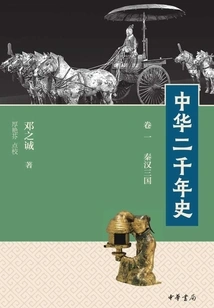
Two Thousand Years of History of China (volume 1 the Three Kingdoms of Qin and Han Dynasties)
History中华二千年史(卷一 秦汉三国)
Deng Zhicheng
"Two Thousand Years of History of China" is Deng Zhicheng's most famous and representative work. This book was originally a lecture notes for his lectures at Peking University, and its original name was "Lecture Notes on the General History of China". Originally there were only two volumes, the first and the middle volumes. In the early 1930s, this incomplete lecture was selected as a type of "University Series", renamed "Two Thousand Years of History of China", and published publicly. In the early 1950s, Mr. Deng continued the second volume, and the whole book was completed, which took more than 20 years and more than 2 million words. Starting from the unification of China by the Qin Dynasty to the end of the Qing Dynasty in the Revolution of 1911, it spans more than two thousand years. It can be said to be the first general history after "Tongjian". The purpose of the whole book is to look at the historical facts of the rise and fall of the past dynasties from beginning to end, to recognize their successes and failures, to identify the characters, and to review strategies for future generations to learn from. This is quite similar to the legacy of "Tongjian". The historian's awareness and Spring and Autumn writing style revealed in the book are also inspired by the spirit of "Tongjian", which reflects Deng Zhicheng's overall awareness and ability to corroborate historical facts as a historian.
"Two Thousand Years of History of China" is Deng Zhicheng's most famous and representative work. This book was originally a lecture notes for his lectures at Peking University, and its original name was "Lecture Notes on the General History of China". Originally there were only two volumes, the first and the middle volumes. In the early 1930s, this incomplete lecture was selected as a type of "University Series", renamed "Two Thousand Years of History of China", and published publicly. In the early 1950s, Mr. Deng continued the second volume, and the whole book was completed, which took more than 20 years and more than 2 million words. Starting from the unification of China by the Qin Dynasty to the end of the Qing Dynasty in the Revolution of 1911, it spans more than two thousand years. It can be said to be the first general history after "Tongjian". The purpose of the whole book is to look at the historical facts of the rise and fall of the past dynasties from beginning to end, to recognize their successes and failures, to identify the characters, and to review strategies for future generations to learn from. This is quite similar to the legacy of "Tongjian". The historian's awareness and Spring and Autumn writing style revealed in the book are also inspired by the spirit of "Tongjian", which reflects Deng Zhicheng's overall awareness and ability to corroborate historical facts as a historian.
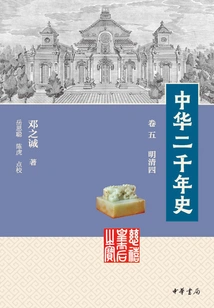
中华二千年史(卷五 明清四)
Deng Zhicheng
"Two Thousand Years of History of China" is Deng Zhicheng's most famous and representative work. This book was originally a lecture notes for his lectures at Peking University, and its original name was "Lecture Notes on the General History of China". Originally there were only two volumes, the first and the middle volumes. In the early 1930s, this incomplete lecture was selected as a type of "University Series", renamed "Two Thousand Years of History of China", and published publicly. In the early 1950s, Mr. Deng continued the second volume, and the whole book was completed, which took more than 20 years and more than 2 million words. Starting from the unification of China by the Qin Dynasty to the end of the Qing Dynasty in the Revolution of 1911, it spans more than two thousand years. It can be said to be the first general history after "Tongjian". The purpose of the whole book is to look at the historical facts of the rise and fall of the past dynasties from beginning to end, to recognize their successes and failures, to identify the characters, and to review strategies for future generations to learn from. This is quite similar to the legacy of "Tongjian". The historian's awareness and Spring and Autumn writing style revealed in the book are also inspired by the spirit of "Tongjian", which reflects Deng Zhicheng's overall awareness and ability to corroborate historical facts as a historian.
"Two Thousand Years of History of China" is Deng Zhicheng's most famous and representative work. This book was originally a lecture notes for his lectures at Peking University, and its original name was "Lecture Notes on the General History of China". Originally there were only two volumes, the first and the middle volumes. In the early 1930s, this incomplete lecture was selected as a type of "University Series", renamed "Two Thousand Years of History of China", and published publicly. In the early 1950s, Mr. Deng continued the second volume, and the whole book was completed, which took more than 20 years and more than 2 million words. Starting from the unification of China by the Qin Dynasty to the end of the Qing Dynasty in the Revolution of 1911, it spans more than two thousand years. It can be said to be the first general history after "Tongjian". The purpose of the whole book is to look at the historical facts of the rise and fall of the past dynasties from beginning to end, to recognize their successes and failures, to identify the characters, and to review strategies for future generations to learn from. This is quite similar to the legacy of "Tongjian". The historian's awareness and Spring and Autumn writing style revealed in the book are also inspired by the spirit of "Tongjian", which reflects Deng Zhicheng's overall awareness and ability to corroborate historical facts as a historian.
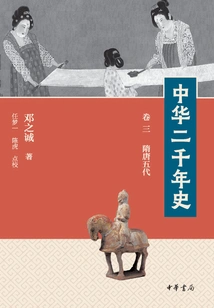
中华二千年史(卷三 隋唐五代)
Deng Zhicheng
"Two Thousand Years of History of China" is Deng Zhicheng's most famous and representative work. This book was originally a lecture notes for his lectures at Peking University, and its original name was "Lecture Notes on the General History of China". Originally there were only two volumes, the first and the middle volumes. In the early 1930s, this incomplete lecture was selected as a type of "University Series", renamed "Two Thousand Years of History of China", and published publicly. In the early 1950s, Mr. Deng continued the second volume, and the whole book was completed, which took more than 20 years and more than 2 million words. Starting from the unification of China by the Qin Dynasty to the end of the Qing Dynasty in the Revolution of 1911, it spans more than two thousand years. It can be said to be the first general history after "Tongjian". The purpose of the whole book is to look at the historical facts of the rise and fall of the past dynasties from beginning to end, to recognize their successes and failures, to identify the characters, and to review strategies for future generations to learn from. This is quite similar to the legacy of "Tongjian". The historian's awareness and Spring and Autumn writing style revealed in the book are also inspired by the spirit of "Tongjian", which reflects Deng Zhicheng's overall awareness and ability to corroborate historical facts as a historian.
"Two Thousand Years of History of China" is Deng Zhicheng's most famous and representative work. This book was originally a lecture notes for his lectures at Peking University, and its original name was "Lecture Notes on the General History of China". Originally there were only two volumes, the first and the middle volumes. In the early 1930s, this incomplete lecture was selected as a type of "University Series", renamed "Two Thousand Years of History of China", and published publicly. In the early 1950s, Mr. Deng continued the second volume, and the whole book was completed, which took more than 20 years and more than 2 million words. Starting from the unification of China by the Qin Dynasty to the end of the Qing Dynasty in the Revolution of 1911, it spans more than two thousand years. It can be said to be the first general history after "Tongjian". The purpose of the whole book is to look at the historical facts of the rise and fall of the past dynasties from beginning to end, to recognize their successes and failures, to identify the characters, and to review strategies for future generations to learn from. This is quite similar to the legacy of "Tongjian". The historian's awareness and Spring and Autumn writing style revealed in the book are also inspired by the spirit of "Tongjian", which reflects Deng Zhicheng's overall awareness and ability to corroborate historical facts as a historian.
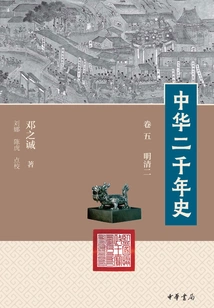
中华二千年史(卷五 明清二)
Deng Zhicheng
"Two Thousand Years of History of China" is Deng Zhicheng's most famous and representative work. This book was originally a lecture notes for his lectures at Peking University, and its original name was "Lecture Notes on the General History of China". Originally there were only two volumes, the first and the middle volumes. In the early 1930s, this incomplete lecture was selected as a type of "University Series", renamed "Two Thousand Years of History of China", and published publicly. In the early 1950s, Mr. Deng continued the second volume, and the whole book was completed, which took more than 20 years and more than 2 million words. Starting from the unification of China by the Qin Dynasty to the end of the Qing Dynasty in the Revolution of 1911, it spans more than two thousand years. It can be said to be the first general history after "Tongjian". The purpose of the whole book is to look at the historical facts of the rise and fall of the past dynasties from beginning to end, to recognize their successes and failures, to identify the characters, and to review strategies for future generations to learn from. This is quite similar to the legacy of "Tongjian". The historian's awareness and Spring and Autumn writing style revealed in the book are also inspired by the spirit of "Tongjian", which reflects Deng Zhicheng's overall awareness and ability to corroborate historical facts as a historian.
"Two Thousand Years of History of China" is Deng Zhicheng's most famous and representative work. This book was originally a lecture notes for his lectures at Peking University, and its original name was "Lecture Notes on the General History of China". Originally there were only two volumes, the first and the middle volumes. In the early 1930s, this incomplete lecture was selected as a type of "University Series", renamed "Two Thousand Years of History of China", and published publicly. In the early 1950s, Mr. Deng continued the second volume, and the whole book was completed, which took more than 20 years and more than 2 million words. Starting from the unification of China by the Qin Dynasty to the end of the Qing Dynasty in the Revolution of 1911, it spans more than two thousand years. It can be said to be the first general history after "Tongjian". The purpose of the whole book is to look at the historical facts of the rise and fall of the past dynasties from beginning to end, to recognize their successes and failures, to identify the characters, and to review strategies for future generations to learn from. This is quite similar to the legacy of "Tongjian". The historian's awareness and Spring and Autumn writing style revealed in the book are also inspired by the spirit of "Tongjian", which reflects Deng Zhicheng's overall awareness and ability to corroborate historical facts as a historian.
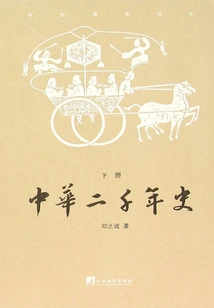
中华二千年史(下)
Deng Zhicheng
Deng Zhicheng began to write "General History of China" for teaching needs. In 1934, the Commercial Press included it in the "University Series" and renamed it "Two Thousand Years of History of China". Twenty years later, the author continued to compile the Ming and Qing Dynasty parts, and the whole book was completed, with 2.7 Million words. It is unique among similar historical works. From the unification of the Qin Dynasty to the Revolution of 1911 and the fall of the Qing Dynasty, it narrates the Three Kingdoms, the Jin and the Southern and Northern Dynasties, the Sui, Tang, and Five Dynasties, the Song, Liao, Jin, Xia, and Yuan Dynasties, etc. It is finally completed in 5 volumes and 9 volumes. It is truly a magnificent masterpiece. The book combines several genres such as chronicle style, chronological style, biographical style, and chapter style. The chronicle style is the backbone of the book, compiling historical facts, institutions, academics, literature, customs, religions, etc. Of each dynasty, supplemented by charts, using simplicity to control complexity, with clear entries and rich content.
Deng Zhicheng began to write "General History of China" for teaching needs. In 1934, the Commercial Press included it in the "University Series" and renamed it "Two Thousand Years of History of China". Twenty years later, the author continued to compile the Ming and Qing Dynasty parts, and the whole book was completed, with 2.7 Million words. It is unique among similar historical works. From the unification of the Qin Dynasty to the Revolution of 1911 and the fall of the Qing Dynasty, it narrates the Three Kingdoms, the Jin and the Southern and Northern Dynasties, the Sui, Tang, and Five Dynasties, the Song, Liao, Jin, Xia, and Yuan Dynasties, etc. It is finally completed in 5 volumes and 9 volumes. It is truly a magnificent masterpiece. The book combines several genres such as chronicle style, chronological style, biographical style, and chapter style. The chronicle style is the backbone of the book, compiling historical facts, institutions, academics, literature, customs, religions, etc. Of each dynasty, supplemented by charts, using simplicity to control complexity, with clear entries and rich content.
中华二千年史(中国通史讲义)
Deng Zhicheng
The representative work of the famous historian Mr. Deng Zhicheng. It was originally a lecture notes for teaching the general history of China at the History Department of Peking University, including four parts: "Qin and Han Three Kingdoms", "Two Jin and Southern and Northern Dynasties", "Sui, Tang and Five Dynasties" and "Song, Liao, Jin, Xia and Yuan". After liberation, the Ming and Qing parts were supplemented and became a magnificent work of five volumes and nine volumes. It is a very unique historical work that reveals the reasons for the rise and fall of the Chinese nation's chaos.
The representative work of the famous historian Mr. Deng Zhicheng. It was originally a lecture notes for teaching the general history of China at the History Department of Peking University, including four parts: "Qin and Han Three Kingdoms", "Two Jin and Southern and Northern Dynasties", "Sui, Tang and Five Dynasties" and "Song, Liao, Jin, Xia and Yuan". After liberation, the Ming and Qing parts were supplemented and became a magnificent work of five volumes and nine volumes. It is a very unique historical work that reveals the reasons for the rise and fall of the Chinese nation's chaos.
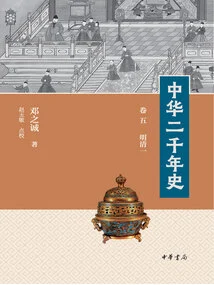
中华二千年史(卷五 明清一)
Deng Zhicheng
"Two Thousand Years of History of China" is Deng Zhicheng's most famous and representative work. This book was originally a lecture notes for his lectures at Peking University, and its original name was "Lecture Notes on the General History of China". Originally there were only two volumes, the first and the middle volumes. In the early 1930s, this incomplete lecture was selected as a type of "University Series", renamed "Two Thousand Years of History of China", and published publicly. In the early 1950s, Mr. Deng continued the second volume, and the whole book was completed, which took more than 20 years and more than 2 million words. Starting from the unification of China by the Qin Dynasty to the end of the Qing Dynasty in the Revolution of 1911, it spans more than two thousand years. It can be said to be the first general history after "Tongjian". The purpose of the whole book is to look at the historical facts of the rise and fall of the past dynasties from beginning to end, to recognize their successes and failures, to identify the characters, and to review strategies for future generations to learn from. This is quite similar to the legacy of "Tongjian". The historian's awareness and Spring and Autumn writing style revealed in the book are also inspired by the spirit of "Tongjian", which reflects Deng Zhicheng's overall awareness and ability to corroborate historical facts as a historian.
"Two Thousand Years of History of China" is Deng Zhicheng's most famous and representative work. This book was originally a lecture notes for his lectures at Peking University, and its original name was "Lecture Notes on the General History of China". Originally there were only two volumes, the first and the middle volumes. In the early 1930s, this incomplete lecture was selected as a type of "University Series", renamed "Two Thousand Years of History of China", and published publicly. In the early 1950s, Mr. Deng continued the second volume, and the whole book was completed, which took more than 20 years and more than 2 million words. Starting from the unification of China by the Qin Dynasty to the end of the Qing Dynasty in the Revolution of 1911, it spans more than two thousand years. It can be said to be the first general history after "Tongjian". The purpose of the whole book is to look at the historical facts of the rise and fall of the past dynasties from beginning to end, to recognize their successes and failures, to identify the characters, and to review strategies for future generations to learn from. This is quite similar to the legacy of "Tongjian". The historian's awareness and Spring and Autumn writing style revealed in the book are also inspired by the spirit of "Tongjian", which reflects Deng Zhicheng's overall awareness and ability to corroborate historical facts as a historian.
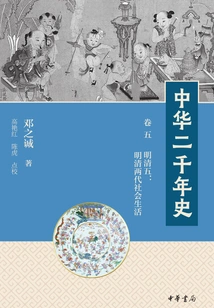
中华二千年史(卷五 明清五:明清两代社会生活)
Deng Zhicheng
"Two Thousand Years of History of China" is Deng Zhicheng's most famous and representative work. This book was originally a lecture notes for his lectures at Peking University, and its original name was "Lecture Notes on the General History of China". Originally there were only two volumes, the first and the middle volumes. In the early 1930s, this incomplete lecture was selected as a type of "University Series", renamed "Two Thousand Years of History of China", and published publicly. In the early 1950s, Mr. Deng continued the second volume, and the whole book was completed, which took more than 20 years and more than 2 million words. Starting from the unification of China by the Qin Dynasty to the end of the Qing Dynasty in the Revolution of 1911, it spans more than two thousand years. It can be said to be the first general history after "Tongjian". The purpose of the whole book is to look at the historical facts of the rise and fall of the past dynasties from beginning to end, to recognize their successes and failures, to identify the characters, and to review strategies for future generations to learn from. This is quite similar to the legacy of "Tongjian". The historian's awareness and Spring and Autumn writing style revealed in the book are also inspired by the spirit of "Tongjian", which reflects Deng Zhicheng's overall awareness and ability to corroborate historical facts as a historian.
"Two Thousand Years of History of China" is Deng Zhicheng's most famous and representative work. This book was originally a lecture notes for his lectures at Peking University, and its original name was "Lecture Notes on the General History of China". Originally there were only two volumes, the first and the middle volumes. In the early 1930s, this incomplete lecture was selected as a type of "University Series", renamed "Two Thousand Years of History of China", and published publicly. In the early 1950s, Mr. Deng continued the second volume, and the whole book was completed, which took more than 20 years and more than 2 million words. Starting from the unification of China by the Qin Dynasty to the end of the Qing Dynasty in the Revolution of 1911, it spans more than two thousand years. It can be said to be the first general history after "Tongjian". The purpose of the whole book is to look at the historical facts of the rise and fall of the past dynasties from beginning to end, to recognize their successes and failures, to identify the characters, and to review strategies for future generations to learn from. This is quite similar to the legacy of "Tongjian". The historian's awareness and Spring and Autumn writing style revealed in the book are also inspired by the spirit of "Tongjian", which reflects Deng Zhicheng's overall awareness and ability to corroborate historical facts as a historian.
中华二千年史(一)
Deng Zhicheng
In the middle of the 20th century, Gu Jiegang commented on the historiography at that time and believed that the general history writing in the past hundred years "rarely reached the ideal state." "Among them, the more recent ideals include Lu Simian's "History of the Country in Vernacular" and "General History of China", Deng Zhicheng's "Two Thousand Years of History of China", Chen Gonglu's "History of China", Miao Fenglin's "Outline of General History of China", Zhang Yinlin's "Outline of Chinese History", and Qian Mu's "Outline of National History".
In the middle of the 20th century, Gu Jiegang commented on the historiography at that time and believed that the general history writing in the past hundred years "rarely reached the ideal state." "Among them, the more recent ideals include Lu Simian's "History of the Country in Vernacular" and "General History of China", Deng Zhicheng's "Two Thousand Years of History of China", Chen Gonglu's "History of China", Miao Fenglin's "Outline of General History of China", Zhang Yinlin's "Outline of Chinese History", and Qian Mu's "Outline of National History".
中华二千年史(二)
Deng Zhicheng
In the middle of the 20th century, Gu Jiegang commented on the historiography at that time and believed that the general history writing in the past hundred years "rarely reached the ideal state." "Among them, the more recent ideals include Lu Simian's "History of the Country in Vernacular" and "General History of China", Deng Zhicheng's "Two Thousand Years of History of China", Chen Gonglu's "History of China", Miao Fenglin's "Outline of General History of China", Zhang Yinlin's "Outline of Chinese History", and Qian Mu's "Outline of National History". "Two Thousand Years of History of China" has a total of 4 volumes, and this volume is the second.
In the middle of the 20th century, Gu Jiegang commented on the historiography at that time and believed that the general history writing in the past hundred years "rarely reached the ideal state." "Among them, the more recent ideals include Lu Simian's "History of the Country in Vernacular" and "General History of China", Deng Zhicheng's "Two Thousand Years of History of China", Chen Gonglu's "History of China", Miao Fenglin's "Outline of General History of China", Zhang Yinlin's "Outline of Chinese History", and Qian Mu's "Outline of National History". "Two Thousand Years of History of China" has a total of 4 volumes, and this volume is the second.