Library
Browse and search books
1 novel found
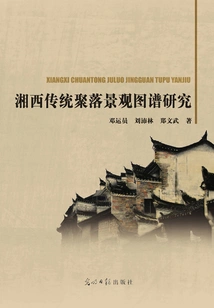
湘西传统聚落景观图谱研究
Deng Yunyuan Liu Peilin Zheng Wenwu
"Research on the Landscape Map of Traditional Settlement in Western Hunan" is divided into seven chapters. The first chapter is the origin of the research, introduces the research background and research ideas, and focuses on clarifying the concepts of landscape genes and landscape gene maps. Chapter 2 introduces the formation process of the traditional settlement landscape in western Hunan, and discusses the formation of political regions. The historical evolution of the formation of the settlement landscape, the geographical environment background and the historical geographical laws of the formation of the settlement landscape; Chapter 3 introduces the evolution process of the traditional settlement landscape in Western Hunan; Chapter 4 focuses on the historical characteristics, location characteristics, national characteristics, settlement layout ideas, spatial layout characteristics, architectural characteristics, The overall characteristics of the traditional settlement landscape in Western Hunan are introduced in terms of place name characteristics, original object characteristics, cultural characteristics, production and living characteristics, etc. Chapter 5 starts from the landscape similarity index system and conducts a zoning evaluation of the regional differentiation of the traditional settlement landscape in Western Hunan through the clustering method. ; Chapter 6 initially constructs a characteristic map of traditional settlement landscape genes in Western Hunan from six aspects: building materials, roof shapes, roof forms, floor layout, local decoration, and gable shapes; Chapter 7 attempts to establish a prototype management prototype system for traditional settlement landscape maps in Western Hunan. "Research on the Landscape Atlas of Traditional Settlement in Western Hunan" can be read and referenced by professional scientific researchers in geography, urban and rural planning, history, architecture, etc., As well as practical workers engaged in literature and history, tourism, and human settlement environment construction.
"Research on the Landscape Map of Traditional Settlement in Western Hunan" is divided into seven chapters. The first chapter is the origin of the research, introduces the research background and research ideas, and focuses on clarifying the concepts of landscape genes and landscape gene maps. Chapter 2 introduces the formation process of the traditional settlement landscape in western Hunan, and discusses the formation of political regions. The historical evolution of the formation of the settlement landscape, the geographical environment background and the historical geographical laws of the formation of the settlement landscape; Chapter 3 introduces the evolution process of the traditional settlement landscape in Western Hunan; Chapter 4 focuses on the historical characteristics, location characteristics, national characteristics, settlement layout ideas, spatial layout characteristics, architectural characteristics, The overall characteristics of the traditional settlement landscape in Western Hunan are introduced in terms of place name characteristics, original object characteristics, cultural characteristics, production and living characteristics, etc. Chapter 5 starts from the landscape similarity index system and conducts a zoning evaluation of the regional differentiation of the traditional settlement landscape in Western Hunan through the clustering method. ; Chapter 6 initially constructs a characteristic map of traditional settlement landscape genes in Western Hunan from six aspects: building materials, roof shapes, roof forms, floor layout, local decoration, and gable shapes; Chapter 7 attempts to establish a prototype management prototype system for traditional settlement landscape maps in Western Hunan. "Research on the Landscape Atlas of Traditional Settlement in Western Hunan" can be read and referenced by professional scientific researchers in geography, urban and rural planning, history, architecture, etc., As well as practical workers engaged in literature and history, tourism, and human settlement environment construction.