Library
Browse and search books
4 novels found
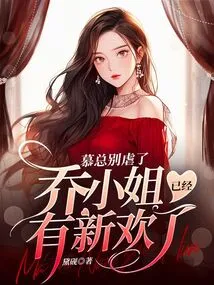
慕总别虐了,乔小姐已经有新欢了
Dai Yan
In the fourth year after becoming Mu Beiqi's secret girlfriend, his Bai Yueguang returned to China and Qiao Chu proposed breaking up. Qiao Chu dragged her sick body to work hard, just wanting to live well, but he trampled her dignity into the ground again and again. She was tired and lost her will to live. When her life was about to end, Mu Beiqi, who knew the truth, held her broken body and begged her not to die. Qiao Chu only murmured: "Mu Beiqi, it hurts so much. I don't want to love you anymore in the next life." The moment he died in his arms, he went completely crazy. In the third year after her death, Mu Beiqi made all those who had wronged her get their retribution. Just when he was about to commit suicide, he saw a face exactly like hers. He pushed her against the side of the road, knelt down with the diamond ring that he had been covering for three years and proposed. Qiao Chu asked with a cold face: "Who are you?"
In the fourth year after becoming Mu Beiqi's secret girlfriend, his Bai Yueguang returned to China and Qiao Chu proposed breaking up. Qiao Chu dragged her sick body to work hard, just wanting to live well, but he trampled her dignity into the ground again and again. She was tired and lost her will to live. When her life was about to end, Mu Beiqi, who knew the truth, held her broken body and begged her not to die. Qiao Chu only murmured: "Mu Beiqi, it hurts so much. I don't want to love you anymore in the next life." The moment he died in his arms, he went completely crazy. In the third year after her death, Mu Beiqi made all those who had wronged her get their retribution. Just when he was about to commit suicide, he saw a face exactly like hers. He pushed her against the side of the road, knelt down with the diamond ring that he had been covering for three years and proposed. Qiao Chu asked with a cold face: "Who are you?"
Phantom
Modern Romance幻影
Dai Yan
Across the six realms, everything has its own destiny. Mortals look up at the sky, where the sun and the moon lurk, and the four seasons change. In the underworld, all things follow their causes and conditions, and what is eternal is the way of heaven. The number of heaven and the change of people's hearts. A man born against nature, One goes against the grain, Walking together, just to find the Dragon King Liu Zilin in the vast sea of people. Marriage is destined, but it goes against the will of heaven... A pair of immortal love, A couple flirting, A couple seems to be apart, With the help of the black hands behind the scenes, the end of the world is causing another turmoil, whether it is good or evil, what is right and what is wrong...
Across the six realms, everything has its own destiny. Mortals look up at the sky, where the sun and the moon lurk, and the four seasons change. In the underworld, all things follow their causes and conditions, and what is eternal is the way of heaven. The number of heaven and the change of people's hearts. A man born against nature, One goes against the grain, Walking together, just to find the Dragon King Liu Zilin in the vast sea of people. Marriage is destined, but it goes against the will of heaven... A pair of immortal love, A couple flirting, A couple seems to be apart, With the help of the black hands behind the scenes, the end of the world is causing another turmoil, whether it is good or evil, what is right and what is wrong...

文学史的权力(增订版)
Dai Yan
"Literary history" was introduced to China from the West via Japan in the early 20th century. Its arrival changed China's inherent concepts of literature and literary history and created a new Chinese literary tradition. What this book discusses is how, after the theory of "literary history" was introduced to China, it cooperated with the academic classification, historical narrative, educational system, ideology, literary and artistic trends, and the Mandarin movement in modern times to create a new understanding and interpretation of Chinese classical literature. Through such an academic historical investigation of "literary history writing", it explains how the "power of literary history" was formed and how it continues to exert its effectiveness. This new edition adds a chapter "The Establishment of the Literary History of Mandarin", enriching the content of the book. In addition, several appendices have been added to provide supplementary discussion on "the power of literary history".
"Literary history" was introduced to China from the West via Japan in the early 20th century. Its arrival changed China's inherent concepts of literature and literary history and created a new Chinese literary tradition. What this book discusses is how, after the theory of "literary history" was introduced to China, it cooperated with the academic classification, historical narrative, educational system, ideology, literary and artistic trends, and the Mandarin movement in modern times to create a new understanding and interpretation of Chinese classical literature. Through such an academic historical investigation of "literary history writing", it explains how the "power of literary history" was formed and how it continues to exert its effectiveness. This new edition adds a chapter "The Establishment of the Literary History of Mandarin", enriching the content of the book. In addition, several appendices have been added to provide supplementary discussion on "the power of literary history".
三国志讲义
Dai Yan
This manuscript focuses on ten biographies of Cao Cao and his son, Empress Bian, the Zhen family, He Yan, Hua Tuo, Zhuge Liang, Lu Xun and other nationalities, such as Karasuma and Japanese, and tells the history of the Three Kingdoms in a simple and easy-to-understand way. Different from traditional history, historiography, or popular novels, this article mainly relies on a specific interpretation of the text of "Three Kingdoms" and uses corresponding perspectives such as political history, women's history, literary history, intellectual history, medical history, ethnic history, and East Asian history to restore the splendid and magnificent picture of the history of the Three Kingdoms written by Chen Shou. In the past, people always paid attention to politics and military in related research, but the characteristic of this book is that in addition to paying attention to military and politics, it pays more attention to issues such as culture, gender, and ethnicity.
This manuscript focuses on ten biographies of Cao Cao and his son, Empress Bian, the Zhen family, He Yan, Hua Tuo, Zhuge Liang, Lu Xun and other nationalities, such as Karasuma and Japanese, and tells the history of the Three Kingdoms in a simple and easy-to-understand way. Different from traditional history, historiography, or popular novels, this article mainly relies on a specific interpretation of the text of "Three Kingdoms" and uses corresponding perspectives such as political history, women's history, literary history, intellectual history, medical history, ethnic history, and East Asian history to restore the splendid and magnificent picture of the history of the Three Kingdoms written by Chen Shou. In the past, people always paid attention to politics and military in related research, but the characteristic of this book is that in addition to paying attention to military and politics, it pays more attention to issues such as culture, gender, and ethnicity.