Library
Browse and search books
2 novels found
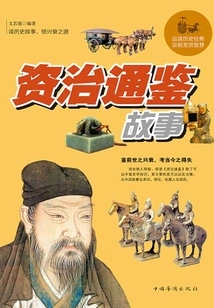
Zizhi Tongjian Story
History资治通鉴故事
Compiled By Wen Ruoyu
"Zi Zhi Tong Jian" is a rare chronological historical work organized and compiled by the famous historian Sima Guang in the Northern Song Dynasty. It was named by Song Shenzong personally because "in view of the past events, it is qualified to govern Taoism". Sima Guang loved history since he was a child and "never tired of reading". He has repeatedly felt that the historical books of the past dynasties are complicated, and most of them except "Historical Records" are chronological histories, which are inconvenient to refer to, making it difficult for people who study history. At the same time, in order to provide reference for feudal rulers, he decided to compile a book. It is a history book that is "lengthy and lengthy, with a summary of secrets, the rise and fall of a country and a country, and the shared interests of the people. Good things can be used as laws, and bad things can be used as warnings." It is determined that the purpose of this book is to "learn from the rise and fall of the past, examine the gains and losses of the present, praise the good and guard the evil, and choose what is right and discard what is wrong." In the third year of Song Yingzong's reign (1066), he submitted "Tongzhi", which records the history of the Warring States and Qin Dynasties, to the imperial court. It was appreciated and ordered to set up a bureau to continue the compilation. Song Shenzong once listened to Sima Guangjin's reading of the manuscript and wrote a preface to the book to show his encouragement. In the seventh year of Yuanfeng (AD 1084), the book was completed, which took 19 years.
"Zi Zhi Tong Jian" is a rare chronological historical work organized and compiled by the famous historian Sima Guang in the Northern Song Dynasty. It was named by Song Shenzong personally because "in view of the past events, it is qualified to govern Taoism". Sima Guang loved history since he was a child and "never tired of reading". He has repeatedly felt that the historical books of the past dynasties are complicated, and most of them except "Historical Records" are chronological histories, which are inconvenient to refer to, making it difficult for people who study history. At the same time, in order to provide reference for feudal rulers, he decided to compile a book. It is a history book that is "lengthy and lengthy, with a summary of secrets, the rise and fall of a country and a country, and the shared interests of the people. Good things can be used as laws, and bad things can be used as warnings." It is determined that the purpose of this book is to "learn from the rise and fall of the past, examine the gains and losses of the present, praise the good and guard the evil, and choose what is right and discard what is wrong." In the third year of Song Yingzong's reign (1066), he submitted "Tongzhi", which records the history of the Warring States and Qin Dynasties, to the imperial court. It was appreciated and ordered to set up a bureau to continue the compilation. Song Shenzong once listened to Sima Guangjin's reading of the manuscript and wrote a preface to the book to show his encouragement. In the seventh year of Yuanfeng (AD 1084), the book was completed, which took 19 years.
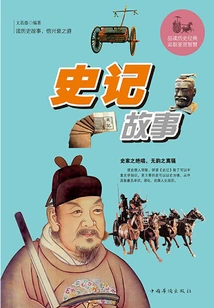
Historical Records Stories
History史记故事
Compiled By Wen Ruoyu
"Historical Records" was written by Sima Qian, the great historian and writer of the Han Dynasty in my country. It records the historical changes of more than 3,000 years from Xuanyuan to the Taichu period of Emperor Wu of the Han Dynasty. It is large in scale and has a complete system. It involves philosophy, politics, economics, literature, aesthetics, astronomy, geography and even medical divination. It covers almost all the contents of human thought activities at that time. It is a mammoth encyclopedia-style work.
"Historical Records" was written by Sima Qian, the great historian and writer of the Han Dynasty in my country. It records the historical changes of more than 3,000 years from Xuanyuan to the Taichu period of Emperor Wu of the Han Dynasty. It is large in scale and has a complete system. It involves philosophy, politics, economics, literature, aesthetics, astronomy, geography and even medical divination. It covers almost all the contents of human thought activities at that time. It is a mammoth encyclopedia-style work.