Library
Browse and search books
3 novels found
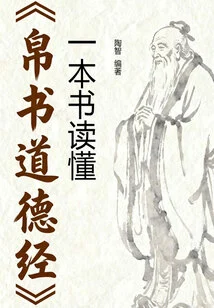
一本书读懂《帛书道德经》
Compiled By Tao Zhi
This book is based on the Tao Te Ching, a silk scroll unearthed from the Mawangdui Han Tomb in Changsha in 1973, and reveals how this precious manuscript over 2,000 years ago subverted traditional understanding and showed the most primitive aspects of Laozi's thoughts. Different from the Wang Bi version and the He Shang Gong version that were passed down in later generations, the silk book has a unique structure with "De Jing" in front and "Dao Jing" in the back, which highlights the emphasis of Huang-Lao thought on realistic governance in the Han Dynasty. Its simple words such as "Feihengdaoye" are closer to the dynamic balance of the universe than the handed down version "Feihengdao". The book provides an in-depth analysis of the original philosophy of "Tao follows nature", the political wisdom of "governing by inaction", and the dialectical thinking of "the weak prevails over the strong". Through hundreds of textual differences between the silk script and the handed down version, it restores Laozi's profound criticism of power boundaries, desire restraint, and social alienation. From the ruler's self-cultivation principle of "little selfishness and few desires" to the ideal social picture of "a small country with few people", this ancient wisdom on silk spans time and space, providing modern people with the ideological resources to return to nature in response to ecological crisis, power expansion and spiritual anxiety, completing a double enlightenment from cultural relic archeology to life awakening.
This book is based on the Tao Te Ching, a silk scroll unearthed from the Mawangdui Han Tomb in Changsha in 1973, and reveals how this precious manuscript over 2,000 years ago subverted traditional understanding and showed the most primitive aspects of Laozi's thoughts. Different from the Wang Bi version and the He Shang Gong version that were passed down in later generations, the silk book has a unique structure with "De Jing" in front and "Dao Jing" in the back, which highlights the emphasis of Huang-Lao thought on realistic governance in the Han Dynasty. Its simple words such as "Feihengdaoye" are closer to the dynamic balance of the universe than the handed down version "Feihengdao". The book provides an in-depth analysis of the original philosophy of "Tao follows nature", the political wisdom of "governing by inaction", and the dialectical thinking of "the weak prevails over the strong". Through hundreds of textual differences between the silk script and the handed down version, it restores Laozi's profound criticism of power boundaries, desire restraint, and social alienation. From the ruler's self-cultivation principle of "little selfishness and few desires" to the ideal social picture of "a small country with few people", this ancient wisdom on silk spans time and space, providing modern people with the ideological resources to return to nature in response to ecological crisis, power expansion and spiritual anxiety, completing a double enlightenment from cultural relic archeology to life awakening.
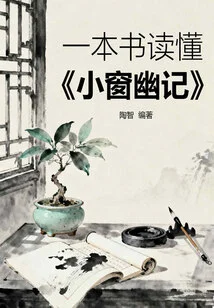
一本书读懂《小窗幽记》
Compiled By Tao Zhi
This book takes the classic clear-language sketch "The Notes of a Small Window" by Chen Jiru, a scholar in the late Ming Dynasty, as the research object, and reveals how this work uses the elegance and wisdom between rulers and tablets to build a spiritual habitat in troubled times. The book provides an in-depth analysis of how scholars in the late Ming Dynasty turned inward amid political corruption and social turmoil, and sublimated daily life into aesthetic resistance against the desolation of the times through elegant activities such as reading, drinking tea, and enjoying games. Through analysis, this book shows how "The Notes of a Little Window" condenses the essence of Confucianism, Buddhism and Taoism in a fragmented and clear form, and provides modern people with a poetic paradigm to heal anxiety: when the external world is out of control, we can still protect our inner character and leisurely mood, like the literati of the late Ming Dynasty, in front of a cup of tea, a book, and a window.
This book takes the classic clear-language sketch "The Notes of a Small Window" by Chen Jiru, a scholar in the late Ming Dynasty, as the research object, and reveals how this work uses the elegance and wisdom between rulers and tablets to build a spiritual habitat in troubled times. The book provides an in-depth analysis of how scholars in the late Ming Dynasty turned inward amid political corruption and social turmoil, and sublimated daily life into aesthetic resistance against the desolation of the times through elegant activities such as reading, drinking tea, and enjoying games. Through analysis, this book shows how "The Notes of a Little Window" condenses the essence of Confucianism, Buddhism and Taoism in a fragmented and clear form, and provides modern people with a poetic paradigm to heal anxiety: when the external world is out of control, we can still protect our inner character and leisurely mood, like the literati of the late Ming Dynasty, in front of a cup of tea, a book, and a window.
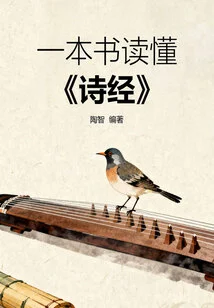
Read the Book of Songs with One Book
Literature一本书读懂《诗经》
Compiled By Tao Zhi
This book takes the Chinese literary classic "The Book of Songs" as the research object, revealing how this ancient collection of poems used the multiple structure of "Elegance Ode" to construct the original emotional map and cultural genes of Chinese civilization. Focusing on the core proposition of "poetry expresses ambition", the book deeply analyzes the etiquette and music education of "Guanyong", the memory of farming civilization in "July", and the social criticism of "Shuo Shu", showing the poetic wisdom from folk songs to temple music. Special attention is paid to the modern inspiration of the text - from the eternal pursuit of "Jian Jia Cang Cang" to the emotional paradigm of "holding the child's hand", the book transforms the images of vegetation, birds and beasts, and the technique of Fu Bixing into the key for contemporary people to understand traditional aesthetics. Finally, traveling through three thousand years of time and space, Confucius's interpretation of "simultaneous thinking" guides readers to reconstruct the dialogue with nature, history and one's own soul through the Book of Songs, and realize the cultural awakening of "without learning poetry, there is nothing to express", making this ancient classic a poetic beacon for modern people's spiritual homeland.
This book takes the Chinese literary classic "The Book of Songs" as the research object, revealing how this ancient collection of poems used the multiple structure of "Elegance Ode" to construct the original emotional map and cultural genes of Chinese civilization. Focusing on the core proposition of "poetry expresses ambition", the book deeply analyzes the etiquette and music education of "Guanyong", the memory of farming civilization in "July", and the social criticism of "Shuo Shu", showing the poetic wisdom from folk songs to temple music. Special attention is paid to the modern inspiration of the text - from the eternal pursuit of "Jian Jia Cang Cang" to the emotional paradigm of "holding the child's hand", the book transforms the images of vegetation, birds and beasts, and the technique of Fu Bixing into the key for contemporary people to understand traditional aesthetics. Finally, traveling through three thousand years of time and space, Confucius's interpretation of "simultaneous thinking" guides readers to reconstruct the dialogue with nature, history and one's own soul through the Book of Songs, and realize the cultural awakening of "without learning poetry, there is nothing to express", making this ancient classic a poetic beacon for modern people's spiritual homeland.