Library
Browse and search books
15 novels found
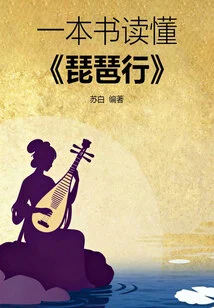
Read "pipa Xing" in One Book
Literature一本书读懂《琵琶行》
Compiled By Su Bai
This book takes Bai Juyi's long-form narrative poem "Pipa Xing" as the research object, and reveals how this eternal masterpiece of "the end of the world" uses the encounter on an autumn night at Huanpukou as an incision to complete the dual reflection of personal destiny and the tragedy of the times. Focusing on the core proposition of "empathy", the book provides an in-depth analysis of Pipa Girl's decline from "young people fighting over heads in Wuling" to "businessmen focusing on profit over separation", and how Bai Juyi's journey from being an outspoken admonisher to being demoted to Jiangzhou Sima achieves soul resonance through music. Special attention is paid to the charm of "synaesthesia" art in the poem - the auditory translation of "big strings are noisy like heavy rain", the emotional explosion of "the silver bottle is broken and water slurry bursts out", showing the unique talent of text reconstruction of music. Finally, traveling through thousands of years of time and space, under the theme of "We are all fallen people at the end of the world", we explore the inspiration of this work to modern society: when material abundance and spiritual loneliness have become the norm, the poem's transcending class understanding, resilience against adversity, and the power of artistic redemption still provide contemporary people with precious emotional resonance and life enlightenment.
This book takes Bai Juyi's long-form narrative poem "Pipa Xing" as the research object, and reveals how this eternal masterpiece of "the end of the world" uses the encounter on an autumn night at Huanpukou as an incision to complete the dual reflection of personal destiny and the tragedy of the times. Focusing on the core proposition of "empathy", the book provides an in-depth analysis of Pipa Girl's decline from "young people fighting over heads in Wuling" to "businessmen focusing on profit over separation", and how Bai Juyi's journey from being an outspoken admonisher to being demoted to Jiangzhou Sima achieves soul resonance through music. Special attention is paid to the charm of "synaesthesia" art in the poem - the auditory translation of "big strings are noisy like heavy rain", the emotional explosion of "the silver bottle is broken and water slurry bursts out", showing the unique talent of text reconstruction of music. Finally, traveling through thousands of years of time and space, under the theme of "We are all fallen people at the end of the world", we explore the inspiration of this work to modern society: when material abundance and spiritual loneliness have become the norm, the poem's transcending class understanding, resilience against adversity, and the power of artistic redemption still provide contemporary people with precious emotional resonance and life enlightenment.
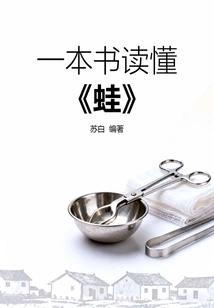
Read "frog" in One Book
Literature一本书读懂《蛙》
Compiled By Su Bai
This book takes Mo Yan's novel "Frog" as the research object, revealing how this Nobel Prize-winning work uses the life trajectory of rural obstetrician and gynecologist Wan Xin as a prism to reflect the bioethical dilemma and human struggle under the fertility policy. Focusing on the dual themes of "reproductive politics" and "soul salvation," the book provides an in-depth analysis of the identity alienation of "aunt" from "child-giving mother" to policy executor, as well as the life worship and historical judgment contained in the image of "frog". Paying special attention to Mo Yan's unique narrative art - from private confessions in letters to dramatic outbursts in drama chapters, the book transforms the local reality and magical symbols of Northeast Gaomi Township into the key to decoding collective memory. In the end, the fierce collision between policy and individuals, in the atonement ceremony of the clay doll, provides readers with a profound perspective on understanding the changes in Chinese society, the complexity of human nature, and the history of literary intervention, making this novel full of echoes of frogs an eternal mirror that interrogates the dignity of life.
This book takes Mo Yan's novel "Frog" as the research object, revealing how this Nobel Prize-winning work uses the life trajectory of rural obstetrician and gynecologist Wan Xin as a prism to reflect the bioethical dilemma and human struggle under the fertility policy. Focusing on the dual themes of "reproductive politics" and "soul salvation," the book provides an in-depth analysis of the identity alienation of "aunt" from "child-giving mother" to policy executor, as well as the life worship and historical judgment contained in the image of "frog". Paying special attention to Mo Yan's unique narrative art - from private confessions in letters to dramatic outbursts in drama chapters, the book transforms the local reality and magical symbols of Northeast Gaomi Township into the key to decoding collective memory. In the end, the fierce collision between policy and individuals, in the atonement ceremony of the clay doll, provides readers with a profound perspective on understanding the changes in Chinese society, the complexity of human nature, and the history of literary intervention, making this novel full of echoes of frogs an eternal mirror that interrogates the dignity of life.
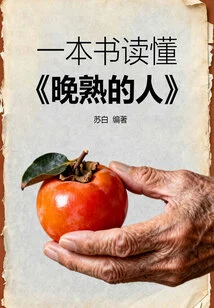
Read "late Bloomers" in One Book
Literature一本书读懂《晚熟的人》
Compiled By Su Bai
This book takes Mo Yan's novel "Late Bloomer" as the research object, revealing how this transformational work after the Nobel Prize uses "late bloomer" as a prism to reflect the spiritual dilemma and survival wisdom of contemporary Chinese society. Focusing on the dual themes of "the burden of fame" and "local changes", the book provides an in-depth analysis of Jiang Xiaotong's survival strategy to combat the anxiety of the times with "slow philosophy", the symbolic dilemma "I" encountered as a Nobel Prize winner, and the allegories of alienation of power and the decline of human nature in stories such as "Crocodile" and "The Poet Jin Xipu". It provides readers with a profound perspective on how individuals can maintain spiritual composure in an era of drastic change, making this work that combines reflexive writing and local fables a literary torch that illuminates the spiritual confusion of contemporary people.
This book takes Mo Yan's novel "Late Bloomer" as the research object, revealing how this transformational work after the Nobel Prize uses "late bloomer" as a prism to reflect the spiritual dilemma and survival wisdom of contemporary Chinese society. Focusing on the dual themes of "the burden of fame" and "local changes", the book provides an in-depth analysis of Jiang Xiaotong's survival strategy to combat the anxiety of the times with "slow philosophy", the symbolic dilemma "I" encountered as a Nobel Prize winner, and the allegories of alienation of power and the decline of human nature in stories such as "Crocodile" and "The Poet Jin Xipu". It provides readers with a profound perspective on how individuals can maintain spiritual composure in an era of drastic change, making this work that combines reflexive writing and local fables a literary torch that illuminates the spiritual confusion of contemporary people.
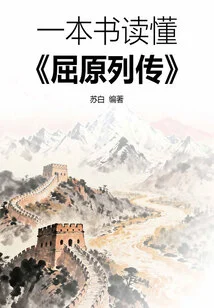
一本书读懂《屈原列传》
Compiled By Su Bai
This book aims to lead readers into the "Biography of Qu Yuan" written by Sima Qian and explore the legendary life and immortal spirit of this eternal poetic soul. Through a refined interpretation of the original text and an analysis from a modern perspective, this book systematically sorts out Qu Yuan's tragic journey from being trusted by King Huai and determined to reform in the early stage to being slandered and exiled to the south of the Yangtze River in the later stage. The content not only analyzes Qu Yuan's political vision of "uniting Qi to resist Qin" step by step, but also presents his ideal of beautiful politics of "promoting talents and empowering them" in detail. The book will guide readers to taste immortal chapters such as "Li Sao" and "Tianwen", to appreciate his "vanilla beauty" metaphorical technique and romantic writing style, to deeply understand his endless sorrow and resentment of "being trustworthy but being doubted, being loyal but being slandered", and his firm belief that "even though he died nine times, he still has no regrets". This is not only a literary tour, but also an in-depth dialogue with a great soul. It aims to allow readers to appreciate Qu Yuan's feelings about his family and country, his noble personality and his inherited talents in one book.
This book aims to lead readers into the "Biography of Qu Yuan" written by Sima Qian and explore the legendary life and immortal spirit of this eternal poetic soul. Through a refined interpretation of the original text and an analysis from a modern perspective, this book systematically sorts out Qu Yuan's tragic journey from being trusted by King Huai and determined to reform in the early stage to being slandered and exiled to the south of the Yangtze River in the later stage. The content not only analyzes Qu Yuan's political vision of "uniting Qi to resist Qin" step by step, but also presents his ideal of beautiful politics of "promoting talents and empowering them" in detail. The book will guide readers to taste immortal chapters such as "Li Sao" and "Tianwen", to appreciate his "vanilla beauty" metaphorical technique and romantic writing style, to deeply understand his endless sorrow and resentment of "being trustworthy but being doubted, being loyal but being slandered", and his firm belief that "even though he died nine times, he still has no regrets". This is not only a literary tour, but also an in-depth dialogue with a great soul. It aims to allow readers to appreciate Qu Yuan's feelings about his family and country, his noble personality and his inherited talents in one book.
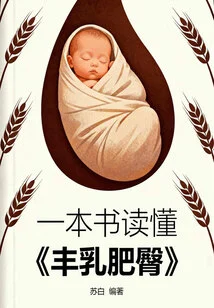
一本书读懂《丰乳肥臀》
Compiled By Su Bai
This book uses Mo Yan's masterpiece "Big Breasts and Wide Hips" as the interpretation object, revealing how this "secret history of the nation" reflects the suffering and struggle of China in the 20th century through the century-old fate of the Shangguan family in Northeast Gaomi Township. Focusing on the symbolic meaning of mother Shangguan Lu's "big breasts and wide buttocks" - both a totem for nurturing life and a carrier of historical violence, the book analyzes how Mo Yan used magical brushwork to incorporate grand narratives such as war, famine, and political movements into family epics, showing the survival plight of his mother and eight daughters during historical nodes such as the Japanese invasion of China, the civil war between the Kuomintang and the Communist Party, and the Cultural Revolution. Pay special attention to the deep thinking behind the controversial writing, and finally go through the fog of blood and absurdity, discover the resilience of life beyond suffering in the image of the mother, and complete the mourning for the disappearance of local civilization and the pursuit of the roots of the national spirit.
This book uses Mo Yan's masterpiece "Big Breasts and Wide Hips" as the interpretation object, revealing how this "secret history of the nation" reflects the suffering and struggle of China in the 20th century through the century-old fate of the Shangguan family in Northeast Gaomi Township. Focusing on the symbolic meaning of mother Shangguan Lu's "big breasts and wide buttocks" - both a totem for nurturing life and a carrier of historical violence, the book analyzes how Mo Yan used magical brushwork to incorporate grand narratives such as war, famine, and political movements into family epics, showing the survival plight of his mother and eight daughters during historical nodes such as the Japanese invasion of China, the civil war between the Kuomintang and the Communist Party, and the Cultural Revolution. Pay special attention to the deep thinking behind the controversial writing, and finally go through the fog of blood and absurdity, discover the resilience of life beyond suffering in the image of the mother, and complete the mourning for the disappearance of local civilization and the pursuit of the roots of the national spirit.
Read "sandalwood Punishment" in One Book
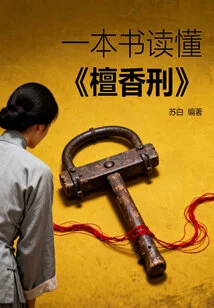
Literature一本书读懂《檀香刑》
Compiled By Su Bai
This book takes Mo Yan's novel "Sandalwood Punishment" as the research object and reveals how this masterpiece, which combines folk narratives and historical reflections, takes Northeast Gaomi Township as the stage to show the fierce collision between individual destiny and national spirit during the changes in the late Qing Dynasty. Focusing on the dual clues of "torture aesthetics" and "cat tune art", the book provides an in-depth analysis of executioner Zhao Jia's power logic of ritualizing violence, Sun Bing's folk spirit of using opera to fight torture, and Sun Meiniang's female wisdom of using her body to navigate the cracks of power. Paying special attention to the multi-vocal narrative structure of the text - from the official career dilemma of the county magistrate Qian Ding to the micro-presentation of the Boxer Rebellion, Mo Yan transforms the Jiaoji Railway incident into a literary specimen that interrogates colonial modernity. Finally, through the bloody execution ground, in the life-and-death confrontation between the sandalwood stake and the cat-voice swan song, it provides readers with a profound perspective on the resilience of China's rural society, the mechanism of power alienation and the complex spectrum of human nature, making this novel full of sound and pain a spiritual key to decoding the nation's collective memory.
This book takes Mo Yan's novel "Sandalwood Punishment" as the research object and reveals how this masterpiece, which combines folk narratives and historical reflections, takes Northeast Gaomi Township as the stage to show the fierce collision between individual destiny and national spirit during the changes in the late Qing Dynasty. Focusing on the dual clues of "torture aesthetics" and "cat tune art", the book provides an in-depth analysis of executioner Zhao Jia's power logic of ritualizing violence, Sun Bing's folk spirit of using opera to fight torture, and Sun Meiniang's female wisdom of using her body to navigate the cracks of power. Paying special attention to the multi-vocal narrative structure of the text - from the official career dilemma of the county magistrate Qian Ding to the micro-presentation of the Boxer Rebellion, Mo Yan transforms the Jiaoji Railway incident into a literary specimen that interrogates colonial modernity. Finally, through the bloody execution ground, in the life-and-death confrontation between the sandalwood stake and the cat-voice swan song, it provides readers with a profound perspective on the resilience of China's rural society, the mechanism of power alienation and the complex spectrum of human nature, making this novel full of sound and pain a spiritual key to decoding the nation's collective memory.
Read "les Miserables" in One Book
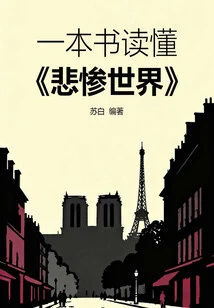
Literature一本书读懂《悲惨世界》
Compiled By Su Bai
This book takes Victor Hugo's epic masterpiece "Les Misérables" as the core, and shows the suffering and struggle of the people at the bottom of French society in the 19th century through the redemption of the convict Jean Valjean. From the tragic beginning when he was sentenced to nineteen years in prison for stealing a piece of bread, to the turning point when Bishop Miriam lit his soul with a silver candlestick, Jean Valjean assumed the alias of Mayor Madeleine and did good deeds to help the world, but was always pursued by the iron-faced police officer Javert. The intertwining of the two lines of fate reveals the eternal conflict between law and human nature. The book not only depicts the tragedies of women such as Fantine who is forced to fall, Cosette who suffers abuse, but also depicts the greed and sin of the Thenardiers and the ideal passion of Enjolras, a young man on the barricade, forming a social panorama in which good and evil are intertwined. Hugo used an encyclopedic style to integrate historical events and philosophical thinking into the narrative. Through shocking scenes such as sewer rescue and bloody battles on barricades, he explored the ultimate propositions of poverty, oppression and redemption. This humanitarian Bible ultimately tells us: Only forgiveness and love can illuminate the darkness of the "miserable world" and allow the humblest soul to shine with the brilliance of divinity.
This book takes Victor Hugo's epic masterpiece "Les Misérables" as the core, and shows the suffering and struggle of the people at the bottom of French society in the 19th century through the redemption of the convict Jean Valjean. From the tragic beginning when he was sentenced to nineteen years in prison for stealing a piece of bread, to the turning point when Bishop Miriam lit his soul with a silver candlestick, Jean Valjean assumed the alias of Mayor Madeleine and did good deeds to help the world, but was always pursued by the iron-faced police officer Javert. The intertwining of the two lines of fate reveals the eternal conflict between law and human nature. The book not only depicts the tragedies of women such as Fantine who is forced to fall, Cosette who suffers abuse, but also depicts the greed and sin of the Thenardiers and the ideal passion of Enjolras, a young man on the barricade, forming a social panorama in which good and evil are intertwined. Hugo used an encyclopedic style to integrate historical events and philosophical thinking into the narrative. Through shocking scenes such as sewer rescue and bloody battles on barricades, he explored the ultimate propositions of poverty, oppression and redemption. This humanitarian Bible ultimately tells us: Only forgiveness and love can illuminate the darkness of the "miserable world" and allow the humblest soul to shine with the brilliance of divinity.
Read "red Sorghum Family" in One Book
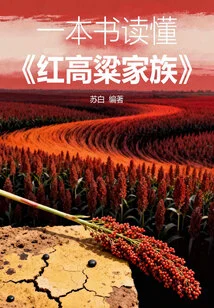
Literature一本书读懂《红高粱家族》
Compiled By Su Bai
This book takes Mo Yan's masterpiece "The Red Sorghum Family" as the research object to reveal how this "secret history of the nation" reconstructs historical memory with the wild narrative of Northeast Gaomi Township. Focusing on the core image of "red sorghum" - which is both a totem of primitive vitality and a container of love, struggle and national spirit, the book deeply analyzes the cultural significance of "bandit heroes" such as Yu Zhan'ao and Dai Fenglian in subverting traditional narratives, and shows how Mo Yan used carnival language to sublimate bloody violence into aesthetic expression. Special attention is paid to the novel's deconstruction of official history: through folk memory fragments, multiple perspectives and magical realism techniques, it presents the real and chaotic rural China during the Anti-Japanese War. Finally, through the bloody mist of the sorghum field, I question the dissolution of the blood of the nation by modern civilization in the melancholy of "the degradation of the species", and complete an affectionate review of the memory of the land and the force of life. This book is not only a literary criticism, but also a key to Mo Yan's literary universe.
This book takes Mo Yan's masterpiece "The Red Sorghum Family" as the research object to reveal how this "secret history of the nation" reconstructs historical memory with the wild narrative of Northeast Gaomi Township. Focusing on the core image of "red sorghum" - which is both a totem of primitive vitality and a container of love, struggle and national spirit, the book deeply analyzes the cultural significance of "bandit heroes" such as Yu Zhan'ao and Dai Fenglian in subverting traditional narratives, and shows how Mo Yan used carnival language to sublimate bloody violence into aesthetic expression. Special attention is paid to the novel's deconstruction of official history: through folk memory fragments, multiple perspectives and magical realism techniques, it presents the real and chaotic rural China during the Anti-Japanese War. Finally, through the bloody mist of the sorghum field, I question the dissolution of the blood of the nation by modern civilization in the melancholy of "the degradation of the species", and complete an affectionate review of the memory of the land and the force of life. This book is not only a literary criticism, but also a key to Mo Yan's literary universe.
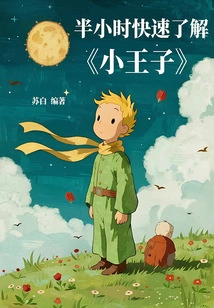
半小时快速了解《小王子》
Compiled By Su Bai
Why has a fairy tale written for children become the antidote to the "spiritual internal friction" of countless adults? This book is not the original text of "The Little Prince", but a series of new interpretations that go deep into its philosophical core. It will help you understand how the thorns of roses are a metaphor for the grinding of love, how the "taming" of foxes solves social difficulties, and how the lamplighter's running around predicts the fate of contemporary "workers". From the baobab trees on planet B612 to the wells in the desert, read this book and you will find the power to heal your heart and regain innocence during this interstellar journey.
Why has a fairy tale written for children become the antidote to the "spiritual internal friction" of countless adults? This book is not the original text of "The Little Prince", but a series of new interpretations that go deep into its philosophical core. It will help you understand how the thorns of roses are a metaphor for the grinding of love, how the "taming" of foxes solves social difficulties, and how the lamplighter's running around predicts the fate of contemporary "workers". From the baobab trees on planet B612 to the wells in the desert, read this book and you will find the power to heal your heart and regain innocence during this interstellar journey.
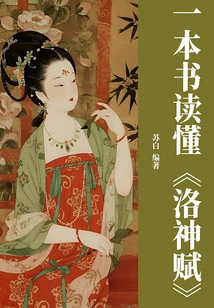
Read "luo Shen Fu" in One Book
Literature一本书读懂《洛神赋》
Compiled By Su Bai
"Fu of the Goddess of Luo", an eternal masterpiece about the love between man and god, why can it transcend time and space and still make people heartbroken and admired today? Behind it, is Cao Zhi's fantasy about the goddess hidden, or is it the memory of Empress Zhen's forbidden love? This book will decipher this literary gem for you. We will not only take you back to the era of "Jian'an style", provide detailed original text, annotations and beautiful translations, but also appreciate its gorgeous diction and artistic achievements paragraph by paragraph... And finally, explore its immortal influence on later generations of calligraphy, painting and literature. Let this masterpiece show its full, three-dimensional and profound beauty in front of you.
"Fu of the Goddess of Luo", an eternal masterpiece about the love between man and god, why can it transcend time and space and still make people heartbroken and admired today? Behind it, is Cao Zhi's fantasy about the goddess hidden, or is it the memory of Empress Zhen's forbidden love? This book will decipher this literary gem for you. We will not only take you back to the era of "Jian'an style", provide detailed original text, annotations and beautiful translations, but also appreciate its gorgeous diction and artistic achievements paragraph by paragraph... And finally, explore its immortal influence on later generations of calligraphy, painting and literature. Let this masterpiece show its full, three-dimensional and profound beauty in front of you.
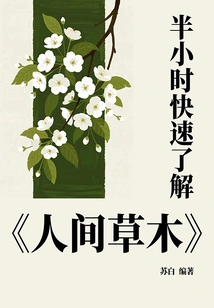
半小时快速了解《人间草木》
Compiled By Su Bai
Why can a plate of pickles and a few flowers and plants become the antidote to heal the hearts of contemporary people? What kind of magic is hidden in Wang Zengqi's words? This book is not the original text of "Human Grass", but a series of interpretation articles that go deep into its spiritual core. It will systematically dismantle Wang Zengqi's literary universe from multiple dimensions, including the codes of nostalgia in food, the philosophy of life in ordinary vegetation, the Zen in the fireworks of the city, and the "light but flavorful" alchemy of writing. After reading this book, you will not only be able to appreciate the scenery described by Mr. Wang, but also understand the transparent, open-minded and life-loving wisdom behind his words.
Why can a plate of pickles and a few flowers and plants become the antidote to heal the hearts of contemporary people? What kind of magic is hidden in Wang Zengqi's words? This book is not the original text of "Human Grass", but a series of interpretation articles that go deep into its spiritual core. It will systematically dismantle Wang Zengqi's literary universe from multiple dimensions, including the codes of nostalgia in food, the philosophy of life in ordinary vegetation, the Zen in the fireworks of the city, and the "light but flavorful" alchemy of writing. After reading this book, you will not only be able to appreciate the scenery described by Mr. Wang, but also understand the transparent, open-minded and life-loving wisdom behind his words.
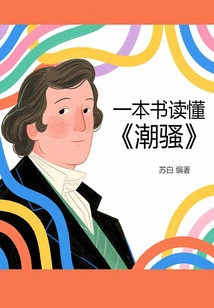
Read "chao Sao" in One Book
Literature一本书读懂《潮骚》
Compiled By Su Bai
What kind of pure and touching love pastoral is performed on the Song Island where the sea breeze and the sound of tide intertwine? This book provides you with an in-depth interpretation of this unique masterpiece of pure beauty by Yukio Mishima. With Mishima-style clarity and poetic writing, this book leads you into the love world of fisherman Shinji and pearl-diver Hatsue, and witnesses how they win the blessing of the "Poseidon" with their courage and virtue in the test of nature and human nature. It profoundly explains its praise of original vitality, pure love and traditional values, helping you quickly and comprehensively appreciate the freshness and timelessness of this "literary anomaly".
What kind of pure and touching love pastoral is performed on the Song Island where the sea breeze and the sound of tide intertwine? This book provides you with an in-depth interpretation of this unique masterpiece of pure beauty by Yukio Mishima. With Mishima-style clarity and poetic writing, this book leads you into the love world of fisherman Shinji and pearl-diver Hatsue, and witnesses how they win the blessing of the "Poseidon" with their courage and virtue in the test of nature and human nature. It profoundly explains its praise of original vitality, pure love and traditional values, helping you quickly and comprehensively appreciate the freshness and timelessness of this "literary anomaly".
Read "afang Palace Fu" in One Book
Literature一本书读懂《阿房宫赋》
Compiled By Su Bai
This book is based on Du Mu's eternally famous "Ode to Afang Palace" and reveals the profound lessons of the Qin Empire's rise and fall through the rise and fall of an illusory palace. From Qin Shihuang's extravagant desire of "Afang comes out of Mount Shu" to Xiang Yu's ultimate destruction of "Chu people torched the scorched earth", the author analyzes layer by layer the cruel reality behind the "overwhelming pressure of more than three hundred miles" in the poem, which is the exploitation of people's power and the plundering of treasures from the six countries. In the late Tang Dynasty, Du Mu used the Qin Dynasty to satirize the Tang Dynasty, using the epigram "Qin people have no time to mourn themselves", turning Epang Palace into a mirror reflecting the corruption of power, warning the rulers of the law of people's hearts that "those who belong to Qin are also Qin". The book not only interprets the literary ingenuity of "intrigue and intrigue" in Fu style, but also explores the eternal proposition of "posterity mourns without taking note of it", allowing readers to understand the logical chain of extravagant subjugation and the political wisdom of people's livelihood from the flaming historical ruins.
This book is based on Du Mu's eternally famous "Ode to Afang Palace" and reveals the profound lessons of the Qin Empire's rise and fall through the rise and fall of an illusory palace. From Qin Shihuang's extravagant desire of "Afang comes out of Mount Shu" to Xiang Yu's ultimate destruction of "Chu people torched the scorched earth", the author analyzes layer by layer the cruel reality behind the "overwhelming pressure of more than three hundred miles" in the poem, which is the exploitation of people's power and the plundering of treasures from the six countries. In the late Tang Dynasty, Du Mu used the Qin Dynasty to satirize the Tang Dynasty, using the epigram "Qin people have no time to mourn themselves", turning Epang Palace into a mirror reflecting the corruption of power, warning the rulers of the law of people's hearts that "those who belong to Qin are also Qin". The book not only interprets the literary ingenuity of "intrigue and intrigue" in Fu style, but also explores the eternal proposition of "posterity mourns without taking note of it", allowing readers to understand the logical chain of extravagant subjugation and the political wisdom of people's livelihood from the flaming historical ruins.
Read "notre Dame De Paris" in One Book
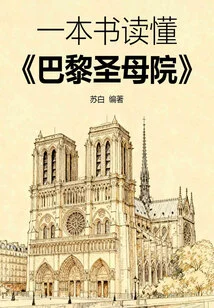
Literature一本书读懂《巴黎圣母院》
Compiled By Su Bai
This book dismantles the literary code and ideological core of Victor Hugo's classic "The Hunchback of Notre Dame." Starting from positioning Notre Dame de Paris as the real "protagonist" of the novel, we analyze its triple significance as a carrier of history, a stage of destiny, and a symbol of civilization. The book carefully interprets the human spectrum of classic characters such as Quasimodo, Esmeralda, and Claude, showing the fierce collision between beauty and ugliness, good and evil. At the same time, focusing on the theme of "fate", it reveals how social prejudices, character weaknesses and accidental events weave the web of tragedy, and analyzes the nature of different forms of love and desire. In addition, this book also restores the social picture of Paris in the fifteenth century, explores the proposition of civilizational change in "architecture and books", explains the romantic aesthetics of "contrast between beauty and ugliness", and finally settles on the practical significance of the work across the century, opening a profound door for readers to understand this immortal masterpiece.
This book dismantles the literary code and ideological core of Victor Hugo's classic "The Hunchback of Notre Dame." Starting from positioning Notre Dame de Paris as the real "protagonist" of the novel, we analyze its triple significance as a carrier of history, a stage of destiny, and a symbol of civilization. The book carefully interprets the human spectrum of classic characters such as Quasimodo, Esmeralda, and Claude, showing the fierce collision between beauty and ugliness, good and evil. At the same time, focusing on the theme of "fate", it reveals how social prejudices, character weaknesses and accidental events weave the web of tragedy, and analyzes the nature of different forms of love and desire. In addition, this book also restores the social picture of Paris in the fifteenth century, explores the proposition of civilizational change in "architecture and books", explains the romantic aesthetics of "contrast between beauty and ugliness", and finally settles on the practical significance of the work across the century, opening a profound door for readers to understand this immortal masterpiece.
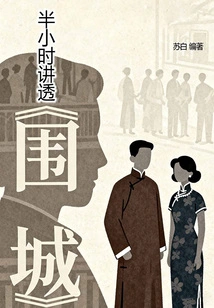
半小时讲透《围城》
Compiled By Su Bai
This book uses the core image of "Fortress Besieged" as its outline to unlock the multiple dimensions of "Fortress Besieged". It not only tells the story of Fang Hongjian's life wanderings - from the vanity of returning from the cruise ship, the confusion of love in Shanghai, to the absurdity of Sanlu University, and the dilemma of marriage life, but also analyzes the spiritual dilemma of intellectuals during the war from the perspective of "new scholarly foreign history". The interpretation deeply explores the satirical art and language magic of the work, from the subtlety of metaphor to the sharp edge of irony, highlighting Qian Zhongshu's erudition and sharpness. It penetrates the surface of the plot and reveals the philosophical essence of "Fortress Besieged" - marriage, career, and life are all dilemmas, behind which are the desires and emptiness of human nature. It places the novel against the background of the Anti-Japanese War era, not only showing criticism of the pathology of the era, but also highlighting its value that transcends time and space: its precise insight into the weaknesses of human nature and its profound questioning of the dilemma of existence make this classic still resonate with readers about themselves and life.
This book uses the core image of "Fortress Besieged" as its outline to unlock the multiple dimensions of "Fortress Besieged". It not only tells the story of Fang Hongjian's life wanderings - from the vanity of returning from the cruise ship, the confusion of love in Shanghai, to the absurdity of Sanlu University, and the dilemma of marriage life, but also analyzes the spiritual dilemma of intellectuals during the war from the perspective of "new scholarly foreign history". The interpretation deeply explores the satirical art and language magic of the work, from the subtlety of metaphor to the sharp edge of irony, highlighting Qian Zhongshu's erudition and sharpness. It penetrates the surface of the plot and reveals the philosophical essence of "Fortress Besieged" - marriage, career, and life are all dilemmas, behind which are the desires and emptiness of human nature. It places the novel against the background of the Anti-Japanese War era, not only showing criticism of the pathology of the era, but also highlighting its value that transcends time and space: its precise insight into the weaknesses of human nature and its profound questioning of the dilemma of existence make this classic still resonate with readers about themselves and life.