Library
Browse and search books
10 novels found
Read "the Wasted City" in One Book
Literature一本书读懂《废都》
Compiled By Qu Xin
This book takes Jia Pingwa's "The Wasted Capital" as the interpretation object, focuses on this contemporary literary classic that has caused great controversy, and deeply analyzes its historical background, characters and spiritual core. Through systematic analysis, this book not only restores the cultural pain and spiritual dilemma of intellectuals during the social transformation period in the early 1990s, but also reveals how the sinking of Zhuang Zhidie, Tang Wan'er and other characters in the whirlpool of desire became a metaphor for the times. At the same time, we sort out the tortuous fate of the work from being banned to being released, and explore its critical value that transcends the times - when material prosperity encounters a vacuum of faith, the fall and redemption of human nature are always eternal propositions worthy of vigilance. This book is not only a literary criticism, but also an ideological key to the spiritual history of contemporary China.
This book takes Jia Pingwa's "The Wasted Capital" as the interpretation object, focuses on this contemporary literary classic that has caused great controversy, and deeply analyzes its historical background, characters and spiritual core. Through systematic analysis, this book not only restores the cultural pain and spiritual dilemma of intellectuals during the social transformation period in the early 1990s, but also reveals how the sinking of Zhuang Zhidie, Tang Wan'er and other characters in the whirlpool of desire became a metaphor for the times. At the same time, we sort out the tortuous fate of the work from being banned to being released, and explore its critical value that transcends the times - when material prosperity encounters a vacuum of faith, the fall and redemption of human nature are always eternal propositions worthy of vigilance. This book is not only a literary criticism, but also an ideological key to the spiritual history of contemporary China.
Read "skins" with One Book
Literature一本书读懂《皮囊》
Compiled By Qu Xin
This book uses Cai Chongda's non-fiction work "Skin" as the research object, revealing how this "recognizing heart and person" literary classic uses Dongshi, a small town in southern Fujian, as a slice to show the spiritual map of the Chinese family and the pain of the times. Focusing on the core image of "skin" - both a shackle for the body and a container for the soul, the book provides an in-depth analysis of Atai's survival philosophy of "the body is for use", his mother's obsession with building a house, and the collapse of his father's dignity on the sickbed. It presents the individual's struggle and resilience in the gap between tradition and modernity. Special attention is paid to the narrative power of "taking truth as the edge" of the work: by dissecting the trauma, estrangement and unspoken love in family memories, Tsai Chongda has completed the precise mapping of the emotional structure of rural China, allowing every reader to see their own life folds in characters such as Zhang Meili and Hong Kong Ah Xiao. Finally, through the fog of individual destiny, in the inquiry of "the questions we always have to answer", it shows how this work breaks the boundaries between fiction and non-fiction with rough truth, and becomes the common spiritual autobiography of a generation, providing emotional resonance and existential enlightenment for all people who walk the world with skins.
This book uses Cai Chongda's non-fiction work "Skin" as the research object, revealing how this "recognizing heart and person" literary classic uses Dongshi, a small town in southern Fujian, as a slice to show the spiritual map of the Chinese family and the pain of the times. Focusing on the core image of "skin" - both a shackle for the body and a container for the soul, the book provides an in-depth analysis of Atai's survival philosophy of "the body is for use", his mother's obsession with building a house, and the collapse of his father's dignity on the sickbed. It presents the individual's struggle and resilience in the gap between tradition and modernity. Special attention is paid to the narrative power of "taking truth as the edge" of the work: by dissecting the trauma, estrangement and unspoken love in family memories, Tsai Chongda has completed the precise mapping of the emotional structure of rural China, allowing every reader to see their own life folds in characters such as Zhang Meili and Hong Kong Ah Xiao. Finally, through the fog of individual destiny, in the inquiry of "the questions we always have to answer", it shows how this work breaks the boundaries between fiction and non-fiction with rough truth, and becomes the common spiritual autobiography of a generation, providing emotional resonance and existential enlightenment for all people who walk the world with skins.
一本书读懂《遥远的向日葵地》
Compiled By Qu Xin
This book provides an in-depth interpretation of "The Distant Sunflower Field", which is Li Juan's affectionate record of the frontier reclamation life. It depicts the hardship and tenacity of her mother in cultivating a sunflower field in the Gobi Desert, as well as the story of three generations of women establishing order and pursuing hope in the wilderness. The author analyzes that Li Juan's simple and sincere language, unique sense of humor and poetry come from life in the Gobi wilderness, interprets the different perspectives of the three generations of mother, grandmother and "me", as well as images of sunflowers, labor, silence, distance, loneliness and other images. He believes that the book not only shows the harshness of nature and the tenacity of life, but also conveys a love and persistence of life, illuminating the reader's deep yearning for beauty and tenacity.
This book provides an in-depth interpretation of "The Distant Sunflower Field", which is Li Juan's affectionate record of the frontier reclamation life. It depicts the hardship and tenacity of her mother in cultivating a sunflower field in the Gobi Desert, as well as the story of three generations of women establishing order and pursuing hope in the wilderness. The author analyzes that Li Juan's simple and sincere language, unique sense of humor and poetry come from life in the Gobi wilderness, interprets the different perspectives of the three generations of mother, grandmother and "me", as well as images of sunflowers, labor, silence, distance, loneliness and other images. He believes that the book not only shows the harshness of nature and the tenacity of life, but also conveys a love and persistence of life, illuminating the reader's deep yearning for beauty and tenacity.
一本书读懂《俗世奇人》
Compiled By Qu Xin
This book takes Feng Jicai's novel "Strange People in the World" as the research object, and reveals how this literary classic uses "strange people and strange things" as a prism to reflect the urban life and craftsman spirit of Tianjin Wei in the late Qing Dynasty and the early Republic of China. Focusing on the core proposition of "seeing wonders in the world", the book deeply analyzes classic cases such as Brush Li's "Black clothes do not dye white", Clay Figurine Zhang's "The Universe in the Sleeve", Su Qikuan's "Seven Rules", etc., Showing the "skills are close to the Tao" state reached by craftsmen in the practice of skills. Paying special attention to the modern enlightenment of the text - from the survival rules of dock culture to the reputation mechanism of teahouses and rivers and lakes, the book transforms Feng's unique language humor and script narrative techniques into the key to interpreting market philosophy. Finally, it travels through a hundred years of time and space, providing contemporary readers with a spiritual reference against the impetuous society.
This book takes Feng Jicai's novel "Strange People in the World" as the research object, and reveals how this literary classic uses "strange people and strange things" as a prism to reflect the urban life and craftsman spirit of Tianjin Wei in the late Qing Dynasty and the early Republic of China. Focusing on the core proposition of "seeing wonders in the world", the book deeply analyzes classic cases such as Brush Li's "Black clothes do not dye white", Clay Figurine Zhang's "The Universe in the Sleeve", Su Qikuan's "Seven Rules", etc., Showing the "skills are close to the Tao" state reached by craftsmen in the practice of skills. Paying special attention to the modern enlightenment of the text - from the survival rules of dock culture to the reputation mechanism of teahouses and rivers and lakes, the book transforms Feng's unique language humor and script narrative techniques into the key to interpreting market philosophy. Finally, it travels through a hundred years of time and space, providing contemporary readers with a spiritual reference against the impetuous society.
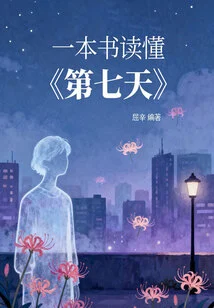
Read "the Seventh Day" in One Book
Literature一本书读懂《第七天》
Compiled By Qu Xin
This book provides an in-depth interpretation of Yu Hua's controversial magical realism masterpiece "The Seventh Day" and unlocks the narrative code and spiritual core of this work. Using the protagonist Yang Fei's soul journey seven days after his death as a clue, we analyze the narrative innovation of the "perspective of the undead" and the metaphorical meaning of the "seven-day frame", and interpret the tragedies of the fate of core characters such as Yang Fei, Yang Jinbiao, Li Qing, and Shu Mei. The book focuses on the novel's sharp reflection of social realities such as violent demolitions and the polarization of rich and poor, and explores the literary reconstruction and recording value of the times behind the "news skewering". At the same time, it deeply explains the utopian metaphor of "no place for death", analyzes the pursuit of equality, dignity and humanity under the inverted structure of life and death, clarifies the breakthrough of humanistic care and narrative style that the work continues from "Alive", responds to the literary controversy it caused, and allows readers to penetrate the absurd appearance and touch the suffering and tender undertones deep in the work.
This book provides an in-depth interpretation of Yu Hua's controversial magical realism masterpiece "The Seventh Day" and unlocks the narrative code and spiritual core of this work. Using the protagonist Yang Fei's soul journey seven days after his death as a clue, we analyze the narrative innovation of the "perspective of the undead" and the metaphorical meaning of the "seven-day frame", and interpret the tragedies of the fate of core characters such as Yang Fei, Yang Jinbiao, Li Qing, and Shu Mei. The book focuses on the novel's sharp reflection of social realities such as violent demolitions and the polarization of rich and poor, and explores the literary reconstruction and recording value of the times behind the "news skewering". At the same time, it deeply explains the utopian metaphor of "no place for death", analyzes the pursuit of equality, dignity and humanity under the inverted structure of life and death, clarifies the breakthrough of humanistic care and narrative style that the work continues from "Alive", responds to the literary controversy it caused, and allows readers to penetrate the absurd appearance and touch the suffering and tender undertones deep in the work.
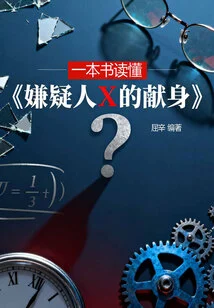
一本书读懂《嫌疑人X的献身》
Compiled By Qu Xin
This book dismantles Keigo Higashino's masterpiece of reasoning, from the subversive narrative structure at the beginning to the mathematical beauty of the core trick, and analyzes the "perfect crime" constructed by Tetsuya Ishigami using logic layer by layer. The manuscript not only explains in detail the subtle techniques of corpse replacement and time shifting, but also focuses on the ethical dilemma of a genius mathematician who sacrifices his life for love. It compares Yukawa Manabu's rational breakthrough and Hanaoka Yasuko's moral struggle, and finally reveals how Higashino Keigo blended original reasoning and socialist concern into the ideological depth and human warmth of this Naoki Award-winning work.
This book dismantles Keigo Higashino's masterpiece of reasoning, from the subversive narrative structure at the beginning to the mathematical beauty of the core trick, and analyzes the "perfect crime" constructed by Tetsuya Ishigami using logic layer by layer. The manuscript not only explains in detail the subtle techniques of corpse replacement and time shifting, but also focuses on the ethical dilemma of a genius mathematician who sacrifices his life for love. It compares Yukawa Manabu's rational breakthrough and Hanaoka Yasuko's moral struggle, and finally reveals how Higashino Keigo blended original reasoning and socialist concern into the ideological depth and human warmth of this Naoki Award-winning work.
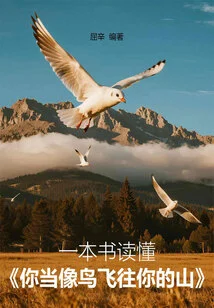
一本书读懂《你当像鸟飞往你的山》
Compiled By Qu Xin
This book takes Tara Westover's coming-of-age epic as the research object, revealing how this memoir uses the extreme survival of the Buck's Peak family as a prism to reflect the subversive power of education on individual liberation. Focusing on the core proposition of "self-reshaping", the book analyzes how the original family built a spiritual cage through doomsday survivalist beliefs, violent discipline and memory manipulation, and how Tara completed the transformation from "father's daughter" to "own authority" through the academic process of self-study for the college entrance examination, enlightenment at Brigham Young University and further study at Cambridge. Special attention is paid to the complexities of family relationships.
This book takes Tara Westover's coming-of-age epic as the research object, revealing how this memoir uses the extreme survival of the Buck's Peak family as a prism to reflect the subversive power of education on individual liberation. Focusing on the core proposition of "self-reshaping", the book analyzes how the original family built a spiritual cage through doomsday survivalist beliefs, violent discipline and memory manipulation, and how Tara completed the transformation from "father's daughter" to "own authority" through the academic process of self-study for the college entrance examination, enlightenment at Brigham Young University and further study at Cambridge. Special attention is paid to the complexities of family relationships.
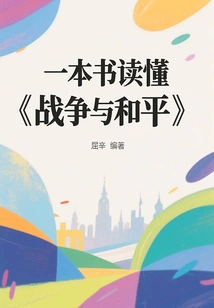
Read "war and Peace" in One Book
Literature一本书读懂《战争与和平》
Compiled By Qu Xin
How to truly understand Tolstoy's all-encompassing epic "War and Peace"? This book lights the way for you. With vivid and epic writing, this book guides you through the grand scenes of "peace" and the flames of "war" in Russia in the 19th century, deeply interprets the search and growth of immortal souls such as Pierre, Andrei, and Natasha in the torrent of love, ideals, and history, and analyzes Toon's profound philosophy about people, history, and "the meaning of life." Help you quickly and comprehensively appreciate the magnificence and eternity of this "Encyclopedia of Life".
How to truly understand Tolstoy's all-encompassing epic "War and Peace"? This book lights the way for you. With vivid and epic writing, this book guides you through the grand scenes of "peace" and the flames of "war" in Russia in the 19th century, deeply interprets the search and growth of immortal souls such as Pierre, Andrei, and Natasha in the torrent of love, ideals, and history, and analyzes Toon's profound philosophy about people, history, and "the meaning of life." Help you quickly and comprehensively appreciate the magnificence and eternity of this "Encyclopedia of Life".
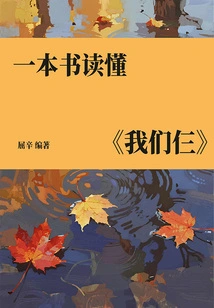
Read "the Three of Us" in One Book
Literature一本书读懂《我们仨》
Compiled By Qu Xin
This book is a companion reading guide that provides an in-depth interpretation of Mr. Yang Jiang's classic work "The Three of Us". With popular and clear writing, the book systematically analyzes the unique dream structure of the original work, the deep affection witnessed in ordinary daily life, the family harbor that persists in the storms of the times... And the effortless tenacity and transparency behind the words. This book will lead readers not only to understand the touching story of "the three of us" helping each other, but also to deeply understand how Mr. Yang Jiang used literature and art to transcend life and death, and to understand the powerful spiritual power about love, family and life philosophy contained in it.
This book is a companion reading guide that provides an in-depth interpretation of Mr. Yang Jiang's classic work "The Three of Us". With popular and clear writing, the book systematically analyzes the unique dream structure of the original work, the deep affection witnessed in ordinary daily life, the family harbor that persists in the storms of the times... And the effortless tenacity and transparency behind the words. This book will lead readers not only to understand the touching story of "the three of us" helping each other, but also to deeply understand how Mr. Yang Jiang used literature and art to transcend life and death, and to understand the powerful spiritual power about love, family and life philosophy contained in it.
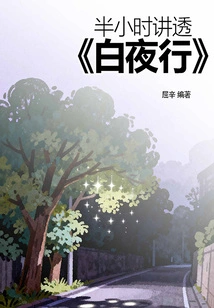
半小时讲透《白夜行》
Compiled By Qu Xin
This book carries out a comprehensive analysis around "White Night Walk", using the core elements of the work as the context to build a multiple interpretation framework. The interpretation first focuses on the creative transformation of the author Keigo Higashino, revealing the integration of his science and engineering background and humanistic care; then combined with the background of Japan's bubble economy to the "lost decade", it explains the profound impact of social changes on the fate of the characters. The core part focuses on the "gun shrimp and goby" morbid symbiotic relationship between Kirihara Ryoji and Karasawa Yukiho, providing an in-depth analysis of their character origins, behavioral logic, and inner world. It also interprets the functions and fates of key supporting characters such as Sasagaki Junzo and Shinozuka Kazunari. In addition, it also covers dimensions such as narrative structure, symbolic imagery, themes of crime and punishment, comparison of film and television adaptations, and connection with "Phantom Night". It integrates psychological and sociological perspectives to fully explore the literary value, human depth and contemporary significance of the work.
This book carries out a comprehensive analysis around "White Night Walk", using the core elements of the work as the context to build a multiple interpretation framework. The interpretation first focuses on the creative transformation of the author Keigo Higashino, revealing the integration of his science and engineering background and humanistic care; then combined with the background of Japan's bubble economy to the "lost decade", it explains the profound impact of social changes on the fate of the characters. The core part focuses on the "gun shrimp and goby" morbid symbiotic relationship between Kirihara Ryoji and Karasawa Yukiho, providing an in-depth analysis of their character origins, behavioral logic, and inner world. It also interprets the functions and fates of key supporting characters such as Sasagaki Junzo and Shinozuka Kazunari. In addition, it also covers dimensions such as narrative structure, symbolic imagery, themes of crime and punishment, comparison of film and television adaptations, and connection with "Phantom Night". It integrates psychological and sociological perspectives to fully explore the literary value, human depth and contemporary significance of the work.