Library
Browse and search books
1 novel found
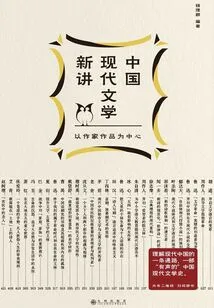
中国现代文学新讲
Compiled By Qian Liqun
One way to open up modern China is to open up modern literature. As part of the "Qian Liqun Modern Literature Course" series, this "New Lectures on Modern Chinese Literature" is essentially a "Qian Liqun's New History of Modern Chinese Literature". It uses the "Thirty Years of Modern Literature" development context as the basic framework, selects 45 writers and more than 60 works, and uses a close reading of the text to return to the starting point and origin of literary reading, literary education and literary history research, and return to literature itself - whether "new edition" or "new lecture", the "new" lies in "centering on writers and works". A basic fact: the edifice of literary history is mainly supported by writers, especially great writers and classic writers; and the main value expression of a writer is the text of his work. Without the two basic elements of writers and works, there would be no literary history. Since the birth of the magazine "New Youth" in the 1910s, modern literature has gone through enlightenment, construction, and in-depth development for thirty years, and its fire is endless. There are not only "Lu (Xun), Guo (Moruo), Mao (Dun), Ba (Jin), Lao (She), Cao (Yu)", but also Zhou Zuoren, Zhu Ziqing, Shen Congwen, Feng Zhi, Xiao Hong , Zhang Ailing, Ai Qing, Zhao Shuli, Ding Ling, Qian Zhongshu, Fei Ming, Mu Dan, Wang Zengqi... The entire history of modern literature is a history of the soul of modern Chinese people. It is a history of modern writers as modern Chinese people and modern Chinese intellectuals, making inner and aesthetic responses to the changes and shifts in Chinese society. Research questions and input academic theories. As the main author of "Thirty Years of Modern Chinese Literature", an advocate and practitioner of the concept of "big literary history", and a senior historian of modern Chinese literature - Professor Qian Liqun of the Department of Chinese at Peking University, this "New Lectures" is his 100th book. He was written in a nursing home when he was over 80 years old. It is also the "final work" of Qian Liqun's literary history writing series. He said it still only had "defective value." He also said that education without literature and people's lives without literature would lose their "soul" and would lead to a spiritual crisis for the nation.
One way to open up modern China is to open up modern literature. As part of the "Qian Liqun Modern Literature Course" series, this "New Lectures on Modern Chinese Literature" is essentially a "Qian Liqun's New History of Modern Chinese Literature". It uses the "Thirty Years of Modern Literature" development context as the basic framework, selects 45 writers and more than 60 works, and uses a close reading of the text to return to the starting point and origin of literary reading, literary education and literary history research, and return to literature itself - whether "new edition" or "new lecture", the "new" lies in "centering on writers and works". A basic fact: the edifice of literary history is mainly supported by writers, especially great writers and classic writers; and the main value expression of a writer is the text of his work. Without the two basic elements of writers and works, there would be no literary history. Since the birth of the magazine "New Youth" in the 1910s, modern literature has gone through enlightenment, construction, and in-depth development for thirty years, and its fire is endless. There are not only "Lu (Xun), Guo (Moruo), Mao (Dun), Ba (Jin), Lao (She), Cao (Yu)", but also Zhou Zuoren, Zhu Ziqing, Shen Congwen, Feng Zhi, Xiao Hong , Zhang Ailing, Ai Qing, Zhao Shuli, Ding Ling, Qian Zhongshu, Fei Ming, Mu Dan, Wang Zengqi... The entire history of modern literature is a history of the soul of modern Chinese people. It is a history of modern writers as modern Chinese people and modern Chinese intellectuals, making inner and aesthetic responses to the changes and shifts in Chinese society. Research questions and input academic theories. As the main author of "Thirty Years of Modern Chinese Literature", an advocate and practitioner of the concept of "big literary history", and a senior historian of modern Chinese literature - Professor Qian Liqun of the Department of Chinese at Peking University, this "New Lectures" is his 100th book. He was written in a nursing home when he was over 80 years old. It is also the "final work" of Qian Liqun's literary history writing series. He said it still only had "defective value." He also said that education without literature and people's lives without literature would lose their "soul" and would lead to a spiritual crisis for the nation.