Library
Browse and search novels
4 novels found
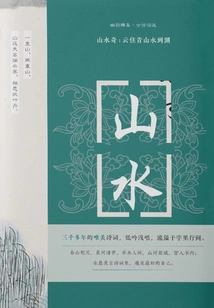
山水奇:云住青山水到渊(幽韵雅集·古诗词选)
Compiled By Meng Xiangjing
There are eighteen books in this series, which collect ancient poems from eighteen aspects: incense, wine, piano, chess, sword, dust, moon, bamboo, staff, flower, stone, snow, monk, beauty, landscape, calligraphy and history, and epigraphy. The idea of classification comes from a sentence in Lu Shaoheng's "Little Window Youji" of the Ming Dynasty: "Fragrance makes people quiet, wine makes people far away, tea makes people refreshed, piano makes people quiet, chess makes people idle, sword makes people chivalrous, staff makes people light, poop makes people elegant, moon makes people clear, bamboo makes people cold, flowers make people rhyme, Stones are interesting, snow is vast, monks are refreshing, futons are wild, beauties are pitiful, mountains and rivers are amazing, books and history are erudite, and gold, stone, tripods and Yi are ancient. "Chinese literati love mountains and rivers, and the mountains and rivers are also more magnificent and clear because of the literati's chants and inscriptions. "The wise enjoy the water, the benevolent enjoy the mountains." Chinese literati recite the mountains and rivers, using the mountains and rivers to praise nature and life. This volume selects nearly a hundred poems related to "landscape". When you read these landscape poems, it is not difficult to find that what they express is the personality spirit of Chinese literati.
There are eighteen books in this series, which collect ancient poems from eighteen aspects: incense, wine, piano, chess, sword, dust, moon, bamboo, staff, flower, stone, snow, monk, beauty, landscape, calligraphy and history, and epigraphy. The idea of classification comes from a sentence in Lu Shaoheng's "Little Window Youji" of the Ming Dynasty: "Fragrance makes people quiet, wine makes people far away, tea makes people refreshed, piano makes people quiet, chess makes people idle, sword makes people chivalrous, staff makes people light, poop makes people elegant, moon makes people clear, bamboo makes people cold, flowers make people rhyme, Stones are interesting, snow is vast, monks are refreshing, futons are wild, beauties are pitiful, mountains and rivers are amazing, books and history are erudite, and gold, stone, tripods and Yi are ancient. "Chinese literati love mountains and rivers, and the mountains and rivers are also more magnificent and clear because of the literati's chants and inscriptions. "The wise enjoy the water, the benevolent enjoy the mountains." Chinese literati recite the mountains and rivers, using the mountains and rivers to praise nature and life. This volume selects nearly a hundred poems related to "landscape". When you read these landscape poems, it is not difficult to find that what they express is the personality spirit of Chinese literati.
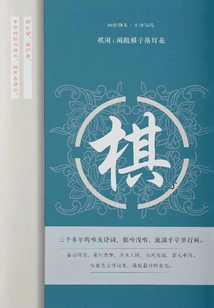
棋闲:闲敲棋子落灯花(幽韵雅集·古诗词选)
Compiled By Meng Xiangjing
This book tells the story of many ancient literati who experienced different realms of life while playing chess. They used Go as the theme to express their thoughts and feelings in their poems. This book selects beautiful poems related to Go from past dynasties, coupled with the editor's interpretation, to present readers with the different brilliance of ancient poems.
This book tells the story of many ancient literati who experienced different realms of life while playing chess. They used Go as the theme to express their thoughts and feelings in their poems. This book selects beautiful poems related to Go from past dynasties, coupled with the editor's interpretation, to present readers with the different brilliance of ancient poems.
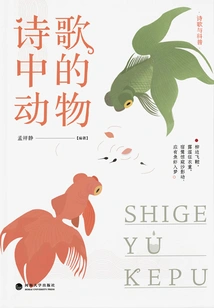
诗歌与科普:诗歌中的动物
Compiled By Meng Xiangjing
This series of books is based on the themes of "Architecture", "Plants", "Animals", "Food", "Clothing" and "Color". Poems with these themes are selected, accompanied by popular science about famous objects. With the help of poetry, we try to penetrate the gaps in history and re-present before our eyes the once dazzling buildings, unknown species, the profound Chinese food, traditional Chinese colors and costumes, etc. This book selects ancient poems involving animal themes from many ancient poems. It is not only accompanied by poetry annotations, but also related animal science, as well as hand-drawn illustrations, etc., Allowing readers to feel that animals are so delicate and have attracted countless poets to bow down, and at the same time, they can also know and understand different animals.
This series of books is based on the themes of "Architecture", "Plants", "Animals", "Food", "Clothing" and "Color". Poems with these themes are selected, accompanied by popular science about famous objects. With the help of poetry, we try to penetrate the gaps in history and re-present before our eyes the once dazzling buildings, unknown species, the profound Chinese food, traditional Chinese colors and costumes, etc. This book selects ancient poems involving animal themes from many ancient poems. It is not only accompanied by poetry annotations, but also related animal science, as well as hand-drawn illustrations, etc., Allowing readers to feel that animals are so delicate and have attracted countless poets to bow down, and at the same time, they can also know and understand different animals.
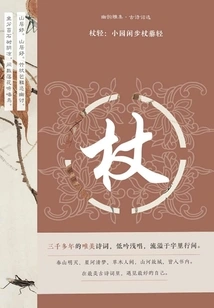
杖轻:小园闲步杖藜轻(幽韵雅集·古诗词选)
Compiled By Meng Xiangjing
The theme of this book is "Leisurely Walking in a Small Garden with a Light Staff". It selects more than 100 beautiful poems related to the "staff" to highlight the leisurely mood and elegant taste. Each poem is followed by a unique emotional experience and affectionate text interpretation, allowing readers to feel the charm of traditional Chinese poetry culture during the process of reading and tasting.
The theme of this book is "Leisurely Walking in a Small Garden with a Light Staff". It selects more than 100 beautiful poems related to the "staff" to highlight the leisurely mood and elegant taste. Each poem is followed by a unique emotional experience and affectionate text interpretation, allowing readers to feel the charm of traditional Chinese poetry culture during the process of reading and tasting.