Library
Browse and search books
2 novels found
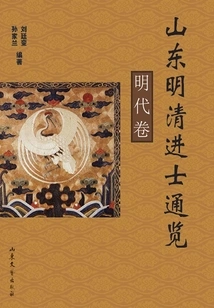
山东明清进士通览(明代卷)
Compiled By Liu Tingluan And Sun Jialan
This set of books is divided into two volumes, Ming and Qing. In the form of biographies, it narrates and organizes the biographical historical materials of 4188 Jinshi in the two dynasties in chronological order. It comprehensively reflects the number, place of birth, family, official history, first-class ranking and important deeds of Jinshi in various subjects in the Ming and Qing dynasties in Shandong. As an important reference book that can search for the Jinshi of the Ming and Qing dynasties and examine the current social situation at that time, its significance and value are self-evident. Previous generations of scholars have also made many attempts and efforts in compiling the biographies of Jinshi, but today we cannot see a complete textual research and summary work, which brings difficulties and regrets to experts in the field of history when they understand the facts and verify the characters. "Don't write biographies for strangers, and then make conclusions after covering coffins." This is the principle established by ancient historians for the compilation of history and chronicles. As Mr. Luo Yansheng said in the preface, "Biographies of virtuous people are often given names such as elders, sages, scholars, rural officials, etc. Those who have entered officialdom but have no high-level officials, whose history is not outstanding, their art is not obvious, and their works are not found in later generations, are not recorded in the official history and are often mixed into the 'personality gate'."
This set of books is divided into two volumes, Ming and Qing. In the form of biographies, it narrates and organizes the biographical historical materials of 4188 Jinshi in the two dynasties in chronological order. It comprehensively reflects the number, place of birth, family, official history, first-class ranking and important deeds of Jinshi in various subjects in the Ming and Qing dynasties in Shandong. As an important reference book that can search for the Jinshi of the Ming and Qing dynasties and examine the current social situation at that time, its significance and value are self-evident. Previous generations of scholars have also made many attempts and efforts in compiling the biographies of Jinshi, but today we cannot see a complete textual research and summary work, which brings difficulties and regrets to experts in the field of history when they understand the facts and verify the characters. "Don't write biographies for strangers, and then make conclusions after covering coffins." This is the principle established by ancient historians for the compilation of history and chronicles. As Mr. Luo Yansheng said in the preface, "Biographies of virtuous people are often given names such as elders, sages, scholars, rural officials, etc. Those who have entered officialdom but have no high-level officials, whose history is not outstanding, their art is not obvious, and their works are not found in later generations, are not recorded in the official history and are often mixed into the 'personality gate'."
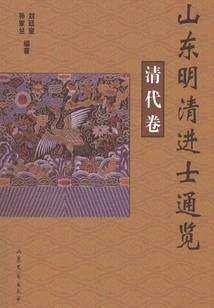
A Comprehensive Survey of Shandong Jinshi During the Ming and Qing Dynasties (qing Dynasty Volume)
History山东明清进士通览(清代卷)
Compiled By Liu Tingluan And Sun Jialan
This set of books is divided into two volumes, Ming and Qing. In the form of biographies, it narrates and organizes the biographical historical materials of 4188 Jinshi in the two dynasties in chronological order. It comprehensively reflects the number, place of birth, family, official history, first-class ranking and important deeds of Jinshi in various subjects in the Ming and Qing dynasties in Shandong. As an important reference book that can search for the Jinshi of the Ming and Qing dynasties and examine the current social situation at that time, its significance and value are self-evident. Previous generations of scholars have also made many attempts and efforts in compiling the biographies of Jinshi, but today we cannot see a complete textual research and summary work, which brings difficulties and regrets to experts in the field of history when they understand the facts and verify the characters. "Don't write biographies for strangers, and then make conclusions after covering coffins." This is the principle established by ancient historians for the compilation of history and chronicles. As Mr. Luo Yansheng said in the preface, "Biographies of virtuous people are often given names such as elders, sages, scholars, rural officials, etc. Those who have entered officialdom but have no high-level officials, whose history is not outstanding, their art is not obvious, and their works are not found in later generations, are not recorded in the official history and are often mixed into the 'personality gate'."
This set of books is divided into two volumes, Ming and Qing. In the form of biographies, it narrates and organizes the biographical historical materials of 4188 Jinshi in the two dynasties in chronological order. It comprehensively reflects the number, place of birth, family, official history, first-class ranking and important deeds of Jinshi in various subjects in the Ming and Qing dynasties in Shandong. As an important reference book that can search for the Jinshi of the Ming and Qing dynasties and examine the current social situation at that time, its significance and value are self-evident. Previous generations of scholars have also made many attempts and efforts in compiling the biographies of Jinshi, but today we cannot see a complete textual research and summary work, which brings difficulties and regrets to experts in the field of history when they understand the facts and verify the characters. "Don't write biographies for strangers, and then make conclusions after covering coffins." This is the principle established by ancient historians for the compilation of history and chronicles. As Mr. Luo Yansheng said in the preface, "Biographies of virtuous people are often given names such as elders, sages, scholars, rural officials, etc. Those who have entered officialdom but have no high-level officials, whose history is not outstanding, their art is not obvious, and their works are not found in later generations, are not recorded in the official history and are often mixed into the 'personality gate'."