Library
Browse and search books
6 novels found
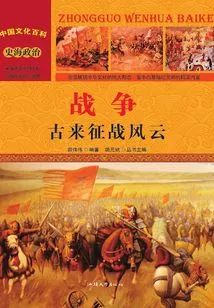
War: Conquests in Ancient Times
Military战争:古来征战风云
Compiled By Guo Weiwei
The Spring and Autumn Period and the Warring States Period are ancient periods in the history of our country. Among the many wars in the pre-Qin period, the war phenomenon characterized by deceit has emerged and gradually matured. For example, the Battle of Mingtiao, the Battle of Makino, the Battle of Changshao, the Battle of Chengpu, the Battle of Guiling and Maling, and the Battle of Changping all reflected the basic characteristics of deceitful warfare in different aspects and to varying degrees: avoiding the truth and using the weak, winning by surprise, setting up ambushes to lure the enemy, and the combination of good and bad, etc. The formation of this kind of war guiding ideology and combat art is inseparable from the background of the feudal princes competing for hegemony during the Spring and Autumn Period and the Warring States Period. War is a continuation of politics, and the characteristics of war in the pre-Qin period exactly reflect the cultural characteristics of the times.
The Spring and Autumn Period and the Warring States Period are ancient periods in the history of our country. Among the many wars in the pre-Qin period, the war phenomenon characterized by deceit has emerged and gradually matured. For example, the Battle of Mingtiao, the Battle of Makino, the Battle of Changshao, the Battle of Chengpu, the Battle of Guiling and Maling, and the Battle of Changping all reflected the basic characteristics of deceitful warfare in different aspects and to varying degrees: avoiding the truth and using the weak, winning by surprise, setting up ambushes to lure the enemy, and the combination of good and bad, etc. The formation of this kind of war guiding ideology and combat art is inseparable from the background of the feudal princes competing for hegemony during the Spring and Autumn Period and the Warring States Period. War is a continuation of politics, and the characteristics of war in the pre-Qin period exactly reflect the cultural characteristics of the times.
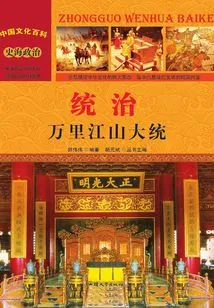
统治:万里江山大统
Compiled By Guo Weiwei
Chinese culture, also known as Chinese culture and Chinese civilization, is the general term for the cultures of all ethnic groups in China. It is a national culture that reflects the national characteristics and style that was gathered together during the development of Chinese civilization. It is the overall expression of various physical culture, spiritual culture, behavioral culture and other aspects in the history of the Chinese nation. Chinese culture is a traditional and fine culture with distinctive national characteristics and profound connotations that was created by the Chinese nation and its ancestors living in China and inherited and developed by the Chinese nation from generation to generation. It has a long history, is widely spread, and has a huge influence in the world.
Chinese culture, also known as Chinese culture and Chinese civilization, is the general term for the cultures of all ethnic groups in China. It is a national culture that reflects the national characteristics and style that was gathered together during the development of Chinese civilization. It is the overall expression of various physical culture, spiritual culture, behavioral culture and other aspects in the history of the Chinese nation. Chinese culture is a traditional and fine culture with distinctive national characteristics and profound connotations that was created by the Chinese nation and its ancestors living in China and inherited and developed by the Chinese nation from generation to generation. It has a long history, is widely spread, and has a huge influence in the world.
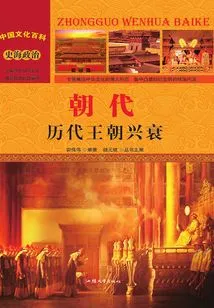
朝代:历代王朝兴衰
Compiled By Guo Weiwei
The Spring and Autumn Period and the Warring States Period are ancient periods in the history of our country. Xia, Shang and Zhou were both successive dynasties and intersecting tribal groups. Politically, they were all feudal systems, economically they were all well-field systems, and in terms of succession to the throne, they were all eldest sons. They are indivisible and represent respectively the formation, development and end of slavery in our country. The establishment of the Xia Dynasty marked the basic completion of the historical transition from primitive society to a slave society; slavery in the Shang Dynasty had reached its peak; during the Spring and Autumn Period and the Warring States Period, slavery was in the midst of unprecedented changes. With the end of the annexation of princes, Chinese civilization has shown the dawn of "great unification."
The Spring and Autumn Period and the Warring States Period are ancient periods in the history of our country. Xia, Shang and Zhou were both successive dynasties and intersecting tribal groups. Politically, they were all feudal systems, economically they were all well-field systems, and in terms of succession to the throne, they were all eldest sons. They are indivisible and represent respectively the formation, development and end of slavery in our country. The establishment of the Xia Dynasty marked the basic completion of the historical transition from primitive society to a slave society; slavery in the Shang Dynasty had reached its peak; during the Spring and Autumn Period and the Warring States Period, slavery was in the midst of unprecedented changes. With the end of the annexation of princes, Chinese civilization has shown the dawn of "great unification."
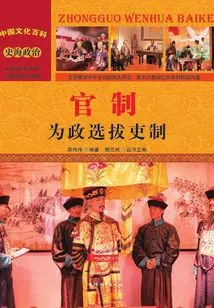
官制:为政选拔吏制
Compiled By Guo Weiwei
The Spring and Autumn Period and the Warring States Period are ancient periods in the history of our country. The Spring and Autumn Period and the Warring States Period were an era of transition from unity to division, an era of social transformation, and an era of economic and cultural development. Although the monarchs in the Spring and Autumn Period and the Warring States Period used etiquette, criminal ethics, rewards and punishments, and executions to control their ministers; although the ministers were still divided according to rank and had different privileges, they no longer exercised power as nobles, but governed as servants of the monarch. Therefore, it has become a historical necessity for various political powers to carry out certain changes in the official system. It is these changes that have transformed my country's bureaucratic system from simplicity to perfection.
The Spring and Autumn Period and the Warring States Period are ancient periods in the history of our country. The Spring and Autumn Period and the Warring States Period were an era of transition from unity to division, an era of social transformation, and an era of economic and cultural development. Although the monarchs in the Spring and Autumn Period and the Warring States Period used etiquette, criminal ethics, rewards and punishments, and executions to control their ministers; although the ministers were still divided according to rank and had different privileges, they no longer exercised power as nobles, but governed as servants of the monarch. Therefore, it has become a historical necessity for various political powers to carry out certain changes in the official system. It is these changes that have transformed my country's bureaucratic system from simplicity to perfection.
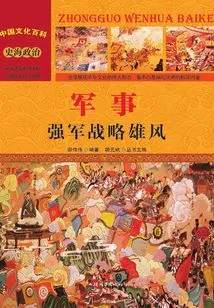
军事:强军战略雄风
Compiled By Guo Weiwei
Military bravery is the pillar of the country and an important guarantee for safeguarding national security. Each feudal dynasty in ancient my country paid special attention to the importance of military bravery, formulated timely conscription and recruitment systems, and built a complete and effective organizational and implementation system with ensuring combat effectiveness as the core. There were many types of conscription systems in ancient my country, and there were changes in different periods, such as the system of combining soldiers and farmers, the system of all soldiers, the guard system, the flag soldier system, etc. The brave soldiers under the conscription system can be summoned when necessary, and they will return to the countryside. Their origin is clear, and the country has no expenses for raising troops in peacetime. Soldiers under the recruitment system regard soldiering as their profession, and their number and service time are not restricted by agricultural production.
Military bravery is the pillar of the country and an important guarantee for safeguarding national security. Each feudal dynasty in ancient my country paid special attention to the importance of military bravery, formulated timely conscription and recruitment systems, and built a complete and effective organizational and implementation system with ensuring combat effectiveness as the core. There were many types of conscription systems in ancient my country, and there were changes in different periods, such as the system of combining soldiers and farmers, the system of all soldiers, the guard system, the flag soldier system, etc. The brave soldiers under the conscription system can be summoned when necessary, and they will return to the countryside. Their origin is clear, and the country has no expenses for raising troops in peacetime. Soldiers under the recruitment system regard soldiering as their profession, and their number and service time are not restricted by agricultural production.
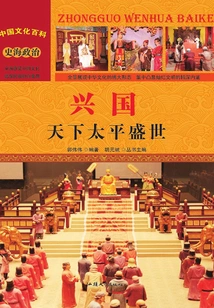
兴国:天下太平盛世
Compiled By Guo Weiwei
Chinese culture has a long history. The most direct sources are the Yellow River culture and the Yangtze River culture. After thousands of years of erosion and baptism, continuous exchange, integration and precipitation, these two cultural waves eventually formed an eclectic Chinese culture that seeks common ground while reserving differences. For thousands of years, Chinese culture has been passed down from generation to generation. It is the only ancient culture in the world that has lasted for five thousand years and has never been interrupted. It has always been full of vitality and vitality, which fully demonstrates the tenacious vitality of Chinese culture.
Chinese culture has a long history. The most direct sources are the Yellow River culture and the Yangtze River culture. After thousands of years of erosion and baptism, continuous exchange, integration and precipitation, these two cultural waves eventually formed an eclectic Chinese culture that seeks common ground while reserving differences. For thousands of years, Chinese culture has been passed down from generation to generation. It is the only ancient culture in the world that has lasted for five thousand years and has never been interrupted. It has always been full of vitality and vitality, which fully demonstrates the tenacious vitality of Chinese culture.