Library
Browse and search books
3 novels found
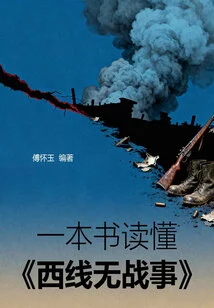
一本书读懂《西线无战事》
Compiled By Fu Huaiyu
This book provides an in-depth interpretation of "All Quiet on the Western Front" and analyzes the connotation of the work from multiple dimensions. In the prologue of the war, Paul and other young men were encouraged by their teachers to join the army, but were disillusioned in the training camp and on the battlefield. It then focused on the brotherhood with Carter as the core in the trenches and the cost of it being destroyed by the war. It then used the "slaughterhouse" as a metaphor to reveal the dual destruction of the body and soul by the war. Through Paul's experience of assassinating a French soldier, this book reflects on the absurdity of war creating "enemies"; it uses Paul's experience of visiting relatives to show the spiritual gap between soldiers and the rear; it uses the contrast between natural images and the destruction of war to construct life irony; it explains the work's portrayal of the mental trauma of the "lost generation"; through the silent death of his comrades and Paul, it highlights the insignificance of the individual in the war machine. I hope that reading this book will enable you to re-see the literary value, historical repercussions and cross-era anti-war significance of this classic in an era of uncertainty.
This book provides an in-depth interpretation of "All Quiet on the Western Front" and analyzes the connotation of the work from multiple dimensions. In the prologue of the war, Paul and other young men were encouraged by their teachers to join the army, but were disillusioned in the training camp and on the battlefield. It then focused on the brotherhood with Carter as the core in the trenches and the cost of it being destroyed by the war. It then used the "slaughterhouse" as a metaphor to reveal the dual destruction of the body and soul by the war. Through Paul's experience of assassinating a French soldier, this book reflects on the absurdity of war creating "enemies"; it uses Paul's experience of visiting relatives to show the spiritual gap between soldiers and the rear; it uses the contrast between natural images and the destruction of war to construct life irony; it explains the work's portrayal of the mental trauma of the "lost generation"; through the silent death of his comrades and Paul, it highlights the insignificance of the individual in the war machine. I hope that reading this book will enable you to re-see the literary value, historical repercussions and cross-era anti-war significance of this classic in an era of uncertainty.
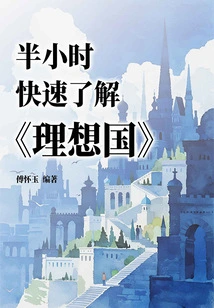
半小时快速了解《理想国》
Compiled By Fu Huaiyu
How did the philosophical classics from 2,500 years ago accurately predict our metaverse, artificial intelligence, and social dilemmas today? This book is not a boring interpretation of "Utopia", but an ideological dialogue spanning time and space. It mirrors Plato's "Allegory of the Cave" with the virtual reality of the metaverse, uses the ideal of the "philosopher king" to examine the responsibilities of contemporary elites, and uses the eternal questioning of "justice" to attack the technological ethics dilemma in the ChatGPT era. From the trichotomy of the soul to the fate of utopia, the book profoundly analyzes how the core concepts of "Utopia" resonate surprisingly with modern society. After reading this book, ancient wisdom will become a key to help you see through the fog of the digital age and find your own true coordinates.
How did the philosophical classics from 2,500 years ago accurately predict our metaverse, artificial intelligence, and social dilemmas today? This book is not a boring interpretation of "Utopia", but an ideological dialogue spanning time and space. It mirrors Plato's "Allegory of the Cave" with the virtual reality of the metaverse, uses the ideal of the "philosopher king" to examine the responsibilities of contemporary elites, and uses the eternal questioning of "justice" to attack the technological ethics dilemma in the ChatGPT era. From the trichotomy of the soul to the fate of utopia, the book profoundly analyzes how the core concepts of "Utopia" resonate surprisingly with modern society. After reading this book, ancient wisdom will become a key to help you see through the fog of the digital age and find your own true coordinates.
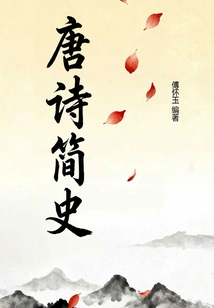
A Brief History of Tang Poetry
Literature唐诗简史
Compiled By Fu Huaiyu
This book shows the three hundred years of development of Tang poetry, from the breakthrough of the innovation of palace poetry by the four heroes of the early Tang Dynasty to Chen Ziang's theoretical foundation for advocating "the character of the Han and Wei dynasties"; ""-like depression and frustration, to the dual-track development of Bai Juyi's New Yuefu Movement in the mid-Tang Dynasty and Han Yu's sinister poetic style; finally, it focuses on the meaningfulness of Du Mu's epic poems in the late Tang Dynasty and the haziness of Li Shangyin's untitled poems, until the budding transformation of the style of poetry in the Five Dynasties. The manuscript takes the poet as the classic and the genre as the weft. It not only analyzes the artistic advancement of metrical shaping, but also reveals the social thrust of imperial examinations to select scholars. It completely presents the magnificent epic of Tang poetry from its cocoon to its heyday and then to its new changes.
This book shows the three hundred years of development of Tang poetry, from the breakthrough of the innovation of palace poetry by the four heroes of the early Tang Dynasty to Chen Ziang's theoretical foundation for advocating "the character of the Han and Wei dynasties"; ""-like depression and frustration, to the dual-track development of Bai Juyi's New Yuefu Movement in the mid-Tang Dynasty and Han Yu's sinister poetic style; finally, it focuses on the meaningfulness of Du Mu's epic poems in the late Tang Dynasty and the haziness of Li Shangyin's untitled poems, until the budding transformation of the style of poetry in the Five Dynasties. The manuscript takes the poet as the classic and the genre as the weft. It not only analyzes the artistic advancement of metrical shaping, but also reveals the social thrust of imperial examinations to select scholars. It completely presents the magnificent epic of Tang poetry from its cocoon to its heyday and then to its new changes.