Library
Browse and search books
1 novel found
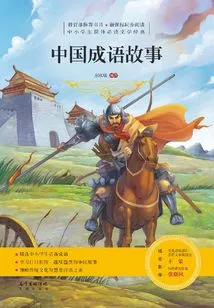
Chinese Idiom Story
Literature中国成语故事
Compiled By Fang Bingyao
This book is one of our series of literary classics that should be read outside the classroom in primary and secondary schools. Each idiom contains an allusion or story, which is either full of magical imagination, full of beautiful morals, telling people a truth, or telling a piece of history. It can be said that idiom stories are a shortcut for people to absorb traditional Chinese culture. This book selects nearly a hundred idioms commonly used by primary and secondary school students and rewrites them according to the language proficiency of the target readers. It is roughly divided into four parts for explanation: stories, explanations, expansions and spiritual quotations. Among them, the expansion and spiritual quotations are unique and are the differences between the Huacheng version and other versions. In the expansion part, based on the content mentioned in the story or source part, keywords are extracted to explain the nouns, so that readers can use the idiom to learn a richer historical background or anecdotes, which in turn can deepen their understanding of the idiom. Spiritual quotations are similar to providing examples to students, but they are more than that. The positive energy in them can guide students to be good, which is also the intention of the writers.
This book is one of our series of literary classics that should be read outside the classroom in primary and secondary schools. Each idiom contains an allusion or story, which is either full of magical imagination, full of beautiful morals, telling people a truth, or telling a piece of history. It can be said that idiom stories are a shortcut for people to absorb traditional Chinese culture. This book selects nearly a hundred idioms commonly used by primary and secondary school students and rewrites them according to the language proficiency of the target readers. It is roughly divided into four parts for explanation: stories, explanations, expansions and spiritual quotations. Among them, the expansion and spiritual quotations are unique and are the differences between the Huacheng version and other versions. In the expansion part, based on the content mentioned in the story or source part, keywords are extracted to explain the nouns, so that readers can use the idiom to learn a richer historical background or anecdotes, which in turn can deepen their understanding of the idiom. Spiritual quotations are similar to providing examples to students, but they are more than that. The positive energy in them can guide students to be good, which is also the intention of the writers.