Library
Browse and search novels
3 novels found
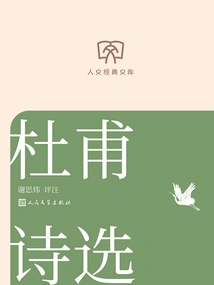
杜甫诗选(人文经典文库)
Commentary By Xie Siwei
Due to its exemplary significance in terms of ideological connotation and artistic form, Du Fu's poetry has been widely welcomed by readers of all levels since the Song Dynasty, and has also aroused great interest among annotators and researchers. Many of his annotations have had a wide impact on ordinary readers. The compilation and selection of this book refers to the annotated editions of the Qing Dynasty and modern times. The selection strives to include Du Fu's most widely read and representative famous works. The annotations are relatively simple, but also strive to be reliable and reliable, which will help readers understand the original works. Among the selected and annotated volumes, "Selected Poems of Du Fu" by Feng Zhi, Pu Jiangqing and others, and "Selected Annotations of Du Fu's Poems" by Mr. Xiao Difei have had a great influence. This book refers to these annotated editions, and absorbs modern and contemporary achievements in the selection of chapters and annotations, not only explaining the original work, but also clarifying its own meaning.
Due to its exemplary significance in terms of ideological connotation and artistic form, Du Fu's poetry has been widely welcomed by readers of all levels since the Song Dynasty, and has also aroused great interest among annotators and researchers. Many of his annotations have had a wide impact on ordinary readers. The compilation and selection of this book refers to the annotated editions of the Qing Dynasty and modern times. The selection strives to include Du Fu's most widely read and representative famous works. The annotations are relatively simple, but also strive to be reliable and reliable, which will help readers understand the original works. Among the selected and annotated volumes, "Selected Poems of Du Fu" by Feng Zhi, Pu Jiangqing and others, and "Selected Annotations of Du Fu's Poems" by Mr. Xiao Difei have had a great influence. This book refers to these annotated editions, and absorbs modern and contemporary achievements in the selection of chapters and annotations, not only explaining the original work, but also clarifying its own meaning.
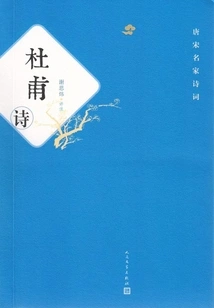
Du Fu's Poems
Literature杜甫诗
Commentary By Xie Siwei
This is a selection of poems by Du Fu, a great poet of the Tang Dynasty. Each poem is followed by annotations of important words and an interpretation of the whole poem. The content is classic, the annotations are concise, and the interpretation is profound and simple. It is a very good ancient poetry reading book.
This is a selection of poems by Du Fu, a great poet of the Tang Dynasty. Each poem is followed by annotations of important words and an interpretation of the whole poem. The content is classic, the annotations are concise, and the interpretation is profound and simple. It is a very good ancient poetry reading book.
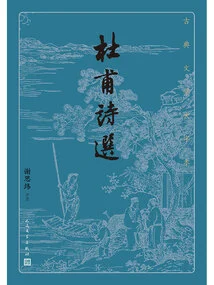
Selected Poems of Du Fu
Literature杜甫诗选
Commentary By Xie Siwei
Du Fu, also known as Zimei, was born in the first year of Xiantian of Emperor Xuanzong of the Tang Dynasty (712) and died in the fifth year of Dali of Emperor Xuanzong of the Tang Dynasty (770). A total of more than 1,400 poems written by Du Fu have been preserved throughout his life. Among them, fewer works have been preserved during his study and travel period, which was the preparation period for his creation. While trapped in Chang'an, his life and thoughts underwent great changes, and his creation gradually matured. During the Anshi Rebellion, Du Fu created a large number of works that directly recorded changes in the times and personal destiny, laying the foundation for the "historical" creation of Du Fu's poetry. During the period when he lived in Chengdu and Kuizhou, Du wrote the largest number of poems, and his themes and styles became increasingly diverse and rich. Due to its exemplary significance in terms of ideological connotation and artistic form, Du Fu's poetry has been widely welcomed by readers of all levels since the Song Dynasty, and has also aroused great interest among annotators and researchers. Many of his annotations have had a wide impact on ordinary readers. The compilation and selection of this book refers to the annotated editions of the Qing Dynasty and modern times. The selection strives to include Du Fu's most widely read and representative famous works. The annotations are relatively simple, but also strive to be reliable and reliable, which will help readers understand the original works.
Du Fu, also known as Zimei, was born in the first year of Xiantian of Emperor Xuanzong of the Tang Dynasty (712) and died in the fifth year of Dali of Emperor Xuanzong of the Tang Dynasty (770). A total of more than 1,400 poems written by Du Fu have been preserved throughout his life. Among them, fewer works have been preserved during his study and travel period, which was the preparation period for his creation. While trapped in Chang'an, his life and thoughts underwent great changes, and his creation gradually matured. During the Anshi Rebellion, Du Fu created a large number of works that directly recorded changes in the times and personal destiny, laying the foundation for the "historical" creation of Du Fu's poetry. During the period when he lived in Chengdu and Kuizhou, Du wrote the largest number of poems, and his themes and styles became increasingly diverse and rich. Due to its exemplary significance in terms of ideological connotation and artistic form, Du Fu's poetry has been widely welcomed by readers of all levels since the Song Dynasty, and has also aroused great interest among annotators and researchers. Many of his annotations have had a wide impact on ordinary readers. The compilation and selection of this book refers to the annotated editions of the Qing Dynasty and modern times. The selection strives to include Du Fu's most widely read and representative famous works. The annotations are relatively simple, but also strive to be reliable and reliable, which will help readers understand the original works.