Library
Browse and search books
4 novels found
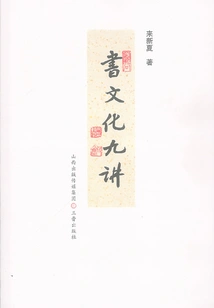
Nine Lectures on Book Culture
Literature书文化九讲
Come To Xinxia
Come to Xinxia to study the "three studies": history, bibliography, and local chronicles. At the age of 90, he keeps reading and writing. Although "Nine Lectures on Book Culture" only has 150,000 words, it is rich in information, informative and informative. The first "four lectures" talk about the development and evolution of books, the fifth and sixth lectures talk about the "collection" and "transmission" of books, and the seventh, eighth and ninth lectures respectively introduce important books in ancient times. The whole book has more than a hundred precious pictures about books.
Come to Xinxia to study the "three studies": history, bibliography, and local chronicles. At the age of 90, he keeps reading and writing. Although "Nine Lectures on Book Culture" only has 150,000 words, it is rich in information, informative and informative. The first "four lectures" talk about the development and evolution of books, the fifth and sixth lectures talk about the "collection" and "transmission" of books, and the seventh, eighth and ninth lectures respectively introduce important books in ancient times. The whole book has more than a hundred precious pictures about books.
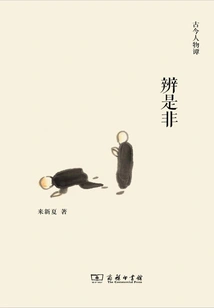
Distinguish Right from Wrong
History辨是非
Come To Xinxia
"Distinguishing Right from Wrong" is the second book in the series of "Talk about Ancient and Modern Figures". The birth and death times of the characters described in the manuscript span from 1840 to 1949, including bibliophiles, courtiers in the late Qing Dynasty, writers and warlords during the Republic of China, etc. The book is written in a brisk style and the content is easy to understand. It contains both rigorous and solid academic research and the author's profound self-view. The writing style is the continuation and improvement of "Notes of Qing Dynasties", one of the research series of the National Committee for Compilation of Qing History.
"Distinguishing Right from Wrong" is the second book in the series of "Talk about Ancient and Modern Figures". The birth and death times of the characters described in the manuscript span from 1840 to 1949, including bibliophiles, courtiers in the late Qing Dynasty, writers and warlords during the Republic of China, etc. The book is written in a brisk style and the content is easy to understand. It contains both rigorous and solid academic research and the author's profound self-view. The writing style is the continuation and improvement of "Notes of Qing Dynasties", one of the research series of the National Committee for Compilation of Qing History.
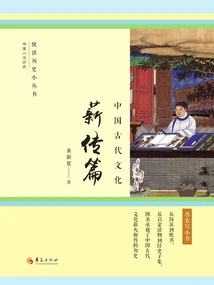
中国古代文化:薪传篇
Come To Xinxia
This book introduces the development and evolution history of Chinese books. From tying knots to record events to modern book engraving, China's book culture has a long history. The book is divided into two parts. The first part mainly talks about the development of book paper and printing technology, such as bamboo slips, paper books, engraving printing, official and private collections, bibliography, etc.; The second part mainly talks about the compilation, printing and circulation of Chinese classics, focusing on the "Thirteen Classics". The compilation and collection status of large-scale books such as "Twenty-Four Histories", "Hundred Scholars", "Series of Books" and "Local Chronicles" show readers our country's rich book collections and long literary and historical traditions. These are precious treasures left to us by the ancients, which are passed down from generation to generation and continue to sing. The content of this book is relatively specialized, but the author writes it concisely and to the point. It is of great reference and reading value for the general public, book lovers and young students.
This book introduces the development and evolution history of Chinese books. From tying knots to record events to modern book engraving, China's book culture has a long history. The book is divided into two parts. The first part mainly talks about the development of book paper and printing technology, such as bamboo slips, paper books, engraving printing, official and private collections, bibliography, etc.; The second part mainly talks about the compilation, printing and circulation of Chinese classics, focusing on the "Thirteen Classics". The compilation and collection status of large-scale books such as "Twenty-Four Histories", "Hundred Scholars", "Series of Books" and "Local Chronicles" show readers our country's rich book collections and long literary and historical traditions. These are precious treasures left to us by the ancients, which are passed down from generation to generation and continue to sing. The content of this book is relatively specialized, but the author writes it concisely and to the point. It is of great reference and reading value for the general public, book lovers and young students.
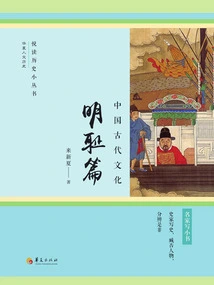
中国古代文化:明耻篇
Come To Xinxia
The concept of "shame" has been passed down for a long time in traditional Chinese culture, is valued by people, and is regarded as one of the codes of conduct. All dynasties have inherited the tradition of emphasizing "shame" and regard "clear shame" as the criterion for knowing people and judging the world, while "shameless" is a curse word that makes people feel ashamed. From governing a country to bringing peace to the world, to cultivating oneself and managing a family, "shame" has almost become a yardstick for measuring right and wrong, loyalty and treachery, and merit, and it is also a force that encourages people to stand up. This book is divided into two parts: the main part and the appendix. It selects 45 typical figures related to "shame": the main part mentions 23 people who exposed shame, including Boyi, Shuqi, Su Wu, Yang Zhen, Zhou Chu, Zu Ti and others who are praised by the world. Duan Xiushi, Zheng Sixiao, Yang Jisheng, etc. Who are little known; the appendix lists 22 shameless people, including Zhao Gao, Emperor Yang of the Sui Dynasty, Qin Hui, Cixi, etc., As well as Deng Tong, Shi Chong, Li Linfu and others who exposed their ugliness. The author uses more than 100,000 words to introduce their cases. Through these stories, we can trigger thinking and encourage people to examine themselves and correct their values. When the author chooses characters, he not only considers the dynasty to which the selected characters belong, but also considers the balance between the number of shameless and shameless people; he not only intentionally selects well-known characters, but also discovers a number of new people and new things. These examples selected by the author provide us with a "human mirror" that we can learn from. The concept of "shame" reflected through them is still used as a reference to this day. Those who are shameful make people think of the wise, and those who are shameless are not only despised, but also serve as a good warning.
The concept of "shame" has been passed down for a long time in traditional Chinese culture, is valued by people, and is regarded as one of the codes of conduct. All dynasties have inherited the tradition of emphasizing "shame" and regard "clear shame" as the criterion for knowing people and judging the world, while "shameless" is a curse word that makes people feel ashamed. From governing a country to bringing peace to the world, to cultivating oneself and managing a family, "shame" has almost become a yardstick for measuring right and wrong, loyalty and treachery, and merit, and it is also a force that encourages people to stand up. This book is divided into two parts: the main part and the appendix. It selects 45 typical figures related to "shame": the main part mentions 23 people who exposed shame, including Boyi, Shuqi, Su Wu, Yang Zhen, Zhou Chu, Zu Ti and others who are praised by the world. Duan Xiushi, Zheng Sixiao, Yang Jisheng, etc. Who are little known; the appendix lists 22 shameless people, including Zhao Gao, Emperor Yang of the Sui Dynasty, Qin Hui, Cixi, etc., As well as Deng Tong, Shi Chong, Li Linfu and others who exposed their ugliness. The author uses more than 100,000 words to introduce their cases. Through these stories, we can trigger thinking and encourage people to examine themselves and correct their values. When the author chooses characters, he not only considers the dynasty to which the selected characters belong, but also considers the balance between the number of shameless and shameless people; he not only intentionally selects well-known characters, but also discovers a number of new people and new things. These examples selected by the author provide us with a "human mirror" that we can learn from. The concept of "shame" reflected through them is still used as a reference to this day. Those who are shameful make people think of the wise, and those who are shameless are not only despised, but also serve as a good warning.