Library
Browse and search books
7 novels found
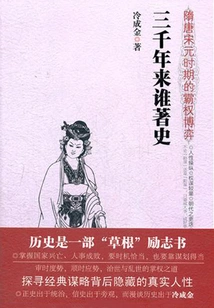
三千年来谁著史:隋唐宋元时期的霸权博弈
Cold Into Gold
The Sui, Tang, Song and Yuan dynasties were one of the most special periods in China's feudal history. They included the prosperous Tang Dynasty and the Five Dynasties and Ten Kingdoms with frequent dynasty changes. At this time, strategy became the protagonist of feudal politics and had a huge impact. However, strategy is just a technique, and it ultimately depends on human nature. Therefore, rather than saying that strategy affects history, it is better to say that human nature shapes history. The relationship between human nature and strategy in "Who Writes History in Three Thousand Years: The Game of Hegemony in the Sui, Tang, Song and Yuan Dynasties" was vividly interpreted during this period. Once you understand the relationship between human nature and strategy, you can understand why history developed in this way.
The Sui, Tang, Song and Yuan dynasties were one of the most special periods in China's feudal history. They included the prosperous Tang Dynasty and the Five Dynasties and Ten Kingdoms with frequent dynasty changes. At this time, strategy became the protagonist of feudal politics and had a huge impact. However, strategy is just a technique, and it ultimately depends on human nature. Therefore, rather than saying that strategy affects history, it is better to say that human nature shapes history. The relationship between human nature and strategy in "Who Writes History in Three Thousand Years: The Game of Hegemony in the Sui, Tang, Song and Yuan Dynasties" was vividly interpreted during this period. Once you understand the relationship between human nature and strategy, you can understand why history developed in this way.
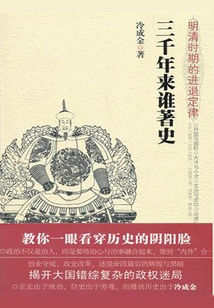
三千年来谁著史:明清时期的进退定律
Cold Into Gold
"Who Writes History in Three Thousand Years; The Law of Advance and Retreat in the Ming and Qing Dynasties" is written by Leng Chengjin, a famous history professor at the National People's Congress. With decades of continuous exploration and research on Chinese history, he boldly proposed "the true meaning of history" and analyzed its in-depth meaning after exploring every clue. It interprets each historical figure and historical phenomenon and creates a true, vivid and complete collection of historical strategy and culture. How to survive in the ever-changing political arena? Love, family affection, career, how did the ancients choose? Will the young emperor seize the imperial power or become a puppet? "Who Writes History in Three Thousand Years: The Law of Advance and Retreat in the Ming and Qing Dynasties" takes you back to the last moments of the empire to see the advancement and retreat of the officialdom of the ancients, and the gains and losses of power!
"Who Writes History in Three Thousand Years; The Law of Advance and Retreat in the Ming and Qing Dynasties" is written by Leng Chengjin, a famous history professor at the National People's Congress. With decades of continuous exploration and research on Chinese history, he boldly proposed "the true meaning of history" and analyzed its in-depth meaning after exploring every clue. It interprets each historical figure and historical phenomenon and creates a true, vivid and complete collection of historical strategy and culture. How to survive in the ever-changing political arena? Love, family affection, career, how did the ancients choose? Will the young emperor seize the imperial power or become a puppet? "Who Writes History in Three Thousand Years: The Law of Advance and Retreat in the Ming and Qing Dynasties" takes you back to the last moments of the empire to see the advancement and retreat of the officialdom of the ancients, and the gains and losses of power!
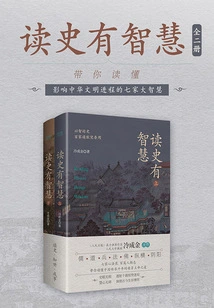
读史有智慧(全二册)
Cold Into Gold
The author Leng Chengjin uses wisdom to discuss history and history to explain wisdom. Through vivid and interesting historical allusions and character stories, he explains the great wisdom in history. They are: profound Confucian wisdom, seeking saints instead of seeking wisdom; harmonious Taoist wisdom, ruling the world with nothingness; detached Buddhist wisdom, pursuing the original heart and seeing one's nature to become a Buddha; harsh Legalist wisdom, analyzing laws, techniques, and trends, and governing by law. Country; the game wisdom of political strategists, the strategic wisdom of military strategists, the natural philosophical wisdom of the Yin Yang family... The whole book vividly displays the rise and fall of historical chaos and the success and failure of characters, leading readers to understand the true meaning of wisdom in traditional culture.
The author Leng Chengjin uses wisdom to discuss history and history to explain wisdom. Through vivid and interesting historical allusions and character stories, he explains the great wisdom in history. They are: profound Confucian wisdom, seeking saints instead of seeking wisdom; harmonious Taoist wisdom, ruling the world with nothingness; detached Buddhist wisdom, pursuing the original heart and seeing one's nature to become a Buddha; harsh Legalist wisdom, analyzing laws, techniques, and trends, and governing by law. Country; the game wisdom of political strategists, the strategic wisdom of military strategists, the natural philosophical wisdom of the Yin Yang family... The whole book vividly displays the rise and fall of historical chaos and the success and failure of characters, leading readers to understand the true meaning of wisdom in traditional culture.
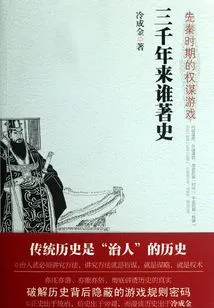
先秦时期的权谋游戏
Cold Into Gold
This book vividly shows the rise and fall of historical chaos, and the success and failure of characters: the most profound Confucian wisdom starts from conquering people's hearts, seeking saints instead of seeking wisdom; the most vicious Legalist wisdom takes law, power, and skills as the core, and uses conspiracy and Power controls the people; the most comprehensive Taoist wisdom is to rule the world with the mind through "non-struggle"; the most transcendent Buddhist wisdom is to choose to pursue the inner heart in the face of the world and the transcendent world, being a human being and becoming a Buddha, seeking Buddha and seeking oneself...
This book vividly shows the rise and fall of historical chaos, and the success and failure of characters: the most profound Confucian wisdom starts from conquering people's hearts, seeking saints instead of seeking wisdom; the most vicious Legalist wisdom takes law, power, and skills as the core, and uses conspiracy and Power controls the people; the most comprehensive Taoist wisdom is to rule the world with the mind through "non-struggle"; the most transcendent Buddhist wisdom is to choose to pursue the inner heart in the face of the world and the transcendent world, being a human being and becoming a Buddha, seeking Buddha and seeking oneself...
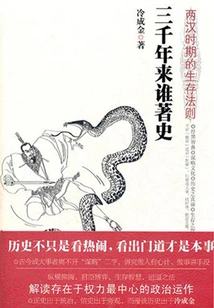
两汉时期的生存法则
Cold Into Gold
When Chu and Han fought, why did Liu Bang finally dominate the world? Han Xin, who was able to command thousands of troops with ease, died at the hands of a woman! Why was Zhou Yafu, a pillar of two dynasties, accused of "not rebelling above ground, but also rebelling underground"? Scholars can hardly build a country, but reckless people can become heroes. What's the truth? As the most representative era in China, the history of the Han Dynasty contains endless wisdom, including strategy, human nature, and life...
When Chu and Han fought, why did Liu Bang finally dominate the world? Han Xin, who was able to command thousands of troops with ease, died at the hands of a woman! Why was Zhou Yafu, a pillar of two dynasties, accused of "not rebelling above ground, but also rebelling underground"? Scholars can hardly build a country, but reckless people can become heroes. What's the truth? As the most representative era in China, the history of the Han Dynasty contains endless wisdom, including strategy, human nature, and life...
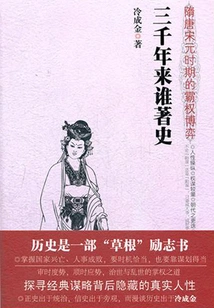
隋唐宋元时期的霸权博弈
Cold Into Gold
The Sui, Tang, Song and Yuan dynasties were one of the most special periods in China's feudal history. During this period, there were both the prosperous Tang Dynasty and the Five Dynasties and Ten Kingdoms with frequent dynasty changes. At this time, strategy became the protagonist of feudal politics and had a great influence. However, strategy is just a technique, and it is ultimately controlled by human nature. Therefore, rather than saying that strategy affects history, it is better to say that human nature shapes history. This book vividly interprets the relationship between human nature and strategy during this period...
The Sui, Tang, Song and Yuan dynasties were one of the most special periods in China's feudal history. During this period, there were both the prosperous Tang Dynasty and the Five Dynasties and Ten Kingdoms with frequent dynasty changes. At this time, strategy became the protagonist of feudal politics and had a great influence. However, strategy is just a technique, and it is ultimately controlled by human nature. Therefore, rather than saying that strategy affects history, it is better to say that human nature shapes history. This book vividly interprets the relationship between human nature and strategy during this period...
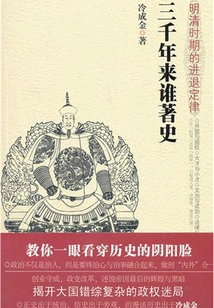
明清时期的进退定律
Cold Into Gold
How to survive in the ever-changing political arena? Love, family affection, career, how did the ancients choose? Will the young emperor seize the imperial power or become a puppet? "Who Writes History in Three Thousand Years: The Law of Advance and Retreat in the Ming and Qing Dynasties" takes you back to the last moments of the empire to see the advancement and retreat of the officialdom of the ancients, and the gains and losses of power!
How to survive in the ever-changing political arena? Love, family affection, career, how did the ancients choose? Will the young emperor seize the imperial power or become a puppet? "Who Writes History in Three Thousand Years: The Law of Advance and Retreat in the Ming and Qing Dynasties" takes you back to the last moments of the empire to see the advancement and retreat of the officialdom of the ancients, and the gains and losses of power!