Library
Browse and search books
3 novels found

洁尘电影随笔精选集(共4册)
Clean Dust
This set of books is a collection of Jie Chen's film essays over the years. With movies as the support, he uses his talent, wisdom and beautiful words to express his deep love and attachment to film art, famous film actors and directors, and presents his unique and unique thinking and interpretation of life, emotion, aesthetics and other aspects. His thoughts are strange, his expressions are fresh, and his emotions are sincere; his language is exquisite, sophisticated, and full of texture. This volume is divided into 4 volumes: the essay collection "The Analects of Confucius", the Chinese film "Summer Chong Yubing", the English film "Crying Water", the Japanese and Korean film "The Decadent Man" and other films in other languages...
This set of books is a collection of Jie Chen's film essays over the years. With movies as the support, he uses his talent, wisdom and beautiful words to express his deep love and attachment to film art, famous film actors and directors, and presents his unique and unique thinking and interpretation of life, emotion, aesthetics and other aspects. His thoughts are strange, his expressions are fresh, and his emotions are sincere; his language is exquisite, sophisticated, and full of texture. This volume is divided into 4 volumes: the essay collection "The Analects of Confucius", the Chinese film "Summer Chong Yubing", the English film "Crying Water", the Japanese and Korean film "The Decadent Man" and other films in other languages...
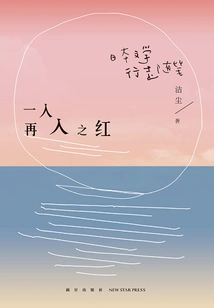
一入再入之红:日本文学行走随笔
Clean Dust
This is a collection of essays about a literary journey in Japan. Having traveled to and from Japan many times, do you know why Kyoto, Kanazawa, and Kamakura have become Japan's three major literary and artistic destinations? What is the connection between writers such as Mishima, Dazai, Shimazaki, and Murasaki Shikibu and Kiyomizudera, Mitaka, Magomejuku, and Hakone? What are the colors of summer insect color, glazed color, and zhuan color? Why are there two tombstones engraved with "emptiness" and "silence" in Junichiro Tanizaki's cemetery? As the "home of literary giants", almost everywhere in Japan is closely connected with the works of well-known writers, from Tokyo and Kamakura to Izu and Kyoto. Following in the footsteps of Jie Chen, we step by step on the land of Japan and in the castle of literature. The author used his personal travels as clues to reorganize Japanese literature and write this book.
This is a collection of essays about a literary journey in Japan. Having traveled to and from Japan many times, do you know why Kyoto, Kanazawa, and Kamakura have become Japan's three major literary and artistic destinations? What is the connection between writers such as Mishima, Dazai, Shimazaki, and Murasaki Shikibu and Kiyomizudera, Mitaka, Magomejuku, and Hakone? What are the colors of summer insect color, glazed color, and zhuan color? Why are there two tombstones engraved with "emptiness" and "silence" in Junichiro Tanizaki's cemetery? As the "home of literary giants", almost everywhere in Japan is closely connected with the works of well-known writers, from Tokyo and Kamakura to Izu and Kyoto. Following in the footsteps of Jie Chen, we step by step on the land of Japan and in the castle of literature. The author used his personal travels as clues to reorganize Japanese literature and write this book.
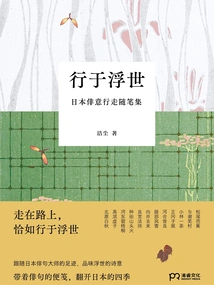
Traveling in the Floating World
Literature行于浮世
Clean Dust
This book is the latest in a series of Japanese travel essays by the well-known writer Jie Chen, written in the 15th year of her trip to Japan. During more than 20 trips, Jiechen hiked in the mountains and rivers of Japan, and visited temples, palaces and hometowns of literati, integrating characters, allusions and cultural aesthetics in Japanese culture into his thoughts and feelings. Using haiku as a clue and the four seasons as chapters, Jie Chen follows the footsteps of haiku artists and revisits Japan's countryside and mountains, cities and wilderness. In the actual scenes, he can taste the unique artistic conception and beauty of Japanese haiku, which is delicate, subtle and Zen. Every journey is an escape and a measurement of the world and time. Walking on the road is like walking in the floating world.
This book is the latest in a series of Japanese travel essays by the well-known writer Jie Chen, written in the 15th year of her trip to Japan. During more than 20 trips, Jiechen hiked in the mountains and rivers of Japan, and visited temples, palaces and hometowns of literati, integrating characters, allusions and cultural aesthetics in Japanese culture into his thoughts and feelings. Using haiku as a clue and the four seasons as chapters, Jie Chen follows the footsteps of haiku artists and revisits Japan's countryside and mountains, cities and wilderness. In the actual scenes, he can taste the unique artistic conception and beauty of Japanese haiku, which is delicate, subtle and Zen. Every journey is an escape and a measurement of the world and time. Walking on the road is like walking in the floating world.