Library
Browse and search books
1 novel found
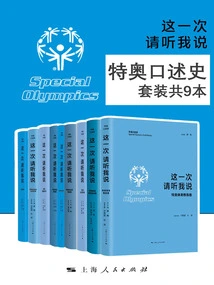
特奥口述史(套装共9本)
Chief Editor Liao Mei
The "Special Olympics Oral History" series uses one-on-one interviews to record the personal experiences of people with disabilities and those working in the disability industry. It tells the most authentic stories from the perspective of those who have experienced them, hoping to become a positive factor in promoting the progress of social civilization. This book mainly interviews two types of people: one is people with intellectual disabilities and their families, teachers, colleagues, etc. It completely records the life experiences of people with intellectual disabilities from birth to the time of the interview, and tells the life stories and life experiences of people with intellectual disabilities, that is, it tells the personal life history and family life history of people with intellectual disabilities. The second is to interview ordinary people engaged in the cause of disabled people, such as Special Olympics coaches, leaders and teachers of special education schools, etc., To record the life and career experiences of practitioners, and to reflect the development process of the cause of disabled people in my country from the perspective of individual careers.
The "Special Olympics Oral History" series uses one-on-one interviews to record the personal experiences of people with disabilities and those working in the disability industry. It tells the most authentic stories from the perspective of those who have experienced them, hoping to become a positive factor in promoting the progress of social civilization. This book mainly interviews two types of people: one is people with intellectual disabilities and their families, teachers, colleagues, etc. It completely records the life experiences of people with intellectual disabilities from birth to the time of the interview, and tells the life stories and life experiences of people with intellectual disabilities, that is, it tells the personal life history and family life history of people with intellectual disabilities. The second is to interview ordinary people engaged in the cause of disabled people, such as Special Olympics coaches, leaders and teachers of special education schools, etc., To record the life and career experiences of practitioners, and to reflect the development process of the cause of disabled people in my country from the perspective of individual careers.