Library
Browse and search books
7 novels found
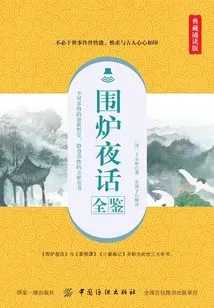
围炉夜话全鉴(典藏诵读版)
Chi Shuangming
"Wailu Night Talk", a popular Confucian book, is a famous Chinese literary criticism work in the Ming and Qing Dynasties. It evaluates and discusses the anecdotes, people, events, articles, etc. In the literary world at that time and in the past. This book was completed by the author Wang Yongbin "in the second month of Jiayin year of Xianfeng period in the Qing Dynasty, in the "Yijingtang" of Qiaoxi Pavilion". The author imagines a situation in which he hugs the stove in winter and makes friends to talk about literature and art. The language of this book is friendly, natural and easy to read, and it occupies an important position in the history of Han literature because of its unique insights. "Wailu Night Talk" is divided into 221 chapters, with the general topic of "settling down and establishing a career", covering ten aspects including morality, self-cultivation, reading, living in poverty and teaching, educating children, loyalty, filial piety, diligence and thrift. "Weilu Night Talk" is a famous literary criticism work during the Ming and Qing Dynasties. It comments on anecdotes, people, events, articles, etc. In the literary world at that time and before. Taking "settling down and establishing a career" as the topic, it analyzes it from aspects such as "self-cultivation, morality, reading, and educating children". It is a representative masterpiece of self-cultivation. On the basis of respecting the original work, this recitation version notates and explains obscure words, and adds explanations to the questions. It is specially equipped with recitation audio to make it easy for readers to read, listen and appreciate.
"Wailu Night Talk", a popular Confucian book, is a famous Chinese literary criticism work in the Ming and Qing Dynasties. It evaluates and discusses the anecdotes, people, events, articles, etc. In the literary world at that time and in the past. This book was completed by the author Wang Yongbin "in the second month of Jiayin year of Xianfeng period in the Qing Dynasty, in the "Yijingtang" of Qiaoxi Pavilion". The author imagines a situation in which he hugs the stove in winter and makes friends to talk about literature and art. The language of this book is friendly, natural and easy to read, and it occupies an important position in the history of Han literature because of its unique insights. "Wailu Night Talk" is divided into 221 chapters, with the general topic of "settling down and establishing a career", covering ten aspects including morality, self-cultivation, reading, living in poverty and teaching, educating children, loyalty, filial piety, diligence and thrift. "Weilu Night Talk" is a famous literary criticism work during the Ming and Qing Dynasties. It comments on anecdotes, people, events, articles, etc. In the literary world at that time and before. Taking "settling down and establishing a career" as the topic, it analyzes it from aspects such as "self-cultivation, morality, reading, and educating children". It is a representative masterpiece of self-cultivation. On the basis of respecting the original work, this recitation version notates and explains obscure words, and adds explanations to the questions. It is specially equipped with recitation audio to make it easy for readers to read, listen and appreciate.
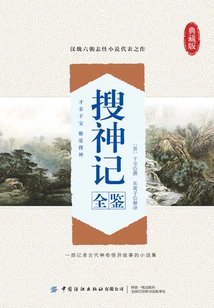
Sou Shen Ji Quan Jian
General Fiction搜神记全鉴
Chi Shuangming
"Sou Shen Ji" was written by the historian Qian Bao in the early Eastern Jin Dynasty. It has 20 existing volumes and contains more than 400 stories, large and small. It mainly compiles stories about ghosts and gods, as well as some trivia and a lot of folklore. Most of them are short in length, simple in plot, fantasy in conception, and full of romanticism. They are directly influenced by "The Biography of Emperor Mu" and "The Classic of Mountains and Seas". It represents the achievements of Chinese fantasy novels.
"Sou Shen Ji" was written by the historian Qian Bao in the early Eastern Jin Dynasty. It has 20 existing volumes and contains more than 400 stories, large and small. It mainly compiles stories about ghosts and gods, as well as some trivia and a lot of folklore. Most of them are short in length, simple in plot, fantasy in conception, and full of romanticism. They are directly influenced by "The Biography of Emperor Mu" and "The Classic of Mountains and Seas". It represents the achievements of Chinese fantasy novels.
儒林外史全鉴(珍藏版)
Chi Shuangming
"The Scholars" is a model of ancient satirical literature in my country. Qing Dynasty novelist Wu Jingzi's successful portrayal of the feudal literati living in the last days of feudalism and the imperial examination system, as well as his vivid depiction of cannibalistic imperial examinations, ethics and corruption, made him one of the outstanding writers of critical realism in the history of Chinese literature. "The Scholars" not only directly influenced modern condemnation novels, but also deeply inspired modern satirical literature. This book is an appreciation and appreciation of this famous work.
"The Scholars" is a model of ancient satirical literature in my country. Qing Dynasty novelist Wu Jingzi's successful portrayal of the feudal literati living in the last days of feudalism and the imperial examination system, as well as his vivid depiction of cannibalistic imperial examinations, ethics and corruption, made him one of the outstanding writers of critical realism in the history of Chinese literature. "The Scholars" not only directly influenced modern condemnation novels, but also deeply inspired modern satirical literature. This book is an appreciation and appreciation of this famous work.
古文观止全鉴(珍藏版)
Chi Shuangming
Ancient Chinese prose is the shining pearl in the treasure house of Chinese traditional culture. They have different styles and are so beautiful. The articles selected in "Guwen Guanzhi" generally reflect the main aspects of the development of prose from the pre-Qin Dynasty to the late Ming Dynasty. "Gu Wen Guan Zhi Quan Jian (Collector's Edition)" takes into account the unity of ideology and artistry, takes the times as its classics, and uses the works of writers of all ages as its weft. It is a model for the taste of beautiful prose. "Gu Wen Guan Zhi Quan Jian (Collector's Edition)" is organized with the era as its classics and the works of writers of all ages as its weft, so as to facilitate readers' reading and understanding. It is a model for the taste of beautiful prose. "Gu Wen Guan Zhi" is a literary reading book compiled for use by schools during the Kangxi period of the Qing Dynasty. The word "Guanzhi" means "the articles included in the collection represent the highest level of classical Chinese writing."
Ancient Chinese prose is the shining pearl in the treasure house of Chinese traditional culture. They have different styles and are so beautiful. The articles selected in "Guwen Guanzhi" generally reflect the main aspects of the development of prose from the pre-Qin Dynasty to the late Ming Dynasty. "Gu Wen Guan Zhi Quan Jian (Collector's Edition)" takes into account the unity of ideology and artistry, takes the times as its classics, and uses the works of writers of all ages as its weft. It is a model for the taste of beautiful prose. "Gu Wen Guan Zhi Quan Jian (Collector's Edition)" is organized with the era as its classics and the works of writers of all ages as its weft, so as to facilitate readers' reading and understanding. It is a model for the taste of beautiful prose. "Gu Wen Guan Zhi" is a literary reading book compiled for use by schools during the Kangxi period of the Qing Dynasty. The word "Guanzhi" means "the articles included in the collection represent the highest level of classical Chinese writing."
史记全鉴(珍藏版)
Chi Shuangming
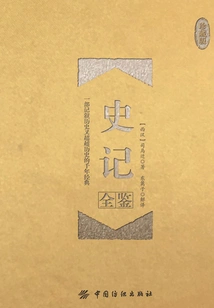
Because "Historical Records" was written a long time ago, it contains many uncommon words and difficult-to-understand sentence structures. Therefore, based on the original text of "Historical Records", "Historical Records (Collector's Edition)" has made some simple annotations on some of the words and sentences to help everyone understand better. "Historical Records" is the first biographical general history in Chinese history. Mr. Lu Xun once praised "Historical Records" as "the swansong of historians, a rhymeless lisao". The first sentence spoke highly of the historical value of "Historical Records", and the latter sentence spoke highly of the literary value of "Historical Records". Reading "Historical Records" can not only enrich historical knowledge, but most importantly, you can use history as a mirror to explore the laws, experiences and lessons of social development and the rise and fall of countries, and find coordinates on the road of life.
Because "Historical Records" was written a long time ago, it contains many uncommon words and difficult-to-understand sentence structures. Therefore, based on the original text of "Historical Records", "Historical Records (Collector's Edition)" has made some simple annotations on some of the words and sentences to help everyone understand better. "Historical Records" is the first biographical general history in Chinese history. Mr. Lu Xun once praised "Historical Records" as "the swansong of historians, a rhymeless lisao". The first sentence spoke highly of the historical value of "Historical Records", and the latter sentence spoke highly of the literary value of "Historical Records". Reading "Historical Records" can not only enrich historical knowledge, but most importantly, you can use history as a mirror to explore the laws, experiences and lessons of social development and the rise and fall of countries, and find coordinates on the road of life.
韩非子全鉴(珍藏版)
Chi Shuangming
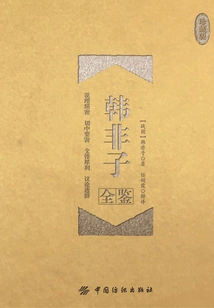
"Han Feizi" is a work by Han Fei, a famous thinker in ancient China. It contains fifty-five articles. The style of his articles is severe, sharp, and sharp. It is unique among the prose of pre-Qin scholars and is a masterpiece of Legalism. From the perspective of its main body, the book is a masterpiece of political commentary. It focuses on the theory of rule of law that combines law, technique, and power. Its purpose is to provide positive ideas for the autocratic monarch, reaching the highest peak of pre-Qin legalist theory. To this day, "Han Feizi" still has strong reference significance for us to understand China's social politics, ideological culture.
"Han Feizi" is a work by Han Fei, a famous thinker in ancient China. It contains fifty-five articles. The style of his articles is severe, sharp, and sharp. It is unique among the prose of pre-Qin scholars and is a masterpiece of Legalism. From the perspective of its main body, the book is a masterpiece of political commentary. It focuses on the theory of rule of law that combines law, technique, and power. Its purpose is to provide positive ideas for the autocratic monarch, reaching the highest peak of pre-Qin legalist theory. To this day, "Han Feizi" still has strong reference significance for us to understand China's social politics, ideological culture.
读史有学问全集
Chi Shuangming
At the end of the Eastern Han Dynasty, the Yellow Turban Uprising broke out, and the Eastern Han Dynasty regime was in danger. As a feudal scholar-bureaucrat with a strong ambition for fame, Jia Xu believed that the time had come to help others in danger and make contributions, so he joined the army and served as a captain of the army under Dong Zhuo's son-in-law and general Niu Fu. In the first year of Chuping in the Eastern Han Dynasty (AD 190), Yuan Shao, Liu Biao, Sun Jian and other warlords fought for power and territory, so they launched troops one after another in the name of attacking Dong Zhuo. They jointly recommended Yuan Shao, the governor of Bohai, as the leader of the alliance, and surrounded Luoyang from the north, east and west. Dong Zhuo was threatened, so he took Emperor Xian of Han hostage and moved the capital from Luoyang to Chang'an. Soon, the crusade armies of the temporary alliance did not advance towards Chang'an, but instead attacked each other for their own interests.
At the end of the Eastern Han Dynasty, the Yellow Turban Uprising broke out, and the Eastern Han Dynasty regime was in danger. As a feudal scholar-bureaucrat with a strong ambition for fame, Jia Xu believed that the time had come to help others in danger and make contributions, so he joined the army and served as a captain of the army under Dong Zhuo's son-in-law and general Niu Fu. In the first year of Chuping in the Eastern Han Dynasty (AD 190), Yuan Shao, Liu Biao, Sun Jian and other warlords fought for power and territory, so they launched troops one after another in the name of attacking Dong Zhuo. They jointly recommended Yuan Shao, the governor of Bohai, as the leader of the alliance, and surrounded Luoyang from the north, east and west. Dong Zhuo was threatened, so he took Emperor Xian of Han hostage and moved the capital from Luoyang to Chang'an. Soon, the crusade armies of the temporary alliance did not advance towards Chang'an, but instead attacked each other for their own interests.