Library
Browse and search books
3 novels found
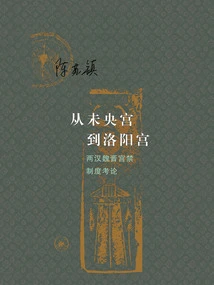
从未央宫到洛阳宫:两汉魏晋宫禁制度考论
Chensu Town
The author of this book's previous research focused on the politics and political culture of the Han Dynasty and has achieved remarkable results. In recent years, I have turned to the issue of the palace prohibition system of the Han, Wei and Jin Dynasties, which has been rarely touched upon by historians in the past. After several years of research, I carefully searched and combed relevant historical materials, and combined with the latest data from many years of exploration and excavation by the archaeological community, I conducted a systematic and in-depth discussion on the combination of the palace system and the palace prohibition space. Based on the predecessors, a series of new insights were put forward. The article has been published in publications such as "Historical Research", "Chinese History Research", and "Institute of History and Linguistics" and other publications, and has received attention and praise from the academic community. Overall, this research has been greatly advanced. The reason why this achievement is important is not only that it is of indispensable value to the history of the Han Dynasty, but also because the palace ban system of the Han, Wei, and Jin Dynasties has left a deep imprint on the history of the dynasty that has lasted for thousands of years. It has direct and indirect relevance and practical significance to today's research in the fields of ancient literature, archeology, art, and art, as well as the dissemination of cultural heritage, and even to the creation of contemporary film and television art works.
The author of this book's previous research focused on the politics and political culture of the Han Dynasty and has achieved remarkable results. In recent years, I have turned to the issue of the palace prohibition system of the Han, Wei and Jin Dynasties, which has been rarely touched upon by historians in the past. After several years of research, I carefully searched and combed relevant historical materials, and combined with the latest data from many years of exploration and excavation by the archaeological community, I conducted a systematic and in-depth discussion on the combination of the palace system and the palace prohibition space. Based on the predecessors, a series of new insights were put forward. The article has been published in publications such as "Historical Research", "Chinese History Research", and "Institute of History and Linguistics" and other publications, and has received attention and praise from the academic community. Overall, this research has been greatly advanced. The reason why this achievement is important is not only that it is of indispensable value to the history of the Han Dynasty, but also because the palace ban system of the Han, Wei, and Jin Dynasties has left a deep imprint on the history of the dynasty that has lasted for thousands of years. It has direct and indirect relevance and practical significance to today's research in the fields of ancient literature, archeology, art, and art, as well as the dissemination of cultural heritage, and even to the creation of contemporary film and television art works.
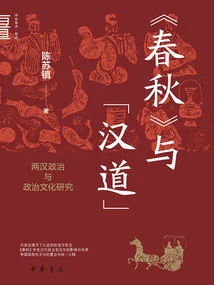
spring and Autumn" and "han Dao": a Study of the Politics and Political Culture of the Han Dynasty
History《春秋》与“汉道”:两汉政治与政治文化研究
Chensu Town
The so-called "Han Dao" refers to the way of governing the country and the world in the Han Dynasty. The author describes and analyzes in depth and in detail how, driven by Confucian scholar-bureaucrats, Confucian classics, mainly the Spring and Autumn Annals, resorted to the creation and legislation of the "Great Unification" empire, and how it affected the actual historical process of the Han Empire, thereby achieving the "Han Dao" and establishing the basic model for ancient Chinese political culture. This book runs through the entire historical process from the founding of the Western Han Dynasty to the Eastern Han Dynasty. The issues covered, such as the Huang Lao Wuwei politics implemented in the early Han Dynasty under the background of "passing the Qin Dynasty", the rise and dominance of Confucianism, the "overlord and Taoism" Han family law, the ancient restructuring driven by Confucianism, and the political and academic changes between the two Han Dynasties, are all major moments in Chinese history. This book connects these issues that have a far-reaching impact on the development of Chinese culture in a coherent manner, sometimes with novel and unique discussions, demonstrating the author's profound ability to integrate the history of ideas, politics, and institutions.
The so-called "Han Dao" refers to the way of governing the country and the world in the Han Dynasty. The author describes and analyzes in depth and in detail how, driven by Confucian scholar-bureaucrats, Confucian classics, mainly the Spring and Autumn Annals, resorted to the creation and legislation of the "Great Unification" empire, and how it affected the actual historical process of the Han Empire, thereby achieving the "Han Dao" and establishing the basic model for ancient Chinese political culture. This book runs through the entire historical process from the founding of the Western Han Dynasty to the Eastern Han Dynasty. The issues covered, such as the Huang Lao Wuwei politics implemented in the early Han Dynasty under the background of "passing the Qin Dynasty", the rise and dominance of Confucianism, the "overlord and Taoism" Han family law, the ancient restructuring driven by Confucianism, and the political and academic changes between the two Han Dynasties, are all major moments in Chinese history. This book connects these issues that have a far-reaching impact on the development of Chinese culture in a coherent manner, sometimes with novel and unique discussions, demonstrating the author's profound ability to integrate the history of ideas, politics, and institutions.
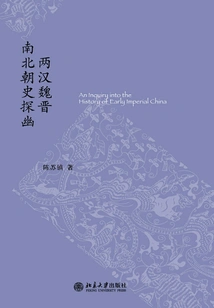
两汉魏晋南北朝史探幽
Chensu Town
The articles collected in "Exploring the History of the Han, Wei, Jin, Southern and Northern Dynasties" are the author's main works published over the past 20 years. The content covers the political history, institutional history and ideological history of the Han, Wei, Jin and Southern and Northern Dynasties. The discussion focuses on issues such as the "Spring and Autumn" study of the Han Dynasty, the politics of the Eastern Han Dynasty, the kingdom and feudal system of the Western Han Dynasty, and the scattered official system of the Southern and Northern Dynasties. The author approaches the fields of political history, institutional history and intellectual history from the perspective of political culture. He not only focuses on the excavation and verification of historical facts, but also strives to explore the deep connections between various fields. Therefore, his articles are not only innovative in viewpoints and conclusions, but also innovative in research ideas and methods.
The articles collected in "Exploring the History of the Han, Wei, Jin, Southern and Northern Dynasties" are the author's main works published over the past 20 years. The content covers the political history, institutional history and ideological history of the Han, Wei, Jin and Southern and Northern Dynasties. The discussion focuses on issues such as the "Spring and Autumn" study of the Han Dynasty, the politics of the Eastern Han Dynasty, the kingdom and feudal system of the Western Han Dynasty, and the scattered official system of the Southern and Northern Dynasties. The author approaches the fields of political history, institutional history and intellectual history from the perspective of political culture. He not only focuses on the excavation and verification of historical facts, but also strives to explore the deep connections between various fields. Therefore, his articles are not only innovative in viewpoints and conclusions, but also innovative in research ideas and methods.