Library
Browse and search books
4 novels found
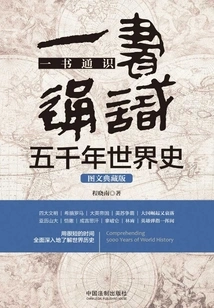
一书通识五千年世界史(图文典藏版)
Cheng Xiaonan
This book is divided into four parts: ancient scrolls of the world, medieval scrolls of the world, modern world history, and modern world history. It helps readers connect Chinese history with world history and understand the vast history of all mankind.
This book is divided into four parts: ancient scrolls of the world, medieval scrolls of the world, modern world history, and modern world history. It helps readers connect Chinese history with world history and understand the vast history of all mankind.
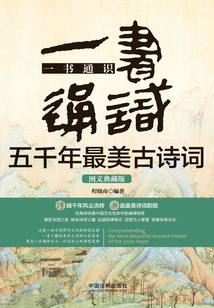
一书通识五千年最美古诗词
Cheng Xiaonan
This book is a rare book that is both practical, readable and literary. The whole book adopts an arrangement method that combines dynasty history and poetic imagery, and captures hundreds of catchy and communication-worthy poems, lyrics, and vocabularies from Chinese history into one book. It provides both general interpretation and expanded appreciation. It is a book of knowledge that introduces poetry culture, a spiritual reader for understanding history, and a poetic wandering through ancient and modern times in dialogue with ancestors. The craze for Chinese studies that has arisen in recent years has brought classical culture closer to the eyes of ordinary people. As a timeless and classic part of classical culture, ancient poetry is a spiritual wealth that every Chinese should master. This book has selected nearly 300 popular and long-circulated ancient poems. Based on the existing annotations and translations, it has added beautiful appreciation based on poetic language, and also added expansion links to connect some poetic works with similar artistic conceptions, so that readers can further deepen their understanding of the selected poems.
This book is a rare book that is both practical, readable and literary. The whole book adopts an arrangement method that combines dynasty history and poetic imagery, and captures hundreds of catchy and communication-worthy poems, lyrics, and vocabularies from Chinese history into one book. It provides both general interpretation and expanded appreciation. It is a book of knowledge that introduces poetry culture, a spiritual reader for understanding history, and a poetic wandering through ancient and modern times in dialogue with ancestors. The craze for Chinese studies that has arisen in recent years has brought classical culture closer to the eyes of ordinary people. As a timeless and classic part of classical culture, ancient poetry is a spiritual wealth that every Chinese should master. This book has selected nearly 300 popular and long-circulated ancient poems. Based on the existing annotations and translations, it has added beautiful appreciation based on poetic language, and also added expansion links to connect some poetic works with similar artistic conceptions, so that readers can further deepen their understanding of the selected poems.
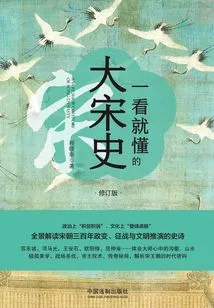
一看就懂的大宋史(修订版)
Cheng Xiaonan
The Northern Song Dynasty was the most prosperous era of economic and cultural prosperity in ancient Chinese history, and was called China's Renaissance by many Western historians. During this period, Confucianism was revived, and the literary world of the Northern Song Dynasty gathered together with stars, such as Su Xun, Su Shi, Su Che, Ouyang Xiu, Wang Anshi, Zeng Gong, Yan Shu, Yan Jidao, Fan Zhongyan, Liu Yong, Huang Tingjian, Zhou Bangyan... It is no wonder that some people say that "since the Qin Dynasty, literature has not flourished in the Song Dynasty." Why does this happen? It is probably due to Zhao Kuangyin's national policy of "emphasis on literature and suppression of martial arts". But this has a big drawback, that is, the military is not strong, and it is always at a disadvantage when facing the Liao and Xixia in the north. The "Chanyuan Alliance" only relieved the pressure on the Northern Song Dynasty, but the military laxity directly led to the "Jingkang Disgrace". The Jin Kingdom captured Bianliang, and Song Huizong and Song Qinzong were both captured. The Song Dynasty had to move south to Hangzhou to establish its capital, and this was the end of the Northern Song Dynasty.
The Northern Song Dynasty was the most prosperous era of economic and cultural prosperity in ancient Chinese history, and was called China's Renaissance by many Western historians. During this period, Confucianism was revived, and the literary world of the Northern Song Dynasty gathered together with stars, such as Su Xun, Su Shi, Su Che, Ouyang Xiu, Wang Anshi, Zeng Gong, Yan Shu, Yan Jidao, Fan Zhongyan, Liu Yong, Huang Tingjian, Zhou Bangyan... It is no wonder that some people say that "since the Qin Dynasty, literature has not flourished in the Song Dynasty." Why does this happen? It is probably due to Zhao Kuangyin's national policy of "emphasis on literature and suppression of martial arts". But this has a big drawback, that is, the military is not strong, and it is always at a disadvantage when facing the Liao and Xixia in the north. The "Chanyuan Alliance" only relieved the pressure on the Northern Song Dynasty, but the military laxity directly led to the "Jingkang Disgrace". The Jin Kingdom captured Bianliang, and Song Huizong and Song Qinzong were both captured. The Song Dynasty had to move south to Hangzhou to establish its capital, and this was the end of the Northern Song Dynasty.
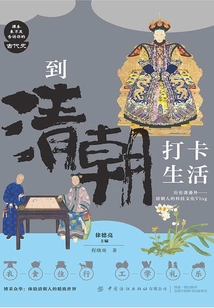
到清朝打卡生活
Cheng Xiaonan
"Coming to Life in the Qing Dynasty" is one of the series of books "Ancient History That Textbooks Can't Tell You". It describes various aspects of civil society life during the Qing Dynasty in a lively and lively narrative way. The book vividly displays the Qing Dynasty people's daily diet, heatstroke prevention and warmth, transportation, housing, occupation, tourism, cultural and sports activities, etc., Like a text version of "Along the River During Qingming Festival". What was the life of the people in the Qing Dynasty like, and what were the special customs and habits? Modern people's curiosity about the lives of the Qing Dynasty people will be answered one by one in the book. At the same time, the book is equipped with many exquisite illustrations, which vividly reproduce the daily life of people in the Qing Dynasty. The "Ancient History That Textbooks Can't Tell You" series covers the history of people's daily lives in various periods of Chinese history. It is written by writers who are deeply involved in the field of history. Based on official history, it uses humorous and easy-to-read history telling methods to restore the different social features of each dynasty and vividly present the changes and inheritance of people's lives in ancient China.
"Coming to Life in the Qing Dynasty" is one of the series of books "Ancient History That Textbooks Can't Tell You". It describes various aspects of civil society life during the Qing Dynasty in a lively and lively narrative way. The book vividly displays the Qing Dynasty people's daily diet, heatstroke prevention and warmth, transportation, housing, occupation, tourism, cultural and sports activities, etc., Like a text version of "Along the River During Qingming Festival". What was the life of the people in the Qing Dynasty like, and what were the special customs and habits? Modern people's curiosity about the lives of the Qing Dynasty people will be answered one by one in the book. At the same time, the book is equipped with many exquisite illustrations, which vividly reproduce the daily life of people in the Qing Dynasty. The "Ancient History That Textbooks Can't Tell You" series covers the history of people's daily lives in various periods of Chinese history. It is written by writers who are deeply involved in the field of history. Based on official history, it uses humorous and easy-to-read history telling methods to restore the different social features of each dynasty and vividly present the changes and inheritance of people's lives in ancient China.