Library
Browse and search books
6 novels found
Establishing the Opposite of Criticism
Literature批评对立面的确立
Cheng Guangwei
Poetry criticism may exist in the process of establishing the "opposite" of criticism. This is a common understanding of the "uniqueness" of poetry criticism. Sun Shaozhen realized the "seriousness" of this problem at that time: "Without the courage to challenge authority and tradition or even blaspheme, ideological emancipation is just a luxurious empty talk. When the trend of artistic innovation begins, tradition, the masses and innovators often have a stage of friction and even torture with each other."
Poetry criticism may exist in the process of establishing the "opposite" of criticism. This is a common understanding of the "uniqueness" of poetry criticism. Sun Shaozhen realized the "seriousness" of this problem at that time: "Without the courage to challenge authority and tradition or even blaspheme, ideological emancipation is just a luxurious empty talk. When the trend of artistic innovation begins, tradition, the masses and innovators often have a stage of friction and even torture with each other."
Difficult Mental Journey
Literature艰难的心路历程
Cheng Guangwei
In July 1949, Ba Jin, who was 45 years old and already in his middle age, wrote an article titled "I Came to Study." This article gives people the impression that he, who has been writing novels for more than 20 years, walked into the venue of the first national literary conference and seemed to be unable to find the feeling of creation. This summer gave Ba Jin a premonition of "change". Writers from the Kuomintang-controlled areas and the liberated areas sat in the audience of Zhongnanhai Huairen Hall. Many of them were old friends with familiar faces, but the high-spirited and confident expressions of the writers in the liberated areas made him somewhat unfamiliar: "I saw how people combined art with life, mixed words with blood and sweat, and created some beautiful, healthy and powerful works. The soul of New China radiated from them."
In July 1949, Ba Jin, who was 45 years old and already in his middle age, wrote an article titled "I Came to Study." This article gives people the impression that he, who has been writing novels for more than 20 years, walked into the venue of the first national literary conference and seemed to be unable to find the feeling of creation. This summer gave Ba Jin a premonition of "change". Writers from the Kuomintang-controlled areas and the liberated areas sat in the audience of Zhongnanhai Huairen Hall. Many of them were old friends with familiar faces, but the high-spirited and confident expressions of the writers in the liberated areas made him somewhat unfamiliar: "I saw how people combined art with life, mixed words with blood and sweat, and created some beautiful, healthy and powerful works. The soul of New China radiated from them."
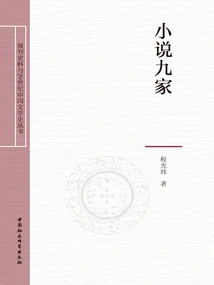
Nine Novels
Literature小说九家
Cheng Guangwei
This book adopts a method that combines knowledge of people and the world with close reading of texts to discuss the important works of nine contemporary novelists in recent years, and also provides a positioning analysis of the status of their creations in the history of contemporary Chinese literature. The appendix is an open-ended comment on the relationship between writers and readers, writers and critics, writers and literary history. It is a narrative style of chatting between friends.
This book adopts a method that combines knowledge of people and the world with close reading of texts to discuss the important works of nine contemporary novelists in recent years, and also provides a positioning analysis of the status of their creations in the history of contemporary Chinese literature. The appendix is an open-ended comment on the relationship between writers and readers, writers and critics, writers and literary history. It is a narrative style of chatting between friends.
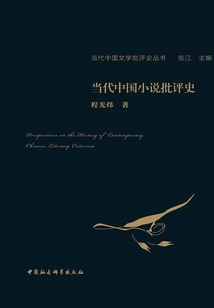
当代中国小说批评史
Cheng Guangwei
This book divides the 70-year historical process of contemporary Chinese novels into the first stage from 1949 to 1976, the second stage from 1977 to 1991, and the third stage from 1992 to 2019. The traditional history of novel criticism usually adopts the "historical theory" historical view and analysis model. This model is certainly historical and persuasive, but it can also easily suppress the uniqueness of the history of novel criticism, and it is especially easy to ignore the subjectivity of criticism and the extremely vivid and rich details. The characteristic of this book is that it wants to highlight the history of contemporary novel criticism from the comprehensive "big history" and put all the weight of theoretical thinking and narrative on it. Through the narration and analysis of the activities and practices of different "novel criticism circles" in each period, the "criticism circle"'s overall thinking on the "history of novels" is demonstrated. This book intends to use the process of the "novel criticism circle"'s penetration and intervention into the history of contemporary novels as an overall clue to connect the relationship between criticism and novels. It also views this connection as how critics who fully demonstrate their critical subjectivity fine-tune their relationship with big history in a "literary way" and reconstruct "the history of contemporary novels" as we know it today through critical concepts and practices.
This book divides the 70-year historical process of contemporary Chinese novels into the first stage from 1949 to 1976, the second stage from 1977 to 1991, and the third stage from 1992 to 2019. The traditional history of novel criticism usually adopts the "historical theory" historical view and analysis model. This model is certainly historical and persuasive, but it can also easily suppress the uniqueness of the history of novel criticism, and it is especially easy to ignore the subjectivity of criticism and the extremely vivid and rich details. The characteristic of this book is that it wants to highlight the history of contemporary novel criticism from the comprehensive "big history" and put all the weight of theoretical thinking and narrative on it. Through the narration and analysis of the activities and practices of different "novel criticism circles" in each period, the "criticism circle"'s overall thinking on the "history of novels" is demonstrated. This book intends to use the process of the "novel criticism circle"'s penetration and intervention into the history of contemporary novels as an overall clue to connect the relationship between criticism and novels. It also views this connection as how critics who fully demonstrate their critical subjectivity fine-tune their relationship with big history in a "literary way" and reconstruct "the history of contemporary novels" as we know it today through critical concepts and practices.
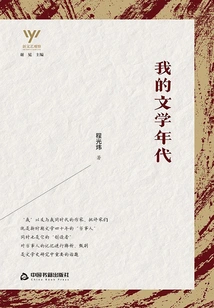
My Literary Years
Literature我的文学年代
Cheng Guangwei
There are many issues worthy of discussion in the forty years of new era literature. "I" and the writers and critics of my generation are not only the "parties" to the forty years of literature in the new era, but also its "creators". Analyzing and screening the memories of the parties concerned is also an important topic in the study of literary history. When conducting literary analysis, the author focuses on the "superposition of memory and literature". He not only respects the historical memories of the parties involved in literary history, but also seriously distinguishes and analyzes these memories, clearly distinguishing which ones are subjective reconstructions of literary trends and slogans, and which ones are related to personal destiny, and re-understand the laws and limitations of literary development in several seemingly different memories.
There are many issues worthy of discussion in the forty years of new era literature. "I" and the writers and critics of my generation are not only the "parties" to the forty years of literature in the new era, but also its "creators". Analyzing and screening the memories of the parties concerned is also an important topic in the study of literary history. When conducting literary analysis, the author focuses on the "superposition of memory and literature". He not only respects the historical memories of the parties involved in literary history, but also seriously distinguishes and analyzes these memories, clearly distinguishing which ones are subjective reconstructions of literary trends and slogans, and which ones are related to personal destiny, and re-understand the laws and limitations of literary development in several seemingly different memories.
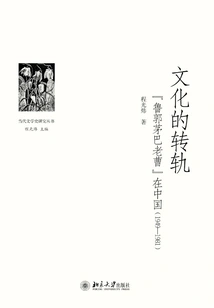
文化的转轨:“鲁郭茅巴老曹”在中国(1949-1981)
Cheng Guangwei
This book tells the short stories of six classic writers in the great story of the Chinese revolution in the 20th century: Lu Xun, Guo Moruo, Mao Dun, Ba Jin, Lao She, and Cao Yu. From the May Fourth Movement, when writing was promoted, what subtle and profound mental twists and turns did they experience in the turbulent waves of the second half of the 20th century? What are their daily lives, reading and writing like? How did he get involved in the complicated social affairs? If these anecdotes in the gaps between official history are easily forgotten, they may become a lonely site, or even a handful of disappearing loess. The author uses the method of a historical tour guide to enter from small time nodes, avoiding the strict rigidity of academic papers, trying to touch every casual detail, taste the dark charm of agarwood, and shed light on the subtle life world of writers. This book is like a whisper between history and the present.
This book tells the short stories of six classic writers in the great story of the Chinese revolution in the 20th century: Lu Xun, Guo Moruo, Mao Dun, Ba Jin, Lao She, and Cao Yu. From the May Fourth Movement, when writing was promoted, what subtle and profound mental twists and turns did they experience in the turbulent waves of the second half of the 20th century? What are their daily lives, reading and writing like? How did he get involved in the complicated social affairs? If these anecdotes in the gaps between official history are easily forgotten, they may become a lonely site, or even a handful of disappearing loess. The author uses the method of a historical tour guide to enter from small time nodes, avoiding the strict rigidity of academic papers, trying to touch every casual detail, taste the dark charm of agarwood, and shed light on the subtle life world of writers. This book is like a whisper between history and the present.