Library
Browse and search books
5 novels found
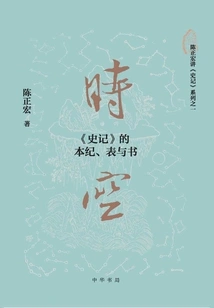
时空:《史记》的本纪、表与书
Chen Zhenghong
"Historical Records" ranks first among the "Twenty-Four Histories". When reading Chinese history, you must read "Historical Records". In accordance with the content sequence of "Historical Records", this book introduces in detail the "Benji" that tells the stories of emperors, the "Biao" that presents history through time and space, and the "Book" that records various ancient systems. It is divided into three parts to tell stories and culture. The author uses a humorous writing style and thirty years of teaching experience to approach the topic in a way that readers like: What is changing dynasties, why divisions and unions always require a king, why do kings take turns in history, and what can and cannot be said behind enfeoffment and officialdom? Because of the depth and difficulty of the culture of "Tables" and "Books" in "Historical Records", it is not easy for even scholars to sort it out clearly. However, the author of this book, Professor Chen Zhenghong of Fudan University, has studied "Historical Records" for 30 years and has the ability to present it in simple terms from the reader's point of view. The importance of "Historical Records" to Chinese culture goes without saying, but to understand "Historical Records", you need a guide book with a clear outline and meticulous details. It not only tells stories, but also analyzes and examines the content to "know why." "Chen Zhenghong Lectures on Historical Records Series" is just such a set of introductory books that provide a three-dimensional and comprehensive explanation of "Historical Records" for the general public. It is divided into four types: "Time and Space: The Chronicles, Tables and Books of "Historical Records"", "Bloodline: The Family of "Historical Records"", "All Beings: Biographies of "Historical Records"", and "Swan Song: The Historical Records of "Historical Records"". This book is the first in the series.
"Historical Records" ranks first among the "Twenty-Four Histories". When reading Chinese history, you must read "Historical Records". In accordance with the content sequence of "Historical Records", this book introduces in detail the "Benji" that tells the stories of emperors, the "Biao" that presents history through time and space, and the "Book" that records various ancient systems. It is divided into three parts to tell stories and culture. The author uses a humorous writing style and thirty years of teaching experience to approach the topic in a way that readers like: What is changing dynasties, why divisions and unions always require a king, why do kings take turns in history, and what can and cannot be said behind enfeoffment and officialdom? Because of the depth and difficulty of the culture of "Tables" and "Books" in "Historical Records", it is not easy for even scholars to sort it out clearly. However, the author of this book, Professor Chen Zhenghong of Fudan University, has studied "Historical Records" for 30 years and has the ability to present it in simple terms from the reader's point of view. The importance of "Historical Records" to Chinese culture goes without saying, but to understand "Historical Records", you need a guide book with a clear outline and meticulous details. It not only tells stories, but also analyzes and examines the content to "know why." "Chen Zhenghong Lectures on Historical Records Series" is just such a set of introductory books that provide a three-dimensional and comprehensive explanation of "Historical Records" for the general public. It is divided into four types: "Time and Space: The Chronicles, Tables and Books of "Historical Records"", "Bloodline: The Family of "Historical Records"", "All Beings: Biographies of "Historical Records"", and "Swan Song: The Historical Records of "Historical Records"". This book is the first in the series.
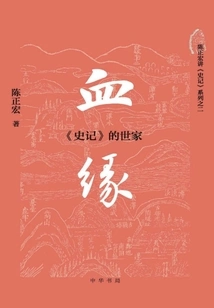
血缘:《史记》的世家
Chen Zhenghong
"Historical Records" ranks first among the "Twenty-Four Histories". When reading Chinese history, you must read "Historical Records". This book introduces the thirty chapters of "Aristocratic Family" in "Historical Records" in a humorous style and a reader-friendly way, that is, the family history of important princes and surnames in the Pre-Qin and Western Han Dynasties. Did Jiang Taigong really "encounter" Xi Bo by chance? What kind of prequel does "Three Families Divide into Promotion" have? What are the other unknown stories behind Yue King Gou Jian's defeat of Wu Gui? Which of the deeds of Confucius recorded in "Historical Records" cannot be seen in "The Analects"? How does Liu Bang, who has conquered the world, deal with threats from all directions? "Success is Xiaohe, failure is Xiaohe" tells what kind of tool life he and Han Xin have? How do brothers who rely on their sisters in the palace to rise to power break through the shadows and live out their lives? Why did the brother-nephew of Emperor Wu of the Han Dynasty do so many weird things? Why did these ancient nobles have such fantastic lives? What kind of integration path has the Chinese nation taken? This book will bring you inspiration.
"Historical Records" ranks first among the "Twenty-Four Histories". When reading Chinese history, you must read "Historical Records". This book introduces the thirty chapters of "Aristocratic Family" in "Historical Records" in a humorous style and a reader-friendly way, that is, the family history of important princes and surnames in the Pre-Qin and Western Han Dynasties. Did Jiang Taigong really "encounter" Xi Bo by chance? What kind of prequel does "Three Families Divide into Promotion" have? What are the other unknown stories behind Yue King Gou Jian's defeat of Wu Gui? Which of the deeds of Confucius recorded in "Historical Records" cannot be seen in "The Analects"? How does Liu Bang, who has conquered the world, deal with threats from all directions? "Success is Xiaohe, failure is Xiaohe" tells what kind of tool life he and Han Xin have? How do brothers who rely on their sisters in the palace to rise to power break through the shadows and live out their lives? Why did the brother-nephew of Emperor Wu of the Han Dynasty do so many weird things? Why did these ancient nobles have such fantastic lives? What kind of integration path has the Chinese nation taken? This book will bring you inspiration.
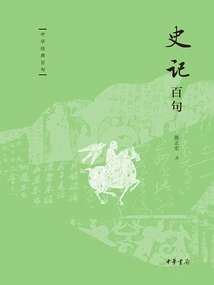
史记百句(中华经典百句)
Chen Zhenghong
The 130 chapters of "Historical Records" are not easy for ordinary readers to read directly. Based on the proofread version of "Historical Records" compiled by Zhonghua Book Company, Professor Chen Zhenghong of Fudan University selected famous quotes and quotes that have been widely quoted or praised by readers of all ages, and used vivid stories in the form of original text, translation, and analysis. And explanations in simple and easy-to-understand language, allowing readers to understand: what was the original context of Sima Qian's writing scenes; if they appear repeatedly in "Historical Records", how their meanings have changed; whether their ancient and modern meanings are different, and what are their unique values in modern times. The target readers of this book are students in the upper grades of primary schools and lower grades of middle schools. It is also suitable for readers with intermediate education levels as non-professional reading.
The 130 chapters of "Historical Records" are not easy for ordinary readers to read directly. Based on the proofread version of "Historical Records" compiled by Zhonghua Book Company, Professor Chen Zhenghong of Fudan University selected famous quotes and quotes that have been widely quoted or praised by readers of all ages, and used vivid stories in the form of original text, translation, and analysis. And explanations in simple and easy-to-understand language, allowing readers to understand: what was the original context of Sima Qian's writing scenes; if they appear repeatedly in "Historical Records", how their meanings have changed; whether their ancient and modern meanings are different, and what are their unique values in modern times. The target readers of this book are students in the upper grades of primary schools and lower grades of middle schools. It is also suitable for readers with intermediate education levels as non-professional reading.
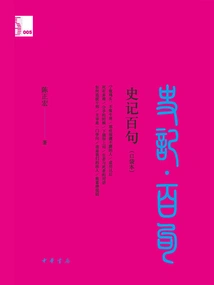
史记百句:中华经典百句(口袋本)
Chen Zhenghong
The "Hundred Chinese Classics" and "Chinese Classics General Knowledge" series of books are "little books for everyone" launched by Zhonghua Book Company where contemporary famous people in various fields talk about and read Chinese classics. "Hundred Chinese Classical Sentences" selects classic golden sentences that Chinese people must know, explains and elucidates them across ancient and modern times, and connects China and the West, guiding readers to easily and freely absorb the cultural essence of Chinese classics and build a spiritual world for themselves. As the first official history, "Historical Records" was praised by Lu Xun as "the swan song of historians and the unrhymed Li Sao", and is a model of the combination of history and literature. Professor Chen Zhenghong of Fudan University selected a hundred essential sentences from "Historical Records" to discover the "good intentions" of Ma Qian of the Taishi Company, leading us to experience a multifaceted life in the vast historical time and space and enlighten ourselves to contemporary wisdom.
The "Hundred Chinese Classics" and "Chinese Classics General Knowledge" series of books are "little books for everyone" launched by Zhonghua Book Company where contemporary famous people in various fields talk about and read Chinese classics. "Hundred Chinese Classical Sentences" selects classic golden sentences that Chinese people must know, explains and elucidates them across ancient and modern times, and connects China and the West, guiding readers to easily and freely absorb the cultural essence of Chinese classics and build a spiritual world for themselves. As the first official history, "Historical Records" was praised by Lu Xun as "the swan song of historians and the unrhymed Li Sao", and is a model of the combination of history and literature. Professor Chen Zhenghong of Fudan University selected a hundred essential sentences from "Historical Records" to discover the "good intentions" of Ma Qian of the Taishi Company, leading us to experience a multifaceted life in the vast historical time and space and enlighten ourselves to contemporary wisdom.
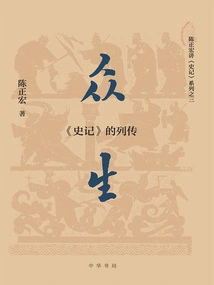
众生:《史记》的列传
Chen Zhenghong
At the beginning of the biography, why should we focus on the hermit? Why did the Taoist Lao Tzu, the Legalist Han Fei, and Sima Qian marry each other? Why did Liu Bang's nephew become a traitor to the Han Dynasty? Why did the fierce general Li Guang not become a marquis even when he was old? Is it difficult to be an official who abides by the rules and has a bottom line? ..."All Living Beings" is the third volume of "Chen Zhenghong's "Historical Records" series". According to the order of the seventy biographies in the current "Historical Records", it is divided into three volumes: "Hermits, sages and assassins in the Pre-Qin Dynasty", "Heroes, celebrities and traitors in the Qin and Han Dynasties" and "Under the Starry Sky, Seeing All Living Beings from Several Angle", which provides a detailed account of the events from the Pre-Qin Dynasty to the early Western Han Dynasty. The observation and analysis of this historical drama by various people full of historical wisdom not only more truly reflects the intention of "Historical Records" to "connect the past and the present", but also reflects the author's understanding and speculation on the shift in focus of Sima Qian's document compilation and historical compilation before and after the Li Ling incident.
At the beginning of the biography, why should we focus on the hermit? Why did the Taoist Lao Tzu, the Legalist Han Fei, and Sima Qian marry each other? Why did Liu Bang's nephew become a traitor to the Han Dynasty? Why did the fierce general Li Guang not become a marquis even when he was old? Is it difficult to be an official who abides by the rules and has a bottom line? ..."All Living Beings" is the third volume of "Chen Zhenghong's "Historical Records" series". According to the order of the seventy biographies in the current "Historical Records", it is divided into three volumes: "Hermits, sages and assassins in the Pre-Qin Dynasty", "Heroes, celebrities and traitors in the Qin and Han Dynasties" and "Under the Starry Sky, Seeing All Living Beings from Several Angle", which provides a detailed account of the events from the Pre-Qin Dynasty to the early Western Han Dynasty. The observation and analysis of this historical drama by various people full of historical wisdom not only more truly reflects the intention of "Historical Records" to "connect the past and the present", but also reflects the author's understanding and speculation on the shift in focus of Sima Qian's document compilation and historical compilation before and after the Li Ling incident.