Library
Browse and search books
6 novels found
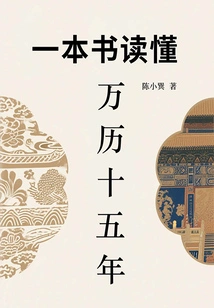
一本书读懂万历十五年
Chen Xiaoxun
Based on Huang Renyu's classic works, this book deeply dissects the historical slices of "calm on the surface but turbulent undercurrents" during the Wanli period of the Ming Dynasty. Through the ups and downs of seven core figures including Emperor Wanli, Zhang Juzheng, and Hai Rui, the book reveals how moral idealism and technical flaws jointly stifle the vitality of reform. From the financial management loopholes exposed by Zhang Juzheng's premature reform, to the paradox of Hai Rui's integrity but being rejected by the system; from the tragedy of Qi Jiguang's military innovation being stifled by the civil service system, to the dilemma of Li Zhi's ideological enlightenment encountering the strangulation of ethics, the social ill of "replacing morality with the rule of law" is analyzed layer by layer. The book focuses specifically on the "insignificant year" of 1587, decoding historical details such as the struggle to establish the crown prince behind the emperor's neglect of government, the falsification of data hidden in the Qing Dynasty's land, and the imbalance of civil and military affairs reflected in the anti-Japanese war, showing how a huge empire declined in a systemic collapse. Through the perspective of the "big historical perspective", it not only restores the classic discussion of "The Fifteenth Year of Wanli", but also incorporates in-depth interpretation from a contemporary perspective, building a cognitive bridge for readers to connect historical laws and realistic enlightenment.
Based on Huang Renyu's classic works, this book deeply dissects the historical slices of "calm on the surface but turbulent undercurrents" during the Wanli period of the Ming Dynasty. Through the ups and downs of seven core figures including Emperor Wanli, Zhang Juzheng, and Hai Rui, the book reveals how moral idealism and technical flaws jointly stifle the vitality of reform. From the financial management loopholes exposed by Zhang Juzheng's premature reform, to the paradox of Hai Rui's integrity but being rejected by the system; from the tragedy of Qi Jiguang's military innovation being stifled by the civil service system, to the dilemma of Li Zhi's ideological enlightenment encountering the strangulation of ethics, the social ill of "replacing morality with the rule of law" is analyzed layer by layer. The book focuses specifically on the "insignificant year" of 1587, decoding historical details such as the struggle to establish the crown prince behind the emperor's neglect of government, the falsification of data hidden in the Qing Dynasty's land, and the imbalance of civil and military affairs reflected in the anti-Japanese war, showing how a huge empire declined in a systemic collapse. Through the perspective of the "big historical perspective", it not only restores the classic discussion of "The Fifteenth Year of Wanli", but also incorporates in-depth interpretation from a contemporary perspective, building a cognitive bridge for readers to connect historical laws and realistic enlightenment.
Xiaokui's 30-year-old Diary
Slice of Life小葵的30岁日记
Chen Xiaoxun
There is a person in Shanghai who is 30 years old, single, and working as an Internet worker. Record this person's life and see if you can figure out anything!
There is a person in Shanghai who is 30 years old, single, and working as an Internet worker. Record this person's life and see if you can figure out anything!

明朝的100个冷知识
Chen Xiaoxun
Do you think that only Jin Yiwei and Zheng He went to the West in the Ming Dynasty? "100 Facts about the Ming Dynasty" will completely subvert your historical understanding! From Emperor Yongle using Persian parrots to report the vassal's scandal, to Emperor Chongzhen relying on calculus to predict the fate of the country; from the research and development of "Gunpowder Poria Cake" in the imperial kitchen that blew up half of the palace, to the glazed tiles of Prince Lu's palace that blinded the entire street of onlookers - this book is like a rebellious brother in a history textbook, uncovering the most absurd and hard-core dark technology, transnational embarrassments and palace battles in the Ming Dynasty. Here, Zheng He's navigation charts conceal military codes, Wanli's telescopes become tools for catching thieves, Qinhuai River oirans work part-time selling false information, and even the armors of the imperial guards are coated with luminous powder and transformed into "humanoid light bulbs." 100 Incredible trivia, revealing a magical Ming Dynasty that fought with chili powder, paid wages with pepper, and relied on magnets to tell fortunes. Open this book, smile and complete the B-side history of Chinese civilization that textbooks dare not write!
Do you think that only Jin Yiwei and Zheng He went to the West in the Ming Dynasty? "100 Facts about the Ming Dynasty" will completely subvert your historical understanding! From Emperor Yongle using Persian parrots to report the vassal's scandal, to Emperor Chongzhen relying on calculus to predict the fate of the country; from the research and development of "Gunpowder Poria Cake" in the imperial kitchen that blew up half of the palace, to the glazed tiles of Prince Lu's palace that blinded the entire street of onlookers - this book is like a rebellious brother in a history textbook, uncovering the most absurd and hard-core dark technology, transnational embarrassments and palace battles in the Ming Dynasty. Here, Zheng He's navigation charts conceal military codes, Wanli's telescopes become tools for catching thieves, Qinhuai River oirans work part-time selling false information, and even the armors of the imperial guards are coated with luminous powder and transformed into "humanoid light bulbs." 100 Incredible trivia, revealing a magical Ming Dynasty that fought with chili powder, paid wages with pepper, and relied on magnets to tell fortunes. Open this book, smile and complete the B-side history of Chinese civilization that textbooks dare not write!
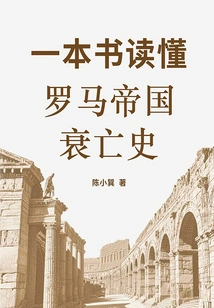
一本书读懂罗马帝国衰亡史
Chen Xiaoxun
Based on Edward Gibbon's historical masterpiece, this book reveals the multiple foreshadowings of the fall of civilization through the dust of the collapse of a thousand-year empire. This book starts from the golden age of the Antonine Dynasty and analyzes the financial collapse caused by the citizenship of Caracalla, the bureaucratic cancer caused by Diocletian's tax reform, the rise of Christianity that dissipated the martial spirit of Rome, and the doomsday carnival boiling in the Baths and the Colosseum. The author restores the bloody twilight of the Battle of Adrianople and the Jedi counterattack of the Battle of Chalons in a popular way, and decodes how the triangular strangulation of the barbarians, Persia and Rome tore apart the empire's territory. The book focuses particularly on Gibbon's "moral narcotics" theory, showing how Christianity transformed from an underground belief into a parasitic force that hollowed out the foundations of empires. It also examines the laws of historical cycles from an enlightenment perspective - from the power rent-seeking of the Senate to the mercenaryization of the army, from the abnormal prosperity of the slave economy to the collective collapse of the citizen spirit, which everywhere reflects the fatal erosion of autocracy and corruption on civilization. The book ends with the bloody dawn of the fall of Constantinople, allowing readers to see the pathological slices common to the decline of all empires in the ashes of the millennium epic.
Based on Edward Gibbon's historical masterpiece, this book reveals the multiple foreshadowings of the fall of civilization through the dust of the collapse of a thousand-year empire. This book starts from the golden age of the Antonine Dynasty and analyzes the financial collapse caused by the citizenship of Caracalla, the bureaucratic cancer caused by Diocletian's tax reform, the rise of Christianity that dissipated the martial spirit of Rome, and the doomsday carnival boiling in the Baths and the Colosseum. The author restores the bloody twilight of the Battle of Adrianople and the Jedi counterattack of the Battle of Chalons in a popular way, and decodes how the triangular strangulation of the barbarians, Persia and Rome tore apart the empire's territory. The book focuses particularly on Gibbon's "moral narcotics" theory, showing how Christianity transformed from an underground belief into a parasitic force that hollowed out the foundations of empires. It also examines the laws of historical cycles from an enlightenment perspective - from the power rent-seeking of the Senate to the mercenaryization of the army, from the abnormal prosperity of the slave economy to the collective collapse of the citizen spirit, which everywhere reflects the fatal erosion of autocracy and corruption on civilization. The book ends with the bloody dawn of the fall of Constantinople, allowing readers to see the pathological slices common to the decline of all empires in the ashes of the millennium epic.
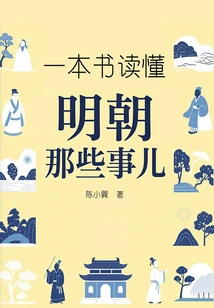
一本书读懂明朝那些事儿
Chen Xiaoxun
This book can help readers understand the essence of "Those Things in the Ming Dynasty" and reproduce the events of the three hundred years of the Ming Dynasty, from Zhu Yuanzhang proclaiming himself emperor in commoner clothes to hanging himself in Meishan, Chongzhen. It uses vivid writing to connect the rise and fall of the sixteen emperors, the game between powerful ministers, and the joys and sorrows of the market. The work breaks the framework of traditional history books. It not only includes the magnificent epic of Yongle's seven voyages to the West, but also analyzes the absurd drama of the emperor becoming a prisoner in the Tumubao Incident. It not only decodes the financial code behind Zhang Juzheng's reforms, but also tears apart the institutional corruption exposed by Wei Zhongxian's autocratic power. The book uses a humorous and sharp modern perspective to restore historical scenes such as the operation of Jin Yiwei's hidden stakes and the power struggle of the cabinet. It also slices through details such as the circulation of silver and the evolution of firearms to reveal the undercurrent of crisis under the appearance of a prosperous age. From Hai Rui's character to Qi Jiguang's fight against the Japanese, from the institutional dilemma in the fifteenth year of Wanli to the strangulation of power in the Tianqi years, each chapter is not only a collection of ups and downs, but also a collection of thoughts that provide insight into the collision between officialdom and civilization. This is not only a popular history of the Ming Dynasty, but also a mirror that reflects the complexity of human nature and the laws of history, allowing readers to understand why a dynasty died slowly in its glory through the chess game of life and death between emperors and generals and the ups and downs of ordinary people.
This book can help readers understand the essence of "Those Things in the Ming Dynasty" and reproduce the events of the three hundred years of the Ming Dynasty, from Zhu Yuanzhang proclaiming himself emperor in commoner clothes to hanging himself in Meishan, Chongzhen. It uses vivid writing to connect the rise and fall of the sixteen emperors, the game between powerful ministers, and the joys and sorrows of the market. The work breaks the framework of traditional history books. It not only includes the magnificent epic of Yongle's seven voyages to the West, but also analyzes the absurd drama of the emperor becoming a prisoner in the Tumubao Incident. It not only decodes the financial code behind Zhang Juzheng's reforms, but also tears apart the institutional corruption exposed by Wei Zhongxian's autocratic power. The book uses a humorous and sharp modern perspective to restore historical scenes such as the operation of Jin Yiwei's hidden stakes and the power struggle of the cabinet. It also slices through details such as the circulation of silver and the evolution of firearms to reveal the undercurrent of crisis under the appearance of a prosperous age. From Hai Rui's character to Qi Jiguang's fight against the Japanese, from the institutional dilemma in the fifteenth year of Wanli to the strangulation of power in the Tianqi years, each chapter is not only a collection of ups and downs, but also a collection of thoughts that provide insight into the collision between officialdom and civilization. This is not only a popular history of the Ming Dynasty, but also a mirror that reflects the complexity of human nature and the laws of history, allowing readers to understand why a dynasty died slowly in its glory through the chess game of life and death between emperors and generals and the ups and downs of ordinary people.
The Secret That Cannot Be Told
Young Adult不能说的秘密
Chen Xiaoxun
Have we all been there once? Love each other so deeply, But I could only hold my knees and cry alone at a midnight street intersection. Love is happy, sweet, it is the carrier of everything The scar of love is so painful, but I can't help but open it over and over again, dripping with blood. Who will you think of this night? Where is your loved one this morning?
Have we all been there once? Love each other so deeply, But I could only hold my knees and cry alone at a midnight street intersection. Love is happy, sweet, it is the carrier of everything The scar of love is so painful, but I can't help but open it over and over again, dripping with blood. Who will you think of this night? Where is your loved one this morning?