Library
Browse and search books
4 novels found
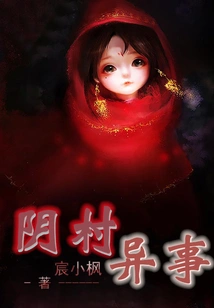
阴村异事
Chen Xiaofeng
I am a mute girl, born in a remote small village in eastern Guangdong, but things are not peaceful here. Since that incident happened to my family, Nanyang descendants, Miao magic, ancient tomb ghosts, and all kinds of weird and evil magic have followed...
I am a mute girl, born in a remote small village in eastern Guangdong, but things are not peaceful here. Since that incident happened to my family, Nanyang descendants, Miao magic, ancient tomb ghosts, and all kinds of weird and evil magic have followed...
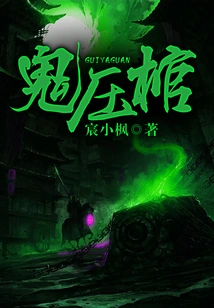
Ghost in the Coffin
Suspense and Supernatural鬼压棺
Chen Xiaofeng
I am a mute girl, born in a remote small village, but things are not peaceful here. Since that incident happened to my family, Nanyang descendants, Miao border witchcraft, ancient tomb ghost realms, and all kinds of weird and evil magic have followed...
I am a mute girl, born in a remote small village, but things are not peaceful here. Since that incident happened to my family, Nanyang descendants, Miao border witchcraft, ancient tomb ghost realms, and all kinds of weird and evil magic have followed...
明清通州范氏家族文学与文化研究(国家社科基金后期资助项目)
Chen Xiaofeng
This book takes the Fan family in Tongzhou as the subject, adheres to diversified research based on literature, explores the evolutionary trajectory, cultural spirit and social status of "literary family" and "family literature", forming an overall concept of the trinity of "individual-family-society", and comprehensively brings the Fan family literature and culture into the field of investigation. The main results of the research are as follows: First, from the perspective of topic selection, we paid attention to the commoner literary family. The majority of the family members are commoners, and it has lasted for 13 generations over more than 450 years. More than 30 writers have been born, and members have written an average of nearly 10 kinds of works. Second, from the literature, a large amount of original information has been disclosed. Many writings of family members have been handed down in manuscripts and banknotes, such as "Shishan Lou Poetry Year", "Wolf Five Poems Preserved", and "Shishan Book Engraving Preface" collected by the Chinese Academy of Sciences Library. These are all disclosed for the first time. Third, from a structural perspective, macro and micro are organically combined. It not only analyzes and refines the internal rules of Fan family inheritance, member characteristics and family commonalities, sort out the family pedigree and family context, but also reveals the influence of the politics, economy and culture of the times on the family. Fourth, from a perspective, it puts forward innovative insights. Through careful examination and debate, the true face of Fan Fengyi Fei as a "Donglin figure" was clarified, the social activities and objects of Li Yu's trip to northern Jiangsu in the ten years of Shunzhi were examined, and the biased understanding of the academic circle was corrected.
This book takes the Fan family in Tongzhou as the subject, adheres to diversified research based on literature, explores the evolutionary trajectory, cultural spirit and social status of "literary family" and "family literature", forming an overall concept of the trinity of "individual-family-society", and comprehensively brings the Fan family literature and culture into the field of investigation. The main results of the research are as follows: First, from the perspective of topic selection, we paid attention to the commoner literary family. The majority of the family members are commoners, and it has lasted for 13 generations over more than 450 years. More than 30 writers have been born, and members have written an average of nearly 10 kinds of works. Second, from the literature, a large amount of original information has been disclosed. Many writings of family members have been handed down in manuscripts and banknotes, such as "Shishan Lou Poetry Year", "Wolf Five Poems Preserved", and "Shishan Book Engraving Preface" collected by the Chinese Academy of Sciences Library. These are all disclosed for the first time. Third, from a structural perspective, macro and micro are organically combined. It not only analyzes and refines the internal rules of Fan family inheritance, member characteristics and family commonalities, sort out the family pedigree and family context, but also reveals the influence of the politics, economy and culture of the times on the family. Fourth, from a perspective, it puts forward innovative insights. Through careful examination and debate, the true face of Fan Fengyi Fei as a "Donglin figure" was clarified, the social activities and objects of Li Yu's trip to northern Jiangsu in the ten years of Shunzhi were examined, and the biased understanding of the academic circle was corrected.
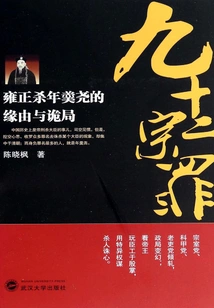
九十二宗罪:雍正杀年羹尧的缘由与诡局
Chen Xiaofeng
The case of Nian Gengyao is full of strange events. Why did Yongzheng execute Nian Gengyao? Since the middle of the Qing Dynasty, different scholars have made various speculations on the Yongzheng murder case based on conspiracy theories, fatalism and imperial autocracy. However, the differences among the various theories coexist, making the case a suspenseful and unsolved mystery for more than 200 years. Professor Chen Xiaofeng of Wuhan University made an in-depth analysis of the internal strife between the clan party, the Kejia party and the capable veteran party during the reign of Emperor Kangxi and Yongzheng, and analyzed in detail the process of Yongzheng using the Nian Gengyao case to eliminate the cliques in the court and the purpose of murdering people. With a profound academic background in the history of the Chinese legal system, the author analyzes the characteristics of Nian Gengyao's ninety-two crimes, the application of criminal law, extrajudicial punishment, and post-penalty pardon and other special features of the legal operation in the early Qing Dynasty based on the "Annotated Bylaws of the Qing Dynasty Code Collection". It also focused on analyzing the strange fate of Nian Gengyao, who was convicted of treason, but was only sentenced to death for himself, implicated the eldest son, and immediately returned the Nian residence after the execution, and the Nian family returned to the capital, as well as the deceitful tactics involved. The author of the book also focuses on analyzing the character of Emperor Yongzheng and the impact of prophecies and prophecies on the vicissitudes of political affairs in the politics of the early Qing Dynasty. He also analyzes in detail the key role that the five-star couplets and prophecies during the case, especially the death of the white tiger in Nian's house, played in Yongzheng's determination to kill Nian Gengyao. In conjunction with the crimes committed by Nian Gengyao, the book comprehensively introduces the general rules of bad officialdom, official conduct, worldly customs, and despicable etiquette during the Kang and Yong reigns that caused trouble and led to executions in the political situation of Kang and Yong. In particular, it also analyzes the institutional causes of Yong Zheng's use of the secret system to instigate relations among ministers and form decisive powers. The author of this book painstakingly analyzes the authenticity of various legends in Kangxi's edict, uniquely puts forward the political choices that should be taken when Emperor Kangxi is about to return to heaven, and effectively demonstrates the important influence of military power, especially the control of the internal guards, in the succession of the throne. This explanation was put forward in the summer of 2012, and it is completely consistent with the interpretation of the original Manchu version of Kangxi's will discovered by the Shenyang History Museum in 2013 in old Manchu documents. As a follow-up to the analysis of the case, Professor Chen Xiaofeng also sharply analyzed the incident in which Yongzheng killed Nian Gengyao but retained his adopted son Yue Zhongqi as the legacy of the faction. After liquidating the parties, he used Yue's backhand to kill the Kejia Party. He summarized the unique tactics used by the emperor to use the forces of various factions in the changing political situation, allowing readers to gain the pleasure of reading the history of centralized political forms.
The case of Nian Gengyao is full of strange events. Why did Yongzheng execute Nian Gengyao? Since the middle of the Qing Dynasty, different scholars have made various speculations on the Yongzheng murder case based on conspiracy theories, fatalism and imperial autocracy. However, the differences among the various theories coexist, making the case a suspenseful and unsolved mystery for more than 200 years. Professor Chen Xiaofeng of Wuhan University made an in-depth analysis of the internal strife between the clan party, the Kejia party and the capable veteran party during the reign of Emperor Kangxi and Yongzheng, and analyzed in detail the process of Yongzheng using the Nian Gengyao case to eliminate the cliques in the court and the purpose of murdering people. With a profound academic background in the history of the Chinese legal system, the author analyzes the characteristics of Nian Gengyao's ninety-two crimes, the application of criminal law, extrajudicial punishment, and post-penalty pardon and other special features of the legal operation in the early Qing Dynasty based on the "Annotated Bylaws of the Qing Dynasty Code Collection". It also focused on analyzing the strange fate of Nian Gengyao, who was convicted of treason, but was only sentenced to death for himself, implicated the eldest son, and immediately returned the Nian residence after the execution, and the Nian family returned to the capital, as well as the deceitful tactics involved. The author of the book also focuses on analyzing the character of Emperor Yongzheng and the impact of prophecies and prophecies on the vicissitudes of political affairs in the politics of the early Qing Dynasty. He also analyzes in detail the key role that the five-star couplets and prophecies during the case, especially the death of the white tiger in Nian's house, played in Yongzheng's determination to kill Nian Gengyao. In conjunction with the crimes committed by Nian Gengyao, the book comprehensively introduces the general rules of bad officialdom, official conduct, worldly customs, and despicable etiquette during the Kang and Yong reigns that caused trouble and led to executions in the political situation of Kang and Yong. In particular, it also analyzes the institutional causes of Yong Zheng's use of the secret system to instigate relations among ministers and form decisive powers. The author of this book painstakingly analyzes the authenticity of various legends in Kangxi's edict, uniquely puts forward the political choices that should be taken when Emperor Kangxi is about to return to heaven, and effectively demonstrates the important influence of military power, especially the control of the internal guards, in the succession of the throne. This explanation was put forward in the summer of 2012, and it is completely consistent with the interpretation of the original Manchu version of Kangxi's will discovered by the Shenyang History Museum in 2013 in old Manchu documents. As a follow-up to the analysis of the case, Professor Chen Xiaofeng also sharply analyzed the incident in which Yongzheng killed Nian Gengyao but retained his adopted son Yue Zhongqi as the legacy of the faction. After liquidating the parties, he used Yue's backhand to kill the Kejia Party. He summarized the unique tactics used by the emperor to use the forces of various factions in the changing political situation, allowing readers to gain the pleasure of reading the history of centralized political forms.