Library
Browse and search books
5 novels found
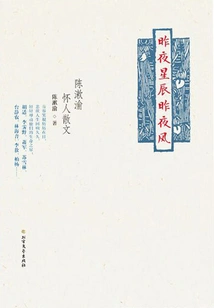
昨夜星辰昨夜风:陈漱渝怀人散文
Chen Shuyu
This book is a collection of essays written by modern Chinese literature scholar Chen Shuyu. He uses the delicacy of a scholar and the feelings of a writer to express his interactions with literati and his memories of some deceased literati. There are many touching details and anecdotes in it. It is a collection of essays with certain historical value and literary beauty.
This book is a collection of essays written by modern Chinese literature scholar Chen Shuyu. He uses the delicacy of a scholar and the feelings of a writer to express his interactions with literati and his memories of some deceased literati. There are many touching details and anecdotes in it. It is a collection of essays with certain historical value and literary beauty.
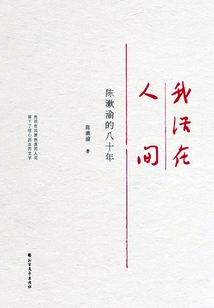
我活在人间:陈漱渝的八十年
Chen Shuyu
This book is a collection of autobiographies by Chen Shuyu, a senior expert on Lu Xun, reviewing his life in chronological order. The first two editions of this book were titled "Footprints on the Beach". This edition is an expanded version and renamed "I Live in the World: Eighty Years of Chen Shuyu". The five characters "I live in the world" are taken from Lu Xun's "Huagai Collection·Inscription". Readers can see reflections of different eras from the author's life experiences, as well as the friendly faces of many famous modern and contemporary scholars. The book also preserves records of right and wrong in the literary world. At the same time, scholars can obtain some historical information about China's contemporary academic transition period, especially first-hand information on the history of contemporary Lu Xun studies.
This book is a collection of autobiographies by Chen Shuyu, a senior expert on Lu Xun, reviewing his life in chronological order. The first two editions of this book were titled "Footprints on the Beach". This edition is an expanded version and renamed "I Live in the World: Eighty Years of Chen Shuyu". The five characters "I live in the world" are taken from Lu Xun's "Huagai Collection·Inscription". Readers can see reflections of different eras from the author's life experiences, as well as the friendly faces of many famous modern and contemporary scholars. The book also preserves records of right and wrong in the literary world. At the same time, scholars can obtain some historical information about China's contemporary academic transition period, especially first-hand information on the history of contemporary Lu Xun studies.
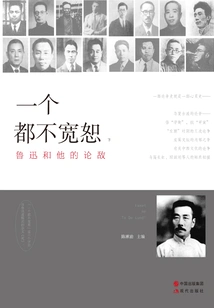
Forgive No One (volume 2)
Literature一个都不宽恕(下册)
Chen Shuyu
This book includes the debates between the Cultural New Army under the banner of Lu Xun and the retrograde school, modern criticism school, "nationalist literature", "revolutionary literature", etc. In the early 20th century. The debaters involved Zhang Shizhao, Wu Mi, Hu Shi, Xu Zhimo, Liang Shiqiu, Guo Moruo, Gu Jiegang, Gao Changhong and others. It provides relatively complete historical materials for the previous debates in which Lu Xun participated, and also provides rich historical materials for studying the history of modern Chinese literary and artistic trends. Lu Xun's argumentative words are thoughtful in thinking, rigorous in logic, vivid in image, pungent in sarcasm, witty in humor, and concise in language. What runs through the whole is his spirit of searching from top to bottom and always enterprising, the spirit of "if you cannot defeat the enemy, you will never stop fighting", the spirit of straightening your spine, never giving up, and being strict with yourself.
This book includes the debates between the Cultural New Army under the banner of Lu Xun and the retrograde school, modern criticism school, "nationalist literature", "revolutionary literature", etc. In the early 20th century. The debaters involved Zhang Shizhao, Wu Mi, Hu Shi, Xu Zhimo, Liang Shiqiu, Guo Moruo, Gu Jiegang, Gao Changhong and others. It provides relatively complete historical materials for the previous debates in which Lu Xun participated, and also provides rich historical materials for studying the history of modern Chinese literary and artistic trends. Lu Xun's argumentative words are thoughtful in thinking, rigorous in logic, vivid in image, pungent in sarcasm, witty in humor, and concise in language. What runs through the whole is his spirit of searching from top to bottom and always enterprising, the spirit of "if you cannot defeat the enemy, you will never stop fighting", the spirit of straightening your spine, never giving up, and being strict with yourself.
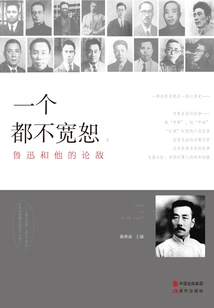
Forgive No One (volume 1)
Literature一个都不宽恕(上册)
Chen Shuyu
This book includes the debates between the Cultural New Army under the banner of Lu Xun and the retrograde school, modern criticism school, "nationalist literature", "revolutionary literature", etc. In the early 20th century. The debaters involved Zhang Shizhao, Wu Mi, Hu Shi, Xu Zhimo, Liang Shiqiu, Guo Moruo, Gu Jiegang, Gao Changhong and others. It provides relatively complete historical materials for the previous debates in which Lu Xun participated, and also provides rich historical materials for studying the history of modern Chinese literary and artistic trends. Lu Xun's argumentative words are thoughtful in thinking, rigorous in logic, vivid in image, pungent in sarcasm, witty in humor, and concise in language. What runs through the whole is his spirit of searching from top to bottom and always enterprising, the spirit of "if you cannot defeat the enemy, you will never stop fighting", the spirit of straightening your spine, never giving up, and being strict with yourself.
This book includes the debates between the Cultural New Army under the banner of Lu Xun and the retrograde school, modern criticism school, "nationalist literature", "revolutionary literature", etc. In the early 20th century. The debaters involved Zhang Shizhao, Wu Mi, Hu Shi, Xu Zhimo, Liang Shiqiu, Guo Moruo, Gu Jiegang, Gao Changhong and others. It provides relatively complete historical materials for the previous debates in which Lu Xun participated, and also provides rich historical materials for studying the history of modern Chinese literary and artistic trends. Lu Xun's argumentative words are thoughtful in thinking, rigorous in logic, vivid in image, pungent in sarcasm, witty in humor, and concise in language. What runs through the whole is his spirit of searching from top to bottom and always enterprising, the spirit of "if you cannot defeat the enemy, you will never stop fighting", the spirit of straightening your spine, never giving up, and being strict with yourself.
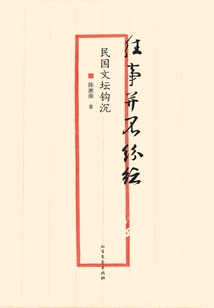
往事并不纷纭:民国文坛钩沉
Chen Shuyu
This book is a collection of essays by scholars, divided into two parts: "Lu Xun Chapter" and "Stars Chapter". The author uses his high understanding of the modern Chinese literary world to sort out the more valuable and interesting anecdotes into a text. The historical materials are reliable and the writing is vivid. It can be read by professionals for evaluation and appreciation, and it can also be used as a reading material for ordinary readers to increase their knowledge and leisurely cultivate themselves.
This book is a collection of essays by scholars, divided into two parts: "Lu Xun Chapter" and "Stars Chapter". The author uses his high understanding of the modern Chinese literary world to sort out the more valuable and interesting anecdotes into a text. The historical materials are reliable and the writing is vivid. It can be read by professionals for evaluation and appreciation, and it can also be used as a reading material for ordinary readers to increase their knowledge and leisurely cultivate themselves.