Library
Browse and search books
6 novels found
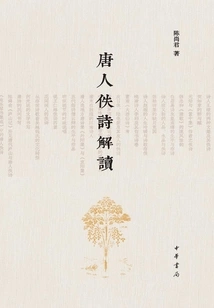
唐人佚诗解读
Chen Shangjun
Teacher Chen Shangjun compiled more than 2,000 lost poems of the Tang Dynasty from Dunhuang posthumous documents, foreign documents, stone inscriptions and other sources. The twenty-four poems collected in this book are based on this. The author pays attention to the poet's life experience and the first interpretation and evaluation of these lost poems. He is very creative and helps readers to understand Tang poetry more comprehensively.
Teacher Chen Shangjun compiled more than 2,000 lost poems of the Tang Dynasty from Dunhuang posthumous documents, foreign documents, stone inscriptions and other sources. The twenty-four poems collected in this book are based on this. The author pays attention to the poet's life experience and the first interpretation and evaluation of these lost poems. He is very creative and helps readers to understand Tang poetry more comprehensively.
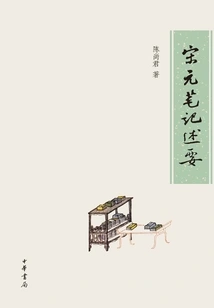
宋元笔记述要
Chen Shangjun
This book is a synopsis of the Song and Yuan Dynasty notes, including one type from the Five Dynasties, 140 types from the Song Dynasty, and 15 types from the Yuan Dynasty. The important ones from the Song and Yuan Dynasties are basically covered. There are also four types of notes from the Ming Dynasty and related compilation notes and textual examinations are attached at the end. It not only involves many common and well-known notes, but also introduces and analyzes rare notes and lost notes, giving people a glimpse of the original work. It not only introduces the author and content of the notes, but also excavates and verifies the writing process and documentary value of the notes, and interprets their complete authenticity.
This book is a synopsis of the Song and Yuan Dynasty notes, including one type from the Five Dynasties, 140 types from the Song Dynasty, and 15 types from the Yuan Dynasty. The important ones from the Song and Yuan Dynasties are basically covered. There are also four types of notes from the Ming Dynasty and related compilation notes and textual examinations are attached at the end. It not only involves many common and well-known notes, but also introduces and analyzes rare notes and lost notes, giving people a glimpse of the original work. It not only introduces the author and content of the notes, but also excavates and verifies the writing process and documentary value of the notes, and interprets their complete authenticity.
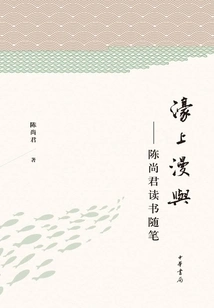
濠上漫与:陈尚君读书随笔
Chen Shangjun
This book collects 56 academic essays by Professor Chen Shangjun in recent years, basically sorted by the time of the content involved. It started with the three legendary women Dugu sisters from the Northern Dynasties to the Sui Dynasty, and gradually included Tang Dynasty figures such as Tang Taizong, Li Linfu, and Gao Lishi. It includes some discoveries and thoughts in the process of reorganizing the entire Tang poetry. Returning to the Song Dynasty, we discuss why the Song version is valuable, pay attention to the compilation of "Zizhi Tongjian", and discuss Sima Guang's historical concepts and team. From the Qing Dynasty to the Republic of China, in addition to analyzing the tampering of documents in Sikuquanshu, it also lists Guo Songtao, Yan Fu, Tang Wenzhi, Zhang Yuanji, Xiong Xiling, Zhang Taiyan and many other figures one by one, which shows the wide scope of reading. As the era becomes more recent, I will describe my interactions with predecessors such as Zhu Dongrun, Cheng Qianfan, and Fu Xuancong, my exchanges with fellow scholars, my support and care for students, as well as some academic work I participated in and my review of some books related to the Tang and Song Dynasties.
This book collects 56 academic essays by Professor Chen Shangjun in recent years, basically sorted by the time of the content involved. It started with the three legendary women Dugu sisters from the Northern Dynasties to the Sui Dynasty, and gradually included Tang Dynasty figures such as Tang Taizong, Li Linfu, and Gao Lishi. It includes some discoveries and thoughts in the process of reorganizing the entire Tang poetry. Returning to the Song Dynasty, we discuss why the Song version is valuable, pay attention to the compilation of "Zizhi Tongjian", and discuss Sima Guang's historical concepts and team. From the Qing Dynasty to the Republic of China, in addition to analyzing the tampering of documents in Sikuquanshu, it also lists Guo Songtao, Yan Fu, Tang Wenzhi, Zhang Yuanji, Xiong Xiling, Zhang Taiyan and many other figures one by one, which shows the wide scope of reading. As the era becomes more recent, I will describe my interactions with predecessors such as Zhu Dongrun, Cheng Qianfan, and Fu Xuancong, my exchanges with fellow scholars, my support and care for students, as well as some academic work I participated in and my review of some books related to the Tang and Song Dynasties.
大梅法常二偈之流传轨迹
Chen Shangjun
He became a monk at Yuquan Temple in Jingzhou when he was young. At the age of twenty, he received full ordination at Longxing Temple. Later, his teacher Mazu Daoyi learned the Zen method. In the twelfth year of Zhenyuan of Emperor Dezong, he moved from Tiantai to Damei Mountain, seventy miles south of Yuyao, Mingzhou. This place was the old hidden place of Han Meizi. He is known as Monk Damei in the world, and he is called Damei Fachang in practice. When Emperor Wenzong first established the temple, monks from all over invited six to seven hundred scholars. He died in September of the fourth year of Kaicheng's reign at the age of eighty-eight. His deeds can be found in Volume 15 of "Zutangji", Volume 11 of "Biography of Eminent Monks of the Song Dynasty", and Volume 7 of "Jingde Zhuan Deng Lu". The quotations of Zen Master Fochang on Zen Buddhism were compiled by his disciples as "Quotations of Zen Master Meishu Daimeishanchan". It is not transmitted in China. An old copy is kept in the Kanazawa Bunko in Japan and is now kept in Shimeiji Temple. The Japanese scholar Takahiko Hioki wrote "Quotations of Zen Master Meishu Daimeishanchan". "Related Investigations" has a collated version, published in "Kanaze Bunko Research Minutes" No. 10 (Linchuan Bookstore, 1989); Jia Jinhua's "Research on handed down Hongzhou Zen Documents" ("Wenshi" 2010, 2nd issue) is also included in the review.
He became a monk at Yuquan Temple in Jingzhou when he was young. At the age of twenty, he received full ordination at Longxing Temple. Later, his teacher Mazu Daoyi learned the Zen method. In the twelfth year of Zhenyuan of Emperor Dezong, he moved from Tiantai to Damei Mountain, seventy miles south of Yuyao, Mingzhou. This place was the old hidden place of Han Meizi. He is known as Monk Damei in the world, and he is called Damei Fachang in practice. When Emperor Wenzong first established the temple, monks from all over invited six to seven hundred scholars. He died in September of the fourth year of Kaicheng's reign at the age of eighty-eight. His deeds can be found in Volume 15 of "Zutangji", Volume 11 of "Biography of Eminent Monks of the Song Dynasty", and Volume 7 of "Jingde Zhuan Deng Lu". The quotations of Zen Master Fochang on Zen Buddhism were compiled by his disciples as "Quotations of Zen Master Meishu Daimeishanchan". It is not transmitted in China. An old copy is kept in the Kanazawa Bunko in Japan and is now kept in Shimeiji Temple. The Japanese scholar Takahiko Hioki wrote "Quotations of Zen Master Meishu Daimeishanchan". "Related Investigations" has a collated version, published in "Kanaze Bunko Research Minutes" No. 10 (Linchuan Bookstore, 1989); Jia Jinhua's "Research on handed down Hongzhou Zen Documents" ("Wenshi" 2010, 2nd issue) is also included in the review.
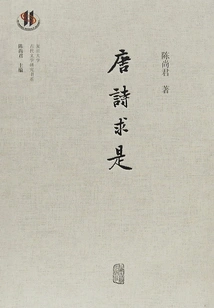
Tang Poetry Seeking Truth
Literature唐诗求是
Chen Shangjun
This book brings together the author's major achievements in the process of re-editing and researching all Tang poems over the years. The collected chapters cover general collections, special collections, and anthologies of Tang Dynasty poetry. The exploration of the lives and creations of Tang Dynasty poets is well-founded. Whether it is a case study of Tang Dynasty poetry or an investigation of the literary history of a generation, it has the significance of enlightenment.
This book brings together the author's major achievements in the process of re-editing and researching all Tang poems over the years. The collected chapters cover general collections, special collections, and anthologies of Tang Dynasty poetry. The exploration of the lives and creations of Tang Dynasty poets is well-founded. Whether it is a case study of Tang Dynasty poetry or an investigation of the literary history of a generation, it has the significance of enlightenment.
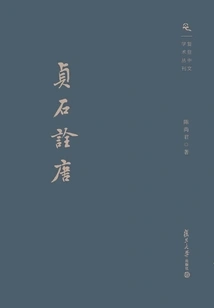
贞石诠唐
Chen Shangjun
The study of the literature and history of the Tang Dynasty has been nourished by countless new materials such as Dunhuang documents, foreign classics, two collections of Buddhism and Taoism, and stone inscriptions over the past century. Scholars specializing in the Tang Dynasty, such as Chen Yinke, Cen Zhongmian, Yan Gengwang, Huang Yongnian, Zhang Guangda, Fu Xuancong, Tao Min, etc., Made outstanding achievements, all relying on their comprehensive mastery of existing classics and new documents and their mutual invention. How can I celebrate and comfort those who live in this era and specialize in governing the Tang Dynasty like me?
The study of the literature and history of the Tang Dynasty has been nourished by countless new materials such as Dunhuang documents, foreign classics, two collections of Buddhism and Taoism, and stone inscriptions over the past century. Scholars specializing in the Tang Dynasty, such as Chen Yinke, Cen Zhongmian, Yan Gengwang, Huang Yongnian, Zhang Guangda, Fu Xuancong, Tao Min, etc., Made outstanding achievements, all relying on their comprehensive mastery of existing classics and new documents and their mutual invention. How can I celebrate and comfort those who live in this era and specialize in governing the Tang Dynasty like me?