Library
Browse and search books
1 novel found
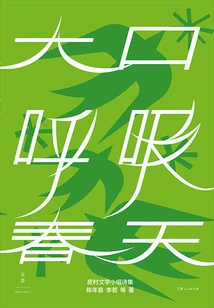
Take a Big Breath of Spring
Literature大口呼吸春天
Chen Nianxi Li Ruo Et Al.
Pi Village, Jinzhan Township, Chaoyang District, Beijing, is located outside the Fifth Ring Road. Many migrant workers live here, including many workers who love literature. Most of them live in Pi Village or nearby, work in the city, and write in their spare time. Since 2014, Zhang Huiyu, a young teacher at Peking University, has begun giving free classes to literature-loving workers in Picun, and has attracted a group of intellectuals to join the volunteer team, and a group of grassroots authors represented by Fan Yusu have emerged one after another. Since 2019, the Picun Literary Group has published a bimonthly electronic magazine "New Workers Literature" and holds the "Workers Literature Cup" essay competition every year. In recent years, the influence of Picun Literary Group has been expanding day by day. "New Workers' Literature" and "Workers' Literature Cup" have gradually attracted the participation of literature lovers from all over the country, covering grassroots workers from all walks of life. These works present rich literary imagination, diverse life experiences and sincere and simple emotions of the times. Following "Worker's Stars", this book selects nearly 150 works by 15 poets from Picun. The authors include not only workers active in Beijing, but also writers in other places who have published poems in "New Workers' Literature" or won the "Workers' Literature Award". Their identities are miners, domestic workers, masons, nannies, machine workers... Their poems can present unknown details of various industries and poetic moments that only those who have experienced them can capture. From fields and workshops to streets and vast cities, these poems condense the dense texture of survival experience. They not only contain deep and strong emotions for hometown and life, but also contain thoughts on the value of labor and human dignity. They are also the most sincere and passionate voices of distinct individuals towards the meaning of survival. The style of these poems is rough and vivid, opening up a unique aesthetic style outside the intellectual community. They can be called the "new Yuefu" of our era.
Pi Village, Jinzhan Township, Chaoyang District, Beijing, is located outside the Fifth Ring Road. Many migrant workers live here, including many workers who love literature. Most of them live in Pi Village or nearby, work in the city, and write in their spare time. Since 2014, Zhang Huiyu, a young teacher at Peking University, has begun giving free classes to literature-loving workers in Picun, and has attracted a group of intellectuals to join the volunteer team, and a group of grassroots authors represented by Fan Yusu have emerged one after another. Since 2019, the Picun Literary Group has published a bimonthly electronic magazine "New Workers Literature" and holds the "Workers Literature Cup" essay competition every year. In recent years, the influence of Picun Literary Group has been expanding day by day. "New Workers' Literature" and "Workers' Literature Cup" have gradually attracted the participation of literature lovers from all over the country, covering grassroots workers from all walks of life. These works present rich literary imagination, diverse life experiences and sincere and simple emotions of the times. Following "Worker's Stars", this book selects nearly 150 works by 15 poets from Picun. The authors include not only workers active in Beijing, but also writers in other places who have published poems in "New Workers' Literature" or won the "Workers' Literature Award". Their identities are miners, domestic workers, masons, nannies, machine workers... Their poems can present unknown details of various industries and poetic moments that only those who have experienced them can capture. From fields and workshops to streets and vast cities, these poems condense the dense texture of survival experience. They not only contain deep and strong emotions for hometown and life, but also contain thoughts on the value of labor and human dignity. They are also the most sincere and passionate voices of distinct individuals towards the meaning of survival. The style of these poems is rough and vivid, opening up a unique aesthetic style outside the intellectual community. They can be called the "new Yuefu" of our era.