Library
Browse and search books
3 novels found
从最强者手下走出的恶魔枭雄
Chen Lunan
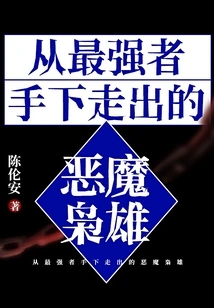
Xing Shou has been under the control and enslavement of the most powerful magician on the continent of Yefu, Orson, since he was a child. He has grown into a unique character with a mixture of good and evil, good and evil. The only thing he cares about is his younger brother Xing Xi, and he will do anything to protect him. In this dark continent covered by monsters and unable to see the sun, in order to survive, Star Hunter can only continue to make big mistakes, hide his sorrow and loneliness, and walk on the path of a demonic hero...
Xing Shou has been under the control and enslavement of the most powerful magician on the continent of Yefu, Orson, since he was a child. He has grown into a unique character with a mixture of good and evil, good and evil. The only thing he cares about is his younger brother Xing Xi, and he will do anything to protect him. In this dark continent covered by monsters and unable to see the sun, in order to survive, Star Hunter can only continue to make big mistakes, hide his sorrow and loneliness, and walk on the path of a demonic hero...
织色入史笺
Chen Lunan
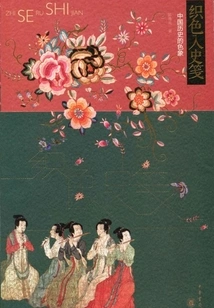
In ancient China, there were only five most important colors: red, green, yellow, white, and black. The five-color system was roughly formed in the Spring and Autumn Period. It is mutually exclusive with the Five Elements Theory that was popular in ancient times, and has penetrated into many aspects such as politics, culture, and social life. This book explains color from the perspective of humanities and history, describing the inextricable connection between color and ancient Chinese culture (including politics, history, literature, folk customs, art, etc.). The content is divided into five chapters. In terms of style, it starts with the glyphs of colors and traces their origins; then the allusions derived from them are divided into categories to explain the influence of colors in all aspects of ancient culture.
In ancient China, there were only five most important colors: red, green, yellow, white, and black. The five-color system was roughly formed in the Spring and Autumn Period. It is mutually exclusive with the Five Elements Theory that was popular in ancient times, and has penetrated into many aspects such as politics, culture, and social life. This book explains color from the perspective of humanities and history, describing the inextricable connection between color and ancient Chinese culture (including politics, history, literature, folk customs, art, etc.). The content is divided into five chapters. In terms of style, it starts with the glyphs of colors and traces their origins; then the allusions derived from them are divided into categories to explain the influence of colors in all aspects of ancient culture.
中国历史的色象
Chen Lunan
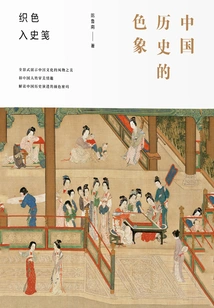
In ancient China, there were only five most important colors: red, green, yellow, white, and black. In the evolution of Chinese civilization, the five-color system and the five-element theory are mutually reinforcing and have penetrated into many aspects such as politics, culture, and social life. This book explains color from the perspective of humanities and history, describing the inextricable connection between color and ancient Chinese culture (including politics, history, literature, folk customs, art, etc.). The author uses history as a bead and colors as a network to pick up and string together the old customs, such as music, chess, calligraphy and painting, poetry, wine and recreation, grand talks in temples, boudoir gossip, flowers, birds, fish and insects, humans, ghosts and immortals... The colorful images of China for thousands of years are presented in a dazzling way. At the same time, this book decodes the various major, far-reaching, precise and complex social meanings given by the Chinese people in the political culture of five colors, and sheds light on the cultural mysteries of China's historical evolution.
In ancient China, there were only five most important colors: red, green, yellow, white, and black. In the evolution of Chinese civilization, the five-color system and the five-element theory are mutually reinforcing and have penetrated into many aspects such as politics, culture, and social life. This book explains color from the perspective of humanities and history, describing the inextricable connection between color and ancient Chinese culture (including politics, history, literature, folk customs, art, etc.). The author uses history as a bead and colors as a network to pick up and string together the old customs, such as music, chess, calligraphy and painting, poetry, wine and recreation, grand talks in temples, boudoir gossip, flowers, birds, fish and insects, humans, ghosts and immortals... The colorful images of China for thousands of years are presented in a dazzling way. At the same time, this book decodes the various major, far-reaching, precise and complex social meanings given by the Chinese people in the political culture of five colors, and sheds light on the cultural mysteries of China's historical evolution.