Library
Browse and search books
14 novels found
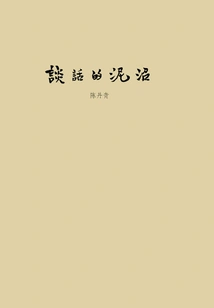
Quagmire of Conversation
Literature谈话的泥沼
Chen Danqing
Directly pointing to reality, laughing and scolding, this is Chen Danqing's first collection of remarks. The book is a collection of words compiled by Chen Danqing from interviews or conversations with people in recent years, carefully selected and compiled into a collection. The title of the book "The Quagmire of Conversation" seems to imply the impossibility of communication. Some chapters in the book also deliberately retain the dilemma of conversation between media carnival and personal expression. This situation of being stuck in the "quagmire" is worth its own price. It requires deep thought. On the other hand, most of the chapters in the book reflect the possibility and necessity of communication after removing the preset stance of the media. For example, the dialogue between Chen Danqing and Wang Anyi. The two people's thoughts and knowledge stimulated and explained each other. It was very rewarding to read. This is a rich dialogue, and it is also a reflection on the dialogue itself.
Directly pointing to reality, laughing and scolding, this is Chen Danqing's first collection of remarks. The book is a collection of words compiled by Chen Danqing from interviews or conversations with people in recent years, carefully selected and compiled into a collection. The title of the book "The Quagmire of Conversation" seems to imply the impossibility of communication. Some chapters in the book also deliberately retain the dilemma of conversation between media carnival and personal expression. This situation of being stuck in the "quagmire" is worth its own price. It requires deep thought. On the other hand, most of the chapters in the book reflect the possibility and necessity of communication after removing the preset stance of the media. For example, the dialogue between Chen Danqing and Wang Anyi. The two people's thoughts and knowledge stimulated and explained each other. It was very rewarding to read. This is a rich dialogue, and it is also a reflection on the dialogue itself.
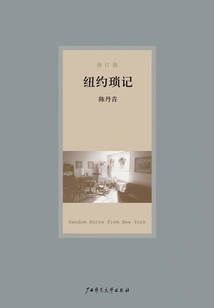
New York Trivia (revised Edition)
Literature纽约琐记(修订版)
Chen Danqing
"New York Trivia" by Chen Danqing, a well-known domestic public intellectual, painter, and cultural critic, has been revised and republished. In this revision, all the original second volume has been deleted, while a large number of pictures have been added, printed in color, and the cover has been redesigned to make it more readable and beautiful. Several familiar readers criticized me and said that among the three or five "books" I have published in recent years, "New York Trivia" is still readable. This book is the closing of my life in New York and the beginning of my first writing... Because of this book, my life has changed and a new area has appeared. The first edition was divided into two volumes. The second volume contains mostly interviews, essays and Chinese topics. This revision has deleted all of them. At the same time, a large number of pictures have been added, printed in color, and the cover has been redesigned. Even before I read the book, I was already a little happy.
"New York Trivia" by Chen Danqing, a well-known domestic public intellectual, painter, and cultural critic, has been revised and republished. In this revision, all the original second volume has been deleted, while a large number of pictures have been added, printed in color, and the cover has been redesigned to make it more readable and beautiful. Several familiar readers criticized me and said that among the three or five "books" I have published in recent years, "New York Trivia" is still readable. This book is the closing of my life in New York and the beginning of my first writing... Because of this book, my life has changed and a new area has appeared. The first edition was divided into two volumes. The second volume contains mostly interviews, essays and Chinese topics. This revision has deleted all of them. At the same time, a large number of pictures have been added, printed in color, and the cover has been redesigned. Even before I read the book, I was already a little happy.
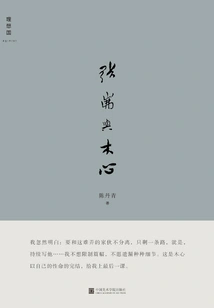
Zhang Hu and Mu Xin
Literature张岪与木心
Chen Danqing
"I suddenly understood: There is only one way to stay with this difficult guy, which is to continue writing about him... I don't want to limit the length or leave out all kinds of details. This is the end of Mu Xin's own life to teach me the last lesson." - Chen Danqing Zhang Hu is the pen name Mu Xin gave Chen Danqing. In 1982, Chen Danqing and Mu Xin went to the United States and met on the New York subway. They became both mentor and friend for nearly thirty years. After Mu Xin passed away in 2011, Chen Danqing began to write about Mu Xin. Eight years later, this collection was produced. The book uses extremely realistic pen and ink and careful and sincere words to recall Mu Xin's literary journey starting from the end point. It is rare that a person's death is described in such detail, and it is rare that such words gaze at death so affectionately. "Zhang Hu and Mu Xin" records the death of literature and itself becomes the literature of death.
"I suddenly understood: There is only one way to stay with this difficult guy, which is to continue writing about him... I don't want to limit the length or leave out all kinds of details. This is the end of Mu Xin's own life to teach me the last lesson." - Chen Danqing Zhang Hu is the pen name Mu Xin gave Chen Danqing. In 1982, Chen Danqing and Mu Xin went to the United States and met on the New York subway. They became both mentor and friend for nearly thirty years. After Mu Xin passed away in 2011, Chen Danqing began to write about Mu Xin. Eight years later, this collection was produced. The book uses extremely realistic pen and ink and careful and sincere words to recall Mu Xin's literary journey starting from the end point. It is rare that a person's death is described in such detail, and it is rare that such words gaze at death so affectionately. "Zhang Hu and Mu Xin" records the death of literature and itself becomes the literature of death.
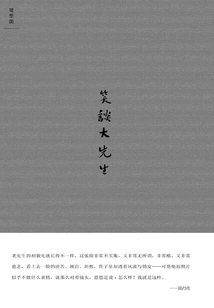
Joking About Mr. Big
Literature笑谈大先生
Chen Danqing
Rather than restoring Lu Xun, it is better to restore an era. This book contains the author's seven speeches on Lu Xun in recent years. Although it only contains tens of thousands of words, it opens up a new realm on the edge of the vast research on Lu Xun. Commentators may say that it "restores" Lu Xun, or that it "recalls" Lu Xun; and for the author, such public discussion of Mr. Da may be more like a wish.
Rather than restoring Lu Xun, it is better to restore an era. This book contains the author's seven speeches on Lu Xun in recent years. Although it only contains tens of thousands of words, it opens up a new realm on the edge of the vast research on Lu Xun. Commentators may say that it "restores" Lu Xun, or that it "recalls" Lu Xun; and for the author, such public discussion of Mr. Da may be more like a wish.

Abandoned Collection
Literature荒废集
Chen Danqing
Commemorating the years wasted by generations. "Retrograde Collection" and its "After Sequel" are Chen Danqing's latest collection of essays. This book collects some of the author's essays in recent years, which have occasionally appeared in newspapers and books. The nine short drafts of "Free Talk" are an attempt at a new way of speaking; three re-talks about Lu Xun's speeches and three commentaries on the Olympic opening ceremony are in-depth elaborations of history and literature. It shows the author's unique feelings for Lu Xun and the entire Chinese nation. The writing is concise, fast and powerful. A long essay looking back at the 1970s, describing the desolate fate of several generations during the decade of catastrophe. The writing is objective and calm, which makes people feel emotional.
Commemorating the years wasted by generations. "Retrograde Collection" and its "After Sequel" are Chen Danqing's latest collection of essays. This book collects some of the author's essays in recent years, which have occasionally appeared in newspapers and books. The nine short drafts of "Free Talk" are an attempt at a new way of speaking; three re-talks about Lu Xun's speeches and three commentaries on the Olympic opening ceremony are in-depth elaborations of history and literature. It shows the author's unique feelings for Lu Xun and the entire Chinese nation. The writing is concise, fast and powerful. A long essay looking back at the 1970s, describing the desolate fate of several generations during the decade of catastrophe. The writing is objective and calm, which makes people feel emotional.
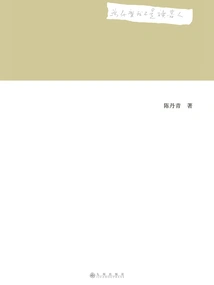
Why Am I Not a Scholar?
Literature为什么我不是读书人
Chen Danqing
This book is a collection of selected interviews and speeches by Chen Danqing in the past ten years, divided into five volumes: interviews, speeches, about "Part", about Mu Xin, and about Mu Xin Art Museum. There was still endless talk about art and literature in the conversation, as well as a lot of copywriting since he started working on "Part" and Mu Xin Art Museum. Facing the impetuosity of the current traffic era, he asked, watch, be watched, spread, be spread, which end are you on?
This book is a collection of selected interviews and speeches by Chen Danqing in the past ten years, divided into five volumes: interviews, speeches, about "Part", about Mu Xin, and about Mu Xin Art Museum. There was still endless talk about art and literature in the conversation, as well as a lot of copywriting since he started working on "Part" and Mu Xin Art Museum. Facing the impetuosity of the current traffic era, he asked, watch, be watched, spread, be spread, which end are you on?
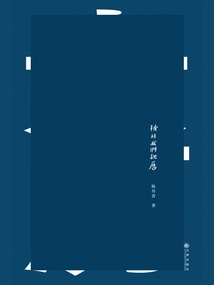
Unless We Experience it Ourselves
Literature除非我们亲历
Chen Danqing
This book contains ten commemorative articles written by Chen Danqing for his deceased teachers and friends in the past ten years. He said that his writing was all entrusted by others, but these ten articles were written after hearing the bad news. When lamenting the life experiences and sufferings of his predecessors, he said that to understand the memories of the past, we must not experience them ourselves.
This book contains ten commemorative articles written by Chen Danqing for his deceased teachers and friends in the past ten years. He said that his writing was all entrusted by others, but these ten articles were written after hearing the bad news. When lamenting the life experiences and sufferings of his predecessors, he said that to understand the memories of the past, we must not experience them ourselves.
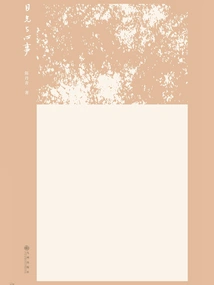
Eyes and Thoughts
Literature目光与心事
Chen Danqing
This book contains Chen Danqing's latest art criticism articles in the past ten years, spanning drama, novels, music, photography, and amateur paintings. The author mocks these comments as "frivolous", but one can see in them the praise of "truth", the amazement of "spirit", and the lamentation of "the fate of the artist"...
This book contains Chen Danqing's latest art criticism articles in the past ten years, spanning drama, novels, music, photography, and amateur paintings. The author mocks these comments as "frivolous", but one can see in them the praise of "truth", the amazement of "spirit", and the lamentation of "the fate of the artist"...
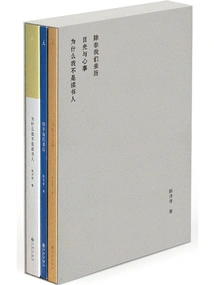
陈丹青精选集(套装共3册)
Chen Danqing
Chen Danqing's three-volume set of new books. "Why I'm Not a Scholar" is a collection of ten years of interviews and speeches, talking about "Part" and Mu Xin Art Museum that he cares about; "Looks and Mind" spans ten years, the first collection of art criticism; "Unless We Experience It" ten years, ten personally experienced memories.
Chen Danqing's three-volume set of new books. "Why I'm Not a Scholar" is a collection of ten years of interviews and speeches, talking about "Part" and Mu Xin Art Museum that he cares about; "Looks and Mind" spans ten years, the first collection of art criticism; "Unless We Experience It" ten years, ten personally experienced memories.
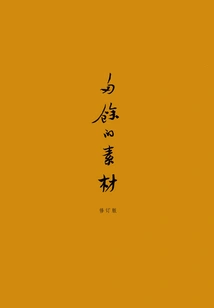
Superfluous Material (revised Version)
Literature多余的素材(修订版)
Chen Danqing
Chen Danqing, a well-known domestic public intellectual, painter, and cultural critic, has published another masterpiece after "The Sequel to the Retrograde Collection". This book is a revised version of "Superfluous Materials". The content has been slightly changed, and a number of illustrations have been added and replaced, reflecting a more sophisticated matching relationship between pictures and text. This collection of essays uses daily details to touch various memories and gain a sense of history. This revision adds or replaces some rare old photos to support the text, providing a unique graphic narrative for many deformed and lost histories that are not so far away from us.
Chen Danqing, a well-known domestic public intellectual, painter, and cultural critic, has published another masterpiece after "The Sequel to the Retrograde Collection". This book is a revised version of "Superfluous Materials". The content has been slightly changed, and a number of illustrations have been added and replaced, reflecting a more sophisticated matching relationship between pictures and text. This collection of essays uses daily details to touch various memories and gain a sense of history. This revision adds or replaces some rare old photos to support the text, providing a unique graphic narrative for many deformed and lost histories that are not so far away from us.
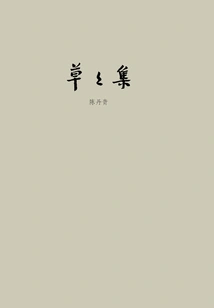
Caocaoji
Literature草草集
Chen Danqing
After "The Wasted Collection", this is Chen Danqing's first collection of essays in five years. This book is a collection of essays and essays written by Chen Danqing in recent years. According to the theme, it is divided into four parts: art, image, society and Mu Xin. Although the themes and contents of each article are different, it is not difficult to read the author's unique insights and style. The whole book either talks about art or history, and is very informative and thought-provoking, continuing the high level of his old works. In addition to the essays, three essays written by Chen Danqing in memory of Mu Xin are specially included. Among them, "Guarding and Farewell" records the moments before and after Mu Xin's death. Compared with the previous essays that were full of laughter and curses, it is sad, touching and more tender.
After "The Wasted Collection", this is Chen Danqing's first collection of essays in five years. This book is a collection of essays and essays written by Chen Danqing in recent years. According to the theme, it is divided into four parts: art, image, society and Mu Xin. Although the themes and contents of each article are different, it is not difficult to read the author's unique insights and style. The whole book either talks about art or history, and is very informative and thought-provoking, continuing the high level of his old works. In addition to the essays, three essays written by Chen Danqing in memory of Mu Xin are specially included. Among them, "Guarding and Farewell" records the moments before and after Mu Xin's death. Compared with the previous essays that were full of laughter and curses, it is sad, touching and more tender.
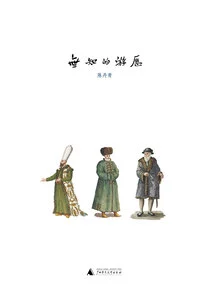
Ignorant Travel
Literature无知的游历
Chen Danqing
Chen Danqing's first travelogue, a foreign customs in the eyes of an artist. Since 2009, Chen Danqing has tried to write travel notes. This book contains a complete collection of long texts written by the author in Turkey, Russia, Germany, and Hungary. This is not only Chen Danqing's first travel note, but also Chen Danqing's first attempt at medium-length writing besides essays. Judging from the final text, these chapters are unique and full of historical and humanistic flavor. They are rare travel notes that are readable and charming. Chen Danqing recorded the little-known scenery of the four places with a painter's perspective, and provided rich nutrition with his interest and knowledge in painting, music, humanities and history. In addition, this book also contains more than 300 on-site and historical pictures from various places and Chen Danqing's sketch manuscripts. The whole book is printed in four colors and glue-stitched, and is carefully arranged by Chen Danqing. It is not only a good travelogue, but also an exquisite and unique travel guide, worth collecting.
Chen Danqing's first travelogue, a foreign customs in the eyes of an artist. Since 2009, Chen Danqing has tried to write travel notes. This book contains a complete collection of long texts written by the author in Turkey, Russia, Germany, and Hungary. This is not only Chen Danqing's first travel note, but also Chen Danqing's first attempt at medium-length writing besides essays. Judging from the final text, these chapters are unique and full of historical and humanistic flavor. They are rare travel notes that are readable and charming. Chen Danqing recorded the little-known scenery of the four places with a painter's perspective, and provided rich nutrition with his interest and knowledge in painting, music, humanities and history. In addition, this book also contains more than 300 on-site and historical pictures from various places and Chen Danqing's sketch manuscripts. The whole book is printed in four colors and glue-stitched, and is carefully arranged by Chen Danqing. It is not only a good travelogue, but also an exquisite and unique travel guide, worth collecting.

Regressive Set
Literature退步集
Chen Danqing
"Collection of Regression" is a collection of some of Chen Danqing's writings in the five years since he returned to China. There are more than 30 articles on topics such as painting, video, city, and education. It can also be understood as a reflection and questioning of various "progress views" in the field of Chinese humanities and art over the past century. Perhaps due to his long years of painting training, Chen Danqing's writing is keen in observation, details are particularly vivid, and he often has witty remarks. Book reviewer Huang Jiwei said: "Although Chen Danqing is a painter, many essayists cannot write words like his. In addition, although the readers are not him himself, the 'estrangement' and 'helplessness' between culture and context in this Turtle School's writings, and even the mentality of 'rejection and welcome' are not difficult for everyone to empathize with." In "Retrograde Collection", a considerable amount of space is devoted to Chen Danqing's lament about today's urban construction. Large-scale urban construction has ruthlessly destroyed the city's original cultural ecology and historical memory, causing the artist Chen Danqing to "cry" with heart-broken heart: "The Jiangnan water town is gone."
"Collection of Regression" is a collection of some of Chen Danqing's writings in the five years since he returned to China. There are more than 30 articles on topics such as painting, video, city, and education. It can also be understood as a reflection and questioning of various "progress views" in the field of Chinese humanities and art over the past century. Perhaps due to his long years of painting training, Chen Danqing's writing is keen in observation, details are particularly vivid, and he often has witty remarks. Book reviewer Huang Jiwei said: "Although Chen Danqing is a painter, many essayists cannot write words like his. In addition, although the readers are not him himself, the 'estrangement' and 'helplessness' between culture and context in this Turtle School's writings, and even the mentality of 'rejection and welcome' are not difficult for everyone to empathize with." In "Retrograde Collection", a considerable amount of space is devoted to Chen Danqing's lament about today's urban construction. Large-scale urban construction has ruthlessly destroyed the city's original cultural ecology and historical memory, causing the artist Chen Danqing to "cry" with heart-broken heart: "The Jiangnan water town is gone."
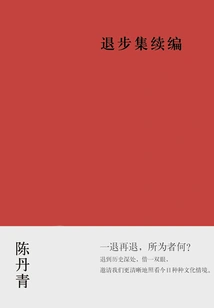
Sequel to the Retrograde Episode
Literature退步集续编
Chen Danqing
This book is a compilation of Chen Danqing's essays, blogs, and interviews in the past two years. It is similar in style to "Retrograde Collection". It includes a systematic analysis of the education system, a reference to the "Renaissance", and three essays about Lu Xun. Editor-in-chief Chen Lingyun said: "When reading "Retrograde Collection", I can feel Chen Danqing's enthusiasm, sharp and lively writing style, and the posture of a questioner. But in "Retrograde Collection Sequel", he not only asked questions but also tried to answer them, especially for some specific questions. Zhang Xian used too much force, which may be due to his gradual understanding of the domestic world. Another feeling is that Chen Danqing lacks interlocutors. "Compared with "Retrograde Collection", the topics of this book have been adjusted: the discussion of education and city has been relatively reduced, and the analysis of humanities and art has been relatively increased. Looking back on the past, the author borrowed a pair of eyes from history and tried to describe the various situations of today's culture more clearly, so he talked about Lu Xun, the Renaissance, and Mu Xin.
This book is a compilation of Chen Danqing's essays, blogs, and interviews in the past two years. It is similar in style to "Retrograde Collection". It includes a systematic analysis of the education system, a reference to the "Renaissance", and three essays about Lu Xun. Editor-in-chief Chen Lingyun said: "When reading "Retrograde Collection", I can feel Chen Danqing's enthusiasm, sharp and lively writing style, and the posture of a questioner. But in "Retrograde Collection Sequel", he not only asked questions but also tried to answer them, especially for some specific questions. Zhang Xian used too much force, which may be due to his gradual understanding of the domestic world. Another feeling is that Chen Danqing lacks interlocutors. "Compared with "Retrograde Collection", the topics of this book have been adjusted: the discussion of education and city has been relatively reduced, and the analysis of humanities and art has been relatively increased. Looking back on the past, the author borrowed a pair of eyes from history and tried to describe the various situations of today's culture more clearly, so he talked about Lu Xun, the Renaissance, and Mu Xin.