Library
Browse and search books
3 novels found
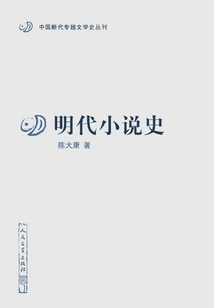
History of Ming Dynasty Novels
Literature明代小说史
Chen Dakang
This book completely describes and analyzes the development process of novel creation in the Ming Dynasty, deeply explores its characteristics and laws, and has creative research and wonderful discussions on many phenomena and issues. The book consciously attempts various research methods, such as fuzzy mathematics, catastrophe theory and even mathematical statistics, etc., And conducts a comprehensive study on the impact of the five intersecting and mutually restricting factors of author, publishing, novel theory, official cultural policy and readers on the development of novels. This makes the history of novels truly a dynamic history of novel development and creates a new paradigm for the study of novel history.
This book completely describes and analyzes the development process of novel creation in the Ming Dynasty, deeply explores its characteristics and laws, and has creative research and wonderful discussions on many phenomena and issues. The book consciously attempts various research methods, such as fuzzy mathematics, catastrophe theory and even mathematical statistics, etc., And conducts a comprehensive study on the impact of the five intersecting and mutually restricting factors of author, publishing, novel theory, official cultural policy and readers on the development of novels. This makes the history of novels truly a dynamic history of novel development and creates a new paradigm for the study of novel history.
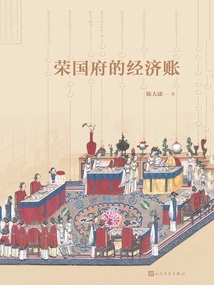
Economic Accounts of Rongguo Mansion
Literature荣国府的经济账
Chen Dakang
In the final analysis, the collapse of the Rongguo Mansion is actually the collapse of the economy. The unfolding of the story of "A Dream of Red Mansions" is closely related to economic issues. However, economic issues are only a hidden existence in the novel, which is the background of the novel. Of course, when the plot requires it, it emerges and becomes the content of the novel's story. "Economic Issues in the Rongguo Mansion" analyzes eight issues including Lin Daiyu's obsession with family property, why Li Wan was not a family member, Wang Xifeng and monthly money management, and the stewardship class in the Jia Mansion. The author handles the case like a detective, with novel angles, strict logic, and penetrating analysis, which makes the case amazing.
In the final analysis, the collapse of the Rongguo Mansion is actually the collapse of the economy. The unfolding of the story of "A Dream of Red Mansions" is closely related to economic issues. However, economic issues are only a hidden existence in the novel, which is the background of the novel. Of course, when the plot requires it, it emerges and becomes the content of the novel's story. "Economic Issues in the Rongguo Mansion" analyzes eight issues including Lin Daiyu's obsession with family property, why Li Wan was not a family member, Wang Xifeng and monthly money management, and the stewardship class in the Jia Mansion. The author handles the case like a detective, with novel angles, strict logic, and penetrating analysis, which makes the case amazing.
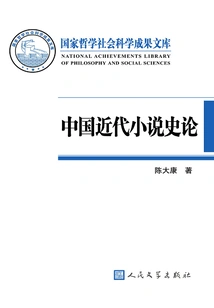
A History of Modern Chinese Novels
Literature中国近代小说史论
Chen Dakang
This book combs the status of novel creation and theory from the end of Daoguang to the end of Tongzhi, discusses the initial changes in the development system of modern novels, corrects past conclusions that are inconsistent with the actual development of novels, and provides a realistic description and analysis of the "revolution in the novel world" and its subsequent changes. Based on a large amount of first-hand information, this book elaborates on some issues that are very important in the history of modern novels but have not been studied in the past, such as daily novels, piracy, novel reprints, novel special issues, translated novels, etc. It also describes and analyzes the process, motivations and endings of the changes in modern novel theory.
This book combs the status of novel creation and theory from the end of Daoguang to the end of Tongzhi, discusses the initial changes in the development system of modern novels, corrects past conclusions that are inconsistent with the actual development of novels, and provides a realistic description and analysis of the "revolution in the novel world" and its subsequent changes. Based on a large amount of first-hand information, this book elaborates on some issues that are very important in the history of modern novels but have not been studied in the past, such as daily novels, piracy, novel reprints, novel special issues, translated novels, etc. It also describes and analyzes the process, motivations and endings of the changes in modern novel theory.