Library
Browse and search books
2 novels found
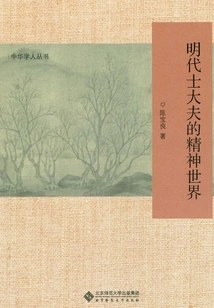
明代士大夫的精神世界
Chen Baoliang
"Ming Xue", as the successor of "Song Xue", is also called "Song Ming Neo-Confucianism". The local officials of the Ming Dynasty should belong to the new type of scholar-officials after the Sui and Tang Dynasties. However, in terms of the scholar-officials of the Ming Dynasty who extremely pursued "pure discussion" and had the characteristics of personal liberation, their spiritual world was the direct successor of the scholar-officials of the Six Dynasties. This book explains the knowledge and actions of scholar-bureaucrats in the Ming Dynasty through the research method of interaction between thought and society, that is, the context of history and society, from multiple perspectives such as the distinction between a gentleman and a villain, the confusion of origin and official seclusion, the dilemma of loyalty, filial piety and justice, the choice between life and death, the distinction between elegance and secularity and their interaction. This is undoubtedly different from previous research that was too biased towards "ideational history", but hopes to reinterpret the actual dynamics of the intellectual history of the Ming Dynasty based on the interrelationships in political history, educational history, regional studies and other fields. This is a study of spiritual history, and its purpose is to examine the relationship between the spirit of native officials and politics and society.
"Ming Xue", as the successor of "Song Xue", is also called "Song Ming Neo-Confucianism". The local officials of the Ming Dynasty should belong to the new type of scholar-officials after the Sui and Tang Dynasties. However, in terms of the scholar-officials of the Ming Dynasty who extremely pursued "pure discussion" and had the characteristics of personal liberation, their spiritual world was the direct successor of the scholar-officials of the Six Dynasties. This book explains the knowledge and actions of scholar-bureaucrats in the Ming Dynasty through the research method of interaction between thought and society, that is, the context of history and society, from multiple perspectives such as the distinction between a gentleman and a villain, the confusion of origin and official seclusion, the dilemma of loyalty, filial piety and justice, the choice between life and death, the distinction between elegance and secularity and their interaction. This is undoubtedly different from previous research that was too biased towards "ideational history", but hopes to reinterpret the actual dynamics of the intellectual history of the Ming Dynasty based on the interrelationships in political history, educational history, regional studies and other fields. This is a study of spiritual history, and its purpose is to examine the relationship between the spirit of native officials and politics and society.
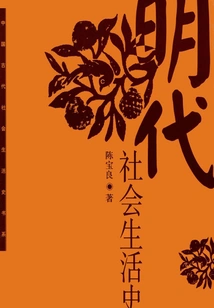
明代社会生活史
Chen Baoliang
The society of the Ming Dynasty was a process of transformation. The continuous growth of the population, the commercialization and monetization of the economy, the prosperity of cities, the acceleration of social mobility, and the "vitality" and "diversity" of life and culture all showed that it was essentially different from the previous era. The cities of the Ming Dynasty brought together all kinds of people. Government officials were full of ambition and went out to play gongs to make their debut; scholars who took the imperial examination fell into disgrace and became guests of the mountain people, working as idlers in yamen and brothels to enjoy the autumn breeze; businessmen wore gorgeous clothes and walked in and out of flower streets; bachelors and bachelors, dressed in short clothes and carrying scales, hammers, and fancy-dressed concubines and female helpers, went in and out of the boudoirs of officials' families.
The society of the Ming Dynasty was a process of transformation. The continuous growth of the population, the commercialization and monetization of the economy, the prosperity of cities, the acceleration of social mobility, and the "vitality" and "diversity" of life and culture all showed that it was essentially different from the previous era. The cities of the Ming Dynasty brought together all kinds of people. Government officials were full of ambition and went out to play gongs to make their debut; scholars who took the imperial examination fell into disgrace and became guests of the mountain people, working as idlers in yamen and brothels to enjoy the autumn breeze; businessmen wore gorgeous clothes and walked in and out of flower streets; bachelors and bachelors, dressed in short clothes and carrying scales, hammers, and fancy-dressed concubines and female helpers, went in and out of the boudoirs of officials' families.