Library
Browse and search books
6 novels found
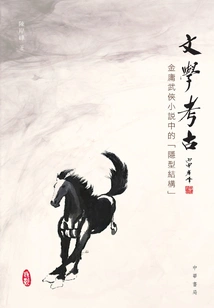
文学考古:金庸武侠小说中的「隐型结构」
Chen Anfeng
"Literary archeology" and "hidden structure" are two academic concepts proposed in this book, which are unprecedented. In fact, conscious transplantation is common in literary creation, and pure transplantation is not worthy of praise. However, Jin Yong transplanted the prototypes, plots, and story structures and props from Chinese and Western novels in his martial arts novels, and modified them to a great extent and created them. Even the same character and the same plot have many variations, which is dizzying and breathtaking.
"Literary archeology" and "hidden structure" are two academic concepts proposed in this book, which are unprecedented. In fact, conscious transplantation is common in literary creation, and pure transplantation is not worthy of praise. However, Jin Yong transplanted the prototypes, plots, and story structures and props from Chinese and Western novels in his martial arts novels, and modified them to a great extent and created them. Even the same character and the same plot have many variations, which is dizzying and breathtaking.
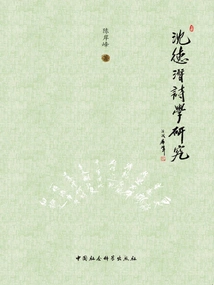
Research on Shen Deqian's Poetry
Literature沈德潜诗学研究
Chen Anfeng
In the poetry world of the late Ming and early Qing dynasties, competing schools of poetry emerged, but in the end they were inseparable from the debate over the Ming Dynasty retro-poetry school. The Gong'an School and Jingling School in the late Ming Dynasty and even the Shen Yun theory in the early Qing Dynasty appeared, either to attack its shortcomings or to form its own theory, and there is no doubt that it is inseparable from the poetic propositions of the Retro Poetry School. Shen Deqian of the Qing Dynasty was the summarizer of the debates in poetry circles in the late Ming and early Qing dynasties. Shen started from refuting Li Panlong's statement that "there were no five-character ancient poems in the Tang Dynasty but had its own ancient poems", advocated "poetic education" as a way to break through the gaps in Tang poetry, and proposed the poetic methodology of "transporting ideas with ideas", aiming to break through the shackles of the retro poetry school on poetic theory and lead the poetry world on the path of creation. On the other hand, Shen proposed a creative transformation of the "style theory", the core poetic concept of the retro poetry school. Shen advocated the mutual complementarity of "gentleness and honesty" and "style theory", and moved these two poetic concepts as the benchmark for his poetic criticism. Shen's more comprehensive response to the poetic debate can be found in his comprehensive anthology. From the analysis of poetic theory to the attitude, principles and orientation of poetry selection, it demonstrates the insight and persistence of a literati scholar with great character.
In the poetry world of the late Ming and early Qing dynasties, competing schools of poetry emerged, but in the end they were inseparable from the debate over the Ming Dynasty retro-poetry school. The Gong'an School and Jingling School in the late Ming Dynasty and even the Shen Yun theory in the early Qing Dynasty appeared, either to attack its shortcomings or to form its own theory, and there is no doubt that it is inseparable from the poetic propositions of the Retro Poetry School. Shen Deqian of the Qing Dynasty was the summarizer of the debates in poetry circles in the late Ming and early Qing dynasties. Shen started from refuting Li Panlong's statement that "there were no five-character ancient poems in the Tang Dynasty but had its own ancient poems", advocated "poetic education" as a way to break through the gaps in Tang poetry, and proposed the poetic methodology of "transporting ideas with ideas", aiming to break through the shackles of the retro poetry school on poetic theory and lead the poetry world on the path of creation. On the other hand, Shen proposed a creative transformation of the "style theory", the core poetic concept of the retro poetry school. Shen advocated the mutual complementarity of "gentleness and honesty" and "style theory", and moved these two poetic concepts as the benchmark for his poetic criticism. Shen's more comprehensive response to the poetic debate can be found in his comprehensive anthology. From the analysis of poetic theory to the attitude, principles and orientation of poetry selection, it demonstrates the insight and persistence of a literati scholar with great character.
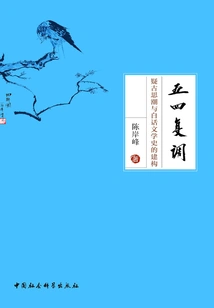
五四复调:疑古思潮与白话文学史的建构
Chen Anfeng
This book mainly re-examines the construction of the history of vernacular literature from the perspective of anti-ancient thoughts, with both historical tracing and synchronic comparison: the former is reflected in the key role played by anti-ancient thoughts in the construction of the history of vernacular literature; the latter can be seen in Hu Shi and Gu Jiegang's discussions on the methodology of constructing the history of vernacular literature, the theory of folk literature, and the relationship between the history of vernacular literature and nationalism. For the first time, this book regards Gu Jiegang as a key figure who jointly constructed the history of vernacular literature with Hu Shi. In short, this book involves not only a discussion of the history of vernacular literature, but also a review and revaluation of modern academic history.
This book mainly re-examines the construction of the history of vernacular literature from the perspective of anti-ancient thoughts, with both historical tracing and synchronic comparison: the former is reflected in the key role played by anti-ancient thoughts in the construction of the history of vernacular literature; the latter can be seen in Hu Shi and Gu Jiegang's discussions on the methodology of constructing the history of vernacular literature, the theory of folk literature, and the relationship between the history of vernacular literature and nationalism. For the first time, this book regards Gu Jiegang as a key figure who jointly constructed the history of vernacular literature with Hu Shi. In short, this book involves not only a discussion of the history of vernacular literature, but also a review and revaluation of modern academic history.
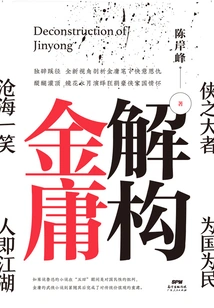
Deconstructing Jin Yong
Literature解构金庸
Chen Anfeng
"Deconstructing Jin Yong" comprehensively explains the humanistic thoughts and content structure of Jin Yong's martial arts novels. On the one hand, in view of the disorganized phenomenon of current Jin Yong research, it clarifies the important concepts of Jin Yong's martial arts novels, allowing readers to have a systematic understanding of Jin Yong's thoughts and the important concepts in his martial arts novels; on the other hand, it reveals the mystery of Jin Yong's creation and shows the interaction between Jin Yong's martial arts novels and Chinese and foreign novels.
"Deconstructing Jin Yong" comprehensively explains the humanistic thoughts and content structure of Jin Yong's martial arts novels. On the one hand, in view of the disorganized phenomenon of current Jin Yong research, it clarifies the important concepts of Jin Yong's martial arts novels, allowing readers to have a systematic understanding of Jin Yong's thoughts and the important concepts in his martial arts novels; on the other hand, it reveals the mystery of Jin Yong's creation and shows the interaction between Jin Yong's martial arts novels and Chinese and foreign novels.
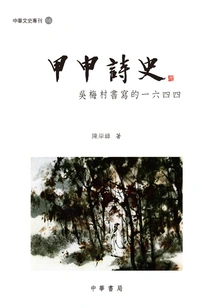
Jiashen Poetry History: 1644 Written by Wu Meicun (special Issue on Chinese Literature and History)
History甲申诗史:吴梅村书写的一六四四(中华文史专刊)
Chen Anfeng
Professor Chen Anfeng used the words and deeds of Wu Meicun's life to carefully demonstrate and describe the process of the collapse of the earth and the words and deeds of the emperors and ministers inside and outside the court, as well as the right and wrong causes and consequences. History can teach future generations, and characters can serve as models at home and abroad. The teachers, friends, and friends of Wu Meicun, Qian Qianyi, and the people of Melon, Vine, and Lotus Roots, no matter whether they are good, stupid, ugly, or various mental movements at the time, can all reflect how the conscience and self-nature emerge in the world when the country is in flux and the society is in crisis. The characteristic of Professor Chen's works is that he has always been able to use detailed materials as the basis, proficient language as a tool, and a serious attitude as the power to explain the profound things in simple terms and create touching results. I have always admired his works and consider them to be examples of the integration of academics and literature. They can be carefully read, studied or referred to by college experts, middle school teachers and students, and even amateurs. --Wang Jinguang [Evaluation Member of the Hong Kong Arts Development Council\u002F Emeritus Professor of the Chinese University of Hong Kong] The historical tragedy of the "Jiashen Incident", Chongzhen died for his country, the country fell, the sky collapsed, the ground was full of flames, and the earthquake This shocked the poet Wu Meicun (Wu Weiye, Jun Gong, 1609-1671) who was full of historical awareness. While enduring the humiliation, he could only write poems about the beginning and end of the overthrow of the country to fulfill his responsibilities as a historian and poet. His works are just like what Shen Deqian (Que Shi, 1673-1769) said: "The thoughts of the motherland are always revealed." Under Wumeicun's all-round poetic history, the earth-shaking turbulent changes of the "Jiashen Incident" are like a tragic scroll, slowly unfolding, with continuous sorrow and hatred, making people sing and cry. --Chen Anfeng
Professor Chen Anfeng used the words and deeds of Wu Meicun's life to carefully demonstrate and describe the process of the collapse of the earth and the words and deeds of the emperors and ministers inside and outside the court, as well as the right and wrong causes and consequences. History can teach future generations, and characters can serve as models at home and abroad. The teachers, friends, and friends of Wu Meicun, Qian Qianyi, and the people of Melon, Vine, and Lotus Roots, no matter whether they are good, stupid, ugly, or various mental movements at the time, can all reflect how the conscience and self-nature emerge in the world when the country is in flux and the society is in crisis. The characteristic of Professor Chen's works is that he has always been able to use detailed materials as the basis, proficient language as a tool, and a serious attitude as the power to explain the profound things in simple terms and create touching results. I have always admired his works and consider them to be examples of the integration of academics and literature. They can be carefully read, studied or referred to by college experts, middle school teachers and students, and even amateurs. --Wang Jinguang [Evaluation Member of the Hong Kong Arts Development Council\u002F Emeritus Professor of the Chinese University of Hong Kong] The historical tragedy of the "Jiashen Incident", Chongzhen died for his country, the country fell, the sky collapsed, the ground was full of flames, and the earthquake This shocked the poet Wu Meicun (Wu Weiye, Jun Gong, 1609-1671) who was full of historical awareness. While enduring the humiliation, he could only write poems about the beginning and end of the overthrow of the country to fulfill his responsibilities as a historian and poet. His works are just like what Shen Deqian (Que Shi, 1673-1769) said: "The thoughts of the motherland are always revealed." Under Wumeicun's all-round poetic history, the earth-shaking turbulent changes of the "Jiashen Incident" are like a tragic scroll, slowly unfolding, with continuous sorrow and hatred, making people sing and cry. --Chen Anfeng
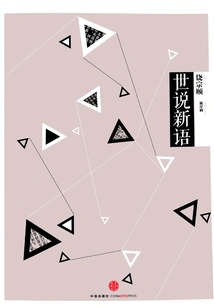
Shishuoxinyu
General Fiction世说新语
Chen Anfeng
This book is a representative work of "note novels" from the Wei, Jin, Southern and Northern Dynasties in China, written by Liu Yiqing. The whole book mainly records the lives and thoughts of the scholars, as well as the situation of the ruling class at that time, reflecting the thoughts, words and deeds of the literati during the Wei and Jin Dynasties, and the life style of the wealthy society. The records are rich and true, and comprehensively reflect the style of "Wei and Jin Dynasty Talks". The writing in this book is concise and comprehensive, and the artistic conception is far-reaching. It retains many well-known sayings and has also had a significant impact on the development of novels in later generations.
This book is a representative work of "note novels" from the Wei, Jin, Southern and Northern Dynasties in China, written by Liu Yiqing. The whole book mainly records the lives and thoughts of the scholars, as well as the situation of the ruling class at that time, reflecting the thoughts, words and deeds of the literati during the Wei and Jin Dynasties, and the life style of the wealthy society. The records are rich and true, and comprehensively reflect the style of "Wei and Jin Dynasty Talks". The writing in this book is concise and comprehensive, and the artistic conception is far-reaching. It retains many well-known sayings and has also had a significant impact on the development of novels in later generations.