Library
Browse and search books
1 novel found
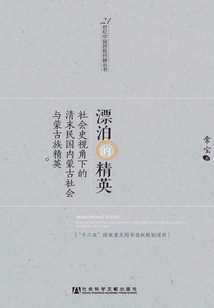
漂泊的精英:社会史视角下的清末民国内蒙古社会与蒙古族精英
Chang Bao
This book is a social historical study of the social changes and the flow of local Mongolian elites in Inner Mongolia in modern times. The late Qing Dynasty and the Republic of China, more specifically, the second half of the 19th century to the first half of the 20th century, was a crucial period of Chinese history and was particularly valuable for research. This was not only based on the development of the international political and economic environment and trends at that time, but more importantly, the rapid social structural changes not only made the Qing Empire face destruction, but also made the national power and local power of the Republic of China face major choices. The introduction of the concept of "nation" and the beginning of the formation of "nationalism" and "nation-state" have "constructed the nation as the subject of history" (Duara, 2003), changing the previous traditional state construction model, the relationship between the state and local areas, and the ethnic identity and national identity of local elites. A whole set of related discourses and vocabulary such as tradition, feudalism, nationalism, reform, and revolution have emerged.
This book is a social historical study of the social changes and the flow of local Mongolian elites in Inner Mongolia in modern times. The late Qing Dynasty and the Republic of China, more specifically, the second half of the 19th century to the first half of the 20th century, was a crucial period of Chinese history and was particularly valuable for research. This was not only based on the development of the international political and economic environment and trends at that time, but more importantly, the rapid social structural changes not only made the Qing Empire face destruction, but also made the national power and local power of the Republic of China face major choices. The introduction of the concept of "nation" and the beginning of the formation of "nationalism" and "nation-state" have "constructed the nation as the subject of history" (Duara, 2003), changing the previous traditional state construction model, the relationship between the state and local areas, and the ethnic identity and national identity of local elites. A whole set of related discourses and vocabulary such as tradition, feudalism, nationalism, reform, and revolution have emerged.