Library
Browse and search books
8 novels found
Chinese Culture
Literature中国人的修养
Cai Yuanpei
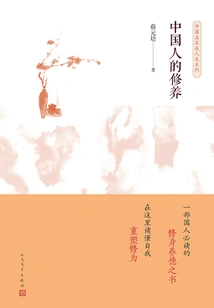
This book consists of three parts: essays on national cultivation (such as aesthetic education and life, scientific cultivation, obligations and rights, etc.), Middle school self-cultivation textbooks (Part 1 and 2), and Chinese Industrial School handouts (30 chapters on moral education and 10 chapters on intellectual education). This is the essence of Cai Yuanpei's talk about life, morality, education, and cultivation. It is of great significance for carrying forward traditional moral education culture, improving national quality cultivation, and practicing socialist core values.
This book consists of three parts: essays on national cultivation (such as aesthetic education and life, scientific cultivation, obligations and rights, etc.), Middle school self-cultivation textbooks (Part 1 and 2), and Chinese Industrial School handouts (30 chapters on moral education and 10 chapters on intellectual education). This is the essence of Cai Yuanpei's talk about life, morality, education, and cultivation. It is of great significance for carrying forward traditional moral education culture, improving national quality cultivation, and practicing socialist core values.
大师讲堂:蔡元培讲中国伦理学史
Cai Yuanpei
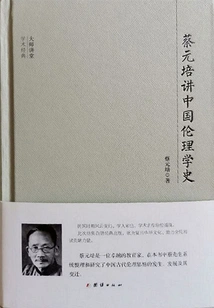
The book "Cai Yuanpei Lectures on the History of Chinese Ethics" is divided into four parts with 32 chapters: the introduction, the founding era of pre-Qin history, the inheritance era of Han and Tang Dynasties, and the Neo-Confucian era of Song and Ming Dynasties. It systematically introduces the important schools and main representatives of ancient Chinese ethics, and explains the key points, origins and development of each school. "Cai Yuanpei: History of Chinese Ethics (Master Works That Influenced Chinese People during the Republic of China)" is the first academic work to systematically organize and study the occurrence, development and changes of ancient Chinese ethical thought. It expounds the ethical thoughts of 28 thinkers from Confucius to Wang Yangming. The appendix lists the moral theories of Dai Zhen, Huang Zongxi and Yu Zhengxie.
The book "Cai Yuanpei Lectures on the History of Chinese Ethics" is divided into four parts with 32 chapters: the introduction, the founding era of pre-Qin history, the inheritance era of Han and Tang Dynasties, and the Neo-Confucian era of Song and Ming Dynasties. It systematically introduces the important schools and main representatives of ancient Chinese ethics, and explains the key points, origins and development of each school. "Cai Yuanpei: History of Chinese Ethics (Master Works That Influenced Chinese People during the Republic of China)" is the first academic work to systematically organize and study the occurrence, development and changes of ancient Chinese ethical thought. It expounds the ethical thoughts of 28 thinkers from Confucius to Wang Yangming. The appendix lists the moral theories of Dai Zhen, Huang Zongxi and Yu Zhengxie.
Hidden in Stone
Literature石头记索隐
Cai Yuanpei
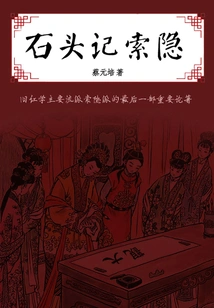
Although "Shi Shi Ji Suo Yin" is not a huge work, it has a unique position in the history of red studies. Cai Yuanpei's "The Stone Records Suoyin" is the last important treatise of the Suoyin School, the main school in the old Red Studies. Although the Suoyin School gradually declined with the rise of New Red Studies, it was this article that triggered the birth of Hu Shi's "Critical Research on the Dream of Red Mansions". In the book, the author analyzes the allusions to people and things in "The Story of the Stone" item by item, which has reference value.
Although "Shi Shi Ji Suo Yin" is not a huge work, it has a unique position in the history of red studies. Cai Yuanpei's "The Stone Records Suoyin" is the last important treatise of the Suoyin School, the main school in the old Red Studies. Although the Suoyin School gradually declined with the rise of New Red Studies, it was this article that triggered the birth of Hu Shi's "Critical Research on the Dream of Red Mansions". In the book, the author analyzes the allusions to people and things in "The Story of the Stone" item by item, which has reference value.
Chinese Culture
Literature中国人的修养
Cai Yuanpei
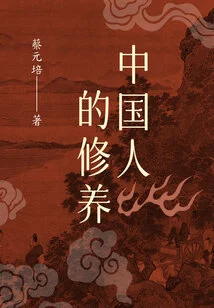
"Chinese Cultivation" is Cai Yuanpei's representative work on moral cultivation. It not only inherits the Chinese tradition of self-cultivation, but also combines Western educational concepts. It is a century-old classic book on moral practice. It mainly includes his most important representative works of moral thought, "Textbook of Self-cultivation in Middle School" and "Lecture Notes of Chinese Workers' School", as well as Cai Yuanpei's other scattered articles on moral cultivation, which reflects Cai Yuanpei's overall conception and deep concern for the moral literacy that modern Chinese people should have.
"Chinese Cultivation" is Cai Yuanpei's representative work on moral cultivation. It not only inherits the Chinese tradition of self-cultivation, but also combines Western educational concepts. It is a century-old classic book on moral practice. It mainly includes his most important representative works of moral thought, "Textbook of Self-cultivation in Middle School" and "Lecture Notes of Chinese Workers' School", as well as Cai Yuanpei's other scattered articles on moral cultivation, which reflects Cai Yuanpei's overall conception and deep concern for the moral literacy that modern Chinese people should have.
新人生观:蔡元培随笔
Cai Yuanpei
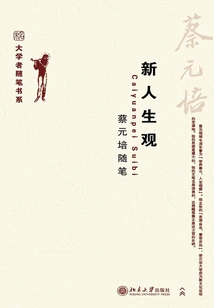
"New Outlook on Life: Cai Yuanpei's Essays" Introduction: Cai Yuanpei was hailed by Mao Zedong as "a leading figure in academic circles and a role model in the world." He advocates "freedom of thought and inclusiveness". Peking University became the birthplace of the New Culture Movement. His thoughts are broad and his writing is beautiful. This collection of essays is a reflection of this.
"New Outlook on Life: Cai Yuanpei's Essays" Introduction: Cai Yuanpei was hailed by Mao Zedong as "a leading figure in academic circles and a role model in the world." He advocates "freedom of thought and inclusiveness". Peking University became the birthplace of the New Culture Movement. His thoughts are broad and his writing is beautiful. This collection of essays is a reflection of this.
中国人的修养:提升自我修养的阅读佳作
Cai Yuanpei
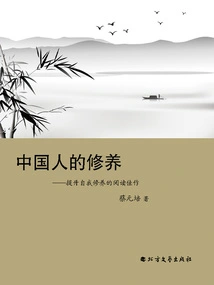
Cai Yuanpei was a modern revolutionary, educator, politician, and a pioneer in modern ethnological research in China. He was the first director of education and the president of Peking University from 1916 to 1927. He pioneered the "academic" and "liberal" style at Peking University. This book mainly consists of four parts - the lecture notes of Huagong School (30 chapters on moral education and 10 chapters on intellectual education), the first part of the middle school self-cultivation textbook, the second part of the middle school self-cultivation textbook, and the second part of the middle school self-cultivation textbook. This book is a book on citizen moral practice that is rare in a century and is of great significance today. If today's youth want to start from me, cultivate a sound personality and shape qualified citizens, "Chinese Cultivation" really has important guiding value.
Cai Yuanpei was a modern revolutionary, educator, politician, and a pioneer in modern ethnological research in China. He was the first director of education and the president of Peking University from 1916 to 1927. He pioneered the "academic" and "liberal" style at Peking University. This book mainly consists of four parts - the lecture notes of Huagong School (30 chapters on moral education and 10 chapters on intellectual education), the first part of the middle school self-cultivation textbook, the second part of the middle school self-cultivation textbook, and the second part of the middle school self-cultivation textbook. This book is a book on citizen moral practice that is rare in a century and is of great significance today. If today's youth want to start from me, cultivate a sound personality and shape qualified citizens, "Chinese Cultivation" really has important guiding value.
崇文馆:中国伦理学史
Cai Yuanpei
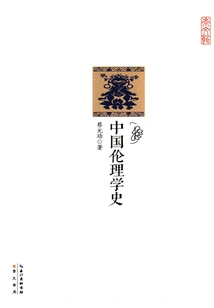
"Chongwen Museum: A History of Chinese Ethics" is the first academic work to systematically organize and study the occurrence, development and changes of ancient Chinese ethical thought. It is also one of Mr. Cai Yuanpei's representative theoretical works. The book divides the history of Chinese ethics into three eras, systematically introduces the important schools and main representatives of ethics in various historical periods in ancient my country, explains the key points, origins and development of each school of thought, and uses scientific methods to analyze their strengths and weaknesses. It provides important guidance and reference for the construction of modern Chinese ethics.
"Chongwen Museum: A History of Chinese Ethics" is the first academic work to systematically organize and study the occurrence, development and changes of ancient Chinese ethical thought. It is also one of Mr. Cai Yuanpei's representative theoretical works. The book divides the history of Chinese ethics into three eras, systematically introduces the important schools and main representatives of ethics in various historical periods in ancient my country, explains the key points, origins and development of each school of thought, and uses scientific methods to analyze their strengths and weaknesses. It provides important guidance and reference for the construction of modern Chinese ethics.
大师讲堂学术经典:蔡元培讲读书
Cai Yuanpei
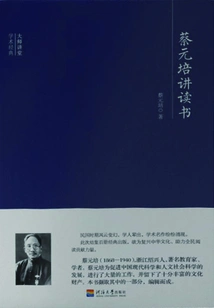
In order to promote the development of modern science and humanities and social sciences in China, Mr. Cai Yuanpei worked hard and carried out a lot of work, and left a very rich cultural heritage. This book extracts part of the content, mainly the prefaces, book reviews and other articles written by Cai Yuanpei for his own translations and contemporary publications.
In order to promote the development of modern science and humanities and social sciences in China, Mr. Cai Yuanpei worked hard and carried out a lot of work, and left a very rich cultural heritage. This book extracts part of the content, mainly the prefaces, book reviews and other articles written by Cai Yuanpei for his own translations and contemporary publications.