Library
Browse and search books
350 novels found
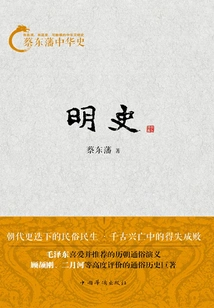
蔡东藩中华史:明史
Cai Dongfan
When Mao Zedong came to Beijing from Yan'an, he ordered his subordinates to bring him a set of books, and this was it! It can be said that this set of books is Mao Zedong's introduction to Chinese history. With more than 2,000 years of history from the Qin Dynasty to the Republic of China, Cai Dongfan used official history as the classic and anecdotes as the weft, and used the language of "The Romance of the Three Kingdoms", which is not very profound in writing and not very vulgar in language, to write this most complete set of historical novels in China. From the creation of "Popular Romance of Qing History" in 1915 to the publication of "Popular Romance of Later Han Dynasty" in 1926, the entire set of "Popular Romance of Historical Dynasties" took ten years to complete. In addition to being very story-telling and interesting, this set of novels also attaches great importance to the authenticity of historical materials. Not only can it be used as a general leisure reading, but it can also be used as a reference book for history lovers.
When Mao Zedong came to Beijing from Yan'an, he ordered his subordinates to bring him a set of books, and this was it! It can be said that this set of books is Mao Zedong's introduction to Chinese history. With more than 2,000 years of history from the Qin Dynasty to the Republic of China, Cai Dongfan used official history as the classic and anecdotes as the weft, and used the language of "The Romance of the Three Kingdoms", which is not very profound in writing and not very vulgar in language, to write this most complete set of historical novels in China. From the creation of "Popular Romance of Qing History" in 1915 to the publication of "Popular Romance of Later Han Dynasty" in 1926, the entire set of "Popular Romance of Historical Dynasties" took ten years to complete. In addition to being very story-telling and interesting, this set of novels also attaches great importance to the authenticity of historical materials. Not only can it be used as a general leisure reading, but it can also be used as a reference book for history lovers.
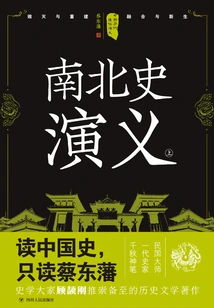
Popular Romance of Chinese Dynasties: Romance of Northern and Southern History (part 1) (reprint)
History中国历代通俗演义:南北史演义(上)(再版)
Cai Dongfan
Mr. Cai Dongfan's "Popular Romance of Chinese Dynasties" was written from the Qin and Han dynasties to the Republic of China. It has more than 1,000 chapters and more than 5 million words, covering nearly 2,200 years of history. After this book was published, it has been widely welcomed and praised. In the mid-1930s, I called Li Kenong to purchase two copies of this book to meet the needs of Yan'an cadres in learning Chinese history. This book always stands beside the bed in the bedroom. The famous historian Zide Geng believes that although this book has shortcomings as a piece of historical knowledge, the content is rich enough and the narrative is systematic. The famous novelist Yue Erhe believes that this book can only be said to be a medium-sized work in terms of literature, but reading this book can help you gain an introduction to national history, and it is unique to this book and has no other branches. "Popular Romance of Chinese Dynasties: Romance of Northern and Southern History" is the part of Northern and Southern History.
Mr. Cai Dongfan's "Popular Romance of Chinese Dynasties" was written from the Qin and Han dynasties to the Republic of China. It has more than 1,000 chapters and more than 5 million words, covering nearly 2,200 years of history. After this book was published, it has been widely welcomed and praised. In the mid-1930s, I called Li Kenong to purchase two copies of this book to meet the needs of Yan'an cadres in learning Chinese history. This book always stands beside the bed in the bedroom. The famous historian Zide Geng believes that although this book has shortcomings as a piece of historical knowledge, the content is rich enough and the narrative is systematic. The famous novelist Yue Erhe believes that this book can only be said to be a medium-sized work in terms of literature, but reading this book can help you gain an introduction to national history, and it is unique to this book and has no other branches. "Popular Romance of Chinese Dynasties: Romance of Northern and Southern History" is the part of Northern and Southern History.
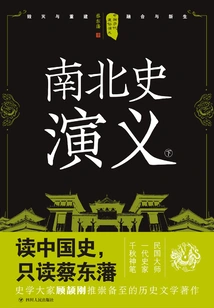
Popular Romance of Chinese Dynasties: Romance of Northern and Southern History (part 2) (reprint)
History中国历代通俗演义:南北史演义(下)(再版)
Cai Dongfan
Mr. Cai Dongfan's "Popular Romance of Chinese Dynasties" was written from the Qin and Han dynasties to the Republic of China. It has more than 1,000 chapters and more than 5 million words, covering nearly 2,200 years of history. After this book was published, it has been widely welcomed and praised. In the mid-1930s, I called Li Kenong to purchase two copies of this book to meet the needs of Yan'an cadres in learning Chinese history. This book always stands beside the bed in the bedroom. The famous historian Zide Geng believes that although this book has shortcomings as a piece of historical knowledge, the content is rich enough and the narrative is systematic. The famous novelist Yue Erhe believes that this book can only be said to be a medium-sized work in terms of literature, but reading this book can help you gain an introduction to national history, and it is unique to this book and has no other branches. "Popular Romance of Chinese Dynasties: Romance of Northern and Southern History" is the Northern and Southern History part.
Mr. Cai Dongfan's "Popular Romance of Chinese Dynasties" was written from the Qin and Han dynasties to the Republic of China. It has more than 1,000 chapters and more than 5 million words, covering nearly 2,200 years of history. After this book was published, it has been widely welcomed and praised. In the mid-1930s, I called Li Kenong to purchase two copies of this book to meet the needs of Yan'an cadres in learning Chinese history. This book always stands beside the bed in the bedroom. The famous historian Zide Geng believes that although this book has shortcomings as a piece of historical knowledge, the content is rich enough and the narrative is systematic. The famous novelist Yue Erhe believes that this book can only be said to be a medium-sized work in terms of literature, but reading this book can help you gain an introduction to national history, and it is unique to this book and has no other branches. "Popular Romance of Chinese Dynasties: Romance of Northern and Southern History" is the Northern and Southern History part.
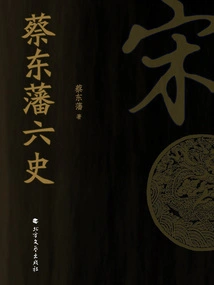
蔡东藩六史:宋
Cai Dongfan
This book tells the history of 18 emperors in the 320 years of the Song Dynasty, from the founding of the country to its demise. It records the historical lessons of the Northern Song Dynasty's emphasis on literature and restraint of martial arts, and the lack of good generals externally, and the incompetent appointment of talents and lack of good prime ministers internally in the Southern Song Dynasty. It also describes in detail major historical events such as the Chenqiao Mutiny, the Chanyuan Alliance, Wang Anshi's Reform, the Jingkang Revolution, and Yue Fei's Northern Expedition.
This book tells the history of 18 emperors in the 320 years of the Song Dynasty, from the founding of the country to its demise. It records the historical lessons of the Northern Song Dynasty's emphasis on literature and restraint of martial arts, and the lack of good generals externally, and the incompetent appointment of talents and lack of good prime ministers internally in the Southern Song Dynasty. It also describes in detail major historical events such as the Chenqiao Mutiny, the Chanyuan Alliance, Wang Anshi's Reform, the Jingkang Revolution, and Yue Fei's Northern Expedition.
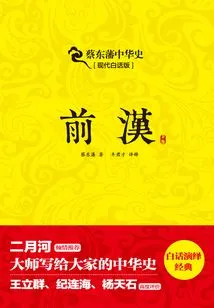
蔡东藩中华史:前汉
Cai Dongfan
"The Romance of the Former Han Dynasty" highlights the characteristics of "righteousness to convey events, that is, Taoism" in terms of genre. It also writes its own text, self-written annotations, and self-written reviews.
"The Romance of the Former Han Dynasty" highlights the characteristics of "righteousness to convey events, that is, Taoism" in terms of genre. It also writes its own text, self-written annotations, and self-written reviews.
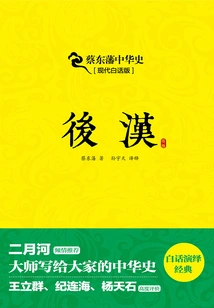
Later Han Dynasty
History后汉
Cai Dongfan
The "History of China by Cai Dongfan" series is the vernacular version of Cai Dongfan's historical romances. The book contains more than a thousand chapters, covering several spring and autumn periods, starting from Qin Shihuang to 1920. It records a total of 2166 years of history, with a total of 11 parts, 1040 chapters, and about 6.01 Million words. Its content spans a long time, has a large number of characters, and is huge in length, making it the best of all historical novels. He is known as "a historian of a generation and a magic pen for thousands of years".
The "History of China by Cai Dongfan" series is the vernacular version of Cai Dongfan's historical romances. The book contains more than a thousand chapters, covering several spring and autumn periods, starting from Qin Shihuang to 1920. It records a total of 2166 years of history, with a total of 11 parts, 1040 chapters, and about 6.01 Million words. Its content spans a long time, has a large number of characters, and is huge in length, making it the best of all historical novels. He is known as "a historian of a generation and a magic pen for thousands of years".
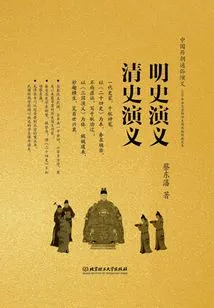
明史演义 清史演义(中国历朝通俗演义)
Cai Dongfan
This book is the Ming and Qing parts of the "Popular Romance of Chinese Dynasties" series written by Cai Dongfan, a famous romance novelist and historian in the Republic of China (mainly about some historical events in the Ming and Qing Dynasties). This series of books is both a historical masterpiece and a literary masterpiece. Reading "Popular Romance of Chinese Dynasties" can not only understand Chinese history, but also appreciate legendary stories. It can be said to be the best of both worlds. Its historical value is higher than its literary value. The biggest feature of this series is the author's strict pursuit of historical truth. Although this series of books by Cai Dongfan is written as a historical romance, "every word has its own origin" and strives to have its main plots based on historical records. Naturally, as a "romance", he also has fiction, especially dialogues between characters. However, the author was very cautious when writing, striving to fit the specific historical environment and the character of specific historical figures, and did not dare to make up any random things. Therefore, this series of books can be read as history. It is a masterpiece integrating literature and history.
This book is the Ming and Qing parts of the "Popular Romance of Chinese Dynasties" series written by Cai Dongfan, a famous romance novelist and historian in the Republic of China (mainly about some historical events in the Ming and Qing Dynasties). This series of books is both a historical masterpiece and a literary masterpiece. Reading "Popular Romance of Chinese Dynasties" can not only understand Chinese history, but also appreciate legendary stories. It can be said to be the best of both worlds. Its historical value is higher than its literary value. The biggest feature of this series is the author's strict pursuit of historical truth. Although this series of books by Cai Dongfan is written as a historical romance, "every word has its own origin" and strives to have its main plots based on historical records. Naturally, as a "romance", he also has fiction, especially dialogues between characters. However, the author was very cautious when writing, striving to fit the specific historical environment and the character of specific historical figures, and did not dare to make up any random things. Therefore, this series of books can be read as history. It is a masterpiece integrating literature and history.
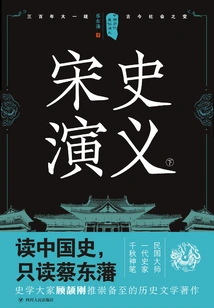
中国历代通俗演义:宋史演义(下)(再版)
Cai Dongfan
Mr. Cai Dongfan's "Popular Romance of Chinese Dynasties" was written from the Qin and Han dynasties to the Republic of China. It has more than 1,000 chapters and more than 5 million words, covering nearly 2,200 years of history. After this book was published, it has been widely welcomed and praised. In the mid-1930s, I called Li Kenong to purchase two copies of this book to meet the needs of Yan'an cadres in learning Chinese history. This book always stands beside the bed in the bedroom. The famous historian Zide Geng believes that although this book has shortcomings as a piece of historical knowledge, the content is rich enough and the narrative is systematic. The famous novelist Yue Erhe believes that this book can only be said to be a medium-sized work in terms of literature, but reading this book can help you gain an introduction to national history, and it is unique to this book and has no other branches. "The Romance of Song History" is the Song History part. "The Romance of Song History" was compiled by Cai Dongfan.
Mr. Cai Dongfan's "Popular Romance of Chinese Dynasties" was written from the Qin and Han dynasties to the Republic of China. It has more than 1,000 chapters and more than 5 million words, covering nearly 2,200 years of history. After this book was published, it has been widely welcomed and praised. In the mid-1930s, I called Li Kenong to purchase two copies of this book to meet the needs of Yan'an cadres in learning Chinese history. This book always stands beside the bed in the bedroom. The famous historian Zide Geng believes that although this book has shortcomings as a piece of historical knowledge, the content is rich enough and the narrative is systematic. The famous novelist Yue Erhe believes that this book can only be said to be a medium-sized work in terms of literature, but reading this book can help you gain an introduction to national history, and it is unique to this book and has no other branches. "The Romance of Song History" is the Song History part. "The Romance of Song History" was compiled by Cai Dongfan.
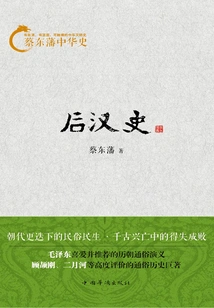
蔡东藩中华史:后汉史
Cai Dongfan
When Mao Zedong came to Beijing from Yan'an, he ordered his subordinates to bring him a set of books, and this was it! It can be said that this set of books is Mao Zedong's introduction to Chinese history. With more than 2,000 years of history from the Qin Dynasty to the Republic of China, Cai Dongfan used official history as the classic and anecdotes as the weft, and used the language of "The Romance of the Three Kingdoms", which is not very profound in writing and not very vulgar in language, to write this most complete set of historical novels in China. From the creation of "Popular Romance of Qing History" in 1915 to the publication of "Popular Romance of Later Han Dynasty" in 1926, the entire set of "Popular Romance of Historical Dynasties" took ten years to complete. In addition to being very story-telling and interesting, this set of novels also attaches great importance to the authenticity of historical materials. Not only can it be used as a general leisure reading, but it can also be used as a reference book for history lovers.
When Mao Zedong came to Beijing from Yan'an, he ordered his subordinates to bring him a set of books, and this was it! It can be said that this set of books is Mao Zedong's introduction to Chinese history. With more than 2,000 years of history from the Qin Dynasty to the Republic of China, Cai Dongfan used official history as the classic and anecdotes as the weft, and used the language of "The Romance of the Three Kingdoms", which is not very profound in writing and not very vulgar in language, to write this most complete set of historical novels in China. From the creation of "Popular Romance of Qing History" in 1915 to the publication of "Popular Romance of Later Han Dynasty" in 1926, the entire set of "Popular Romance of Historical Dynasties" took ten years to complete. In addition to being very story-telling and interesting, this set of novels also attaches great importance to the authenticity of historical materials. Not only can it be used as a general leisure reading, but it can also be used as a reference book for history lovers.
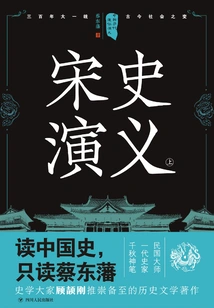
中国历代通俗演义:宋史演义(上)(再版)
Cai Dongfan
Mr. Cai Dongfan's "Popular Romance of Chinese Dynasties" was written from the Qin and Han dynasties to the Republic of China. It has more than 1,000 chapters and more than 5 million words, covering nearly 2,200 years of history. After this book was published, it has been widely welcomed and praised. In the mid-1930s, I called Li Kenong to purchase two copies of this book to meet the needs of Yan'an cadres in learning Chinese history. This book always stands beside the bed in the bedroom. The famous historian Zide Geng believes that although this book has shortcomings as a piece of historical knowledge, the content is rich enough and the narrative is systematic. The famous novelist Yue Erhe believes that this book can only be said to be a medium-sized work in terms of literature, but reading this book can help you gain an introduction to national history, and it is unique to this book and has no other branches. "The Romance of Song History" is the Song History part. "The Romance of Song History" was compiled by Cai Dongfan.
Mr. Cai Dongfan's "Popular Romance of Chinese Dynasties" was written from the Qin and Han dynasties to the Republic of China. It has more than 1,000 chapters and more than 5 million words, covering nearly 2,200 years of history. After this book was published, it has been widely welcomed and praised. In the mid-1930s, I called Li Kenong to purchase two copies of this book to meet the needs of Yan'an cadres in learning Chinese history. This book always stands beside the bed in the bedroom. The famous historian Zide Geng believes that although this book has shortcomings as a piece of historical knowledge, the content is rich enough and the narrative is systematic. The famous novelist Yue Erhe believes that this book can only be said to be a medium-sized work in terms of literature, but reading this book can help you gain an introduction to national history, and it is unique to this book and has no other branches. "The Romance of Song History" is the Song History part. "The Romance of Song History" was compiled by Cai Dongfan.
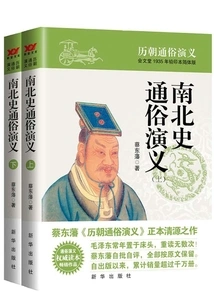
南北史通俗演义(上下)
Cai Dongfan
After the Han and Jin Dynasties, foreigners gradually came to China and lived in the interior. Subsequently, the Five Hus and Sixteen Kingdoms rose and fell one after another. Later, the weak preyed on the strong, swallowed each other up, moved around, and combined the sixteen kingdoms into one big country, called the Northern Wei Dynasty. Later, internal strife broke out again in the Northern Wei Dynasty. The east was divided and the west was divided, and there was no time to take care of Jiangnan, so Jiangnan was still preserved. When the Eastern Wei Dynasty was changed to the Northern Qi Dynasty and the Western Wei Dynasty was changed to the Northern Zhou Dynasty, the Western Territory was divided into three parts. The Zhou Dynasty was the strongest, Qi was the second, and Jiangnan was the weakest. The tripartite war lasted for several years. Qi was merged with the Zhou Dynasty, but only two-tenths of Jiangnan remained, almost all belonging to the Northern Zhou Dynasty. A great prime minister, Yang Jian, was chosen. He usurped the Zhou Dynasty and re-annexed the south of the Yangtze River. He accepted Zhou Chan and destroyed the Chen family, and actually unified the Central Plains and merged the north and the south.
After the Han and Jin Dynasties, foreigners gradually came to China and lived in the interior. Subsequently, the Five Hus and Sixteen Kingdoms rose and fell one after another. Later, the weak preyed on the strong, swallowed each other up, moved around, and combined the sixteen kingdoms into one big country, called the Northern Wei Dynasty. Later, internal strife broke out again in the Northern Wei Dynasty. The east was divided and the west was divided, and there was no time to take care of Jiangnan, so Jiangnan was still preserved. When the Eastern Wei Dynasty was changed to the Northern Qi Dynasty and the Western Wei Dynasty was changed to the Northern Zhou Dynasty, the Western Territory was divided into three parts. The Zhou Dynasty was the strongest, Qi was the second, and Jiangnan was the weakest. The tripartite war lasted for several years. Qi was merged with the Zhou Dynasty, but only two-tenths of Jiangnan remained, almost all belonging to the Northern Zhou Dynasty. A great prime minister, Yang Jian, was chosen. He usurped the Zhou Dynasty and re-annexed the south of the Yangtze River. He accepted Zhou Chan and destroyed the Chen family, and actually unified the Central Plains and merged the north and the south.
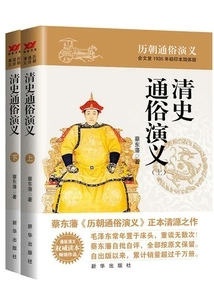
清史通俗演义(上下)
Cai Dongfan
As far back as the Zhao and Song Dynasties, after the Jin State was destroyed, the surviving Jurchen clan fled to the northeast and hid on the seashore. Taking the meaning of "residents under Changbai Mountain", they named themselves the "Aixinjueluo Clan" and established the Manchukuo Kingdom, so the whole family was renamed "Manchu". After hundreds of years and several generations, a man emerged from the clan who was both wise and courageous and outstanding. So another 268 years of Qing Dynasty history was rehearsed. The Qing Dynasty unified the Central Plains, and the general path lasted for thousands of years and stretched endlessly, becoming one with the sky. Unexpectedly, the foreign ships have strong guns and powerful guns, and they repeatedly invade the country. The great power of the Qing Dynasty had to cede territory today and pay indemnity tomorrow. The Qing Dynasty's monarchs and ministers were so tired that they only focused on one thing and the other, and the country's power gradually declined. Unexpectedly, before the external troubles were over, internal worries arose again. Wuchang launched an attack, and the provinces responded, overthrowing the Qing Dynasty.
As far back as the Zhao and Song Dynasties, after the Jin State was destroyed, the surviving Jurchen clan fled to the northeast and hid on the seashore. Taking the meaning of "residents under Changbai Mountain", they named themselves the "Aixinjueluo Clan" and established the Manchukuo Kingdom, so the whole family was renamed "Manchu". After hundreds of years and several generations, a man emerged from the clan who was both wise and courageous and outstanding. So another 268 years of Qing Dynasty history was rehearsed. The Qing Dynasty unified the Central Plains, and the general path lasted for thousands of years and stretched endlessly, becoming one with the sky. Unexpectedly, the foreign ships have strong guns and powerful guns, and they repeatedly invade the country. The great power of the Qing Dynasty had to cede territory today and pay indemnity tomorrow. The Qing Dynasty's monarchs and ministers were so tired that they only focused on one thing and the other, and the country's power gradually declined. Unexpectedly, before the external troubles were over, internal worries arose again. Wuchang launched an attack, and the provinces responded, overthrowing the Qing Dynasty.
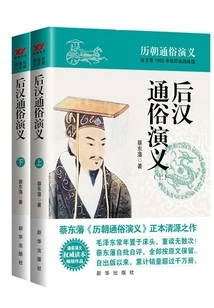
后汉通俗演义(上下)
Cai Dongfan
The Han dynasty is divided by historians into two periods, called the Early Han and the Later Han, also known as the Eastern and Western Han. This is because during the 400 years of the Han Dynasty, Wang Mang usurped the country and usurped the throne for 18 years. Therefore, the period before Wang Mang was called the Former Han, and the period after Wang Mang was called the Later Han. "The Romance of the Former Han Dynasty" has hundreds of chapters, starting from the first emperor of Qin and ending with Wang Mang's usurpation of the country; this part is connected with the previous part, starting with Wang Mang and ending with the Three Kingdoms. "The Romance of the Former Han Dynasty" is attached to the Qin Dynasty, and "The Romance of the Later Han Dynasty" is attached to the Three Kingdoms. They are relatively opposite, but they are also unique creations. If we want to talk about the rise and fall of the Later Han Dynasty, it is more complicated than that of the Early Han Dynasty: Wang Mang usurped the country, and the trouble was caused by the Queen of the Yuan Dynasty, and the harm caused by his relatives. Guangwu Zhongxing, punishing the past and ignoring the future, took over the power personally and tried to prevent his relatives from intervening in the government; the Ming Emperor was particularly paternal, and the Zhang Emperor was impressive in his early administration; after he was emperor, the country's affairs deteriorated day by day, and relatives and eunuchs fought, and eventually they all died together. The power of the country was in the hands of the state pastors, and the heroes fought for hegemony, and the weak and the strong were able to eat each other, so there were three kingdoms.
The Han dynasty is divided by historians into two periods, called the Early Han and the Later Han, also known as the Eastern and Western Han. This is because during the 400 years of the Han Dynasty, Wang Mang usurped the country and usurped the throne for 18 years. Therefore, the period before Wang Mang was called the Former Han, and the period after Wang Mang was called the Later Han. "The Romance of the Former Han Dynasty" has hundreds of chapters, starting from the first emperor of Qin and ending with Wang Mang's usurpation of the country; this part is connected with the previous part, starting with Wang Mang and ending with the Three Kingdoms. "The Romance of the Former Han Dynasty" is attached to the Qin Dynasty, and "The Romance of the Later Han Dynasty" is attached to the Three Kingdoms. They are relatively opposite, but they are also unique creations. If we want to talk about the rise and fall of the Later Han Dynasty, it is more complicated than that of the Early Han Dynasty: Wang Mang usurped the country, and the trouble was caused by the Queen of the Yuan Dynasty, and the harm caused by his relatives. Guangwu Zhongxing, punishing the past and ignoring the future, took over the power personally and tried to prevent his relatives from intervening in the government; the Ming Emperor was particularly paternal, and the Zhang Emperor was impressive in his early administration; after he was emperor, the country's affairs deteriorated day by day, and relatives and eunuchs fought, and eventually they all died together. The power of the country was in the hands of the state pastors, and the heroes fought for hegemony, and the weak and the strong were able to eat each other, so there were three kingdoms.
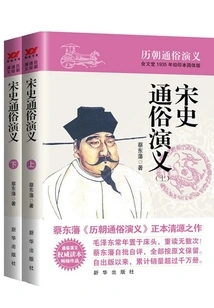
宋史通俗演义(上下)
Cai Dongfan
Chen Qiao changed and wore a yellow robe. Zhao Kuangyin, who was guarding the whole palace, actually took over the throne of Zhou Dynasty and became the emperor himself. However, the emperor had an eye for it, which caused the three kingdoms of Liao, Jin, and Yuan to rise up in the north one after another and cause frequent border troubles. The Northern Song Dynasty suppressed its troops too much and lacked good generals. The main idea was to recover the sixteen states of Yan and Yun. Who knew that even the two emperors were captured by others. In the Southern Song Dynasty, there was a lack of expertise in appointing talents and a lack of good prime ministers. A few generals appeared, but they were framed by the traitorous ministers in many ways. On the Fengbo Pavilion, a prison of injustice was formed, and on the bank of the West Lake, riding a donkey back, everyone was disheartened and sat listening to defeat. Later, even the last piece of the Zhao family's bones and blood was left alone overseas, and the cliffs were destroyed, and the emperor's son perished. There was no choice but to put an end to the 320 years of Zhao and Song Dynasty.
Chen Qiao changed and wore a yellow robe. Zhao Kuangyin, who was guarding the whole palace, actually took over the throne of Zhou Dynasty and became the emperor himself. However, the emperor had an eye for it, which caused the three kingdoms of Liao, Jin, and Yuan to rise up in the north one after another and cause frequent border troubles. The Northern Song Dynasty suppressed its troops too much and lacked good generals. The main idea was to recover the sixteen states of Yan and Yun. Who knew that even the two emperors were captured by others. In the Southern Song Dynasty, there was a lack of expertise in appointing talents and a lack of good prime ministers. A few generals appeared, but they were framed by the traitorous ministers in many ways. On the Fengbo Pavilion, a prison of injustice was formed, and on the bank of the West Lake, riding a donkey back, everyone was disheartened and sat listening to defeat. Later, even the last piece of the Zhao family's bones and blood was left alone overseas, and the cliffs were destroyed, and the emperor's son perished. There was no choice but to put an end to the 320 years of Zhao and Song Dynasty.
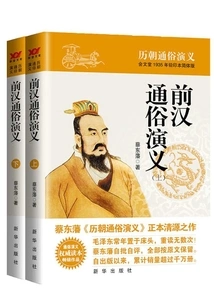
前汉通俗演义(上下)
Cai Dongfan
The Eastern Zhou Dynasty gradually declined, the Western Qin Dynasty rose, and the seven heroes of the Warring States Period attacked and killed each other. King Qin Yingzheng relied on his ancestral foundation to gather millions of strong men in Guanzhong, intimidated and deceived, and devoured the six kingdoms one by one, and took the territory of Kyushu as his own. Ying Zheng believed that his virtue was equal to that of the Three Emperors and that he had more merit than the Five Emperors, so he combined one character from each of the names of the Three Emperors and the Five Emperors into one word and called himself emperor. The four words "emperor's autocratic rule" are the main purpose that covers the entire book. The Qin Dynasty and the Han Dynasty followed it, which is related to the original Qin and Han Dynasties, and there is no big difference. The Qin Dynasty lasted for only fifteen years after Hu Hai and Ziying for three generations. It is narrated according to the events, only a few chapters, and does not make up a volume. Moreover, although it is called a dynasty, only tyranny is heard but no peace is seen. It is actually the transitional era from Zhou to Han, so it is listed before Han Dynasty to briefly describe its deeds. During the two hundred years before the Han Dynasty, there were favored women, relatives, Fangzhen, barbarians, eunuchs, eunuchs, and powerful traitors. They were all the causes of chaos in the country from ancient to modern times.
The Eastern Zhou Dynasty gradually declined, the Western Qin Dynasty rose, and the seven heroes of the Warring States Period attacked and killed each other. King Qin Yingzheng relied on his ancestral foundation to gather millions of strong men in Guanzhong, intimidated and deceived, and devoured the six kingdoms one by one, and took the territory of Kyushu as his own. Ying Zheng believed that his virtue was equal to that of the Three Emperors and that he had more merit than the Five Emperors, so he combined one character from each of the names of the Three Emperors and the Five Emperors into one word and called himself emperor. The four words "emperor's autocratic rule" are the main purpose that covers the entire book. The Qin Dynasty and the Han Dynasty followed it, which is related to the original Qin and Han Dynasties, and there is no big difference. The Qin Dynasty lasted for only fifteen years after Hu Hai and Ziying for three generations. It is narrated according to the events, only a few chapters, and does not make up a volume. Moreover, although it is called a dynasty, only tyranny is heard but no peace is seen. It is actually the transitional era from Zhou to Han, so it is listed before Han Dynasty to briefly describe its deeds. During the two hundred years before the Han Dynasty, there were favored women, relatives, Fangzhen, barbarians, eunuchs, eunuchs, and powerful traitors. They were all the causes of chaos in the country from ancient to modern times.
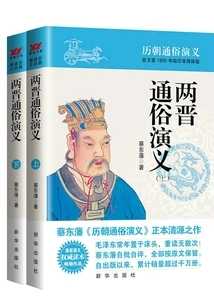
两晋通俗演义(上下)
Cai Dongfan
In the one hundred and fifty-six years of the Eastern and Western Jin Dynasties, except for the more than 20 years since the founding of the Jin Dynasty, there was no day of trouble or invasion. If there was no internal strife, there would be external aggression. Foreign aggression has always been the most severe, and it has never been more severe than the two Jins, the Five Hus and the Sixteen Kingdoms. They rise and fall suddenly, and there is no end. If the husband's internal affairs are in disrepair, internal strife will inevitably arise; if internal restraint arises, external aggression will take advantage of it. Insects grow on decaying wood, and ants invade the walls. This has been the case since ancient times, but it is particularly noticeable in Jin Dynasty. The Eastern and Western Jin Dynasties seemed to be always facing foreign aggression, but after all, they were like snipers and clams, and only fishermen existed. The land of Shenzhou is sinking, the bronze camels are thorny, the two masters are captured, and they are drinking in Di Ting. It is nothing more than internal affairs that are not in line, so this is the reason. Fortunately, in the battle of Feishui, Fu Qin was defeated and half of the country was saved. The monarchs and ministers of the Eastern Jin Dynasty became arrogant after a slight victory. Arrogance led to laziness, and there was no improvement. So they usurped each other, and disasters arose one after another, eventually leading to the destruction of the country. The downfall of the Jin Dynasty was not entirely caused by foreign aggression: bad ethics and seeking revenge among flesh and blood were the first disasters for the country's downfall; the loss of faith and the feud between the powerful and powerful were the second disasters for the country's downfall.
In the one hundred and fifty-six years of the Eastern and Western Jin Dynasties, except for the more than 20 years since the founding of the Jin Dynasty, there was no day of trouble or invasion. If there was no internal strife, there would be external aggression. Foreign aggression has always been the most severe, and it has never been more severe than the two Jins, the Five Hus and the Sixteen Kingdoms. They rise and fall suddenly, and there is no end. If the husband's internal affairs are in disrepair, internal strife will inevitably arise; if internal restraint arises, external aggression will take advantage of it. Insects grow on decaying wood, and ants invade the walls. This has been the case since ancient times, but it is particularly noticeable in Jin Dynasty. The Eastern and Western Jin Dynasties seemed to be always facing foreign aggression, but after all, they were like snipers and clams, and only fishermen existed. The land of Shenzhou is sinking, the bronze camels are thorny, the two masters are captured, and they are drinking in Di Ting. It is nothing more than internal affairs that are not in line, so this is the reason. Fortunately, in the battle of Feishui, Fu Qin was defeated and half of the country was saved. The monarchs and ministers of the Eastern Jin Dynasty became arrogant after a slight victory. Arrogance led to laziness, and there was no improvement. So they usurped each other, and disasters arose one after another, eventually leading to the destruction of the country. The downfall of the Jin Dynasty was not entirely caused by foreign aggression: bad ethics and seeking revenge among flesh and blood were the first disasters for the country's downfall; the loss of faith and the feud between the powerful and powerful were the second disasters for the country's downfall.
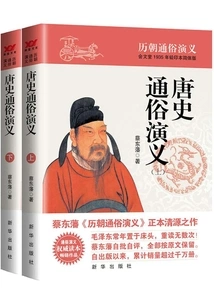
唐史通俗演义(上下)
Cai Dongfan
At the founding of the Tang Dynasty, all the heroes were drawn up, and the 293 states in the sea were conquered. All the Dongyi, Nanman, Xirong, and Beidi paid tribute every year and came to court every year. This is really a fact of the Tang Dynasty. It is not a false talk of the Tang Dynasty, it is a name of the Tang Dynasty. From then on, it was rumored overseas, and we Chinese often boast about it, and it is still used today. I once remembered that the predecessors left a joke and talked about it: Han Jingxue, Jin Qing Tan, Tang Wugui, Song Nashin, Qing Sloppy. What is the meaning of the three characters "Tang Turtle"? During the reigns of Taizong and Gaozong, the Tang Dynasty was at its peak, and things were already murky in the palace. Taizong raped his younger brother-in-law, and Empress Wu was widely seen. Later, Empress Wei relied on her favor, Zhongzong ordered the chips, Yuhuan washed the children, Lushan grabbed the breasts, the green headscarf became the family law, and the tortoise and the tortoise were not uncommon...
At the founding of the Tang Dynasty, all the heroes were drawn up, and the 293 states in the sea were conquered. All the Dongyi, Nanman, Xirong, and Beidi paid tribute every year and came to court every year. This is really a fact of the Tang Dynasty. It is not a false talk of the Tang Dynasty, it is a name of the Tang Dynasty. From then on, it was rumored overseas, and we Chinese often boast about it, and it is still used today. I once remembered that the predecessors left a joke and talked about it: Han Jingxue, Jin Qing Tan, Tang Wugui, Song Nashin, Qing Sloppy. What is the meaning of the three characters "Tang Turtle"? During the reigns of Taizong and Gaozong, the Tang Dynasty was at its peak, and things were already murky in the palace. Taizong raped his younger brother-in-law, and Empress Wu was widely seen. Later, Empress Wei relied on her favor, Zhongzong ordered the chips, Yuhuan washed the children, Lushan grabbed the breasts, the green headscarf became the family law, and the tortoise and the tortoise were not uncommon...
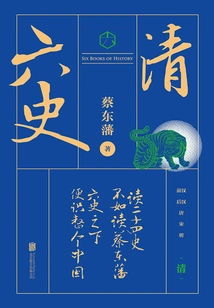
六史:清史演义
Cai Dongfan
"Six Histories" records the panoramic views and secret details of the six most representative turning dynasties in Chinese history, from their rise to their decline. The system is complete, the content is rich, and the priorities are clear. It combines the majestic spirit of history with the interest of grass and snakes. It respects historical facts and has sophisticated diction. It has many but lifelike characters. In the midst of laughter and curses, it writes the breadth and splendor of history. It is recognized as a masterpiece of epic history.
"Six Histories" records the panoramic views and secret details of the six most representative turning dynasties in Chinese history, from their rise to their decline. The system is complete, the content is rich, and the priorities are clear. It combines the majestic spirit of history with the interest of grass and snakes. It respects historical facts and has sophisticated diction. It has many but lifelike characters. In the midst of laughter and curses, it writes the breadth and splendor of history. It is recognized as a masterpiece of epic history.
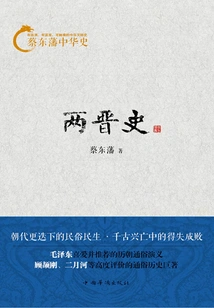
蔡东藩中华史:两晋史
Cai Dongfan
When Mao Zedong came to Beijing from Yan'an, he ordered his subordinates to bring him a set of books, and this was it! It can be said that this set of books is Mao Zedong's introduction to Chinese history. With more than 2,000 years of history from the Qin Dynasty to the Republic of China, Cai Dongfan used official history as the classic and anecdotes as the weft, and used the language of "The Romance of the Three Kingdoms", which is not very profound in writing and not very vulgar in language, to write this most complete set of historical novels in China. From the creation of "Popular Romance of Qing History" in 1915 to the publication of "Popular Romance of Later Han Dynasty" in 1926, the entire set of "Popular Romance of Historical Dynasties" took ten years to complete. In addition to being very story-telling and interesting, this set of novels also attaches great importance to the authenticity of historical materials. Not only can it be used as a general leisure reading, but it can also be used as a reference book for history lovers.
When Mao Zedong came to Beijing from Yan'an, he ordered his subordinates to bring him a set of books, and this was it! It can be said that this set of books is Mao Zedong's introduction to Chinese history. With more than 2,000 years of history from the Qin Dynasty to the Republic of China, Cai Dongfan used official history as the classic and anecdotes as the weft, and used the language of "The Romance of the Three Kingdoms", which is not very profound in writing and not very vulgar in language, to write this most complete set of historical novels in China. From the creation of "Popular Romance of Qing History" in 1915 to the publication of "Popular Romance of Later Han Dynasty" in 1926, the entire set of "Popular Romance of Historical Dynasties" took ten years to complete. In addition to being very story-telling and interesting, this set of novels also attaches great importance to the authenticity of historical materials. Not only can it be used as a general leisure reading, but it can also be used as a reference book for history lovers.
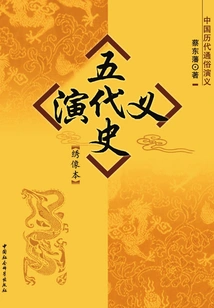
五代史演义
Cai Dongfan
If there is long-term rule, there will be chaos; if there is long-term unity, there will be division. As time went by, the legacy of the ancestors gradually depleted, and the chaos became increasingly fierce. Three or five heroes took advantage of the chaos to cause trouble, either claiming the title of emperor or claiming the land as king. In this chaotic and divided situation, there were various states during the Eastern Zhou Dynasty, the Three Kingdoms during the Later Han Dynasty, the Southern and Northern Dynasties after the Eastern Jin Dynasty, and the Five Dynasties after the Late Tang Dynasty. The Five Dynasties lasted for fifty-three years, with eight surnames and thirteen emperors, and the country's name was changed five times, namely Liang, Tang, Jin, Han, and Zhou. Because these kingdoms had already been named by previous dynasties, historians added a later character to each, calling them Later Liang, Later Tang, Later Jin, Later Han, and Later Zhou. In addition, there were countries that were either combined or separated from the Five Dynasties, but were not affiliated with each other. They were called the Ten Kingdoms, namely Wu, Chu, Fujian, Southern Tang, Former Shu, Later Shu, Southern Han, Northern Han, Wuyue, and Jingnan. The current situation of the Five Dynasties and Ten Kingdoms was simply that the king was not the king, the ministers were not the ministers, the father was not the father, and the son was not the son. They were fighting for each other, the superiors and the inferiors were replacing each other, usurpers and murderers were seeking each other, and the greed was endless. Therefore, each generation can only pass on the inheritance for more than ten years at most, and only three or four years at least. Before our eyes, China is in chaos, the sea is fishy, and the surrounding areas are restless...
If there is long-term rule, there will be chaos; if there is long-term unity, there will be division. As time went by, the legacy of the ancestors gradually depleted, and the chaos became increasingly fierce. Three or five heroes took advantage of the chaos to cause trouble, either claiming the title of emperor or claiming the land as king. In this chaotic and divided situation, there were various states during the Eastern Zhou Dynasty, the Three Kingdoms during the Later Han Dynasty, the Southern and Northern Dynasties after the Eastern Jin Dynasty, and the Five Dynasties after the Late Tang Dynasty. The Five Dynasties lasted for fifty-three years, with eight surnames and thirteen emperors, and the country's name was changed five times, namely Liang, Tang, Jin, Han, and Zhou. Because these kingdoms had already been named by previous dynasties, historians added a later character to each, calling them Later Liang, Later Tang, Later Jin, Later Han, and Later Zhou. In addition, there were countries that were either combined or separated from the Five Dynasties, but were not affiliated with each other. They were called the Ten Kingdoms, namely Wu, Chu, Fujian, Southern Tang, Former Shu, Later Shu, Southern Han, Northern Han, Wuyue, and Jingnan. The current situation of the Five Dynasties and Ten Kingdoms was simply that the king was not the king, the ministers were not the ministers, the father was not the father, and the son was not the son. They were fighting for each other, the superiors and the inferiors were replacing each other, usurpers and murderers were seeking each other, and the greed was endless. Therefore, each generation can only pass on the inheritance for more than ten years at most, and only three or four years at least. Before our eyes, China is in chaos, the sea is fishy, and the surrounding areas are restless...
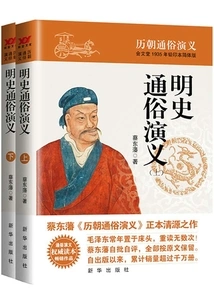
明史通俗演义(上下)
Cai Dongfan
Zhu Yuanzhang, Taizu of the Ming Dynasty, rose to the occasion. Within a few years, he expelled the Yuan Emperor and unified China. There were 12 successive emperors, and each of the 17 emperors lasted for 270 years and six years. During this period, there was a huge reason for the rise, prosperity, decline and death. The sages have a saying: "When a gentleman's Tao disappears, and a villain's Tao disappears, a country will prosper; when a gentleman's Tao disappears, and a villain's Tao grows, a country will decline." Although this sentence is ancient and modern, it is always a common saying and cannot be used as a conclusive proof of the rise and fall of a generation. The Ming Dynasty rose to decline and fell from prosperity, but it followed the same five mistakes as the Yuan Dynasty: the first disadvantage was fratricide, the second disadvantage was the succession of eunuchs, the third disadvantage was rampant traitors, the fourth disadvantage was the palace's reliance on favors, and the fifth disadvantage was rogue bandits causing harm to the people. In addition, there were domestic party disputes, powerful foreign enemies, and the chaos became more and more fierce. It barely supported it for hundreds of years, and finally suffered a complete defeat. The splendid country created and managed by Mingzu was handed over to the Manchus. It is also sad and miserable to say the least.
Zhu Yuanzhang, Taizu of the Ming Dynasty, rose to the occasion. Within a few years, he expelled the Yuan Emperor and unified China. There were 12 successive emperors, and each of the 17 emperors lasted for 270 years and six years. During this period, there was a huge reason for the rise, prosperity, decline and death. The sages have a saying: "When a gentleman's Tao disappears, and a villain's Tao disappears, a country will prosper; when a gentleman's Tao disappears, and a villain's Tao grows, a country will decline." Although this sentence is ancient and modern, it is always a common saying and cannot be used as a conclusive proof of the rise and fall of a generation. The Ming Dynasty rose to decline and fell from prosperity, but it followed the same five mistakes as the Yuan Dynasty: the first disadvantage was fratricide, the second disadvantage was the succession of eunuchs, the third disadvantage was rampant traitors, the fourth disadvantage was the palace's reliance on favors, and the fifth disadvantage was rogue bandits causing harm to the people. In addition, there were domestic party disputes, powerful foreign enemies, and the chaos became more and more fierce. It barely supported it for hundreds of years, and finally suffered a complete defeat. The splendid country created and managed by Mingzu was handed over to the Manchus. It is also sad and miserable to say the least.
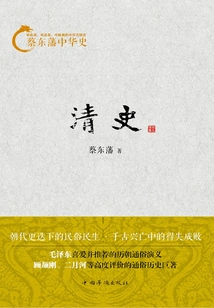
蔡东藩中华史:清史
Cai Dongfan
When Mao Zedong came to Beijing from Yan'an, he ordered his subordinates to bring him a set of books, and this was it! It can be said that this set of books is Mao Zedong's introduction to Chinese history. With more than 2,000 years of history from the Qin Dynasty to the Republic of China, Cai Dongfan used official history as the classic and anecdotes as the weft, and used the language of "The Romance of the Three Kingdoms", which is not very profound in writing and not very vulgar in language, to write this most complete set of historical novels in China. From the creation of "Popular Romance of Qing History" in 1915 to the publication of "Popular Romance of Later Han Dynasty" in 1926, the entire set of "Popular Romance of Historical Dynasties" took ten years to complete. In addition to being very story-telling and interesting, this set of novels also attaches great importance to the authenticity of historical materials. Not only can it be used as a general leisure reading, but it can also be used as a reference book for history lovers.
When Mao Zedong came to Beijing from Yan'an, he ordered his subordinates to bring him a set of books, and this was it! It can be said that this set of books is Mao Zedong's introduction to Chinese history. With more than 2,000 years of history from the Qin Dynasty to the Republic of China, Cai Dongfan used official history as the classic and anecdotes as the weft, and used the language of "The Romance of the Three Kingdoms", which is not very profound in writing and not very vulgar in language, to write this most complete set of historical novels in China. From the creation of "Popular Romance of Qing History" in 1915 to the publication of "Popular Romance of Later Han Dynasty" in 1926, the entire set of "Popular Romance of Historical Dynasties" took ten years to complete. In addition to being very story-telling and interesting, this set of novels also attaches great importance to the authenticity of historical materials. Not only can it be used as a general leisure reading, but it can also be used as a reference book for history lovers.
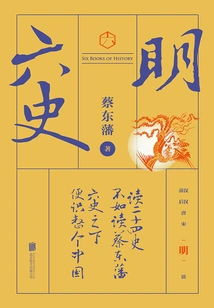
六史:明史演义
Cai Dongfan
"Six Histories" records the panoramic views and secret details of the six most representative turning dynasties in Chinese history, from their rise to their decline. The system is complete, the content is rich, and the priorities are clear. It combines the majestic spirit of history with the interest of grass and snakes. It respects historical facts and has sophisticated diction. It has many but lifelike characters. In the midst of laughter and curses, it writes the breadth and splendor of history. It is recognized as a masterpiece of epic history.
"Six Histories" records the panoramic views and secret details of the six most representative turning dynasties in Chinese history, from their rise to their decline. The system is complete, the content is rich, and the priorities are clear. It combines the majestic spirit of history with the interest of grass and snakes. It respects historical facts and has sophisticated diction. It has many but lifelike characters. In the midst of laughter and curses, it writes the breadth and splendor of history. It is recognized as a masterpiece of epic history.
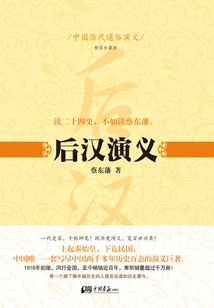
中国历代通俗演义:后汉演义
Cai Dongfan
During the Han Dynasty, historians divided it into two groups, called the Early Han and the Later Han, also known as the Eastern and Western Han. This is because during the four hundred years of the Han Dynasty, Wang Mang usurped the country and actually usurped the throne for eighteen years. Therefore, before Wang Mang, it was called the Former Han, and after Wang Mang, it was called the Later Han. Moreover, the former Han Dynasty established its capital in Shaanxi, so it was known as the Western Han Dynasty, and the later Han Dynasty established its capital in Luoyang, so it was known as the Eastern Han Dynasty.
During the Han Dynasty, historians divided it into two groups, called the Early Han and the Later Han, also known as the Eastern and Western Han. This is because during the four hundred years of the Han Dynasty, Wang Mang usurped the country and actually usurped the throne for eighteen years. Therefore, before Wang Mang, it was called the Former Han, and after Wang Mang, it was called the Later Han. Moreover, the former Han Dynasty established its capital in Shaanxi, so it was known as the Western Han Dynasty, and the later Han Dynasty established its capital in Luoyang, so it was known as the Eastern Han Dynasty.
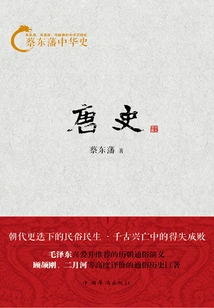
蔡东藩中华史:唐史
Cai Dongfan
When Mao Zedong came to Beijing from Yan'an, he ordered his subordinates to bring him a set of books, and this was it! It can be said that this set of books is Mao Zedong's introduction to Chinese history. With more than 2,000 years of history from the Qin Dynasty to the Republic of China, Cai Dongfan used official history as the classic and anecdotes as the weft, and used the language of "The Romance of the Three Kingdoms", which is not very profound in writing and not very vulgar in language, to write this most complete set of historical novels in China. From the creation of "Popular Romance of Qing History" in 1915 to the publication of "Popular Romance of Later Han Dynasty" in 1926, the entire set of "Popular Romance of Historical Dynasties" took ten years to complete. In addition to being very story-telling and interesting, this set of novels also attaches great importance to the authenticity of historical materials. Not only can it be used as a general leisure reading, but it can also be used as a reference book for history lovers.
When Mao Zedong came to Beijing from Yan'an, he ordered his subordinates to bring him a set of books, and this was it! It can be said that this set of books is Mao Zedong's introduction to Chinese history. With more than 2,000 years of history from the Qin Dynasty to the Republic of China, Cai Dongfan used official history as the classic and anecdotes as the weft, and used the language of "The Romance of the Three Kingdoms", which is not very profound in writing and not very vulgar in language, to write this most complete set of historical novels in China. From the creation of "Popular Romance of Qing History" in 1915 to the publication of "Popular Romance of Later Han Dynasty" in 1926, the entire set of "Popular Romance of Historical Dynasties" took ten years to complete. In addition to being very story-telling and interesting, this set of novels also attaches great importance to the authenticity of historical materials. Not only can it be used as a general leisure reading, but it can also be used as a reference book for history lovers.
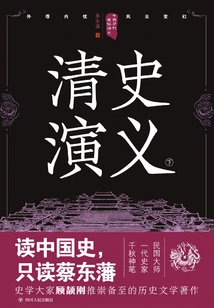
中国历代通俗演义:清史演义(下)(再版)
Cai Dongfan
"Popular Romance of Chinese History" dates from the Qin and Han dynasties to the Republic of China. Two thousand years of Chinese history are vividly displayed in front of us. It is the only popular novel so far that comprehensively narrates Chinese history. When writing, the author adheres to the concept of "mainly trusting the history and relying on unconventional history". He draws materials carefully, has a plain viewpoint, is rich in content, has a methodical narrative, elegant language, self-evaluation and annotation, and has both reason and interest. It is regarded as a classic of popular history. This book is "The Romance of Qing History (Part 2)", one of the series of "Popular Romance of Chinese Dynasties". This book tells the history from "the 51st chapter of Lin Zhijun's generous judgment on Shi Qi Zhongtang's mediocrity and harming the country" to "the 100th chapter of the election of President Sun Wen to take office and abdicate the throne and end with Qing Zuo." After the heyday of Kangxi and Qianlong, the Qing Dynasty began to decline again. The foreign ships in the West had strong guns and guns, and repeatedly invaded the country. The great powers ceded territory today and paid indemnity tomorrow. The domestic Taiping Rebellion, Boxer Rebellion, etc. Tired the Qing Dynasty monarchs and ministers to focus on one thing and the other, and the country's power gradually declined. Until Wuchang launched an attack, all provinces responded, and the Qing Dynasty was overthrown...
"Popular Romance of Chinese History" dates from the Qin and Han dynasties to the Republic of China. Two thousand years of Chinese history are vividly displayed in front of us. It is the only popular novel so far that comprehensively narrates Chinese history. When writing, the author adheres to the concept of "mainly trusting the history and relying on unconventional history". He draws materials carefully, has a plain viewpoint, is rich in content, has a methodical narrative, elegant language, self-evaluation and annotation, and has both reason and interest. It is regarded as a classic of popular history. This book is "The Romance of Qing History (Part 2)", one of the series of "Popular Romance of Chinese Dynasties". This book tells the history from "the 51st chapter of Lin Zhijun's generous judgment on Shi Qi Zhongtang's mediocrity and harming the country" to "the 100th chapter of the election of President Sun Wen to take office and abdicate the throne and end with Qing Zuo." After the heyday of Kangxi and Qianlong, the Qing Dynasty began to decline again. The foreign ships in the West had strong guns and guns, and repeatedly invaded the country. The great powers ceded territory today and paid indemnity tomorrow. The domestic Taiping Rebellion, Boxer Rebellion, etc. Tired the Qing Dynasty monarchs and ministers to focus on one thing and the other, and the country's power gradually declined. Until Wuchang launched an attack, all provinces responded, and the Qing Dynasty was overthrown...
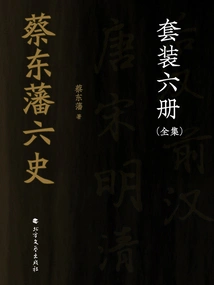
蔡东藩六史(全集)
Cai Dongfan
"Six Histories" describes the six most representative transitional dynasties in Chinese history, Qin, Han, Tang, Song, Ming and Qing, from their rise to decline, with panoramic views and secret details. The system is complete, the content is rich, and the priorities are clear. It combines the majestic spirit of history with the interest of grass and snakes. It respects historical facts and has sophisticated diction. It has many but lifelike characters. In the midst of laughter and curses, it writes the breadth and splendor of history. It is recognized as a masterpiece of epic history. Qin, Han, Tang, Song, Ming and Qing, the rise and fall of a dynasty are the food, clothing, housing and transportation, happiness and troubles, life and death of people traveling around time and space. Write down all the details of history. Reading the Twenty-Four Histories is not as good as reading Cai Dongfan; under the Six Histories, there is a whole China.
"Six Histories" describes the six most representative transitional dynasties in Chinese history, Qin, Han, Tang, Song, Ming and Qing, from their rise to decline, with panoramic views and secret details. The system is complete, the content is rich, and the priorities are clear. It combines the majestic spirit of history with the interest of grass and snakes. It respects historical facts and has sophisticated diction. It has many but lifelike characters. In the midst of laughter and curses, it writes the breadth and splendor of history. It is recognized as a masterpiece of epic history. Qin, Han, Tang, Song, Ming and Qing, the rise and fall of a dynasty are the food, clothing, housing and transportation, happiness and troubles, life and death of people traveling around time and space. Write down all the details of history. Reading the Twenty-Four Histories is not as good as reading Cai Dongfan; under the Six Histories, there is a whole China.
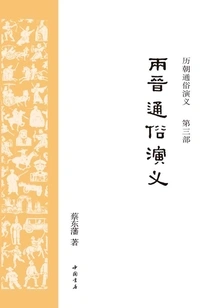
两晋通俗演义(历朝通俗演义)
Cai Dongfan
With more than 2,000 years of history from the Qin Dynasty to the Republic of China, Cai Dongfan used official history as the classic and anecdotes as the weft, and used the language of "The Romance of the Three Kingdoms", which is not very profound in writing and not very vulgar in language, to write this most complete set of historical novels in China. From the creation of "Popular Romance of Qing History" in 1915 to the publication of "Popular Romance of Later Han Dynasty" in 1928, the entire set of "Popular Romance of Historical Dynasties" took ten years to complete. In addition to being very story-telling and interesting, this set of novels also attaches great importance to the authenticity of historical materials. Not only can it be used as a general leisure reading, but it can also be used as a reference book for history lovers.
With more than 2,000 years of history from the Qin Dynasty to the Republic of China, Cai Dongfan used official history as the classic and anecdotes as the weft, and used the language of "The Romance of the Three Kingdoms", which is not very profound in writing and not very vulgar in language, to write this most complete set of historical novels in China. From the creation of "Popular Romance of Qing History" in 1915 to the publication of "Popular Romance of Later Han Dynasty" in 1928, the entire set of "Popular Romance of Historical Dynasties" took ten years to complete. In addition to being very story-telling and interesting, this set of novels also attaches great importance to the authenticity of historical materials. Not only can it be used as a general leisure reading, but it can also be used as a reference book for history lovers.
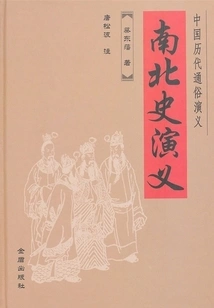
Romance of Northern and Southern History
General Fiction南北史演义
Cai Dongfan
The narrative content of this book covers a history of about two centuries from Liu Yu's generation in the Jin Dynasty to the demise of the Sui Dynasty. The south experienced Song, Qi, Liang, and Chen, with frequent dynasty changes and constant wars. After the Northern Wei unified the north, Emperor Xiaowen implemented reforms and absorbed Han culture. Later, the Eastern and Western Wei were split, and were replaced by the Northern Qi and Northern Zhou.
The narrative content of this book covers a history of about two centuries from Liu Yu's generation in the Jin Dynasty to the demise of the Sui Dynasty. The south experienced Song, Qi, Liang, and Chen, with frequent dynasty changes and constant wars. After the Northern Wei unified the north, Emperor Xiaowen implemented reforms and absorbed Han culture. Later, the Eastern and Western Wei were split, and were replaced by the Northern Qi and Northern Zhou.
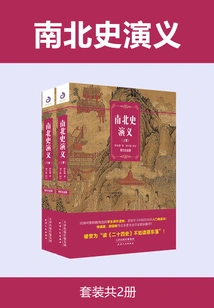
南北史演义(套装共2册)
Cai Dongfan
"History of the North and South" (modern vernacular version) is one of the series of "Popular Romance of the Past Dynasties". It describes the split and confrontation situation during the 170 years of the Southern and Northern Dynasties when "rebellious ministers and traitors filled the world". Following the old example of Li Yanshou of the Tang Dynasty, Song, Qi, Liang, and Chen were classified as Southern History, and Wei, Qi, Zhou, and Sui were Northern History. The writing is a parallel narration of the history of the north and the south, without praising the emperors or omitting the shining points of the little people. "The Romance of Northern and Southern History" (modern vernacular version) is rich in content and objective in its discussion. It can be called a classic of popular history. It can be used not only as a general leisure reading, but also as a reference book for history lovers. "History of the North and South" (Modern Vernacular Version) quotes from many sources, has detailed literature and history, is authentic and reliable, has relaxed writing, self-criticism and self-evaluation, and is full of wit and humor. It has rich characters, clear priorities, vivid stories, and unique comments. It integrates literature, history, and interest, making people unable to bear to put it down. It can be said to be a classic work of popular history.
"History of the North and South" (modern vernacular version) is one of the series of "Popular Romance of the Past Dynasties". It describes the split and confrontation situation during the 170 years of the Southern and Northern Dynasties when "rebellious ministers and traitors filled the world". Following the old example of Li Yanshou of the Tang Dynasty, Song, Qi, Liang, and Chen were classified as Southern History, and Wei, Qi, Zhou, and Sui were Northern History. The writing is a parallel narration of the history of the north and the south, without praising the emperors or omitting the shining points of the little people. "The Romance of Northern and Southern History" (modern vernacular version) is rich in content and objective in its discussion. It can be called a classic of popular history. It can be used not only as a general leisure reading, but also as a reference book for history lovers. "History of the North and South" (Modern Vernacular Version) quotes from many sources, has detailed literature and history, is authentic and reliable, has relaxed writing, self-criticism and self-evaluation, and is full of wit and humor. It has rich characters, clear priorities, vivid stories, and unique comments. It integrates literature, history, and interest, making people unable to bear to put it down. It can be said to be a classic work of popular history.
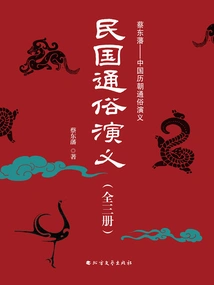
Popular Romance of the Republic of China (three Volumes)
General Fiction民国通俗演义(全三册)
Cai Dongfan
Beginning in 1916, Cai Dongfan spent ten years completing "Popular Romance of Chinese Dynasties". In the form of a chapter-style historical romance novel, he recorded the major historical events and important historical figures that occurred in China during the 2166 years from Qin Shihuang to the Republic of China (1920). "Popular Romance of the Republic of China: Popular Romance of the Republic of China (Set Volume 1, 2)" is one of them. The whole book reproduces the history of the Republic of China in the form of chapter novels, describing in detail the beginning and end of major historical events such as the Revolution of 1911, Sun Yat-sen's resignation, Yuan Shikai's proclaimed emperor, Cai E's attack on Yuan, Zhang Xun's restoration, the May Fourth Movement, and Sun Yat-sen's reorganization of the Kuomintang.
Beginning in 1916, Cai Dongfan spent ten years completing "Popular Romance of Chinese Dynasties". In the form of a chapter-style historical romance novel, he recorded the major historical events and important historical figures that occurred in China during the 2166 years from Qin Shihuang to the Republic of China (1920). "Popular Romance of the Republic of China: Popular Romance of the Republic of China (Set Volume 1, 2)" is one of them. The whole book reproduces the history of the Republic of China in the form of chapter novels, describing in detail the beginning and end of major historical events such as the Revolution of 1911, Sun Yat-sen's resignation, Yuan Shikai's proclaimed emperor, Cai E's attack on Yuan, Zhang Xun's restoration, the May Fourth Movement, and Sun Yat-sen's reorganization of the Kuomintang.
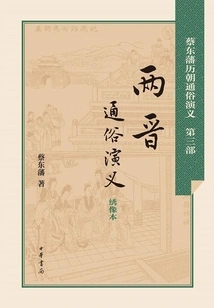
Popular Romance of the Two Jin Dynasties (popular Romance of Cai Dongfan's Past Dynasties)
General Fiction两晋通俗演义(蔡东藩历朝通俗演义)
Cai Dongfan
"The Popular Romance of Cai Dongfan's Dynasties" written by Cai Dongfan was written from the Qin and Han Dynasties to the Republic of China. The book has more than a thousand chapters and more than 5 million words, covering nearly 2,200 years of history.
"The Popular Romance of Cai Dongfan's Dynasties" written by Cai Dongfan was written from the Qin and Han Dynasties to the Republic of China. The book has more than a thousand chapters and more than 5 million words, covering nearly 2,200 years of history.
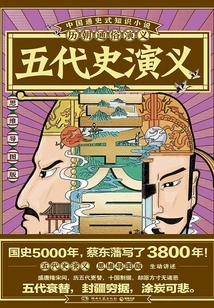
Popular Romance of the Past Dynasties: Romance of the Five Dynasties (mind Map Version)
General Fiction历朝通俗演义:五代史演义(思维导图版)
Cai Dongfan
"History of the Five Dynasties" is a recreation of Cai Dongfan's original work. The book describes the rise and fall of each dynasty during the Five Dynasties and Ten Kingdoms period. The book depicts many historical figures, such as Li Yu, Chai Rong, etc., And depicts the historical changes of the Five Dynasties period in a panoramic manner. As a large-scale work, the review process of this book was carefully and rigorously edited, all illustrations and character embroideries in the book were restored and redrawn, and all rare characters were notated in accordance with the latest "General Standard Chinese Character List". As the core feature of this book that is different from previous versions, "Reading Mind Map" provides a new interpretation of the book from the perspective of "cultural anecdotes of emperors, generals, generals" and other perspectives, and uses big data presentation to gain insight into the context of historical changes and understand ancient wisdom from data changes. The mind map involves many classic battles and unsolved mysteries during the Five Dynasties period, and all content is reviewed by relevant experts and scholars.
"History of the Five Dynasties" is a recreation of Cai Dongfan's original work. The book describes the rise and fall of each dynasty during the Five Dynasties and Ten Kingdoms period. The book depicts many historical figures, such as Li Yu, Chai Rong, etc., And depicts the historical changes of the Five Dynasties period in a panoramic manner. As a large-scale work, the review process of this book was carefully and rigorously edited, all illustrations and character embroideries in the book were restored and redrawn, and all rare characters were notated in accordance with the latest "General Standard Chinese Character List". As the core feature of this book that is different from previous versions, "Reading Mind Map" provides a new interpretation of the book from the perspective of "cultural anecdotes of emperors, generals, generals" and other perspectives, and uses big data presentation to gain insight into the context of historical changes and understand ancient wisdom from data changes. The mind map involves many classic battles and unsolved mysteries during the Five Dynasties period, and all content is reviewed by relevant experts and scholars.
宋史通俗演义(历朝通俗演义)
Cai Dongfan
With more than 2,000 years of history from the Qin Dynasty to the Republic of China, Cai Dongfan used official history as the classic and anecdotes as the weft, and used the language of "The Romance of the Three Kingdoms", which is not very profound in writing and not very vulgar in language, to write this most complete set of historical novels in China. From the creation of "Popular Romance of Qing History" in 1915 to the publication of "Popular Romance of Later Han Dynasty" in 1932, the entire set of "Popular Romance of Historical Dynasties" took ten years to complete. In addition to being very story-telling and interesting, this set of novels also attaches great importance to the authenticity of historical materials. Not only can it be used as a general leisure reading, but it can also be used as a reference book for history lovers.
With more than 2,000 years of history from the Qin Dynasty to the Republic of China, Cai Dongfan used official history as the classic and anecdotes as the weft, and used the language of "The Romance of the Three Kingdoms", which is not very profound in writing and not very vulgar in language, to write this most complete set of historical novels in China. From the creation of "Popular Romance of Qing History" in 1915 to the publication of "Popular Romance of Later Han Dynasty" in 1932, the entire set of "Popular Romance of Historical Dynasties" took ten years to complete. In addition to being very story-telling and interesting, this set of novels also attaches great importance to the authenticity of historical materials. Not only can it be used as a general leisure reading, but it can also be used as a reference book for history lovers.
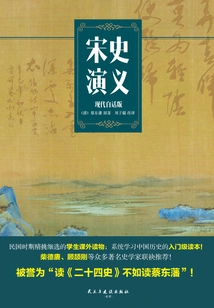
The Romance of Song Dynasty (modern Vernacular Version)
General Fiction宋史演义(现代白话版)
Cai Dongfan
Cai Dongfan advocated that "the writing should not be fictitious, but the language should follow the popular". The "Popular Romance of the Dynasties" he compiled is easy to understand, clear as words, coupled with a rigorous academic attitude, extensive citations, detailed literature and history, and authenticity and reliability, making this set of "Popular Romance of the Dynasties" deeply loved by readers. It is both historical and interesting, and can be called a classic work of popular history. "The Romance of the Song Dynasty" is the Song Dynasty part of the "Popular Romance of the Dynasties". It introduces the history of more than 300 years from the end of the Five Dynasties and the Ten Kingdoms, when Zhao Kuangyin and Chen Qiao rebelled to create the Song Dynasty, to the Yuan soldiers' massive invasion of the south and the demise of the Song Dynasty. During this period, the political, economic, military and other aspects of the two Song Dynasties were vividly described in the form of character romances. The stories of the emperors of the two Song dynasties and many famous ministers and generals unfold one after another. The characters are rich, the priorities are clear, and the stories are vivid. It is difficult to put down the book when reading.
Cai Dongfan advocated that "the writing should not be fictitious, but the language should follow the popular". The "Popular Romance of the Dynasties" he compiled is easy to understand, clear as words, coupled with a rigorous academic attitude, extensive citations, detailed literature and history, and authenticity and reliability, making this set of "Popular Romance of the Dynasties" deeply loved by readers. It is both historical and interesting, and can be called a classic work of popular history. "The Romance of the Song Dynasty" is the Song Dynasty part of the "Popular Romance of the Dynasties". It introduces the history of more than 300 years from the end of the Five Dynasties and the Ten Kingdoms, when Zhao Kuangyin and Chen Qiao rebelled to create the Song Dynasty, to the Yuan soldiers' massive invasion of the south and the demise of the Song Dynasty. During this period, the political, economic, military and other aspects of the two Song Dynasties were vividly described in the form of character romances. The stories of the emperors of the two Song dynasties and many famous ministers and generals unfold one after another. The characters are rich, the priorities are clear, and the stories are vivid. It is difficult to put down the book when reading.
Popular Romance of the Two Jin Dynasties (part 1)
General Fiction两晋通俗演义(上)
Cai Dongfan
The author summarizes the 156-year history of the two Jin Dynasties as a history of internal strife and external humiliation, as a lesson for today. This book is rich in content, elegant in language, self-evaluating and annotating, and is both rational and interesting. It can be regarded as a classic of popular history. It retains the preface, lineage diagram, Mr. Cai Dongfan's own annotations, included batches and subsequent batches. Promote an authentic reading experience.
The author summarizes the 156-year history of the two Jin Dynasties as a history of internal strife and external humiliation, as a lesson for today. This book is rich in content, elegant in language, self-evaluating and annotating, and is both rational and interesting. It can be regarded as a classic of popular history. It retains the preface, lineage diagram, Mr. Cai Dongfan's own annotations, included batches and subsequent batches. Promote an authentic reading experience.
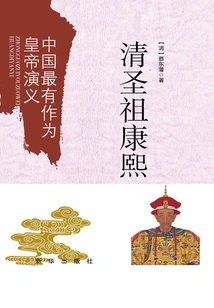
The Romance of China's Most Promising Emperor: Kangxi, the Holy Ancestor of the Qing Dynasty
General Fiction中国最有作为皇帝演义:清圣祖康熙
Cai Dongfan
The "Romances of China's Most Promising Emperors" series of books selects eight most promising emperors in Chinese history from the "Popular Romance of Chinese Dynasties" written by Mr. Cai Dongfan (based on the 1935 Huiwentang printed version, retaining the author's annotations) and compiles them into a book. This series of books has both historical and literary qualities. It "takes official history as the basis and strives for certainty; it uses anecdotes as the weft and does not make false accusations." Readers can not only read history but also appreciate legendary stories, which is the best of both worlds. This book is one of them, recreating a real and vivid Emperor Kangxi in history for readers.
The "Romances of China's Most Promising Emperors" series of books selects eight most promising emperors in Chinese history from the "Popular Romance of Chinese Dynasties" written by Mr. Cai Dongfan (based on the 1935 Huiwentang printed version, retaining the author's annotations) and compiles them into a book. This series of books has both historical and literary qualities. It "takes official history as the basis and strives for certainty; it uses anecdotes as the weft and does not make false accusations." Readers can not only read history but also appreciate legendary stories, which is the best of both worlds. This book is one of them, recreating a real and vivid Emperor Kangxi in history for readers.
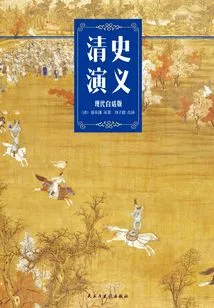
Romance of Qing History (modern Vernacular Revised Edition)
General Fiction清史演义(现代白话修订版)
Cai Dongfan
"The Romance of Qing History" is the Qing Dynasty part of "Popular Romance of the Past Dynasties". It is one of the series of long historical novels created by Cai Dongfan in the Republic of China under the guidance of the idea of "Romance to save the country". "The History of the Qing Dynasty" has one hundred chapters, covering nearly three hundred years of historical events from the rise of the Qing Dynasty in the Northeast to Xuantong's abdication and leaving the palace. All major historical facts in the book are well-founded, and each chapter is highly readable. It can be said to have created a new genre of historical novels.
"The Romance of Qing History" is the Qing Dynasty part of "Popular Romance of the Past Dynasties". It is one of the series of long historical novels created by Cai Dongfan in the Republic of China under the guidance of the idea of "Romance to save the country". "The History of the Qing Dynasty" has one hundred chapters, covering nearly three hundred years of historical events from the rise of the Qing Dynasty in the Northeast to Xuantong's abdication and leaving the palace. All major historical facts in the book are well-founded, and each chapter is highly readable. It can be said to have created a new genre of historical novels.
蔡东藩经典历史小说:两晋演义(10)
Cai Dongfan
"The Romance of the Two Jin Dynasties" is one of the "Popular Romance of the Past Dynasties". This book uses a chapter structure, popular articles, and witty comments to truly reproduce the magnificent historical evolution of Chinese civilization and narrate the rise and fall of the Jin Dynasty. It started from Sima Yan in the Wei Dynasty and ended in the Liu Song Dynasty in the Jin Dynasty, which lasted for 156 years. The Western Jin Dynasty ended nearly a century of division. However, the Eight Kings Rebellion depleted the country's capital, and the Hu people, who were mixed with the Han people, took the opportunity to attack one after another, leading to the fall of the Western Jin Dynasty. The Eastern Jin Dynasty rebuilt in Jiangdong, accumulated energy, and launched the difficult task of the Northern Expedition, but its strength was lost due to internal power struggles. General Liu Yu stood out and made two Northern Expeditions to recapture Chang'an. After that, he deposed two emperors one after another, founded the Song Dynasty, and fell to the Eastern Jin Dynasty. This book is easy to understand and has witty comments. It is a good helper for understanding history.
"The Romance of the Two Jin Dynasties" is one of the "Popular Romance of the Past Dynasties". This book uses a chapter structure, popular articles, and witty comments to truly reproduce the magnificent historical evolution of Chinese civilization and narrate the rise and fall of the Jin Dynasty. It started from Sima Yan in the Wei Dynasty and ended in the Liu Song Dynasty in the Jin Dynasty, which lasted for 156 years. The Western Jin Dynasty ended nearly a century of division. However, the Eight Kings Rebellion depleted the country's capital, and the Hu people, who were mixed with the Han people, took the opportunity to attack one after another, leading to the fall of the Western Jin Dynasty. The Eastern Jin Dynasty rebuilt in Jiangdong, accumulated energy, and launched the difficult task of the Northern Expedition, but its strength was lost due to internal power struggles. General Liu Yu stood out and made two Northern Expeditions to recapture Chang'an. After that, he deposed two emperors one after another, founded the Song Dynasty, and fell to the Eastern Jin Dynasty. This book is easy to understand and has witty comments. It is a good helper for understanding history.
蔡东藩经典历史小说:民国演义(14)
Cai Dongfan
This book is a must-read historical novel of the Republic of China. The author is Cai Dongfan, a famous historian and novelist of the Republic of China. This book describes in relatively detail the beginning and end of major historical events such as the Revolution of 1911, Sun Yat-sen's resignation, Yuan Shikai's proclaimed emperor, Cai E's campaign against Yuan, Zhang Xun's restoration, the May Fourth Movement, Sun Yat-sen's reorganization of the Kuomintang, and other major historical events. This book is the Republic of China part of "Popular Romance of Chinese History". "Popular Romance of Chinese History" dates from the Qin and Han dynasties to the Republic of China. Two thousand years of Chinese history are vividly displayed in front of us. The book tells the history of the Republic of China in a detailed and easy-to-understand way, and has been widely praised by people since its publication. The work is based on historical facts and side by side with unofficial history. It is prudent in selecting materials, has plain viewpoints, is rich in content, has a methodical narrative, elegant language, self-evaluation and self-annotation, and has both reason and interest. It is regarded as a classic of popular history and is deeply favored by readers. In the selection and use of historical materials, Cai Dongfan mainly focused on "official history" and also collected anecdotes and anecdotes. He claimed that the historical romance he compiled "takes official history as the classic and strives for certainty; uses anecdotes as the latitude and does not make false accusations." He is extremely cautious in the use of historical materials such as anecdotes and anecdotes, and often requires "several rounds of textual research."
This book is a must-read historical novel of the Republic of China. The author is Cai Dongfan, a famous historian and novelist of the Republic of China. This book describes in relatively detail the beginning and end of major historical events such as the Revolution of 1911, Sun Yat-sen's resignation, Yuan Shikai's proclaimed emperor, Cai E's campaign against Yuan, Zhang Xun's restoration, the May Fourth Movement, Sun Yat-sen's reorganization of the Kuomintang, and other major historical events. This book is the Republic of China part of "Popular Romance of Chinese History". "Popular Romance of Chinese History" dates from the Qin and Han dynasties to the Republic of China. Two thousand years of Chinese history are vividly displayed in front of us. The book tells the history of the Republic of China in a detailed and easy-to-understand way, and has been widely praised by people since its publication. The work is based on historical facts and side by side with unofficial history. It is prudent in selecting materials, has plain viewpoints, is rich in content, has a methodical narrative, elegant language, self-evaluation and self-annotation, and has both reason and interest. It is regarded as a classic of popular history and is deeply favored by readers. In the selection and use of historical materials, Cai Dongfan mainly focused on "official history" and also collected anecdotes and anecdotes. He claimed that the historical romance he compiled "takes official history as the classic and strives for certainty; uses anecdotes as the latitude and does not make false accusations." He is extremely cautious in the use of historical materials such as anecdotes and anecdotes, and often requires "several rounds of textual research."
Popular Romance of the Republic of China (part 1)
General Fiction民国通俗演义(上)
Cai Dongfan
Beginning in 1916, Cai Dongfan spent ten years completing "Popular Romance of Chinese Dynasties". In the form of a chapter-style historical romance novel, he recorded the major historical events and important historical figures that occurred in China during the 2166 years from Qin Shihuang to the Republic of China (1920). "Popular Romance of the Republic of China: Popular Romance of the Republic of China (Set Volume 1, 2)" is one of them. The whole book reproduces the history of the Republic of China in the form of chapter novels, describing in detail the beginning and end of major historical events such as the Revolution of 1911, Sun Yat-sen's resignation, Yuan Shikai's proclaimed emperor, Cai E's attack on Yuan, Zhang Xun's restoration, the May Fourth Movement, and Sun Yat-sen's reorganization of the Kuomintang.
Beginning in 1916, Cai Dongfan spent ten years completing "Popular Romance of Chinese Dynasties". In the form of a chapter-style historical romance novel, he recorded the major historical events and important historical figures that occurred in China during the 2166 years from Qin Shihuang to the Republic of China (1920). "Popular Romance of the Republic of China: Popular Romance of the Republic of China (Set Volume 1, 2)" is one of them. The whole book reproduces the history of the Republic of China in the form of chapter novels, describing in detail the beginning and end of major historical events such as the Revolution of 1911, Sun Yat-sen's resignation, Yuan Shikai's proclaimed emperor, Cai E's attack on Yuan, Zhang Xun's restoration, the May Fourth Movement, and Sun Yat-sen's reorganization of the Kuomintang.
Cai Dongfan's Historical Novels: Romance of Song Dynasty (5)
General Fiction蔡东藩历史小说:宋史演义(5)
Cai Dongfan
This book mainly talks about how after the Five Dynasties and Ten Kingdoms, Zhao Kuangyin wore a yellow robe and used a glass of wine to release his military power and concentrate the power in his own hands. Under the basic national policy of strengthening the cadres and weakening the branches, literati politics solved the opportunity for the warriors of the previous dynasty to usurp the throne, and also shaped a humanistic empire at the cultural level. But it was unable to break through the political chaos, and the political situation was disrupted. This book is structured in chapters, with popular articles and witty comments. It truly reproduces the magnificent historical evolution of Chinese civilization and narrates the rise and fall of the Song Dynasty. The northern part of the Great Wall was surrounded by powerful neighbors and foreign troubles continued, and half of the country was lost in the Jingkang disaster. After Jingkang, Emperor Gaozong and Zhao Gou rebuilt the empire in Suzhou and Hangzhou under heaven, and lost the illusion of returning to China. The author uses his personal history to tell the history of China in the form of a popular novel, hoping to help the Chinese people find a way to save the nation and survive from the enlightenment of history.
This book mainly talks about how after the Five Dynasties and Ten Kingdoms, Zhao Kuangyin wore a yellow robe and used a glass of wine to release his military power and concentrate the power in his own hands. Under the basic national policy of strengthening the cadres and weakening the branches, literati politics solved the opportunity for the warriors of the previous dynasty to usurp the throne, and also shaped a humanistic empire at the cultural level. But it was unable to break through the political chaos, and the political situation was disrupted. This book is structured in chapters, with popular articles and witty comments. It truly reproduces the magnificent historical evolution of Chinese civilization and narrates the rise and fall of the Song Dynasty. The northern part of the Great Wall was surrounded by powerful neighbors and foreign troubles continued, and half of the country was lost in the Jingkang disaster. After Jingkang, Emperor Gaozong and Zhao Gou rebuilt the empire in Suzhou and Hangzhou under heaven, and lost the illusion of returning to China. The author uses his personal history to tell the history of China in the form of a popular novel, hoping to help the Chinese people find a way to save the nation and survive from the enlightenment of history.
蔡东藩经典历史小说:两晋演义(14)
Cai Dongfan
"The Romance of the Two Jin Dynasties" is one of the "Popular Romance of the Past Dynasties". This book uses a chapter structure, popular articles, and witty comments to truly reproduce the magnificent historical evolution of Chinese civilization and narrate the rise and fall of the Jin Dynasty. It started from Sima Yan in the Wei Dynasty and ended in the Liu Song Dynasty in the Jin Dynasty, which lasted for 156 years. The Western Jin Dynasty ended nearly a century of division. However, the Eight Kings Rebellion depleted the country's capital, and the Hu people, who were mixed with the Han people, took the opportunity to attack one after another, leading to the fall of the Western Jin Dynasty. The Eastern Jin Dynasty rebuilt in Jiangdong, accumulated energy, and launched the difficult task of the Northern Expedition, but its strength was lost due to internal power struggles. General Liu Yu stood out and made two Northern Expeditions to recapture Chang'an. After that, he deposed two emperors one after another, founded the Song Dynasty, and fell to the Eastern Jin Dynasty. This book is easy to understand and has witty comments. It is a good helper for understanding history.
"The Romance of the Two Jin Dynasties" is one of the "Popular Romance of the Past Dynasties". This book uses a chapter structure, popular articles, and witty comments to truly reproduce the magnificent historical evolution of Chinese civilization and narrate the rise and fall of the Jin Dynasty. It started from Sima Yan in the Wei Dynasty and ended in the Liu Song Dynasty in the Jin Dynasty, which lasted for 156 years. The Western Jin Dynasty ended nearly a century of division. However, the Eight Kings Rebellion depleted the country's capital, and the Hu people, who were mixed with the Han people, took the opportunity to attack one after another, leading to the fall of the Western Jin Dynasty. The Eastern Jin Dynasty rebuilt in Jiangdong, accumulated energy, and launched the difficult task of the Northern Expedition, but its strength was lost due to internal power struggles. General Liu Yu stood out and made two Northern Expeditions to recapture Chang'an. After that, he deposed two emperors one after another, founded the Song Dynasty, and fell to the Eastern Jin Dynasty. This book is easy to understand and has witty comments. It is a good helper for understanding history.
变革时代的乱象:五代史演义
Cai Dongfan
This book is a popular romance of the Five Dynasties in "Cai Dongfan Talks about Chinese History", with a total of sixty chapters. From Zhu Wen's usurpation of the Tang Dynasty to Zhao Kuangyin and Chen Qiao's mutiny, it wonderfully interprets the change of the Five Dynasties in fifty-three years. The author draws extensively from official history, occasionally from officials and wild officials, and his narrative is plain, smooth, and methodical; he makes self-evaluations and annotations, and his language is humorous and both reasonable and reasonable. Reading through this book, it is like a historical picture of the Five Dynasties unfolding slowly before your eyes. Sometimes it is a fierce battle, sometimes it is gentle and affectionate, sometimes it is a dispute between countries, sometimes it is a game of loyalty and traitor... It makes people dizzy and full of emotions.
This book is a popular romance of the Five Dynasties in "Cai Dongfan Talks about Chinese History", with a total of sixty chapters. From Zhu Wen's usurpation of the Tang Dynasty to Zhao Kuangyin and Chen Qiao's mutiny, it wonderfully interprets the change of the Five Dynasties in fifty-three years. The author draws extensively from official history, occasionally from officials and wild officials, and his narrative is plain, smooth, and methodical; he makes self-evaluations and annotations, and his language is humorous and both reasonable and reasonable. Reading through this book, it is like a historical picture of the Five Dynasties unfolding slowly before your eyes. Sometimes it is a fierce battle, sometimes it is gentle and affectionate, sometimes it is a dispute between countries, sometimes it is a game of loyalty and traitor... It makes people dizzy and full of emotions.
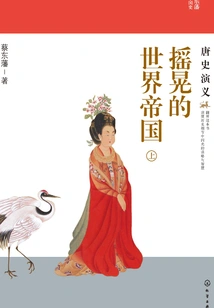
摇晃的世界帝国:唐史演义(上)
Cai Dongfan
This book is a popular romance about the history of the Tang Dynasty, "Cai Dongfan Talks about Chinese History", with a total of 100 chapters in two volumes. From the Xuanwu Gate Change to the Zhenguan Rule, from Empress Wu becoming emperor to the prosperous Kaiyuan Dynasty, from the Anshi Rebellion to Zhu Wen's usurpation of the Tang Dynasty, it wonderfully interprets the rise and fall of the Tang Dynasty in 289 years. The author draws extensively from official history, occasionally from officials and wild officials, and his narrative is plain, smooth, and methodical; he makes self-evaluations and annotations, and his language is humorous and both reasonable and reasonable. Reading through this book, it is like a historical picture of the Tang Dynasty unfolding slowly before your eyes. Sometimes it is a fierce battle, sometimes it is gentle and affectionate, sometimes it is a dispute between countries, sometimes it is a game of loyalty and traitor... It makes people dizzy and full of emotions.
This book is a popular romance about the history of the Tang Dynasty, "Cai Dongfan Talks about Chinese History", with a total of 100 chapters in two volumes. From the Xuanwu Gate Change to the Zhenguan Rule, from Empress Wu becoming emperor to the prosperous Kaiyuan Dynasty, from the Anshi Rebellion to Zhu Wen's usurpation of the Tang Dynasty, it wonderfully interprets the rise and fall of the Tang Dynasty in 289 years. The author draws extensively from official history, occasionally from officials and wild officials, and his narrative is plain, smooth, and methodical; he makes self-evaluations and annotations, and his language is humorous and both reasonable and reasonable. Reading through this book, it is like a historical picture of the Tang Dynasty unfolding slowly before your eyes. Sometimes it is a fierce battle, sometimes it is gentle and affectionate, sometimes it is a dispute between countries, sometimes it is a game of loyalty and traitor... It makes people dizzy and full of emotions.
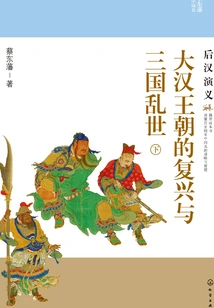
大汉王朝的复兴与三国乱世:后汉演义(下)
Cai Dongfan
This book is a popular romance of the Later Han Dynasty with the History of the Three Kingdoms, "Cai Dongfan Talks about the History of China", with a total of 100 chapters in two volumes. From the resurgence of Guangwu to the disaster of the Party's imprisonment, from the Battle of Guandu to the Battle of Chibi, from Cao Pi usurping the Han Dynasty to Sima Yan proclaiming the emperor, it wonderfully interprets the rise and fall of the Later Han Dynasty and the Three Kingdoms in the past 250 years. The author draws extensively from official history, occasionally from officials and wild officials, and his narrative is plain, smooth, and methodical; he makes self-evaluations and annotations, and his language is humorous and both reasonable and reasonable. Reading through this book, it is like a historical picture unfolding slowly before your eyes. Sometimes it is a fierce battle, sometimes it is gentle and affectionate, sometimes it is a dispute between countries, sometimes it is a game of loyalty and traitor... It makes people dizzy and full of emotions.
This book is a popular romance of the Later Han Dynasty with the History of the Three Kingdoms, "Cai Dongfan Talks about the History of China", with a total of 100 chapters in two volumes. From the resurgence of Guangwu to the disaster of the Party's imprisonment, from the Battle of Guandu to the Battle of Chibi, from Cao Pi usurping the Han Dynasty to Sima Yan proclaiming the emperor, it wonderfully interprets the rise and fall of the Later Han Dynasty and the Three Kingdoms in the past 250 years. The author draws extensively from official history, occasionally from officials and wild officials, and his narrative is plain, smooth, and methodical; he makes self-evaluations and annotations, and his language is humorous and both reasonable and reasonable. Reading through this book, it is like a historical picture unfolding slowly before your eyes. Sometimes it is a fierce battle, sometimes it is gentle and affectionate, sometimes it is a dispute between countries, sometimes it is a game of loyalty and traitor... It makes people dizzy and full of emotions.
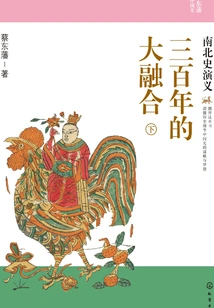
三百年的大融合:南北史演义(下)
Cai Dongfan
This book is a popular romance of the Northern and Southern Dynasties "Cai Dongfan Talks about the History of China", with a total of one hundred chapters in two volumes. From Liu Yu's usurpation of the Jin Dynasty to the rule of Yuanjia, from the Battle of Zhongli to the Rebellion of Hou Jing, from the reforms of Emperor Xiaowen to the Emperor Yang Jianjian, it wonderfully interprets the rise and fall of the Southern and Northern Dynasties in the past two hundred years. The author draws extensively from official history, occasionally from officials and wild officials, and his narrative is plain, smooth, and methodical; he makes self-evaluations and annotations, and his language is humorous and both reasonable and reasonable. Reading through this book, it is like a historical picture unfolding slowly before your eyes. Sometimes it is a fierce battle, sometimes it is gentle and affectionate, sometimes it is a dispute between countries, sometimes it is a game of loyalty and traitor... It makes people dizzy and full of emotions.
This book is a popular romance of the Northern and Southern Dynasties "Cai Dongfan Talks about the History of China", with a total of one hundred chapters in two volumes. From Liu Yu's usurpation of the Jin Dynasty to the rule of Yuanjia, from the Battle of Zhongli to the Rebellion of Hou Jing, from the reforms of Emperor Xiaowen to the Emperor Yang Jianjian, it wonderfully interprets the rise and fall of the Southern and Northern Dynasties in the past two hundred years. The author draws extensively from official history, occasionally from officials and wild officials, and his narrative is plain, smooth, and methodical; he makes self-evaluations and annotations, and his language is humorous and both reasonable and reasonable. Reading through this book, it is like a historical picture unfolding slowly before your eyes. Sometimes it is a fierce battle, sometimes it is gentle and affectionate, sometimes it is a dispute between countries, sometimes it is a game of loyalty and traitor... It makes people dizzy and full of emotions.
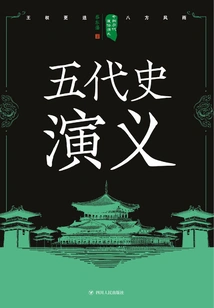
中国历代通俗演义:五代史演义
Cai Dongfan
This set of 21 volumes covers popular romances in 11 historical stages: the Early Han Dynasty, the Later Han Dynasty, the Two Jin Dynasties, Northern and Southern History, the Five Dynasties, Tang, Song, Yuan, Ming, Qing, and the Republic of China. Starting from the first emperor of Qin to the Republic of China, totaling 2166 years, the emperor has written more than six million words. The system is complete, the content is rich, and the priorities are clear. According to the official history, all words have their own origins, and miscellaneous histories are not false accusations. The language is elegant and clean, self-note and self-evaluation, and both rational and interesting. Because he is known as "a historian of a generation, a magic pen for thousands of years", Xun is a model of popular history and a must-read for beginners of history. This book is part of the Five Dynasties and Ten Kingdoms.
This set of 21 volumes covers popular romances in 11 historical stages: the Early Han Dynasty, the Later Han Dynasty, the Two Jin Dynasties, Northern and Southern History, the Five Dynasties, Tang, Song, Yuan, Ming, Qing, and the Republic of China. Starting from the first emperor of Qin to the Republic of China, totaling 2166 years, the emperor has written more than six million words. The system is complete, the content is rich, and the priorities are clear. According to the official history, all words have their own origins, and miscellaneous histories are not false accusations. The language is elegant and clean, self-note and self-evaluation, and both rational and interesting. Because he is known as "a historian of a generation, a magic pen for thousands of years", Xun is a model of popular history and a must-read for beginners of history. This book is part of the Five Dynasties and Ten Kingdoms.
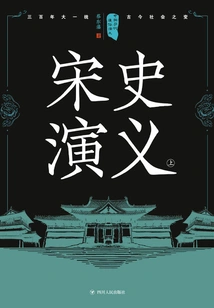
中国历代通俗演义:宋史演义(上)
Cai Dongfan
This set of 21 volumes covers popular romances in 11 historical stages: the Early Han Dynasty, the Later Han Dynasty, the Two Jin Dynasties, Northern and Southern History, the Five Dynasties, Tang, Song, Yuan, Ming, Qing, and the Republic of China. Starting from the first emperor of Qin to the Republic of China, totaling 2166 years, the emperor has written more than six million words. The system is complete, the content is rich, and the priorities are clear. According to the official history, all words have their own origins, and miscellaneous histories are not false accusations. The language is elegant and clean, self-note and self-evaluation, and both rational and interesting. Because he is known as "a historian of a generation, a magic pen for thousands of years", Xun is a model of popular history and a must-read for beginners of history. This book is the part of the pilgrimage.
This set of 21 volumes covers popular romances in 11 historical stages: the Early Han Dynasty, the Later Han Dynasty, the Two Jin Dynasties, Northern and Southern History, the Five Dynasties, Tang, Song, Yuan, Ming, Qing, and the Republic of China. Starting from the first emperor of Qin to the Republic of China, totaling 2166 years, the emperor has written more than six million words. The system is complete, the content is rich, and the priorities are clear. According to the official history, all words have their own origins, and miscellaneous histories are not false accusations. The language is elegant and clean, self-note and self-evaluation, and both rational and interesting. Because he is known as "a historian of a generation, a magic pen for thousands of years", Xun is a model of popular history and a must-read for beginners of history. This book is the part of the pilgrimage.