Library
Browse and search books
350 novels found
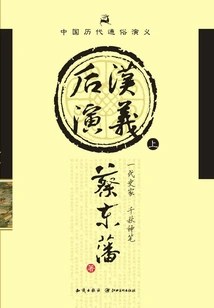
中国历代通俗演义:后汉演义(上)
Cai Dongfan
This book tells the history from "The first chapter: Fake fortune seals and cake sellers, Jinglian sitting in the school bookstore" to "The fiftieth chapter: The conspirators punished the Liang family, and Li Yun was killed unjustly due to jealousy and loyalty." Liu Xiu, a clan member of the Han Dynasty, gradually grew stronger in the struggle against Wang Mang, and eventually re-established the Han Dynasty Ancestral Temple. Emperor Guangwu Liu Xiu ignored past mistakes and took over the power himself, and tried his best to prevent external influence from interfering with the government. Under his hard work, the Han Dynasty was in a state of resurgence. Emperor Ming was particularly paternal, and Emperor Zhang's initial administration was impressive; after he was reunited with the emperor, the affairs of the country deteriorated day by day, with relatives and eunuchs fighting, and the power of the Han Dynasty once again fell into the struggle between relatives and eunuchs...
This book tells the history from "The first chapter: Fake fortune seals and cake sellers, Jinglian sitting in the school bookstore" to "The fiftieth chapter: The conspirators punished the Liang family, and Li Yun was killed unjustly due to jealousy and loyalty." Liu Xiu, a clan member of the Han Dynasty, gradually grew stronger in the struggle against Wang Mang, and eventually re-established the Han Dynasty Ancestral Temple. Emperor Guangwu Liu Xiu ignored past mistakes and took over the power himself, and tried his best to prevent external influence from interfering with the government. Under his hard work, the Han Dynasty was in a state of resurgence. Emperor Ming was particularly paternal, and Emperor Zhang's initial administration was impressive; after he was reunited with the emperor, the affairs of the country deteriorated day by day, with relatives and eunuchs fighting, and the power of the Han Dynasty once again fell into the struggle between relatives and eunuchs...
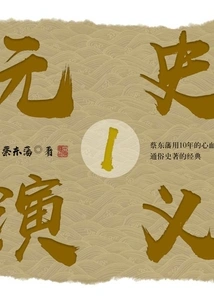
Romance of the Yuan Dynasty 1
General Fiction元史演义1
Cai Dongfan
This book is presented in a chapter-by-chapter structure, with popular articles and witty comments, narrating the rise and fall of the Yuan Dynasty. From the time when Genghis Khan unified the Mongolian tribes and Kublai Khan named the country Yuan, until Zhu Yuanzhang established the Ming Dynasty. Soon after the Mongolian cavalry conquered Europe in the west, they went south to destroy the Jin Dynasty and invade the Song Dynasty. The Southern Song Dynasty collapsed, and the Central Plains was captured by the Mongolian Khan. The Mongolian people had a cruel temperament and treated the people harshly, which aroused numerous popular uprisings until Zhu Yuanzhang destroyed Yuan Jianming.
This book is presented in a chapter-by-chapter structure, with popular articles and witty comments, narrating the rise and fall of the Yuan Dynasty. From the time when Genghis Khan unified the Mongolian tribes and Kublai Khan named the country Yuan, until Zhu Yuanzhang established the Ming Dynasty. Soon after the Mongolian cavalry conquered Europe in the west, they went south to destroy the Jin Dynasty and invade the Song Dynasty. The Southern Song Dynasty collapsed, and the Central Plains was captured by the Mongolian Khan. The Mongolian people had a cruel temperament and treated the people harshly, which aroused numerous popular uprisings until Zhu Yuanzhang destroyed Yuan Jianming.
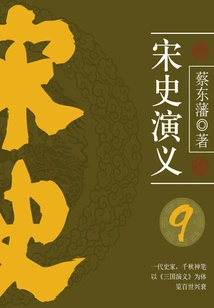
Cai Dongfan's Historical Novels: Romance of Song Dynasty (9)
General Fiction蔡东藩历史小说:宋史演义(9)
Cai Dongfan
This book mainly talks about how after the Five Dynasties and Ten Kingdoms, Zhao Kuangyin wore a yellow robe and used a glass of wine to release his military power and concentrate the power in his own hands. Under the basic national policy of strengthening the cadres and weakening the branches, literati politics solved the opportunity for the warriors of the previous dynasty to usurp the throne, and also shaped a humanistic empire at the cultural level. But it was unable to break through the political chaos, and the political situation was disrupted. This book is structured in chapters, with popular articles and witty comments. It truly reproduces the magnificent historical evolution of Chinese civilization and narrates the rise and fall of the Song Dynasty. The northern part of the Great Wall was surrounded by powerful neighbors and foreign troubles continued, and half of the country was lost in the Jingkang disaster. After Jingkang, Emperor Gaozong and Zhao Gou rebuilt the empire in Suzhou and Hangzhou under heaven, and lost the illusion of returning to China. The author uses his personal history to tell the history of China in the form of a popular novel, hoping to help the Chinese people find a way to save the nation and survive from the enlightenment of history.
This book mainly talks about how after the Five Dynasties and Ten Kingdoms, Zhao Kuangyin wore a yellow robe and used a glass of wine to release his military power and concentrate the power in his own hands. Under the basic national policy of strengthening the cadres and weakening the branches, literati politics solved the opportunity for the warriors of the previous dynasty to usurp the throne, and also shaped a humanistic empire at the cultural level. But it was unable to break through the political chaos, and the political situation was disrupted. This book is structured in chapters, with popular articles and witty comments. It truly reproduces the magnificent historical evolution of Chinese civilization and narrates the rise and fall of the Song Dynasty. The northern part of the Great Wall was surrounded by powerful neighbors and foreign troubles continued, and half of the country was lost in the Jingkang disaster. After Jingkang, Emperor Gaozong and Zhao Gou rebuilt the empire in Suzhou and Hangzhou under heaven, and lost the illusion of returning to China. The author uses his personal history to tell the history of China in the form of a popular novel, hoping to help the Chinese people find a way to save the nation and survive from the enlightenment of history.
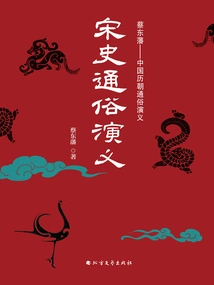
Popular Romance of Song History (two Volumes)
General Fiction宋史通俗演义(全二册)
Cai Dongfan
"Popular Romance of Song History" is one of the popular romances in the history of China. The author Cai Dongfan adopts a chapter-like structure, closely follows the history, and truly reproduces the magnificent historical picture of the evolution of Chinese history during the two Song Dynasties. This book is a classic masterpiece that integrates reading history, saving the country, and being a human being. It is worth reading.
"Popular Romance of Song History" is one of the popular romances in the history of China. The author Cai Dongfan adopts a chapter-like structure, closely follows the history, and truly reproduces the magnificent historical picture of the evolution of Chinese history during the two Song Dynasties. This book is a classic masterpiece that integrates reading history, saving the country, and being a human being. It is worth reading.
蔡东藩历史小说:宋史演义(13)
Cai Dongfan
This book mainly talks about how after the Five Dynasties and Ten Kingdoms, Zhao Kuangyin wore a yellow robe and used a glass of wine to release his military power and concentrate the power in his own hands. Under the basic national policy of strengthening the cadres and weakening the branches, literati politics solved the opportunity for the warriors of the previous dynasty to usurp the throne, and also shaped a humanistic empire at the cultural level. But it was unable to break through the political chaos, and the political situation was disrupted. This book is structured in chapters, with popular articles and witty comments. It truly reproduces the magnificent historical evolution of Chinese civilization and narrates the rise and fall of the Song Dynasty. The northern part of the Great Wall was surrounded by powerful neighbors and foreign troubles continued, and half of the country was lost in the Jingkang disaster. After Jingkang, Emperor Gaozong and Zhao Gou rebuilt the empire in Suzhou and Hangzhou under heaven, and lost the illusion of returning to China. The author uses his personal history to tell the history of China in the form of a popular novel, hoping to help the Chinese people find a way to save the nation and survive from the enlightenment of history.
This book mainly talks about how after the Five Dynasties and Ten Kingdoms, Zhao Kuangyin wore a yellow robe and used a glass of wine to release his military power and concentrate the power in his own hands. Under the basic national policy of strengthening the cadres and weakening the branches, literati politics solved the opportunity for the warriors of the previous dynasty to usurp the throne, and also shaped a humanistic empire at the cultural level. But it was unable to break through the political chaos, and the political situation was disrupted. This book is structured in chapters, with popular articles and witty comments. It truly reproduces the magnificent historical evolution of Chinese civilization and narrates the rise and fall of the Song Dynasty. The northern part of the Great Wall was surrounded by powerful neighbors and foreign troubles continued, and half of the country was lost in the Jingkang disaster. After Jingkang, Emperor Gaozong and Zhao Gou rebuilt the empire in Suzhou and Hangzhou under heaven, and lost the illusion of returning to China. The author uses his personal history to tell the history of China in the form of a popular novel, hoping to help the Chinese people find a way to save the nation and survive from the enlightenment of history.
蔡东藩历史小说:清史演义(13)
Cai Dongfan
This book is a must-read historical novel of the Qing Dynasty. It mainly tells the history of 294 years starting from the Manchu Qing Dynasty and ending with the abdication of Emperor Xuantong. For readers who like the history of the Qing Dynasty, this book is not to be missed. After the Manchus entered the customs, they became the second foreign power after the Mongols, and the territory of modern China was roughly determined. While the Western world was undergoing rapid changes due to the Industrial Revolution, the stagnant Qing Empire closed its doors to the outside world. The Opium War brought Chinese history into the category of modern history. For the next half century, the Qing Empire suffered from internal and external troubles. Although reforms such as the Westernization Movement and the Restoration were implemented later, they ended due to the obstruction of the conservative forces. The anti-foreign movement of the Boxer Rebellion led to the invasion of the Eight-Power Allied Forces, and the Qing Empire was unable to revive after the Boxer Indemnity. The Battle of Wuchang not only ended the Qing Empire's national lineage, but also ended the imperial era of more than two thousand years.
This book is a must-read historical novel of the Qing Dynasty. It mainly tells the history of 294 years starting from the Manchu Qing Dynasty and ending with the abdication of Emperor Xuantong. For readers who like the history of the Qing Dynasty, this book is not to be missed. After the Manchus entered the customs, they became the second foreign power after the Mongols, and the territory of modern China was roughly determined. While the Western world was undergoing rapid changes due to the Industrial Revolution, the stagnant Qing Empire closed its doors to the outside world. The Opium War brought Chinese history into the category of modern history. For the next half century, the Qing Empire suffered from internal and external troubles. Although reforms such as the Westernization Movement and the Restoration were implemented later, they ended due to the obstruction of the conservative forces. The anti-foreign movement of the Boxer Rebellion led to the invasion of the Eight-Power Allied Forces, and the Qing Empire was unable to revive after the Boxer Indemnity. The Battle of Wuchang not only ended the Qing Empire's national lineage, but also ended the imperial era of more than two thousand years.
中国历代通俗演义:后汉演义(下)
Cai Dongfan
For the convenience of writing, the author merges the history of the Three Kingdoms period into the history of the Later Han Dynasty. This book tells the history from "Chapter 51: Receiving a penny from an honest official to move to an official position, impeaching a group of eunuchs and eunuchs such as Fu Que" to "Chapter 100: Losing the absolute sacrifice of the Han clan in Shu, usurping Wei Zuo and establishing the foundation of the Jin Dynasty". After Emperor Huan, relatives and eunuchs took over power. There are many changes, starting with the era of war between chaotic parties, followed by the era of disputes in Fangzhen, and finally the era of competition among the Three Kingdoms: Cao Cao, Yuan Shao, Yuan Shu, Qi Bei, Sun Quan and other heroes vying for hegemony...
For the convenience of writing, the author merges the history of the Three Kingdoms period into the history of the Later Han Dynasty. This book tells the history from "Chapter 51: Receiving a penny from an honest official to move to an official position, impeaching a group of eunuchs and eunuchs such as Fu Que" to "Chapter 100: Losing the absolute sacrifice of the Han clan in Shu, usurping Wei Zuo and establishing the foundation of the Jin Dynasty". After Emperor Huan, relatives and eunuchs took over power. There are many changes, starting with the era of war between chaotic parties, followed by the era of disputes in Fangzhen, and finally the era of competition among the Three Kingdoms: Cao Cao, Yuan Shao, Yuan Shu, Qi Bei, Sun Quan and other heroes vying for hegemony...
蔡东藩历史小说:宋史演义(10)
Cai Dongfan
This book mainly talks about how after the Five Dynasties and Ten Kingdoms, Zhao Kuangyin wore a yellow robe and used a glass of wine to release his military power and concentrate the power in his own hands. Under the basic national policy of strengthening the cadres and weakening the branches, literati politics solved the opportunity for the warriors of the previous dynasty to usurp the throne, and also shaped a humanistic empire at the cultural level. But it was unable to break through the political chaos, and the political situation was disrupted. This book is structured in chapters, with popular articles and witty comments. It truly reproduces the magnificent historical evolution of Chinese civilization and narrates the rise and fall of the Song Dynasty. The northern part of the Great Wall was surrounded by powerful neighbors and foreign troubles continued, and half of the country was lost in the Jingkang disaster. After Jingkang, Emperor Gaozong and Zhao Gou rebuilt the empire in Suzhou and Hangzhou under heaven, and lost the illusion of returning to China. The author uses his personal history to tell the history of China in the form of a popular novel, hoping to help the Chinese people find a way to save the nation and survive from the enlightenment of history.
This book mainly talks about how after the Five Dynasties and Ten Kingdoms, Zhao Kuangyin wore a yellow robe and used a glass of wine to release his military power and concentrate the power in his own hands. Under the basic national policy of strengthening the cadres and weakening the branches, literati politics solved the opportunity for the warriors of the previous dynasty to usurp the throne, and also shaped a humanistic empire at the cultural level. But it was unable to break through the political chaos, and the political situation was disrupted. This book is structured in chapters, with popular articles and witty comments. It truly reproduces the magnificent historical evolution of Chinese civilization and narrates the rise and fall of the Song Dynasty. The northern part of the Great Wall was surrounded by powerful neighbors and foreign troubles continued, and half of the country was lost in the Jingkang disaster. After Jingkang, Emperor Gaozong and Zhao Gou rebuilt the empire in Suzhou and Hangzhou under heaven, and lost the illusion of returning to China. The author uses his personal history to tell the history of China in the form of a popular novel, hoping to help the Chinese people find a way to save the nation and survive from the enlightenment of history.
Popular Romance of Tang History (part 2)
General Fiction唐史通俗演义(下)
Cai Dongfan
"Popular Romance of Tang History (Volume 2)" tells us the history of the Tang Dynasty in a simple and easy-to-understand way: the ancestors of the Li family were able to preserve their strength amidst the chaos at the end of the Sui Dynasty and conquered the world in one fell swoop. Taizong Li Shimin is well known for the establishment of the Tang Empire. He successfully obtained the throne despite weak opposition and initiated the rule of Zhenguan. Later, the empress Wu Zetian continued the empire's prosperity. Tang Xuanzong's Kaiyuan Tianbao Reign followed immediately, and the empire dominated all corners of the world in the land of Middle-Earth. After the Anshi Rebellion, the Tang Empire began to decline. The separatist rule of vassal towns, the exclusive power of eunuchs, and crony warfare became the cancer of Tang Dynasty politics. Eunuchs controlled the fate of this crumbling empire. While the central characters inadvertently escaped from history, in order to end the war, the opposition forces were legalized on the spot. Coupled with the disobedient warlords of the feudal towns, the empire happened to be very aware of the current affairs and muddle along. During a long period of calm contemplation, the out-of-control empire also had reverie to cheer up, but in the end it could not be restored.
"Popular Romance of Tang History (Volume 2)" tells us the history of the Tang Dynasty in a simple and easy-to-understand way: the ancestors of the Li family were able to preserve their strength amidst the chaos at the end of the Sui Dynasty and conquered the world in one fell swoop. Taizong Li Shimin is well known for the establishment of the Tang Empire. He successfully obtained the throne despite weak opposition and initiated the rule of Zhenguan. Later, the empress Wu Zetian continued the empire's prosperity. Tang Xuanzong's Kaiyuan Tianbao Reign followed immediately, and the empire dominated all corners of the world in the land of Middle-Earth. After the Anshi Rebellion, the Tang Empire began to decline. The separatist rule of vassal towns, the exclusive power of eunuchs, and crony warfare became the cancer of Tang Dynasty politics. Eunuchs controlled the fate of this crumbling empire. While the central characters inadvertently escaped from history, in order to end the war, the opposition forces were legalized on the spot. Coupled with the disobedient warlords of the feudal towns, the empire happened to be very aware of the current affairs and muddle along. During a long period of calm contemplation, the out-of-control empire also had reverie to cheer up, but in the end it could not be restored.
Cai Dongfan's Historical Novels: Romance of Ming Dynasty (6)
General Fiction蔡东藩历史小说:明史演义(6)
Cai Dongfan
"The Romance of the Ming Dynasty" is informative and tells us the history of the Ming Dynasty in a simple and easy-to-understand way. It took 276 years from the founding of the country by the civilian emperor Zhu Yuanzhang to the death of Sizong in the Ming Dynasty. Zhu Yuanzhang rose to the occasion, and within a few years he expelled Emperor Yuan and unified China. He finally drove the foreigners out of China, but he was afraid of constant harassment, so he had to build the Great Wall high and thick. It was only at this time that Zheng He, who made seven voyages to the West, appeared, bringing with him the highest technology at the time and a huge fleet to greatly promote the power of the Ming Empire. Cai Dongfan's book romance emphasizes history over prose. Although it is slightly inferior to literary talent, it provides a vast and popular general history of the Ming Dynasty and made an indelible contribution to the popularization of Chinese historical knowledge. The author Cai Dongfan was a historian and novelist in the late Qing Dynasty and the early Republic of China. When writing this historical romance, Cai Dongfan followed the principle of "taking official history as the basis, striving for conclusiveness, using anecdotes as the basis, and not making false accusations" in historical materials. He paid great attention to the authenticity of history and carefully examined the selection and use of historical materials. The work is highly readable and is a classic that history lovers cannot miss.
"The Romance of the Ming Dynasty" is informative and tells us the history of the Ming Dynasty in a simple and easy-to-understand way. It took 276 years from the founding of the country by the civilian emperor Zhu Yuanzhang to the death of Sizong in the Ming Dynasty. Zhu Yuanzhang rose to the occasion, and within a few years he expelled Emperor Yuan and unified China. He finally drove the foreigners out of China, but he was afraid of constant harassment, so he had to build the Great Wall high and thick. It was only at this time that Zheng He, who made seven voyages to the West, appeared, bringing with him the highest technology at the time and a huge fleet to greatly promote the power of the Ming Empire. Cai Dongfan's book romance emphasizes history over prose. Although it is slightly inferior to literary talent, it provides a vast and popular general history of the Ming Dynasty and made an indelible contribution to the popularization of Chinese historical knowledge. The author Cai Dongfan was a historian and novelist in the late Qing Dynasty and the early Republic of China. When writing this historical romance, Cai Dongfan followed the principle of "taking official history as the basis, striving for conclusiveness, using anecdotes as the basis, and not making false accusations" in historical materials. He paid great attention to the authenticity of history and carefully examined the selection and use of historical materials. The work is highly readable and is a classic that history lovers cannot miss.
蔡东藩经典历史小说:两晋演义(3)
Cai Dongfan
"The Romance of the Two Jin Dynasties" is one of the "Popular Romance of the Past Dynasties". This book uses a chapter structure, popular articles, and witty comments to truly reproduce the magnificent historical evolution of Chinese civilization and narrate the rise and fall of the Jin Dynasty. It started from Sima Yan in the Wei Dynasty and ended in the Liu Song Dynasty in the Jin Dynasty, which lasted for 156 years. The Western Jin Dynasty ended nearly a century of division. However, the Eight Kings Rebellion depleted the country's capital, and the Hu people, who were mixed with the Han people, took the opportunity to attack one after another, leading to the fall of the Western Jin Dynasty. The Eastern Jin Dynasty rebuilt in Jiangdong, accumulated energy, and launched the difficult task of the Northern Expedition, but its strength was lost due to internal power struggles. General Liu Yu stood out and made two Northern Expeditions to recapture Chang'an. After that, he deposed two emperors one after another, founded the Song Dynasty, and fell to the Eastern Jin Dynasty. This book is easy to understand and has witty comments. It is a good helper for understanding history.
"The Romance of the Two Jin Dynasties" is one of the "Popular Romance of the Past Dynasties". This book uses a chapter structure, popular articles, and witty comments to truly reproduce the magnificent historical evolution of Chinese civilization and narrate the rise and fall of the Jin Dynasty. It started from Sima Yan in the Wei Dynasty and ended in the Liu Song Dynasty in the Jin Dynasty, which lasted for 156 years. The Western Jin Dynasty ended nearly a century of division. However, the Eight Kings Rebellion depleted the country's capital, and the Hu people, who were mixed with the Han people, took the opportunity to attack one after another, leading to the fall of the Western Jin Dynasty. The Eastern Jin Dynasty rebuilt in Jiangdong, accumulated energy, and launched the difficult task of the Northern Expedition, but its strength was lost due to internal power struggles. General Liu Yu stood out and made two Northern Expeditions to recapture Chang'an. After that, he deposed two emperors one after another, founded the Song Dynasty, and fell to the Eastern Jin Dynasty. This book is easy to understand and has witty comments. It is a good helper for understanding history.
蔡东藩经典历史小说:民国演义(6)
Cai Dongfan
This book is a must-read historical novel of the Republic of China. The author is Cai Dongfan, a famous historian and novelist of the Republic of China. This book describes in relatively detail the beginning and end of major historical events such as the Revolution of 1911, Sun Yat-sen's resignation, Yuan Shikai's proclaimed emperor, Cai E's campaign against Yuan, Zhang Xun's restoration, the May Fourth Movement, Sun Yat-sen's reorganization of the Kuomintang, and other major historical events. This book is the Republic of China part of "Popular Romance of Chinese History". "Popular Romance of Chinese History" dates from the Qin and Han dynasties to the Republic of China. Two thousand years of Chinese history are vividly displayed in front of us. The book tells the history of the Republic of China in a detailed and easy-to-understand way, and has been widely praised by people since its publication. The work is based on historical facts and side by side with unofficial history. It is prudent in selecting materials, has plain viewpoints, is rich in content, has a methodical narrative, elegant language, self-evaluation and self-annotation, and has both reason and interest. It is regarded as a classic of popular history and is deeply favored by readers. In the selection and use of historical materials, Cai Dongfan mainly focused on "official history" and also collected anecdotes and anecdotes. He claimed that the historical romance he compiled "takes official history as the classic and strives for certainty; uses anecdotes as the latitude and does not make false accusations." He is extremely cautious in the use of historical materials such as anecdotes and anecdotes, and often requires "several rounds of textual research."
This book is a must-read historical novel of the Republic of China. The author is Cai Dongfan, a famous historian and novelist of the Republic of China. This book describes in relatively detail the beginning and end of major historical events such as the Revolution of 1911, Sun Yat-sen's resignation, Yuan Shikai's proclaimed emperor, Cai E's campaign against Yuan, Zhang Xun's restoration, the May Fourth Movement, Sun Yat-sen's reorganization of the Kuomintang, and other major historical events. This book is the Republic of China part of "Popular Romance of Chinese History". "Popular Romance of Chinese History" dates from the Qin and Han dynasties to the Republic of China. Two thousand years of Chinese history are vividly displayed in front of us. The book tells the history of the Republic of China in a detailed and easy-to-understand way, and has been widely praised by people since its publication. The work is based on historical facts and side by side with unofficial history. It is prudent in selecting materials, has plain viewpoints, is rich in content, has a methodical narrative, elegant language, self-evaluation and self-annotation, and has both reason and interest. It is regarded as a classic of popular history and is deeply favored by readers. In the selection and use of historical materials, Cai Dongfan mainly focused on "official history" and also collected anecdotes and anecdotes. He claimed that the historical romance he compiled "takes official history as the classic and strives for certainty; uses anecdotes as the latitude and does not make false accusations." He is extremely cautious in the use of historical materials such as anecdotes and anecdotes, and often requires "several rounds of textual research."
蔡东藩经典历史小说:两晋演义(7)
Cai Dongfan
"The Romance of the Two Jin Dynasties" is one of the "Popular Romance of the Past Dynasties". This book uses a chapter structure, popular articles, and witty comments to truly reproduce the magnificent historical evolution of Chinese civilization and narrate the rise and fall of the Jin Dynasty. It started from Sima Yan in the Wei Dynasty and ended in the Liu Song Dynasty in the Jin Dynasty, which lasted for 156 years. The Western Jin Dynasty ended nearly a century of division. However, the Eight Kings Rebellion depleted the country's capital, and the Hu people, who were mixed with the Han people, took the opportunity to attack one after another, leading to the fall of the Western Jin Dynasty. The Eastern Jin Dynasty rebuilt in Jiangdong, accumulated energy, and launched the difficult task of the Northern Expedition, but its strength was lost due to internal power struggles. General Liu Yu stood out and made two Northern Expeditions to recapture Chang'an. After that, he deposed two emperors one after another, founded the Song Dynasty, and fell to the Eastern Jin Dynasty. This book is easy to understand and has witty comments. It is a good helper for understanding history.
"The Romance of the Two Jin Dynasties" is one of the "Popular Romance of the Past Dynasties". This book uses a chapter structure, popular articles, and witty comments to truly reproduce the magnificent historical evolution of Chinese civilization and narrate the rise and fall of the Jin Dynasty. It started from Sima Yan in the Wei Dynasty and ended in the Liu Song Dynasty in the Jin Dynasty, which lasted for 156 years. The Western Jin Dynasty ended nearly a century of division. However, the Eight Kings Rebellion depleted the country's capital, and the Hu people, who were mixed with the Han people, took the opportunity to attack one after another, leading to the fall of the Western Jin Dynasty. The Eastern Jin Dynasty rebuilt in Jiangdong, accumulated energy, and launched the difficult task of the Northern Expedition, but its strength was lost due to internal power struggles. General Liu Yu stood out and made two Northern Expeditions to recapture Chang'an. After that, he deposed two emperors one after another, founded the Song Dynasty, and fell to the Eastern Jin Dynasty. This book is easy to understand and has witty comments. It is a good helper for understanding history.
蔡东藩经典历史小说:两晋演义(11)
Cai Dongfan
"The Romance of the Two Jin Dynasties" is one of the "Popular Romance of the Past Dynasties". This book uses a chapter structure, popular articles, and witty comments to truly reproduce the magnificent historical evolution of Chinese civilization and narrate the rise and fall of the Jin Dynasty. It started from Sima Yan in the Wei Dynasty and ended in the Liu Song Dynasty in the Jin Dynasty, which lasted for 156 years. The Western Jin Dynasty ended nearly a century of division. However, the Eight Kings Rebellion depleted the country's capital, and the Hu people, who were mixed with the Han people, took the opportunity to attack one after another, leading to the fall of the Western Jin Dynasty. The Eastern Jin Dynasty rebuilt in Jiangdong, accumulated energy, and launched the difficult task of the Northern Expedition, but its strength was lost due to internal power struggles. General Liu Yu stood out and made two Northern Expeditions to recapture Chang'an. After that, he deposed two emperors one after another, founded the Song Dynasty, and fell to the Eastern Jin Dynasty. This book is easy to understand and has witty comments. It is a good helper for understanding history.
"The Romance of the Two Jin Dynasties" is one of the "Popular Romance of the Past Dynasties". This book uses a chapter structure, popular articles, and witty comments to truly reproduce the magnificent historical evolution of Chinese civilization and narrate the rise and fall of the Jin Dynasty. It started from Sima Yan in the Wei Dynasty and ended in the Liu Song Dynasty in the Jin Dynasty, which lasted for 156 years. The Western Jin Dynasty ended nearly a century of division. However, the Eight Kings Rebellion depleted the country's capital, and the Hu people, who were mixed with the Han people, took the opportunity to attack one after another, leading to the fall of the Western Jin Dynasty. The Eastern Jin Dynasty rebuilt in Jiangdong, accumulated energy, and launched the difficult task of the Northern Expedition, but its strength was lost due to internal power struggles. General Liu Yu stood out and made two Northern Expeditions to recapture Chang'an. After that, he deposed two emperors one after another, founded the Song Dynasty, and fell to the Eastern Jin Dynasty. This book is easy to understand and has witty comments. It is a good helper for understanding history.
后汉通俗演义:附三国(下)
Cai Dongfan
This book tells the story of two and a half centuries starting from Wang Mang's new dynasty, ending with the demise of Shu Han and Cao Wei, and the founding of the Jin Dynasty. Pay special attention to the rise and fall of dynasties. Wang Mang's hypocrisy is deeply exposed. Guangwu Zhongxing, the Eastern Han Dynasty's civil and martial arts once achieved brilliant achievements. However, due to the family system of the feudal dynasty, the succeeding emperors were fatuous and promiscuous, their relatives interfered in politics, the eunuchs were rampant, and the warlords were rampant, which eventually led to the fall of the empire and the people suffered from wars. Most of the materials cited in the book come from official history, with detailed descriptions of major events and important figures.
This book tells the story of two and a half centuries starting from Wang Mang's new dynasty, ending with the demise of Shu Han and Cao Wei, and the founding of the Jin Dynasty. Pay special attention to the rise and fall of dynasties. Wang Mang's hypocrisy is deeply exposed. Guangwu Zhongxing, the Eastern Han Dynasty's civil and martial arts once achieved brilliant achievements. However, due to the family system of the feudal dynasty, the succeeding emperors were fatuous and promiscuous, their relatives interfered in politics, the eunuchs were rampant, and the warlords were rampant, which eventually led to the fall of the empire and the people suffered from wars. Most of the materials cited in the book come from official history, with detailed descriptions of major events and important figures.
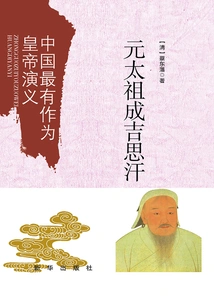
The Romance of China's Most Promising Emperor: Genghis Khan
General Fiction中国最有作为皇帝演义:元太祖成吉思汗
Cai Dongfan
The "Romances of China's Most Promising Emperors" series of books selects eight most promising emperors in Chinese history from the "Popular Romance of Chinese Dynasties" written by Mr. Cai Dongfan (based on the 1935 Huiwentang printed version, retaining the author's annotations) and compiles them into a book. This series of books has both historical and literary qualities. It "takes official history as the basis and strives for certainty; it uses anecdotes as the weft and does not make false accusations." Readers can not only read history but also appreciate legendary stories, which is the best of both worlds. This book is one of them. This book tells the life of Genghis Khan, Taizu of the Yuan Dynasty, including his childhood experiences, the war of the Thirteen Wings, the unification of the tribes, the rise and expansion, the enfeoffment of households, the model of Khwarazm and his death. Temujin was one of the greatest organizers and military strategists in history. His glorious achievements in politics and on the battlefield were few that could match him before the twentieth century.
The "Romances of China's Most Promising Emperors" series of books selects eight most promising emperors in Chinese history from the "Popular Romance of Chinese Dynasties" written by Mr. Cai Dongfan (based on the 1935 Huiwentang printed version, retaining the author's annotations) and compiles them into a book. This series of books has both historical and literary qualities. It "takes official history as the basis and strives for certainty; it uses anecdotes as the weft and does not make false accusations." Readers can not only read history but also appreciate legendary stories, which is the best of both worlds. This book is one of them. This book tells the life of Genghis Khan, Taizu of the Yuan Dynasty, including his childhood experiences, the war of the Thirteen Wings, the unification of the tribes, the rise and expansion, the enfeoffment of households, the model of Khwarazm and his death. Temujin was one of the greatest organizers and military strategists in history. His glorious achievements in politics and on the battlefield were few that could match him before the twentieth century.
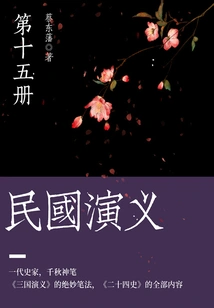
蔡东藩经典历史小说:民国演义(15)
Cai Dongfan
This book is a must-read historical novel of the Republic of China. The author is Cai Dongfan, a famous historian and novelist of the Republic of China. This book describes in relatively detail the beginning and end of major historical events such as the Revolution of 1911, Sun Yat-sen's resignation, Yuan Shikai's proclaimed emperor, Cai E's campaign against Yuan, Zhang Xun's restoration, the May Fourth Movement, Sun Yat-sen's reorganization of the Kuomintang, and other major historical events. This book is the Republic of China part of "Popular Romance of Chinese History". "Popular Romance of Chinese History" dates from the Qin and Han dynasties to the Republic of China. Two thousand years of Chinese history are vividly displayed in front of us. The book tells the history of the Republic of China in a detailed and easy-to-understand way, and has been widely praised by people since its publication. The work is based on historical facts and side by side with unofficial history. It is prudent in selecting materials, has plain viewpoints, is rich in content, has a methodical narrative, elegant language, self-evaluation and self-annotation, and has both reason and interest. It is regarded as a classic of popular history and is deeply favored by readers. In the selection and use of historical materials, Cai Dongfan mainly focused on "official history" and also collected anecdotes and anecdotes. He claimed that the historical romance he compiled "takes official history as the classic and strives for certainty; uses anecdotes as the latitude and does not make false accusations." He is extremely cautious in the use of historical materials such as anecdotes and anecdotes, and often requires "several rounds of textual research."
This book is a must-read historical novel of the Republic of China. The author is Cai Dongfan, a famous historian and novelist of the Republic of China. This book describes in relatively detail the beginning and end of major historical events such as the Revolution of 1911, Sun Yat-sen's resignation, Yuan Shikai's proclaimed emperor, Cai E's campaign against Yuan, Zhang Xun's restoration, the May Fourth Movement, Sun Yat-sen's reorganization of the Kuomintang, and other major historical events. This book is the Republic of China part of "Popular Romance of Chinese History". "Popular Romance of Chinese History" dates from the Qin and Han dynasties to the Republic of China. Two thousand years of Chinese history are vividly displayed in front of us. The book tells the history of the Republic of China in a detailed and easy-to-understand way, and has been widely praised by people since its publication. The work is based on historical facts and side by side with unofficial history. It is prudent in selecting materials, has plain viewpoints, is rich in content, has a methodical narrative, elegant language, self-evaluation and self-annotation, and has both reason and interest. It is regarded as a classic of popular history and is deeply favored by readers. In the selection and use of historical materials, Cai Dongfan mainly focused on "official history" and also collected anecdotes and anecdotes. He claimed that the historical romance he compiled "takes official history as the classic and strives for certainty; uses anecdotes as the latitude and does not make false accusations." He is extremely cautious in the use of historical materials such as anecdotes and anecdotes, and often requires "several rounds of textual research."
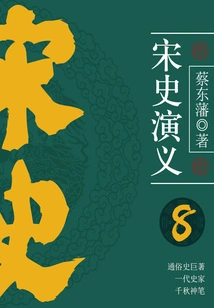
Cai Dongfan's Historical Novels: Romance of Song Dynasty (8)
General Fiction蔡东藩历史小说:宋史演义(8)
Cai Dongfan
This book mainly talks about how after the Five Dynasties and Ten Kingdoms, Zhao Kuangyin wore a yellow robe and used a glass of wine to release his military power and concentrate the power in his own hands. Under the basic national policy of strengthening the cadres and weakening the branches, literati politics solved the opportunity for the warriors of the previous dynasty to usurp the throne, and also shaped a humanistic empire at the cultural level. But it was unable to break through the political chaos, and the political situation was disrupted. This book is structured in chapters, with popular articles and witty comments. It truly reproduces the magnificent historical evolution of Chinese civilization and narrates the rise and fall of the Song Dynasty. The northern part of the Great Wall was surrounded by powerful neighbors and foreign troubles continued, and half of the country was lost in the Jingkang disaster. After Jingkang, Emperor Gaozong and Zhao Gou rebuilt the empire in Suzhou and Hangzhou under heaven, and lost the illusion of returning to China. The author uses his personal history to tell the history of China in the form of a popular novel, hoping to help the Chinese people find a way to save the nation and survive from the enlightenment of history.
This book mainly talks about how after the Five Dynasties and Ten Kingdoms, Zhao Kuangyin wore a yellow robe and used a glass of wine to release his military power and concentrate the power in his own hands. Under the basic national policy of strengthening the cadres and weakening the branches, literati politics solved the opportunity for the warriors of the previous dynasty to usurp the throne, and also shaped a humanistic empire at the cultural level. But it was unable to break through the political chaos, and the political situation was disrupted. This book is structured in chapters, with popular articles and witty comments. It truly reproduces the magnificent historical evolution of Chinese civilization and narrates the rise and fall of the Song Dynasty. The northern part of the Great Wall was surrounded by powerful neighbors and foreign troubles continued, and half of the country was lost in the Jingkang disaster. After Jingkang, Emperor Gaozong and Zhao Gou rebuilt the empire in Suzhou and Hangzhou under heaven, and lost the illusion of returning to China. The author uses his personal history to tell the history of China in the form of a popular novel, hoping to help the Chinese people find a way to save the nation and survive from the enlightenment of history.
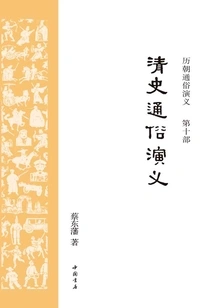
清史通俗演义(历朝通俗演义)
Cai Dongfan
With more than 2,000 years of history from the Qin Dynasty to the Republic of China, Cai Dongfan used official history as the classic and anecdotes as the weft, and used the language of "The Romance of the Three Kingdoms", which is not very profound in writing and not very vulgar in language, to write this most complete set of historical novels in China. From the creation of "Popular Romance of Qing History" in 1915 to the publication of "Popular Romance of Later Han Dynasty" in 1935, the entire set of "Popular Romance of Historical Dynasties" took ten years to complete. In addition to being very story-telling and interesting, this set of novels also attaches great importance to the authenticity of historical materials. Not only can it be used as a general leisure reading, but it can also be used as a reference book for history lovers.
With more than 2,000 years of history from the Qin Dynasty to the Republic of China, Cai Dongfan used official history as the classic and anecdotes as the weft, and used the language of "The Romance of the Three Kingdoms", which is not very profound in writing and not very vulgar in language, to write this most complete set of historical novels in China. From the creation of "Popular Romance of Qing History" in 1915 to the publication of "Popular Romance of Later Han Dynasty" in 1935, the entire set of "Popular Romance of Historical Dynasties" took ten years to complete. In addition to being very story-telling and interesting, this set of novels also attaches great importance to the authenticity of historical materials. Not only can it be used as a general leisure reading, but it can also be used as a reference book for history lovers.
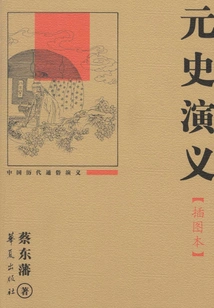
Romance of Yuan Dynasty
General Fiction元史演义
Cai Dongfan
This book has sixty chapters, narrating the history of the thirteen dynasties for more than a hundred years from Taizu Temuzhen of the Yuan Dynasty to Emperor Tuohuan Tiemuer of the Yuan Dynasty.
This book has sixty chapters, narrating the history of the thirteen dynasties for more than a hundred years from Taizu Temuzhen of the Yuan Dynasty to Emperor Tuohuan Tiemuer of the Yuan Dynasty.
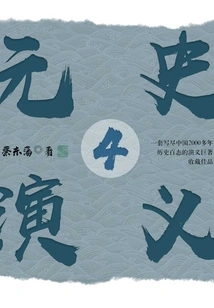
Romance of Yuan Dynasty 4
General Fiction元史演义4
Cai Dongfan
This book has a chapter-by-chapter structure, which is relaxed and relaxed, self-commented and self-annotated, and full of wit and interest. It combines literary and historical aspects and is worth reading. It mainly tells the story from the founding of the country by Taizu Temujin of the Yuan Dynasty to the escape of Emperor Shun of the Yuan Dynasty, reproducing the magnanimity of the Mongols and the historical fate of the empire's prosperity, decline and disintegration.
This book has a chapter-by-chapter structure, which is relaxed and relaxed, self-commented and self-annotated, and full of wit and interest. It combines literary and historical aspects and is worth reading. It mainly tells the story from the founding of the country by Taizu Temujin of the Yuan Dynasty to the escape of Emperor Shun of the Yuan Dynasty, reproducing the magnanimity of the Mongols and the historical fate of the empire's prosperity, decline and disintegration.
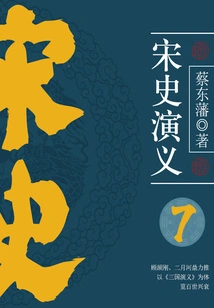
Cai Dongfan's Historical Novels: Romance of Song Dynasty (7)
General Fiction蔡东藩历史小说:宋史演义(7)
Cai Dongfan
This book mainly talks about how after the Five Dynasties and Ten Kingdoms, Zhao Kuangyin wore a yellow robe and used a glass of wine to release his military power and concentrate the power in his own hands. Under the basic national policy of strengthening the cadres and weakening the branches, literati politics solved the opportunity for the warriors of the previous dynasty to usurp the throne, and also shaped a humanistic empire at the cultural level. But it was unable to break through the political chaos, and the political situation was disrupted. This book is structured in chapters, with popular articles and witty comments. It truly reproduces the magnificent historical evolution of Chinese civilization and narrates the rise and fall of the Song Dynasty. The northern part of the Great Wall was surrounded by powerful neighbors and foreign troubles continued, and half of the country was lost in the Jingkang disaster. After Jingkang, Emperor Gaozong and Zhao Gou rebuilt the empire in Suzhou and Hangzhou under heaven, and lost the illusion of returning to China. The author uses his personal history to tell the history of China in the form of a popular novel, hoping to help the Chinese people find a way to save the nation and survive from the enlightenment of history.
This book mainly talks about how after the Five Dynasties and Ten Kingdoms, Zhao Kuangyin wore a yellow robe and used a glass of wine to release his military power and concentrate the power in his own hands. Under the basic national policy of strengthening the cadres and weakening the branches, literati politics solved the opportunity for the warriors of the previous dynasty to usurp the throne, and also shaped a humanistic empire at the cultural level. But it was unable to break through the political chaos, and the political situation was disrupted. This book is structured in chapters, with popular articles and witty comments. It truly reproduces the magnificent historical evolution of Chinese civilization and narrates the rise and fall of the Song Dynasty. The northern part of the Great Wall was surrounded by powerful neighbors and foreign troubles continued, and half of the country was lost in the Jingkang disaster. After Jingkang, Emperor Gaozong and Zhao Gou rebuilt the empire in Suzhou and Hangzhou under heaven, and lost the illusion of returning to China. The author uses his personal history to tell the history of China in the form of a popular novel, hoping to help the Chinese people find a way to save the nation and survive from the enlightenment of history.
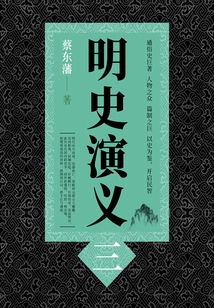
蔡东藩历史小说:明史演义(3)
Cai Dongfan
"The Romance of the Ming Dynasty" is informative and tells us the history of the Ming Dynasty in a simple and easy-to-understand way. It took 276 years from the founding of the country by the civilian emperor Zhu Yuanzhang to the death of Sizong in the Ming Dynasty. Zhu Yuanzhang rose to the occasion, and within a few years he expelled Emperor Yuan and unified China. He finally drove the foreigners out of China, but he was afraid of constant harassment, so he had to build the Great Wall high and thick. It was only at this time that Zheng He, who made seven voyages to the West, appeared, bringing with him the highest technology at the time and a huge fleet to greatly promote the power of the Ming Empire. Cai Dongfan's book romance emphasizes history over prose. Although it is slightly inferior to literary talent, it provides a vast and popular general history of the Ming Dynasty and made an indelible contribution to the popularization of Chinese historical knowledge. The author Cai Dongfan was a historian and novelist in the late Qing Dynasty and the early Republic of China. When writing this historical romance, Cai Dongfan followed the principle of "taking official history as the basis, striving for conclusiveness, using anecdotes as the basis, and not making false accusations" in historical materials. He paid great attention to the authenticity of history and carefully examined the selection and use of historical materials. The work is highly readable and is a classic that history lovers cannot miss.
"The Romance of the Ming Dynasty" is informative and tells us the history of the Ming Dynasty in a simple and easy-to-understand way. It took 276 years from the founding of the country by the civilian emperor Zhu Yuanzhang to the death of Sizong in the Ming Dynasty. Zhu Yuanzhang rose to the occasion, and within a few years he expelled Emperor Yuan and unified China. He finally drove the foreigners out of China, but he was afraid of constant harassment, so he had to build the Great Wall high and thick. It was only at this time that Zheng He, who made seven voyages to the West, appeared, bringing with him the highest technology at the time and a huge fleet to greatly promote the power of the Ming Empire. Cai Dongfan's book romance emphasizes history over prose. Although it is slightly inferior to literary talent, it provides a vast and popular general history of the Ming Dynasty and made an indelible contribution to the popularization of Chinese historical knowledge. The author Cai Dongfan was a historian and novelist in the late Qing Dynasty and the early Republic of China. When writing this historical romance, Cai Dongfan followed the principle of "taking official history as the basis, striving for conclusiveness, using anecdotes as the basis, and not making false accusations" in historical materials. He paid great attention to the authenticity of history and carefully examined the selection and use of historical materials. The work is highly readable and is a classic that history lovers cannot miss.
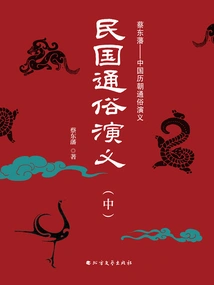
Popular Romance of the Republic of China (part 2)
General Fiction民国通俗演义(中)
Cai Dongfan
Beginning in 1916, Cai Dongfan spent ten years completing "Popular Romance of Chinese Dynasties". In the form of a chapter-style historical romance novel, he recorded the major historical events and important historical figures that occurred in China during the 2166 years from Qin Shihuang to the Republic of China (1920). "Popular Romance of the Republic of China: Popular Romance of the Republic of China (Set Volume 1, 2)" is one of them. The whole book reproduces the history of the Republic of China in the form of chapter novels, describing in detail the beginning and end of major historical events such as the Revolution of 1911, Sun Yat-sen's resignation, Yuan Shikai's proclaimed emperor, Cai E's attack on Yuan, Zhang Xun's restoration, the May Fourth Movement, and Sun Yat-sen's reorganization of the Kuomintang.
Beginning in 1916, Cai Dongfan spent ten years completing "Popular Romance of Chinese Dynasties". In the form of a chapter-style historical romance novel, he recorded the major historical events and important historical figures that occurred in China during the 2166 years from Qin Shihuang to the Republic of China (1920). "Popular Romance of the Republic of China: Popular Romance of the Republic of China (Set Volume 1, 2)" is one of them. The whole book reproduces the history of the Republic of China in the form of chapter novels, describing in detail the beginning and end of major historical events such as the Revolution of 1911, Sun Yat-sen's resignation, Yuan Shikai's proclaimed emperor, Cai E's attack on Yuan, Zhang Xun's restoration, the May Fourth Movement, and Sun Yat-sen's reorganization of the Kuomintang.
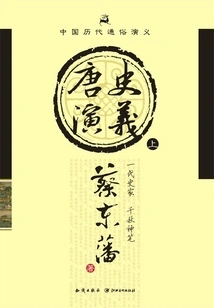
中国历代通俗演义:唐史演义(上)
Cai Dongfan
This book tells the history from "The first review of Longxing's opening of the editor's talk about choosing seeds to serve the banquet to earn money for the Tang Dynasty" to "the fiftieth chapter: Chen Zhen, the boy of Qinzhenglou, and Fan Yang suppressed the rebellion of Hu Gou". At the founding of the Tang Dynasty, the society was prosperous and prosperous, the emperor was revered as the Heavenly Khan, and the early events from prosperity to decline due to the An-Shi Rebellion focused on explaining one of the three major historical lessons - the role of women's troubles (i. E., Palace promiscuity) in the historical evolution of the Tang Dynasty. The book has a relatively detailed description of major events such as the Li family's father and son's defeat of all the heroes, the Xuanwu Gate Incident, Wu Zetian's proclaimed emperor, and the Anshi Rebellion...
This book tells the history from "The first review of Longxing's opening of the editor's talk about choosing seeds to serve the banquet to earn money for the Tang Dynasty" to "the fiftieth chapter: Chen Zhen, the boy of Qinzhenglou, and Fan Yang suppressed the rebellion of Hu Gou". At the founding of the Tang Dynasty, the society was prosperous and prosperous, the emperor was revered as the Heavenly Khan, and the early events from prosperity to decline due to the An-Shi Rebellion focused on explaining one of the three major historical lessons - the role of women's troubles (i. E., Palace promiscuity) in the historical evolution of the Tang Dynasty. The book has a relatively detailed description of major events such as the Li family's father and son's defeat of all the heroes, the Xuanwu Gate Incident, Wu Zetian's proclaimed emperor, and the Anshi Rebellion...
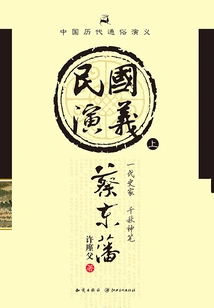
中国历代通俗演义:民国演义(上)
Cai Dongfan
"The Romance of the Republic of China" records the beginning and end of major historical events such as the Revolution of 1911, Sun Yat-sen's resignation, Yuan Shikai's proclaimed emperor, Cai E's campaign against Yuan, Zhang Xun's restoration, the May Fourth Movement, Sun Yat-sen's reorganization of the Kuomintang, and other major historical events. This book tells the history from "the first chapter, revealing the outline of the whole book, and taking advantage of the great changes to come back" to "the fifty-sixth chapter, bribing the inner court to host the grand ceremony, marrying the palace and marrying the eldest female official". The opening chapter reveals the outline of the book, recalling the Revolution of 1911. The people of the country thought that they would overthrow the Qing Dynasty, eradicate autocracy forever, and then enjoy the happiness of republic. However, it has not yet been achieved. Yuan Shikai violated the constitution, broke the National Assembly, signed a treaty that was humiliating and humiliating the country, and was obsessed with the imperial system. He finally took the fruits of the victory of the Revolution of 1911 as his own, and became a sinner of the country, spurned by his countrymen...
"The Romance of the Republic of China" records the beginning and end of major historical events such as the Revolution of 1911, Sun Yat-sen's resignation, Yuan Shikai's proclaimed emperor, Cai E's campaign against Yuan, Zhang Xun's restoration, the May Fourth Movement, Sun Yat-sen's reorganization of the Kuomintang, and other major historical events. This book tells the history from "the first chapter, revealing the outline of the whole book, and taking advantage of the great changes to come back" to "the fifty-sixth chapter, bribing the inner court to host the grand ceremony, marrying the palace and marrying the eldest female official". The opening chapter reveals the outline of the book, recalling the Revolution of 1911. The people of the country thought that they would overthrow the Qing Dynasty, eradicate autocracy forever, and then enjoy the happiness of republic. However, it has not yet been achieved. Yuan Shikai violated the constitution, broke the National Assembly, signed a treaty that was humiliating and humiliating the country, and was obsessed with the imperial system. He finally took the fruits of the victory of the Revolution of 1911 as his own, and became a sinner of the country, spurned by his countrymen...
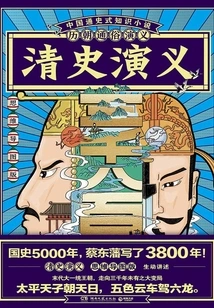
历朝通俗演义:清史演义(思维导图版)
Cai Dongfan
"The Romance of Qing History" is a re-creation of Cai Dongfan's original work. The book tells the story of famous historical figures such as Kangxi, Yongzheng, and Qianlong, and depicts the rise and fall of the Qing Dynasty in detail. During the editing process of this book, the editor strictly followed the newly promulgated "General Standard Chinese Character List" to annotate and phoneticize rare characters, and redrawn a large number of character embroideries and illustrations. The core feature of the book, "Reading Mind Map", aims to make use of big data changes in history, providing convenience for readers to read the essence of the book at the first time. This map uses multiple modules such as "Cultural Anecdotes" to sort out more than a hundred knowledge points about the history of the Qing Dynasty, which is of great help to young readers in learning history and enhancing their confidence in national culture.
"The Romance of Qing History" is a re-creation of Cai Dongfan's original work. The book tells the story of famous historical figures such as Kangxi, Yongzheng, and Qianlong, and depicts the rise and fall of the Qing Dynasty in detail. During the editing process of this book, the editor strictly followed the newly promulgated "General Standard Chinese Character List" to annotate and phoneticize rare characters, and redrawn a large number of character embroideries and illustrations. The core feature of the book, "Reading Mind Map", aims to make use of big data changes in history, providing convenience for readers to read the essence of the book at the first time. This map uses multiple modules such as "Cultural Anecdotes" to sort out more than a hundred knowledge points about the history of the Qing Dynasty, which is of great help to young readers in learning history and enhancing their confidence in national culture.
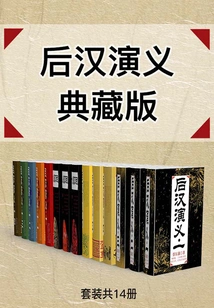
后汉演义典藏版(套装共14册)
Cai Dongfan
Cai Dongpan's chapter-backward novel begins with Wang Mang's usurpation of the Han Dynasty and ends with the fall of the Shu Han Dynasty. It reproduces the short-term rule of the New Dynasty, the rise and fall of the Han Empire at its second peak, and the era of disputes between heroes and the establishment of the Three Kingdoms after the Yellow Turban Rebellion. Summarizing the rise and fall of the Later Han Dynasty, there were more complicated factors than those of the Early Han Dynasty: Wang Mang usurped the country, and the trouble was caused by the Yuan Dynasty and his relatives. Guangwu Zhongxing, punishing the past and ignoring the future, took over the power personally and tried to prevent foreign influence from interfering with the government; Emperor Ming was particularly paternal, and Emperor Zhang was impressive in his early administration. After he was emperor, the state affairs became increasingly unstable, with relatives and eunuchs fighting, and the power of the country was controlled by state pastors. The heroes competed for hegemony, and the weak and the strong preyed on each other, so there were three kingdoms.
Cai Dongpan's chapter-backward novel begins with Wang Mang's usurpation of the Han Dynasty and ends with the fall of the Shu Han Dynasty. It reproduces the short-term rule of the New Dynasty, the rise and fall of the Han Empire at its second peak, and the era of disputes between heroes and the establishment of the Three Kingdoms after the Yellow Turban Rebellion. Summarizing the rise and fall of the Later Han Dynasty, there were more complicated factors than those of the Early Han Dynasty: Wang Mang usurped the country, and the trouble was caused by the Yuan Dynasty and his relatives. Guangwu Zhongxing, punishing the past and ignoring the future, took over the power personally and tried to prevent foreign influence from interfering with the government; Emperor Ming was particularly paternal, and Emperor Zhang was impressive in his early administration. After he was emperor, the state affairs became increasingly unstable, with relatives and eunuchs fighting, and the power of the country was controlled by state pastors. The heroes competed for hegemony, and the weak and the strong preyed on each other, so there were three kingdoms.
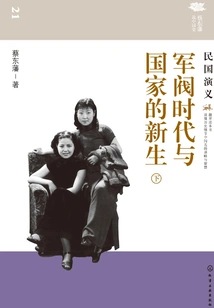
The Age of Warlords and the Rebirth of the Country: Romance of the Republic of China (part 2)
General Fiction军阀时代与国家的新生:民国演义(下)
Cai Dongfan
This book is a popular romance of the Republic of China, "Cai Dongfan Talks about the History of China", with a total of 160 chapters in the first, middle and second volumes. From the Revolution of 1911 and Yuan's proclaiming the emperor, to Cai E's rebellion against Yuan and Zhang Xun's restoration, to the May Fourth Movement and Sun Yat-sen's reorganization of the Kuomintang, it wonderfully interprets the historical events of more than ten years from the establishment of the Republic of China to 1924, when Sun Yat-sen pledged to fight for the Northern Expedition. The author draws extensively from official history, occasionally from officials and wild officials, and his narrative is plain, smooth, and methodical; he makes self-evaluations and annotations, and his language is humorous and both reasonable and reasonable. The last forty chapters were continued by Xu Genfu, which also continued the characteristics of Cai Dongfan's writings. Reading through this book, it is like a historical picture of the early years of the Republic of China slowly unfolding in front of you. Sometimes it is a fierce battle, sometimes it is gentle and affectionate, sometimes it is a dispute between warlords, sometimes it is a game of loyalty and traitor... It makes people dizzy and full of emotions.
This book is a popular romance of the Republic of China, "Cai Dongfan Talks about the History of China", with a total of 160 chapters in the first, middle and second volumes. From the Revolution of 1911 and Yuan's proclaiming the emperor, to Cai E's rebellion against Yuan and Zhang Xun's restoration, to the May Fourth Movement and Sun Yat-sen's reorganization of the Kuomintang, it wonderfully interprets the historical events of more than ten years from the establishment of the Republic of China to 1924, when Sun Yat-sen pledged to fight for the Northern Expedition. The author draws extensively from official history, occasionally from officials and wild officials, and his narrative is plain, smooth, and methodical; he makes self-evaluations and annotations, and his language is humorous and both reasonable and reasonable. The last forty chapters were continued by Xu Genfu, which also continued the characteristics of Cai Dongfan's writings. Reading through this book, it is like a historical picture of the early years of the Republic of China slowly unfolding in front of you. Sometimes it is a fierce battle, sometimes it is gentle and affectionate, sometimes it is a dispute between warlords, sometimes it is a game of loyalty and traitor... It makes people dizzy and full of emotions.
蔡东藩历史小说:宋史演义(12)
Cai Dongfan
This book mainly talks about how after the Five Dynasties and Ten Kingdoms, Zhao Kuangyin wore a yellow robe and used a glass of wine to release his military power and concentrate the power in his own hands. Under the basic national policy of strengthening the cadres and weakening the branches, literati politics solved the opportunity for the warriors of the previous dynasty to usurp the throne, and also shaped a humanistic empire at the cultural level. But it was unable to break through the political chaos, and the political situation was disrupted. This book is structured in chapters, with popular articles and witty comments. It truly reproduces the magnificent historical evolution of Chinese civilization and narrates the rise and fall of the Song Dynasty. The northern part of the Great Wall was surrounded by powerful neighbors and foreign troubles continued, and half of the country was lost in the Jingkang disaster. After Jingkang, Emperor Gaozong and Zhao Gou rebuilt the empire in Suzhou and Hangzhou under heaven, and lost the illusion of returning to China. The author uses his personal history to tell the history of China in the form of a popular novel, hoping to help the Chinese people find a way to save the nation and survive from the enlightenment of history.
This book mainly talks about how after the Five Dynasties and Ten Kingdoms, Zhao Kuangyin wore a yellow robe and used a glass of wine to release his military power and concentrate the power in his own hands. Under the basic national policy of strengthening the cadres and weakening the branches, literati politics solved the opportunity for the warriors of the previous dynasty to usurp the throne, and also shaped a humanistic empire at the cultural level. But it was unable to break through the political chaos, and the political situation was disrupted. This book is structured in chapters, with popular articles and witty comments. It truly reproduces the magnificent historical evolution of Chinese civilization and narrates the rise and fall of the Song Dynasty. The northern part of the Great Wall was surrounded by powerful neighbors and foreign troubles continued, and half of the country was lost in the Jingkang disaster. After Jingkang, Emperor Gaozong and Zhao Gou rebuilt the empire in Suzhou and Hangzhou under heaven, and lost the illusion of returning to China. The author uses his personal history to tell the history of China in the form of a popular novel, hoping to help the Chinese people find a way to save the nation and survive from the enlightenment of history.
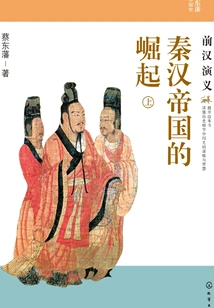
秦汉帝国的崛起:前汉演义(上)
Cai Dongfan
This book is a popular historical romance of the Qin and pre-Han Dynasty, "Cai Dongfan Talks about Chinese History", with a total of 100 chapters in two volumes. From the unification of China by Qin Shihuang, the conflict between Chu and Han, to the establishment of the Western Han Dynasty, the rule of Wenjing, to the chaos of the Seven Kingdoms, the prosperity of Han Dynasty, and finally the dictatorship of foreign relatives and the usurpation of the Han Dynasty by Wang Mang, it brilliantly interprets the rise and fall of the Qin and Han Dynasty in the past 270 years, and reproduces the historical picture of divisions, mergers, and chaos during this period. The author draws extensively from official history, occasionally from officials and wild officials, and his narrative is plain, smooth, and methodical; he makes self-evaluations and annotations, and his language is humorous and both reasonable and reasonable. Reading through this book, it is like a historical picture of the Qin and Han dynasties slowly unfolding in front of you. Sometimes it is a fierce battle, sometimes it is gentle and affectionate, sometimes it is a dispute between countries, sometimes it is a game of loyalty and traitor... It makes people dizzy and full of emotions.
This book is a popular historical romance of the Qin and pre-Han Dynasty, "Cai Dongfan Talks about Chinese History", with a total of 100 chapters in two volumes. From the unification of China by Qin Shihuang, the conflict between Chu and Han, to the establishment of the Western Han Dynasty, the rule of Wenjing, to the chaos of the Seven Kingdoms, the prosperity of Han Dynasty, and finally the dictatorship of foreign relatives and the usurpation of the Han Dynasty by Wang Mang, it brilliantly interprets the rise and fall of the Qin and Han Dynasty in the past 270 years, and reproduces the historical picture of divisions, mergers, and chaos during this period. The author draws extensively from official history, occasionally from officials and wild officials, and his narrative is plain, smooth, and methodical; he makes self-evaluations and annotations, and his language is humorous and both reasonable and reasonable. Reading through this book, it is like a historical picture of the Qin and Han dynasties slowly unfolding in front of you. Sometimes it is a fierce battle, sometimes it is gentle and affectionate, sometimes it is a dispute between countries, sometimes it is a game of loyalty and traitor... It makes people dizzy and full of emotions.
蔡东藩经典历史小说:民国演义(18)
Cai Dongfan
This book is a must-read historical novel of the Republic of China. The author is Cai Dongfan, a famous historian and novelist of the Republic of China. This book describes in relatively detail the beginning and end of major historical events such as the Revolution of 1911, Sun Yat-sen's resignation, Yuan Shikai's proclaimed emperor, Cai E's campaign against Yuan, Zhang Xun's restoration, the May Fourth Movement, Sun Yat-sen's reorganization of the Kuomintang, and other major historical events. This book is the Republic of China part of "Popular Romance of Chinese History". "Popular Romance of Chinese History" dates from the Qin and Han dynasties to the Republic of China. Two thousand years of Chinese history are vividly displayed in front of us. The book tells the history of the Republic of China in a detailed and easy-to-understand way, and has been widely praised by people since its publication. The work is based on historical facts and side by side with unofficial history. It is prudent in selecting materials, has plain viewpoints, is rich in content, has a methodical narrative, elegant language, self-evaluation and self-annotation, and has both reason and interest. It is regarded as a classic of popular history and is deeply favored by readers. In the selection and use of historical materials, Cai Dongfan mainly focused on "official history" and also collected anecdotes and anecdotes. He claimed that the historical romance he compiled "takes official history as the classic and strives for certainty; uses anecdotes as the latitude and does not make false accusations." He is extremely cautious in the use of historical materials such as anecdotes and anecdotes, and often requires "several rounds of textual research."
This book is a must-read historical novel of the Republic of China. The author is Cai Dongfan, a famous historian and novelist of the Republic of China. This book describes in relatively detail the beginning and end of major historical events such as the Revolution of 1911, Sun Yat-sen's resignation, Yuan Shikai's proclaimed emperor, Cai E's campaign against Yuan, Zhang Xun's restoration, the May Fourth Movement, Sun Yat-sen's reorganization of the Kuomintang, and other major historical events. This book is the Republic of China part of "Popular Romance of Chinese History". "Popular Romance of Chinese History" dates from the Qin and Han dynasties to the Republic of China. Two thousand years of Chinese history are vividly displayed in front of us. The book tells the history of the Republic of China in a detailed and easy-to-understand way, and has been widely praised by people since its publication. The work is based on historical facts and side by side with unofficial history. It is prudent in selecting materials, has plain viewpoints, is rich in content, has a methodical narrative, elegant language, self-evaluation and self-annotation, and has both reason and interest. It is regarded as a classic of popular history and is deeply favored by readers. In the selection and use of historical materials, Cai Dongfan mainly focused on "official history" and also collected anecdotes and anecdotes. He claimed that the historical romance he compiled "takes official history as the classic and strives for certainty; uses anecdotes as the latitude and does not make false accusations." He is extremely cautious in the use of historical materials such as anecdotes and anecdotes, and often requires "several rounds of textual research."
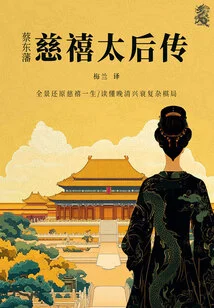
Cai Dongfan: the Biography of Empress Dowager Cixi
General Fiction蔡东藩:慈禧太后传
Cai Dongfan
Detailed historical materials are used to show the life of Empress Dowager Cixi from a beautiful girl to a powerful person. The book focuses on key events such as his behind-the-curtain administration, the 1898 Coup, and the Boxer Rebellion, depicting his Machiavellian tactics and conservative rigidity, and revealing the historical trajectory of his rule that accelerated the decline of the Qing Dynasty. With vivid writing style, both literary and historical criticism, it is an important popular reading for studying the politics of the late Qing Dynasty.
Detailed historical materials are used to show the life of Empress Dowager Cixi from a beautiful girl to a powerful person. The book focuses on key events such as his behind-the-curtain administration, the 1898 Coup, and the Boxer Rebellion, depicting his Machiavellian tactics and conservative rigidity, and revealing the historical trajectory of his rule that accelerated the decline of the Qing Dynasty. With vivid writing style, both literary and historical criticism, it is an important popular reading for studying the politics of the late Qing Dynasty.
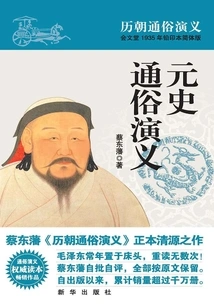
元史通俗演义
Cai Dongfan
The history of China has been inherited by the Han people. During this period, ethnic minorities may have invaded the Central Plains, and they have waxed and waned, coming and going. Although the Wuhu, Khitan, and Jurchen cavalry were so powerful, they could not unify China in the end. The Mongol origin was originally the Shiwei branch of the Tang Dynasty. They lived in northern China, made a living by hunting, and formed their own tribe. He first served under the leadership of the Jin State, and until Temujin was born, he unified all Mongolian tribes and developed his power. The Mongolian cavalry then conquered Europe in the west, and soon went south, destroying the Jin Dynasty and invading the Song Dynasty. The Southern Song Dynasty was destroyed, and the Central Plains was conquered by the Mongol Khan. One emperor and one courtier actually served as the emperor of China for eighty-nine years. This is really a pioneering work in history! Little did they know that the Mongolian people had a cruel temperament, treated the people harshly, and the world was tired, which actually aroused countless popular uprisings, and one Zhu Yuanzhang was chosen, and he just took away all the people in the Yuan Dynasty. Some said it was destiny, and some said it was man-made. The boy was also confused, so he had to discuss history and perform a "Romance of the Yuan Dynasty" based on the facts of the rise and fall of Mongolia.
The history of China has been inherited by the Han people. During this period, ethnic minorities may have invaded the Central Plains, and they have waxed and waned, coming and going. Although the Wuhu, Khitan, and Jurchen cavalry were so powerful, they could not unify China in the end. The Mongol origin was originally the Shiwei branch of the Tang Dynasty. They lived in northern China, made a living by hunting, and formed their own tribe. He first served under the leadership of the Jin State, and until Temujin was born, he unified all Mongolian tribes and developed his power. The Mongolian cavalry then conquered Europe in the west, and soon went south, destroying the Jin Dynasty and invading the Song Dynasty. The Southern Song Dynasty was destroyed, and the Central Plains was conquered by the Mongol Khan. One emperor and one courtier actually served as the emperor of China for eighty-nine years. This is really a pioneering work in history! Little did they know that the Mongolian people had a cruel temperament, treated the people harshly, and the world was tired, which actually aroused countless popular uprisings, and one Zhu Yuanzhang was chosen, and he just took away all the people in the Yuan Dynasty. Some said it was destiny, and some said it was man-made. The boy was also confused, so he had to discuss history and perform a "Romance of the Yuan Dynasty" based on the facts of the rise and fall of Mongolia.
蔡东藩经典历史小说:民国演义(16)
Cai Dongfan
This book is a must-read historical novel of the Republic of China. The author is Cai Dongfan, a famous historian and novelist of the Republic of China. This book describes in relatively detail the beginning and end of major historical events such as the Revolution of 1911, Sun Yat-sen's resignation, Yuan Shikai's proclaimed emperor, Cai E's campaign against Yuan, Zhang Xun's restoration, the May Fourth Movement, Sun Yat-sen's reorganization of the Kuomintang, and other major historical events. This book is the Republic of China part of "Popular Romance of Chinese History". "Popular Romance of Chinese History" dates from the Qin and Han dynasties to the Republic of China. Two thousand years of Chinese history are vividly displayed in front of us. The book tells the history of the Republic of China in a detailed and easy-to-understand way, and has been widely praised by people since its publication. The work is based on historical facts and side by side with unofficial history. It is prudent in selecting materials, has plain viewpoints, is rich in content, has a methodical narrative, elegant language, self-evaluation and self-annotation, and has both reason and interest. It is regarded as a classic of popular history and is deeply favored by readers. In the selection and use of historical materials, Cai Dongfan mainly focused on "official history" and also collected anecdotes and anecdotes. He claimed that the historical romance he compiled "takes official history as the classic and strives for certainty; uses anecdotes as the latitude and does not make false accusations." He is extremely cautious in the use of historical materials such as anecdotes and anecdotes, and often requires "several rounds of textual research."
This book is a must-read historical novel of the Republic of China. The author is Cai Dongfan, a famous historian and novelist of the Republic of China. This book describes in relatively detail the beginning and end of major historical events such as the Revolution of 1911, Sun Yat-sen's resignation, Yuan Shikai's proclaimed emperor, Cai E's campaign against Yuan, Zhang Xun's restoration, the May Fourth Movement, Sun Yat-sen's reorganization of the Kuomintang, and other major historical events. This book is the Republic of China part of "Popular Romance of Chinese History". "Popular Romance of Chinese History" dates from the Qin and Han dynasties to the Republic of China. Two thousand years of Chinese history are vividly displayed in front of us. The book tells the history of the Republic of China in a detailed and easy-to-understand way, and has been widely praised by people since its publication. The work is based on historical facts and side by side with unofficial history. It is prudent in selecting materials, has plain viewpoints, is rich in content, has a methodical narrative, elegant language, self-evaluation and self-annotation, and has both reason and interest. It is regarded as a classic of popular history and is deeply favored by readers. In the selection and use of historical materials, Cai Dongfan mainly focused on "official history" and also collected anecdotes and anecdotes. He claimed that the historical romance he compiled "takes official history as the classic and strives for certainty; uses anecdotes as the latitude and does not make false accusations." He is extremely cautious in the use of historical materials such as anecdotes and anecdotes, and often requires "several rounds of textual research."
Romance of Qing History
History清史演义
Cai Dongfan
As far back as the Zhao and Song Dynasties, after the Jin State was destroyed, the surviving Jurchen clan fled to the northeast and hid on the seashore. Taking the meaning of "residents under Changbai Mountain", they named themselves the "Aixinjueluo Clan" and established the Manchukuo Kingdom, so the whole family was renamed "Manchu". After hundreds of years and several generations, a man of outstanding wisdom and courage appeared in the clan, and another 268 years of Qing Dynasty history was rehearsed. The Qing Dynasty unified the Central Plains, and the general path is eternal and endless, and it can rest with the sky. Unexpectedly, the foreign ships had strong guns and powerful guns, and they repeatedly invaded the country. The great country ceded territory today and paid compensation tomorrow. Tired to the Qing Dynasty, the monarchs and ministers were distracted by one thing and lost the other, and the country's power gradually declined. Unexpectedly, before the external troubles were over, internal worries arose again. Wuchang launched an attack, and the provinces responded, overthrowing the Qing Dynasty. Later generations often said that the Qing Dynasty had bad politics and was abusive in all kinds of ways. It seems that the emperors of the Qing Dynasty were all obscene and tyrannical, and the ministers of the Qing Dynasty were all despicable and dirty. In fact, a careful study of the history of the Qing Dynasty shows that there are disadvantages and advantages; there are lewdness and violence, and there are also benevolence. However, in the last dynasty, the rulers were weak and the ministers were mediocre, the government was chaotic, and the world situation had already changed greatly, so the people and the army collapsed together. This is no surprise.
As far back as the Zhao and Song Dynasties, after the Jin State was destroyed, the surviving Jurchen clan fled to the northeast and hid on the seashore. Taking the meaning of "residents under Changbai Mountain", they named themselves the "Aixinjueluo Clan" and established the Manchukuo Kingdom, so the whole family was renamed "Manchu". After hundreds of years and several generations, a man of outstanding wisdom and courage appeared in the clan, and another 268 years of Qing Dynasty history was rehearsed. The Qing Dynasty unified the Central Plains, and the general path is eternal and endless, and it can rest with the sky. Unexpectedly, the foreign ships had strong guns and powerful guns, and they repeatedly invaded the country. The great country ceded territory today and paid compensation tomorrow. Tired to the Qing Dynasty, the monarchs and ministers were distracted by one thing and lost the other, and the country's power gradually declined. Unexpectedly, before the external troubles were over, internal worries arose again. Wuchang launched an attack, and the provinces responded, overthrowing the Qing Dynasty. Later generations often said that the Qing Dynasty had bad politics and was abusive in all kinds of ways. It seems that the emperors of the Qing Dynasty were all obscene and tyrannical, and the ministers of the Qing Dynasty were all despicable and dirty. In fact, a careful study of the history of the Qing Dynasty shows that there are disadvantages and advantages; there are lewdness and violence, and there are also benevolence. However, in the last dynasty, the rulers were weak and the ministers were mediocre, the government was chaotic, and the world situation had already changed greatly, so the people and the army collapsed together. This is no surprise.
市民时代的兴起:宋史演义(下)
Cai Dongfan
This book is a popular romance of the Song Dynasty called "Cai Dongfan Talks about the History of China", with a total of one hundred chapters in two volumes. From the Chenqiao mutiny to Wang Anshi's reform, from the Jingkang disaster to Yue Fei's resistance to the Jin Dynasty, from Jia Sidao's rise to power to the collapse of Yashan, it wonderfully interprets the rise and fall of the Song Dynasty in three hundred and twenty years. The author draws extensively from official history, occasionally from officials and wild officials, and his narrative is plain, smooth, and methodical; he makes self-evaluations and annotations, and his language is humorous and both reasonable and reasonable. Reading through this book, it is like a historical picture of the Song Dynasty unfolding slowly before your eyes. Sometimes it is a fierce battle, sometimes it is gentle and affectionate, sometimes it is a dispute between countries, sometimes it is a game of loyalty and traitor... It makes people dizzy and full of emotions.
This book is a popular romance of the Song Dynasty called "Cai Dongfan Talks about the History of China", with a total of one hundred chapters in two volumes. From the Chenqiao mutiny to Wang Anshi's reform, from the Jingkang disaster to Yue Fei's resistance to the Jin Dynasty, from Jia Sidao's rise to power to the collapse of Yashan, it wonderfully interprets the rise and fall of the Song Dynasty in three hundred and twenty years. The author draws extensively from official history, occasionally from officials and wild officials, and his narrative is plain, smooth, and methodical; he makes self-evaluations and annotations, and his language is humorous and both reasonable and reasonable. Reading through this book, it is like a historical picture of the Song Dynasty unfolding slowly before your eyes. Sometimes it is a fierce battle, sometimes it is gentle and affectionate, sometimes it is a dispute between countries, sometimes it is a game of loyalty and traitor... It makes people dizzy and full of emotions.
Cai Dongfan's Historical Novels: Romance of Song Dynasty (1)
General Fiction蔡东藩历史小说:宋史演义(1)
Cai Dongfan
This book mainly talks about how after the Five Dynasties and Ten Kingdoms, Zhao Kuangyin wore a yellow robe and used a glass of wine to release his military power and concentrate the power in his own hands. Under the basic national policy of strengthening the branches and strengthening the branches, civilian politics solved the opportunity for the military men of the previous dynasty to usurp the throne, and also created a humanistic empire at the cultural level. It was unable to break through the political chaos, and the political situation was disrupted. This book is structured in chapters, with popular articles and witty comments. It truly reproduces the magnificent historical evolution of Chinese civilization and narrates the rise and fall of the Song Dynasty. The northern part of the Great Wall was surrounded by powerful neighbors and foreign troubles continued, and half of the country was lost in the Jingkang disaster. After Jingkang, Emperor Gaozong and Zhao Gou rebuilt the empire in Suzhou and Hangzhou under heaven, and lost the illusion of returning to China. The author uses his personal history to tell the history of China in the form of a popular novel, hoping to help the Chinese people find a way to save the nation and survive from the enlightenment of history.
This book mainly talks about how after the Five Dynasties and Ten Kingdoms, Zhao Kuangyin wore a yellow robe and used a glass of wine to release his military power and concentrate the power in his own hands. Under the basic national policy of strengthening the branches and strengthening the branches, civilian politics solved the opportunity for the military men of the previous dynasty to usurp the throne, and also created a humanistic empire at the cultural level. It was unable to break through the political chaos, and the political situation was disrupted. This book is structured in chapters, with popular articles and witty comments. It truly reproduces the magnificent historical evolution of Chinese civilization and narrates the rise and fall of the Song Dynasty. The northern part of the Great Wall was surrounded by powerful neighbors and foreign troubles continued, and half of the country was lost in the Jingkang disaster. After Jingkang, Emperor Gaozong and Zhao Gou rebuilt the empire in Suzhou and Hangzhou under heaven, and lost the illusion of returning to China. The author uses his personal history to tell the history of China in the form of a popular novel, hoping to help the Chinese people find a way to save the nation and survive from the enlightenment of history.
Romance of the Five Dynasties
General Fiction五代史演义
Cai Dongfan
"The Romance of the Five Dynasties" is part of the Five Dynasties and Ten Kingdoms series in Cai Dongfan's "Popular Romance of Chinese History" series. "The Romance of the Five Dynasties" has a total of sixty chapters, which truly reproduces the rule of the game of regime change that "the one with strong soldiers and horses will be the emperor" under the situation of division and turmoil. What Cai Dongfan describes in his writings is not only the chaotic chaos of this period, but also aims to reveal its roots and connect it with the social reality of the warlords' melee in the early years of the Republic of China from the perspective of historians. This is a lesson from the mistakes made before. Cai Dongfan takes official history as the classic and anecdotes as the weft. "History of the Five Dynasties" is relaxed and relaxed, self-criticizing and self-evaluating, full of wit and humor. It integrates literary and historical nature. It can be used not only as a general leisure reading, but also as a reference book for history lovers. In addition, this edition has specially translated part of the original work into vernacular, making it more suitable for young people to read than other editions.
"The Romance of the Five Dynasties" is part of the Five Dynasties and Ten Kingdoms series in Cai Dongfan's "Popular Romance of Chinese History" series. "The Romance of the Five Dynasties" has a total of sixty chapters, which truly reproduces the rule of the game of regime change that "the one with strong soldiers and horses will be the emperor" under the situation of division and turmoil. What Cai Dongfan describes in his writings is not only the chaotic chaos of this period, but also aims to reveal its roots and connect it with the social reality of the warlords' melee in the early years of the Republic of China from the perspective of historians. This is a lesson from the mistakes made before. Cai Dongfan takes official history as the classic and anecdotes as the weft. "History of the Five Dynasties" is relaxed and relaxed, self-criticizing and self-evaluating, full of wit and humor. It integrates literary and historical nature. It can be used not only as a general leisure reading, but also as a reference book for history lovers. In addition, this edition has specially translated part of the original work into vernacular, making it more suitable for young people to read than other editions.
蔡东藩六史:后汉
Cai Dongfan
It started from Wang Mang's new dynasty and ended with the demise of Shu Han and Cao Wei, and the founding of the Jin Dynasty, which lasted for two and a half centuries. Pay special attention to the rise and fall of dynasties. Wang Mang's hypocrisy is deeply exposed. Guangwu Zhongxing, the Eastern Han Dynasty's civil and martial arts once achieved brilliant achievements. However, due to the family system of the feudal dynasty, the succeeding emperors were fatuous and promiscuous, their relatives interfered in politics, the eunuchs were rampant, and the warlords were rampant, which eventually led to the fall of the empire and the people suffered from wars.
It started from Wang Mang's new dynasty and ended with the demise of Shu Han and Cao Wei, and the founding of the Jin Dynasty, which lasted for two and a half centuries. Pay special attention to the rise and fall of dynasties. Wang Mang's hypocrisy is deeply exposed. Guangwu Zhongxing, the Eastern Han Dynasty's civil and martial arts once achieved brilliant achievements. However, due to the family system of the feudal dynasty, the succeeding emperors were fatuous and promiscuous, their relatives interfered in politics, the eunuchs were rampant, and the warlords were rampant, which eventually led to the fall of the empire and the people suffered from wars.
Qing History
History清史
Cai Dongfan
The "Cai Dongfan Chinese History" series is the vernacular version of Cai Dongfan's historical novels. The book contains more than a thousand chapters, covering several spring and autumn periods, starting from Qin Shihuang to 1920. It records a total of 2166 years of history, with a total of 11 parts, 1040 chapters, and about 6.09 Million words. Its content spans a long time, has a large number of characters, and is huge in length, making it the best of all historical novels. He is known as "a historian of a generation and a magic pen for thousands of years". In the selection and use of historical materials, Cai Dongfan mainly focused on "official history" and also collected anecdotes and anecdotes. He claimed that the historical romance he compiled "takes official history as the classic and strives for certainty; uses anecdotes as the latitude and does not make false accusations." He is extremely cautious in the use of historical materials such as anecdotes and anecdotes, and often requires "several rounds of textual research." In terms of genre, it highlights the characteristics of "righteousness is used to express things, that is, to express feelings", and it also writes its own text, self-written annotations, and self-written reviews.
The "Cai Dongfan Chinese History" series is the vernacular version of Cai Dongfan's historical novels. The book contains more than a thousand chapters, covering several spring and autumn periods, starting from Qin Shihuang to 1920. It records a total of 2166 years of history, with a total of 11 parts, 1040 chapters, and about 6.09 Million words. Its content spans a long time, has a large number of characters, and is huge in length, making it the best of all historical novels. He is known as "a historian of a generation and a magic pen for thousands of years". In the selection and use of historical materials, Cai Dongfan mainly focused on "official history" and also collected anecdotes and anecdotes. He claimed that the historical romance he compiled "takes official history as the classic and strives for certainty; uses anecdotes as the latitude and does not make false accusations." He is extremely cautious in the use of historical materials such as anecdotes and anecdotes, and often requires "several rounds of textual research." In terms of genre, it highlights the characteristics of "righteousness is used to express things, that is, to express feelings", and it also writes its own text, self-written annotations, and self-written reviews.
Song History Romance
History宋史演义
Cai Dongfan
Chen Qiao changed and wore a yellow robe. Zhao Kuangyin, who was guarding the whole palace, actually took over the throne of Zhou Dynasty and became the emperor himself. However, the emperor had an eye for it, which caused the three kingdoms of Liao, Jin, and Yuan to rise up in the north one after another and cause frequent border troubles. The Northern Song Dynasty suppressed its troops too much and lacked good generals. The main idea was to recover the sixteen states of Yan and Yun. Who knew that even the two emperors were captured by others. In the Southern Song Dynasty, there was a lack of expertise in appointing talents and a lack of good prime ministers. A few generals appeared, but they were framed by the traitorous ministers in many ways. On the Fengbo Pavilion, a prison of injustice was formed, and on the bank of the West Lake, riding a donkey back, everyone was disheartened and sat listening to defeat. Later, even the last piece of the Zhao family's bones and blood was left alone overseas, and the cliffs were destroyed, and the emperor's son perished. There was no choice but to put an end to the 320 years of Zhao and Song Dynasty. In fact, there were several types of good governance in the Song Dynasty: the first one was to clean up the palace, so there would be no trouble with women; the second kind was to suppress the eunuchs, so there would be no trouble with castration; the third kind was to harmonize relatives, and there would be no trouble with clans; the fourth kind was to prevent idle relatives, so there would be no trouble from foreign relatives; the fifth kind was to ban the troops and force the vassal to have no trouble. Not only are the Han and Tang dynasties incomparable, but the Xia, Shang and Zhou dynasties are probably even inferior. This is also the reason why Zhao and Song maintained people's hearts and enjoyed the country for many years.
Chen Qiao changed and wore a yellow robe. Zhao Kuangyin, who was guarding the whole palace, actually took over the throne of Zhou Dynasty and became the emperor himself. However, the emperor had an eye for it, which caused the three kingdoms of Liao, Jin, and Yuan to rise up in the north one after another and cause frequent border troubles. The Northern Song Dynasty suppressed its troops too much and lacked good generals. The main idea was to recover the sixteen states of Yan and Yun. Who knew that even the two emperors were captured by others. In the Southern Song Dynasty, there was a lack of expertise in appointing talents and a lack of good prime ministers. A few generals appeared, but they were framed by the traitorous ministers in many ways. On the Fengbo Pavilion, a prison of injustice was formed, and on the bank of the West Lake, riding a donkey back, everyone was disheartened and sat listening to defeat. Later, even the last piece of the Zhao family's bones and blood was left alone overseas, and the cliffs were destroyed, and the emperor's son perished. There was no choice but to put an end to the 320 years of Zhao and Song Dynasty. In fact, there were several types of good governance in the Song Dynasty: the first one was to clean up the palace, so there would be no trouble with women; the second kind was to suppress the eunuchs, so there would be no trouble with castration; the third kind was to harmonize relatives, and there would be no trouble with clans; the fourth kind was to prevent idle relatives, so there would be no trouble from foreign relatives; the fifth kind was to ban the troops and force the vassal to have no trouble. Not only are the Han and Tang dynasties incomparable, but the Xia, Shang and Zhou dynasties are probably even inferior. This is also the reason why Zhao and Song maintained people's hearts and enjoyed the country for many years.
Republic of China
History民国
Cai Dongfan
This book contains almost all of Lin Huiyin's classic literary works. Each article is the condensation of her smart thoughts and full of talent. Her language is gentle and elegant, like flowing clouds and flowing water, and like the spring breeze blowing on her face. It can be said that her words have a charm that transcends time, and her writing also reveals an astonishing understanding of folklore.
This book contains almost all of Lin Huiyin's classic literary works. Each article is the condensation of her smart thoughts and full of talent. Her language is gentle and elegant, like flowing clouds and flowing water, and like the spring breeze blowing on her face. It can be said that her words have a charm that transcends time, and her writing also reveals an astonishing understanding of folklore.
后汉通俗演义·附三国(蔡东藩历朝通俗演义)
Cai Dongfan
Cai Dongfan's "Popular Romance of the Past Dynasties" takes official history as the classic and anecdotes as the weft. A set of books covers all aspects of China's history of more than two thousand years. This series uses the 1935 Shanghai Huiwentang Xinji Bookstore's printed version as the authoritative original, and also collects all The illustrations in the lithographed and thread-bound edition retain the preface, lineage diagrams, and notes written by Mr. Cai Dongfan himself, advocating the original reading experience and maximizing the appearance of the original book. "Attached to the Three Kingdoms" is one of the series of books "Popular Romance of Cai Dongfan Dynasties". It narrates the history of more than 250 years from Wang Mang's usurpation of the Han Dynasty to the founding of the Western Jin Dynasty. It has plain views, rich content, legal discussion, connotations of praise and blame, elegant language, clear and clear language, self-evaluation and annotation, and interesting reasoning. It has both aspects and can be regarded as a classic of popular history. The book is careful in its material selection, focusing on historical facts and supplementing it with unofficial histories and notes. The Three Kingdoms part is different from Luo Guanzhong's "The Romance of the Three Kingdoms" which is divided into seven parts facts and three parts fiction.
Cai Dongfan's "Popular Romance of the Past Dynasties" takes official history as the classic and anecdotes as the weft. A set of books covers all aspects of China's history of more than two thousand years. This series uses the 1935 Shanghai Huiwentang Xinji Bookstore's printed version as the authoritative original, and also collects all The illustrations in the lithographed and thread-bound edition retain the preface, lineage diagrams, and notes written by Mr. Cai Dongfan himself, advocating the original reading experience and maximizing the appearance of the original book. "Attached to the Three Kingdoms" is one of the series of books "Popular Romance of Cai Dongfan Dynasties". It narrates the history of more than 250 years from Wang Mang's usurpation of the Han Dynasty to the founding of the Western Jin Dynasty. It has plain views, rich content, legal discussion, connotations of praise and blame, elegant language, clear and clear language, self-evaluation and annotation, and interesting reasoning. It has both aspects and can be regarded as a classic of popular history. The book is careful in its material selection, focusing on historical facts and supplementing it with unofficial histories and notes. The Three Kingdoms part is different from Luo Guanzhong's "The Romance of the Three Kingdoms" which is divided into seven parts facts and three parts fiction.
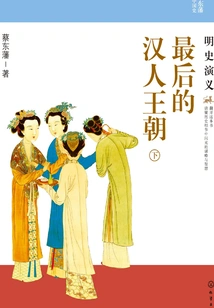
最后的汉人王朝:明史演义(下)
Cai Dongfan
This book is a popular romance of the Ming Dynasty called "Cai Dongfan Talks about the History of China". It has one hundred chapters in two volumes, starting from the establishment of the Ming Dynasty and the prosperous age of Yongle, to the rule of Renxuan, the civil war, to the continuous civil strife, the northern captives and the southern Japanese, and finally Wanli's neglect of government and the loss of the country by Sizong. The author draws extensively from official history, occasionally from officials and wild officials, and his narrative is plain, smooth, and methodical; he makes self-evaluations and annotations, and his language is humorous and both reasonable and reasonable. Reading through this book, it is like a historical picture of the Ming Dynasty slowly unfolding before your eyes. Sometimes it is fierce and iron, sometimes it is gentle and affectionate, sometimes it is civil strife, sometimes it is a game of loyalty and traitor... It makes people dizzy and full of emotions.
This book is a popular romance of the Ming Dynasty called "Cai Dongfan Talks about the History of China". It has one hundred chapters in two volumes, starting from the establishment of the Ming Dynasty and the prosperous age of Yongle, to the rule of Renxuan, the civil war, to the continuous civil strife, the northern captives and the southern Japanese, and finally Wanli's neglect of government and the loss of the country by Sizong. The author draws extensively from official history, occasionally from officials and wild officials, and his narrative is plain, smooth, and methodical; he makes self-evaluations and annotations, and his language is humorous and both reasonable and reasonable. Reading through this book, it is like a historical picture of the Ming Dynasty slowly unfolding before your eyes. Sometimes it is fierce and iron, sometimes it is gentle and affectionate, sometimes it is civil strife, sometimes it is a game of loyalty and traitor... It makes people dizzy and full of emotions.
History of Ming Dynasty
History明史
Cai Dongfan
The "History of China by Cai Dongfan" series is the vernacular version of Cai Dongfan's historical novels. The book contains more than a thousand chapters, covering several spring and autumn periods, starting from Qin Shihuang to 1920. It records a total of 2166 years of history, with a total of 11 parts, 1040 chapters, and about 6.08 Million words. Its content spans a long time, has a large number of characters, and is huge in length, making it the best of all historical novels. He is known as "a historian of a generation and a magic pen for thousands of years".
The "History of China by Cai Dongfan" series is the vernacular version of Cai Dongfan's historical novels. The book contains more than a thousand chapters, covering several spring and autumn periods, starting from Qin Shihuang to 1920. It records a total of 2166 years of history, with a total of 11 parts, 1040 chapters, and about 6.08 Million words. Its content spans a long time, has a large number of characters, and is huge in length, making it the best of all historical novels. He is known as "a historian of a generation and a magic pen for thousands of years".
蔡东藩六史:清
Cai Dongfan
This book tells the history of the Qing Dynasty from the founding of Manchuria to the Revolution of 1911 for nearly three hundred years. The author summarizes the lessons and laws of history from the chaos, rise and fall, praises virtuous ministers, famous generals, and national heroes, and lashes out at the arrogance and mediocrity of rulers. While telling history, the author also expressed his deep worries and deep expectations for the future of the nation and country, and expressed his own progressive thoughts.
This book tells the history of the Qing Dynasty from the founding of Manchuria to the Revolution of 1911 for nearly three hundred years. The author summarizes the lessons and laws of history from the chaos, rise and fall, praises virtuous ministers, famous generals, and national heroes, and lashes out at the arrogance and mediocrity of rulers. While telling history, the author also expressed his deep worries and deep expectations for the future of the nation and country, and expressed his own progressive thoughts.
蔡东藩六史:唐
Cai Dongfan
The Tang Dynasty is an important era in the development of the Chinese nation. Not long after the founding of the country, his prestige spread far and wide, the society was prosperous and prosperous, and the emperor was revered as the Khan of Heaven. This book outlines the process of the Tang Empire from prosperity to decline in nearly three centuries, focusing on three historical lessons: the first is the disaster of women, that is, promiscuity in the palace; the second is the disaster of eunuchs, that is, the eunuchs are good at governing and hijacking the emperor; the third is the disaster of vassals, that is, warlords fight in a melee, separate one side, and finally usurp the central power. The book has a relatively detailed description of major events such as the Li family's father and son's defeat of the heroes, the Xuanwumen Incident, Wu Zetian's proclaiming emperor, and the Anshi Rebellion.
The Tang Dynasty is an important era in the development of the Chinese nation. Not long after the founding of the country, his prestige spread far and wide, the society was prosperous and prosperous, and the emperor was revered as the Khan of Heaven. This book outlines the process of the Tang Empire from prosperity to decline in nearly three centuries, focusing on three historical lessons: the first is the disaster of women, that is, promiscuity in the palace; the second is the disaster of eunuchs, that is, the eunuchs are good at governing and hijacking the emperor; the third is the disaster of vassals, that is, warlords fight in a melee, separate one side, and finally usurp the central power. The book has a relatively detailed description of major events such as the Li family's father and son's defeat of the heroes, the Xuanwumen Incident, Wu Zetian's proclaiming emperor, and the Anshi Rebellion.
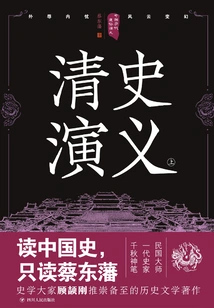
中国历代通俗演义:清史演义(上)(再版)
Cai Dongfan
"Popular Romance of Chinese History" dates from the Qin and Han dynasties to the Republic of China. Two thousand years of Chinese history are vividly displayed in front of us. It is the only popular novel so far that comprehensively narrates Chinese history. When writing, the author adheres to the concept of "mainly trusting the history and relying on unconventional history". He draws materials carefully, has a plain viewpoint, is rich in content, has a methodical narrative, elegant language, self-evaluation and annotation, and has both reason and interest. It is regarded as a classic of popular history. This book is "The Romance of Qing History (Part 2)", one of the series of "Popular Romance of Chinese Dynasties". This book tells the history from "the 51st chapter of Lin Zhijun's generous judgment on Shi Qi Zhongtang's mediocrity and harming the country" to "the 100th chapter of the election of President Sun Wen to take office and abdicate the throne and end with Qing Zuo." After the heyday of Kangxi and Qianlong, the Qing Dynasty began to decline again. The foreign ships in the West had strong guns and guns, and repeatedly invaded the country. The great powers ceded territory today and paid indemnity tomorrow. The domestic Taiping Rebellion, Boxer Rebellion, etc. Tired the Qing Dynasty monarchs and ministers to focus on one thing and the other, and the country's power gradually declined. Until Wuchang launched an attack, all provinces responded, and the Qing Dynasty was overthrown...
"Popular Romance of Chinese History" dates from the Qin and Han dynasties to the Republic of China. Two thousand years of Chinese history are vividly displayed in front of us. It is the only popular novel so far that comprehensively narrates Chinese history. When writing, the author adheres to the concept of "mainly trusting the history and relying on unconventional history". He draws materials carefully, has a plain viewpoint, is rich in content, has a methodical narrative, elegant language, self-evaluation and annotation, and has both reason and interest. It is regarded as a classic of popular history. This book is "The Romance of Qing History (Part 2)", one of the series of "Popular Romance of Chinese Dynasties". This book tells the history from "the 51st chapter of Lin Zhijun's generous judgment on Shi Qi Zhongtang's mediocrity and harming the country" to "the 100th chapter of the election of President Sun Wen to take office and abdicate the throne and end with Qing Zuo." After the heyday of Kangxi and Qianlong, the Qing Dynasty began to decline again. The foreign ships in the West had strong guns and guns, and repeatedly invaded the country. The great powers ceded territory today and paid indemnity tomorrow. The domestic Taiping Rebellion, Boxer Rebellion, etc. Tired the Qing Dynasty monarchs and ministers to focus on one thing and the other, and the country's power gradually declined. Until Wuchang launched an attack, all provinces responded, and the Qing Dynasty was overthrown...