Library
Browse and search books
350 novels found
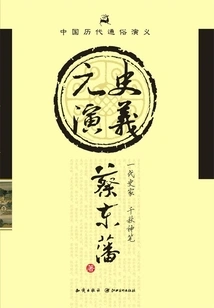
中国历代通俗演义:元史演义
Cai Dongfan
This book tells the history from "The first chapter, when a widow becomes pregnant with a white light, and a beauty's strange son is robbed to get his wife" to the "sixtieth chapter, when a group of bandits defeat Mingzu and ascend to the throne, and Emperor Shun flees, the history of the Yuan Dynasty comes to an end". The Mongolian tribe was originally the Shiwei branch of the Tang Dynasty. They lived in northern China, made a living by hunting, and formed their own tribe. He first served as the commander of the Jin State, and when Temujin was born, he took charge of all Mongolian tribes and developed his power. The Mongolian cavalry then went west to conquer Europe and soon went south to destroy the Jin Dynasty and invade the Song Dynasty. After the fall of the Southern Song Dynasty and the devastation of the Central Plains by the Mongol Khan, one emperor and one courtier actually served as the emperor of China for eighty-nine years. This is truly a first in history! Little did they know that the Mongols were cruel in character, harsh in their treatment of the people, and the world was exhausted. They actually provoked countless civil uprisings, and one Zhu Yuanzhang emerged and took away every life in the Yuan Dynasty...
This book tells the history from "The first chapter, when a widow becomes pregnant with a white light, and a beauty's strange son is robbed to get his wife" to the "sixtieth chapter, when a group of bandits defeat Mingzu and ascend to the throne, and Emperor Shun flees, the history of the Yuan Dynasty comes to an end". The Mongolian tribe was originally the Shiwei branch of the Tang Dynasty. They lived in northern China, made a living by hunting, and formed their own tribe. He first served as the commander of the Jin State, and when Temujin was born, he took charge of all Mongolian tribes and developed his power. The Mongolian cavalry then went west to conquer Europe and soon went south to destroy the Jin Dynasty and invade the Song Dynasty. After the fall of the Southern Song Dynasty and the devastation of the Central Plains by the Mongol Khan, one emperor and one courtier actually served as the emperor of China for eighty-nine years. This is truly a first in history! Little did they know that the Mongols were cruel in character, harsh in their treatment of the people, and the world was exhausted. They actually provoked countless civil uprisings, and one Zhu Yuanzhang emerged and took away every life in the Yuan Dynasty...
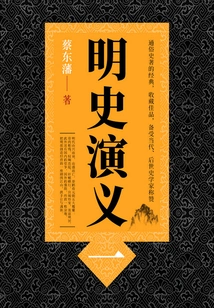
Cai Dongfan's Historical Novels: Romance of Ming Dynasty (1)
General Fiction蔡东藩历史小说:明史演义(1)
Cai Dongfan
"The Romance of the Ming Dynasty" is informative and tells us the history of the Ming Dynasty in a simple and easy-to-understand way. It took 276 years from the founding of the country by the civilian emperor Zhu Yuanzhang to the death of Sizong in the Ming Dynasty. Zhu Yuanzhang rose to the occasion, and within a few years he expelled Emperor Yuan and unified China. He finally drove the foreigners out of China, but he was afraid of constant harassment, so he had to build the Great Wall high and thick. It was only at this time that Zheng He, who made seven voyages to the West, appeared, bringing with him the highest technology at the time and a huge fleet to greatly promote the power of the Ming Empire. Cai Dongfan's book romance emphasizes history over prose. Although it is slightly inferior to literary talent, it provides a vast and popular general history of the Ming Dynasty and made an indelible contribution to the popularization of Chinese historical knowledge. The author Cai Dongfan was a historian and novelist in the late Qing Dynasty and the early Republic of China. When writing this historical romance, Cai Dongfan followed the principle of "taking official history as the basis, striving for conclusiveness, using anecdotes as the basis, and not making false accusations" in historical materials. He paid great attention to the authenticity of history and carefully examined the selection and use of historical materials. The work is highly readable and is a classic that history lovers cannot miss.
"The Romance of the Ming Dynasty" is informative and tells us the history of the Ming Dynasty in a simple and easy-to-understand way. It took 276 years from the founding of the country by the civilian emperor Zhu Yuanzhang to the death of Sizong in the Ming Dynasty. Zhu Yuanzhang rose to the occasion, and within a few years he expelled Emperor Yuan and unified China. He finally drove the foreigners out of China, but he was afraid of constant harassment, so he had to build the Great Wall high and thick. It was only at this time that Zheng He, who made seven voyages to the West, appeared, bringing with him the highest technology at the time and a huge fleet to greatly promote the power of the Ming Empire. Cai Dongfan's book romance emphasizes history over prose. Although it is slightly inferior to literary talent, it provides a vast and popular general history of the Ming Dynasty and made an indelible contribution to the popularization of Chinese historical knowledge. The author Cai Dongfan was a historian and novelist in the late Qing Dynasty and the early Republic of China. When writing this historical romance, Cai Dongfan followed the principle of "taking official history as the basis, striving for conclusiveness, using anecdotes as the basis, and not making false accusations" in historical materials. He paid great attention to the authenticity of history and carefully examined the selection and use of historical materials. The work is highly readable and is a classic that history lovers cannot miss.
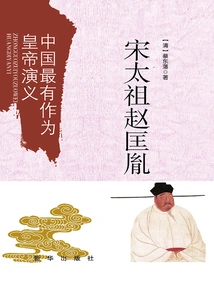
中国最有作为皇帝演义:宋太祖赵匡胤
Cai Dongfan
The "Romances of China's Most Promising Emperors" series of books selects eight most promising emperors in Chinese history from the "Popular Romance of Chinese Dynasties" written by Mr. Cai Dongfan (based on the 1935 Huiwentang printed version, retaining the author's annotations) and compiles them into a book. This series of books has both historical and literary qualities. It "takes official history as the basis and strives for certainty; it uses anecdotes as the weft and does not make false accusations." Readers can not only read history but also appreciate legendary stories, which is the best of both worlds. This book is one of them. It tells the life of Song Taizu Zhao Kuangyin, the terminator of the Five Dynasties and Ten Kingdoms and the pioneer of the Song Dynasty, including his many military exploits, the Chenqiao mutiny, the capture of Jinghu, the defeat of Houshu, the pacification of Jiangnan, and his mysterious death. The greatest contribution and achievement of Song Taizu Zhao Kuangyin's life was to restore the unification of China and end the 200 years of feudal separatism and warlord wars since the Anshi Rebellion. He was an important figure in Chinese history who connected the past and the future.
The "Romances of China's Most Promising Emperors" series of books selects eight most promising emperors in Chinese history from the "Popular Romance of Chinese Dynasties" written by Mr. Cai Dongfan (based on the 1935 Huiwentang printed version, retaining the author's annotations) and compiles them into a book. This series of books has both historical and literary qualities. It "takes official history as the basis and strives for certainty; it uses anecdotes as the weft and does not make false accusations." Readers can not only read history but also appreciate legendary stories, which is the best of both worlds. This book is one of them. It tells the life of Song Taizu Zhao Kuangyin, the terminator of the Five Dynasties and Ten Kingdoms and the pioneer of the Song Dynasty, including his many military exploits, the Chenqiao mutiny, the capture of Jinghu, the defeat of Houshu, the pacification of Jiangnan, and his mysterious death. The greatest contribution and achievement of Song Taizu Zhao Kuangyin's life was to restore the unification of China and end the 200 years of feudal separatism and warlord wars since the Anshi Rebellion. He was an important figure in Chinese history who connected the past and the future.
明史通俗演义(历朝通俗演义)
Cai Dongfan
With more than 2,000 years of history from the Qin Dynasty to the Republic of China, Cai Dongfan used official history as the classic and anecdotes as the weft, and used the language of "The Romance of the Three Kingdoms", which is not very profound in writing and not very vulgar in language, to write this most complete set of historical novels in China. From the creation of "Popular Romance of Qing History" in 1915 to the publication of "Popular Romance of Later Han Dynasty" in 1934, the entire set of "Popular Romance of Historical Dynasties" took ten years to complete. In addition to being very story-telling and interesting, this set of novels also attaches great importance to the authenticity of historical materials. Not only can it be used as a general leisure reading, but it can also be used as a reference book for history lovers.
With more than 2,000 years of history from the Qin Dynasty to the Republic of China, Cai Dongfan used official history as the classic and anecdotes as the weft, and used the language of "The Romance of the Three Kingdoms", which is not very profound in writing and not very vulgar in language, to write this most complete set of historical novels in China. From the creation of "Popular Romance of Qing History" in 1915 to the publication of "Popular Romance of Later Han Dynasty" in 1934, the entire set of "Popular Romance of Historical Dynasties" took ten years to complete. In addition to being very story-telling and interesting, this set of novels also attaches great importance to the authenticity of historical materials. Not only can it be used as a general leisure reading, but it can also be used as a reference book for history lovers.
后汉通俗演义:附三国(上)
Cai Dongfan
This book tells the story of two and a half centuries starting from Wang Mang's new dynasty, ending with the demise of Shu Han and Cao Wei, and the founding of the Jin Dynasty. Pay special attention to the rise and fall of dynasties. Wang Mang's hypocrisy is deeply exposed. Guangwu Zhongxing, the Eastern Han Dynasty's civil and martial arts once achieved brilliant achievements. However, due to the family system of the feudal dynasty, the succeeding emperors were fatuous and promiscuous, their relatives interfered in politics, the eunuchs were rampant, and the warlords were rampant, which eventually led to the fall of the empire and the people suffered from wars. Most of the materials cited in the book come from official history, with detailed descriptions of major events and important figures.
This book tells the story of two and a half centuries starting from Wang Mang's new dynasty, ending with the demise of Shu Han and Cao Wei, and the founding of the Jin Dynasty. Pay special attention to the rise and fall of dynasties. Wang Mang's hypocrisy is deeply exposed. Guangwu Zhongxing, the Eastern Han Dynasty's civil and martial arts once achieved brilliant achievements. However, due to the family system of the feudal dynasty, the succeeding emperors were fatuous and promiscuous, their relatives interfered in politics, the eunuchs were rampant, and the warlords were rampant, which eventually led to the fall of the empire and the people suffered from wars. Most of the materials cited in the book come from official history, with detailed descriptions of major events and important figures.
Cai Dongfan's Historical Novels: Romance of Ming Dynasty (9)
General Fiction蔡东藩历史小说:明史演义(9)
Cai Dongfan
"The Romance of the Ming Dynasty" is informative and tells us the history of the Ming Dynasty in a simple and easy-to-understand way. It took 276 years from the founding of the country by the civilian emperor Zhu Yuanzhang to the death of Sizong in the Ming Dynasty. Zhu Yuanzhang rose to the occasion, and within a few years he expelled Emperor Yuan and unified China. He finally drove the foreigners out of China, but he was afraid of constant harassment, so he had to build the Great Wall high and thick. It was only at this time that Zheng He, who made seven voyages to the West, appeared, bringing with him the highest technology at the time and a huge fleet to greatly promote the power of the Ming Empire. Cai Dongfan's book romance emphasizes history over prose. Although it is slightly inferior to literary talent, it provides a vast and popular general history of the Ming Dynasty and made an indelible contribution to the popularization of Chinese historical knowledge. The author Cai Dongfan was a historian and novelist in the late Qing Dynasty and the early Republic of China. When writing this historical romance, Cai Dongfan followed the principle of "taking official history as the basis, striving for conclusiveness, using anecdotes as the basis, and not making false accusations" in historical materials. He paid great attention to the authenticity of history and carefully examined the selection and use of historical materials. The work is highly readable and is a classic that history lovers cannot miss.
"The Romance of the Ming Dynasty" is informative and tells us the history of the Ming Dynasty in a simple and easy-to-understand way. It took 276 years from the founding of the country by the civilian emperor Zhu Yuanzhang to the death of Sizong in the Ming Dynasty. Zhu Yuanzhang rose to the occasion, and within a few years he expelled Emperor Yuan and unified China. He finally drove the foreigners out of China, but he was afraid of constant harassment, so he had to build the Great Wall high and thick. It was only at this time that Zheng He, who made seven voyages to the West, appeared, bringing with him the highest technology at the time and a huge fleet to greatly promote the power of the Ming Empire. Cai Dongfan's book romance emphasizes history over prose. Although it is slightly inferior to literary talent, it provides a vast and popular general history of the Ming Dynasty and made an indelible contribution to the popularization of Chinese historical knowledge. The author Cai Dongfan was a historian and novelist in the late Qing Dynasty and the early Republic of China. When writing this historical romance, Cai Dongfan followed the principle of "taking official history as the basis, striving for conclusiveness, using anecdotes as the basis, and not making false accusations" in historical materials. He paid great attention to the authenticity of history and carefully examined the selection and use of historical materials. The work is highly readable and is a classic that history lovers cannot miss.
Popular Romance of Northern and Southern History (part 1)
General Fiction南北史通俗演义(上)
Cai Dongfan
The Northern and Southern Dynasties was a famous period of division and confrontation in Chinese history. It extended from the Eastern Jin Dynasty and the Five Hus and Sixteen Kingdoms, to the Sui Dynasty, which suffered the fate of subjugation less than 40 years after its establishment. During this period, there were frequent regime changes, chaos and ups and downs, which are very memorable. During this period, the north and the south of China were divided and in conflict with each other. The Northern Dynasties were ruled by the Xianbei people and the Huhua Han people. The Southern Dynasties were a history of the rise and fall of the noble gentry. Even as the wheel of history rolled, a group of local tyrants in the south began to become separatist forces. Due to the change of dynasties, Chinese culture and humanistic customs have undergone great changes during the Southern and Northern Dynasties. It must be said that this is also a disguised development.
The Northern and Southern Dynasties was a famous period of division and confrontation in Chinese history. It extended from the Eastern Jin Dynasty and the Five Hus and Sixteen Kingdoms, to the Sui Dynasty, which suffered the fate of subjugation less than 40 years after its establishment. During this period, there were frequent regime changes, chaos and ups and downs, which are very memorable. During this period, the north and the south of China were divided and in conflict with each other. The Northern Dynasties were ruled by the Xianbei people and the Huhua Han people. The Southern Dynasties were a history of the rise and fall of the noble gentry. Even as the wheel of history rolled, a group of local tyrants in the south began to become separatist forces. Due to the change of dynasties, Chinese culture and humanistic customs have undergone great changes during the Southern and Northern Dynasties. It must be said that this is also a disguised development.
中国历代通俗演义:民国演义
Cai Dongfan
"The Romance of the Republic of China" is the history of the Ming Dynasty. "The Romance of the Republic of China" was compiled by Cai Dongfan.
"The Romance of the Republic of China" is the history of the Ming Dynasty. "The Romance of the Republic of China" was compiled by Cai Dongfan.
中国历代通俗演义:民国演义(中)
Cai Dongfan
"The Romance of the Republic of China" records the beginning and end of major historical events such as the Revolution of 1911, Sun Yat-sen's resignation, Yuan Shikai's proclaimed emperor, Cai E's rebellion against Yuan, Zhang Xun's restoration, the May Fourth Movement, Sun Yat-sen's reorganization of the Kuomintang, and other major historical events. This book tells the history from "Chapter 57: Yunnan Province declares independence, Fengzeyuan discusses military affairs" to "Chapter 111: Prime Minister Xu Jin conspires to banquet on behalf of King Li's dissident officials". Yuan Shikai usurped power and stole the country, which aroused the indignation of the people across the country. A large number of patriots rose up and many provinces declared independence. The treasury of the Republic of China was in short supply, so the government had no choice but to borrow heavily from foreign countries, which led to foreign interference in internal affairs. The people were even more miserable. Warlords increasingly interfered in politics, causing harm to the country and making the people miserable...
"The Romance of the Republic of China" records the beginning and end of major historical events such as the Revolution of 1911, Sun Yat-sen's resignation, Yuan Shikai's proclaimed emperor, Cai E's rebellion against Yuan, Zhang Xun's restoration, the May Fourth Movement, Sun Yat-sen's reorganization of the Kuomintang, and other major historical events. This book tells the history from "Chapter 57: Yunnan Province declares independence, Fengzeyuan discusses military affairs" to "Chapter 111: Prime Minister Xu Jin conspires to banquet on behalf of King Li's dissident officials". Yuan Shikai usurped power and stole the country, which aroused the indignation of the people across the country. A large number of patriots rose up and many provinces declared independence. The treasury of the Republic of China was in short supply, so the government had no choice but to borrow heavily from foreign countries, which led to foreign interference in internal affairs. The people were even more miserable. Warlords increasingly interfered in politics, causing harm to the country and making the people miserable...
Romance of Yuan Dynasty
General Fiction元史演义
Cai Dongfan
Mongolia was originally the Shiwei branch of the Tang Dynasty. It lived in northern China, made a living by hunting, and formed its own tribe. He first served as the commander of the Jin State, and when Temujin was born, he took charge of all Mongolian tribes and developed his power. The Mongolian cavalry then went west to conquer Europe and soon went south to destroy the Jin Dynasty and invade the Song Dynasty. After the fall of the Southern Song Dynasty and the destruction of the Central Plains by the Mongol Khan, the emperor and his courtiers actually served as the emperor of China for eighty-nine years. This is truly a first in history! Little did they know that the Mongolian people had a cruel temperament, treated the people harshly, and the world was tired. They actually provoked countless civil uprisings, and one Zhu Yuanzhang emerged and took away all the people in the Yuan Dynasty. Some say it was destiny, some say it was man-made. The boy is baffled, so he can only discuss the rise and fall of Mongolia based on history.
Mongolia was originally the Shiwei branch of the Tang Dynasty. It lived in northern China, made a living by hunting, and formed its own tribe. He first served as the commander of the Jin State, and when Temujin was born, he took charge of all Mongolian tribes and developed his power. The Mongolian cavalry then went west to conquer Europe and soon went south to destroy the Jin Dynasty and invade the Song Dynasty. After the fall of the Southern Song Dynasty and the destruction of the Central Plains by the Mongol Khan, the emperor and his courtiers actually served as the emperor of China for eighty-nine years. This is truly a first in history! Little did they know that the Mongolian people had a cruel temperament, treated the people harshly, and the world was tired. They actually provoked countless civil uprisings, and one Zhu Yuanzhang emerged and took away all the people in the Yuan Dynasty. Some say it was destiny, some say it was man-made. The boy is baffled, so he can only discuss the rise and fall of Mongolia based on history.
Cai Dongfan's Historical Novels: Romance of Song Dynasty (6)
General Fiction蔡东藩历史小说:宋史演义(6)
Cai Dongfan
This book mainly talks about how after the Five Dynasties and Ten Kingdoms, Zhao Kuangyin wore a yellow robe and used a glass of wine to release his military power and concentrate the power in his own hands. Under the basic national policy of strengthening the cadres and weakening the branches, literati politics solved the opportunity for the warriors of the previous dynasty to usurp the throne, and also shaped a humanistic empire at the cultural level. But it was unable to break through the political chaos, and the political situation was disrupted. This book is structured in chapters, with popular articles and witty comments. It truly reproduces the magnificent historical evolution of Chinese civilization and narrates the rise and fall of the Song Dynasty. The northern part of the Great Wall was surrounded by powerful neighbors and foreign troubles continued, and half of the country was lost in the Jingkang disaster. After Jingkang, Emperor Gaozong and Zhao Gou rebuilt the empire in Suzhou and Hangzhou under heaven, and lost the illusion of returning to China. The author uses his personal history to tell the history of China in the form of a popular novel, hoping to help the Chinese people find a way to save the nation and survive from the enlightenment of history.
This book mainly talks about how after the Five Dynasties and Ten Kingdoms, Zhao Kuangyin wore a yellow robe and used a glass of wine to release his military power and concentrate the power in his own hands. Under the basic national policy of strengthening the cadres and weakening the branches, literati politics solved the opportunity for the warriors of the previous dynasty to usurp the throne, and also shaped a humanistic empire at the cultural level. But it was unable to break through the political chaos, and the political situation was disrupted. This book is structured in chapters, with popular articles and witty comments. It truly reproduces the magnificent historical evolution of Chinese civilization and narrates the rise and fall of the Song Dynasty. The northern part of the Great Wall was surrounded by powerful neighbors and foreign troubles continued, and half of the country was lost in the Jingkang disaster. After Jingkang, Emperor Gaozong and Zhao Gou rebuilt the empire in Suzhou and Hangzhou under heaven, and lost the illusion of returning to China. The author uses his personal history to tell the history of China in the form of a popular novel, hoping to help the Chinese people find a way to save the nation and survive from the enlightenment of history.
Popular Romance of the Past Dynasties: Romance of the Yuan Dynasty (mind Map Version)
General Fiction历朝通俗演义:元史演义(思维导图版)
Cai Dongfan
"The Romance of the Yuan Dynasty" is a re-adaptation of Cai Dongfan's original work. The book depicts the entire process of the rise and fall of the Yuan Dynasty over a century, and depicts famous historical figures such as Genghis Khan and Kublai Khan, providing a detailed and powerful reference for understanding the history of the Yuan Dynasty. During the editing process of the book, not only were the rare characters annotated and phoneticized according to the latest "General Standard Chinese Character List", but the book's character embroideries and text illustrations were also redrawn. The "Reading Mind Map" added to the book for the first time provides big data support for readers to quickly understand the history of the Yuan Dynasty. Through multiple modules such as "Classic Battles", more than a hundred knowledge points are sorted out, and historical changes are rigorously presented through maps. It is of great help to young readers in learning history and enhancing national pride.
"The Romance of the Yuan Dynasty" is a re-adaptation of Cai Dongfan's original work. The book depicts the entire process of the rise and fall of the Yuan Dynasty over a century, and depicts famous historical figures such as Genghis Khan and Kublai Khan, providing a detailed and powerful reference for understanding the history of the Yuan Dynasty. During the editing process of the book, not only were the rare characters annotated and phoneticized according to the latest "General Standard Chinese Character List", but the book's character embroideries and text illustrations were also redrawn. The "Reading Mind Map" added to the book for the first time provides big data support for readers to quickly understand the history of the Yuan Dynasty. Through multiple modules such as "Classic Battles", more than a hundred knowledge points are sorted out, and historical changes are rigorously presented through maps. It is of great help to young readers in learning history and enhancing national pride.
Romance of Yuan Dynasty 3
General Fiction元史演义3
Cai Dongfan
This book tells the history of the rise and fall of the Yuan Dynasty, from the founding of Temujin to the escape of Emperor Shun of the Yuan Dynasty. It reproduces the magnanimity of the Mongols and the historical destiny of the empire's prosperity, decline and disintegration. Our country has been passed down by the Han people in all dynasties, and some ethnic minorities may have invaded the Central Plains. Although the Five Hu Khitan Jurchens are so powerful, they cannot unify China in the end. The Mongolian tribe was originally the Shiwei branch of the Tang Dynasty. They lived in northern China, made a living by hunting, and formed their own tribe. He first served as the commander of the Jin State, and when Temujin was born, he took charge of all Mongolian tribes and developed his power. The Mongolian cavalry then went west to conquer Europe and soon went south to destroy the Jin Dynasty and invade the Song Dynasty. After the Southern Song Dynasty was destroyed and the Central Plains was conquered by the Mongol Khan, he became the emperor of China for eighty-nine years! However, the Mongolian people had a cruel temperament, treated the people harshly, and the world was exhausted, which aroused countless popular uprisings. In the end, Zhu Yuanzhang just took away all the people in the Yuan Dynasty.
This book tells the history of the rise and fall of the Yuan Dynasty, from the founding of Temujin to the escape of Emperor Shun of the Yuan Dynasty. It reproduces the magnanimity of the Mongols and the historical destiny of the empire's prosperity, decline and disintegration. Our country has been passed down by the Han people in all dynasties, and some ethnic minorities may have invaded the Central Plains. Although the Five Hu Khitan Jurchens are so powerful, they cannot unify China in the end. The Mongolian tribe was originally the Shiwei branch of the Tang Dynasty. They lived in northern China, made a living by hunting, and formed their own tribe. He first served as the commander of the Jin State, and when Temujin was born, he took charge of all Mongolian tribes and developed his power. The Mongolian cavalry then went west to conquer Europe and soon went south to destroy the Jin Dynasty and invade the Song Dynasty. After the Southern Song Dynasty was destroyed and the Central Plains was conquered by the Mongol Khan, he became the emperor of China for eighty-nine years! However, the Mongolian people had a cruel temperament, treated the people harshly, and the world was exhausted, which aroused countless popular uprisings. In the end, Zhu Yuanzhang just took away all the people in the Yuan Dynasty.
Romance of Tang History (part 2)
General Fiction唐史演义(下)
Cai Dongfan
"The Romance of Tang History" is a chapter-style historical romance novel with a total of one hundred chapters. It tells the story of Li Yuan and his son's troops stationed in Chang'an, the unification of the Tang Dynasty, the rule of Zhenguan, Wu Zetian's replacement of the Tang Dynasty and the establishment of the Zhou Dynasty, the prosperity of the Kaiyuan Dynasty and the Anshi Rebellion, as well as the eunuch monopoly, separatist feudal towns, Huangchao Uprising, and the demise of the Tang Dynasty in the Middle Tang Dynasty. It has a glorious three-hundred-year history. This book is the second part of "The Romance of Tang History". It tells the history from "Chapter 51: Brother Shuhan lost his army at Tongguan and Concubine Yang Guifei died in Zhumawei" to "Chapter 100: Zhu Quanzhong went to kill Zhu Quanzhong in his disciples and moved to Zuo Zhao to destroy Emperor Xuan of the Tang Dynasty".
"The Romance of Tang History" is a chapter-style historical romance novel with a total of one hundred chapters. It tells the story of Li Yuan and his son's troops stationed in Chang'an, the unification of the Tang Dynasty, the rule of Zhenguan, Wu Zetian's replacement of the Tang Dynasty and the establishment of the Zhou Dynasty, the prosperity of the Kaiyuan Dynasty and the Anshi Rebellion, as well as the eunuch monopoly, separatist feudal towns, Huangchao Uprising, and the demise of the Tang Dynasty in the Middle Tang Dynasty. It has a glorious three-hundred-year history. This book is the second part of "The Romance of Tang History". It tells the history from "Chapter 51: Brother Shuhan lost his army at Tongguan and Concubine Yang Guifei died in Zhumawei" to "Chapter 100: Zhu Quanzhong went to kill Zhu Quanzhong in his disciples and moved to Zuo Zhao to destroy Emperor Xuan of the Tang Dynasty".
蔡东藩经典历史小说:民国演义(13)
Cai Dongfan
This book is a must-read historical novel of the Republic of China. The author is Cai Dongfan, a famous historian and novelist of the Republic of China. This book describes in relatively detail the beginning and end of major historical events such as the Revolution of 1911, Sun Yat-sen's resignation, Yuan Shikai's proclaimed emperor, Cai E's campaign against Yuan, Zhang Xun's restoration, the May Fourth Movement, Sun Yat-sen's reorganization of the Kuomintang, and other major historical events. This book is the Republic of China part of "Popular Romance of Chinese History". "Popular Romance of Chinese History" dates from the Qin and Han dynasties to the Republic of China. Two thousand years of Chinese history are vividly displayed in front of us. The book tells the history of the Republic of China in a detailed and easy-to-understand way, and has been widely praised by people since its publication. The work is based on historical facts and side by side with unofficial history. It is prudent in selecting materials, has plain viewpoints, is rich in content, has a methodical narrative, elegant language, self-evaluation and self-annotation, and has both reason and interest. It is regarded as a classic of popular history and is deeply favored by readers. In the selection and use of historical materials, Cai Dongfan mainly focused on "official history" and also collected anecdotes and anecdotes. He claimed that the historical romance he compiled "takes official history as the classic and strives for certainty; uses anecdotes as the latitude and does not make false accusations." He is extremely cautious in the use of historical materials such as anecdotes and anecdotes, and often requires "several rounds of textual research."
This book is a must-read historical novel of the Republic of China. The author is Cai Dongfan, a famous historian and novelist of the Republic of China. This book describes in relatively detail the beginning and end of major historical events such as the Revolution of 1911, Sun Yat-sen's resignation, Yuan Shikai's proclaimed emperor, Cai E's campaign against Yuan, Zhang Xun's restoration, the May Fourth Movement, Sun Yat-sen's reorganization of the Kuomintang, and other major historical events. This book is the Republic of China part of "Popular Romance of Chinese History". "Popular Romance of Chinese History" dates from the Qin and Han dynasties to the Republic of China. Two thousand years of Chinese history are vividly displayed in front of us. The book tells the history of the Republic of China in a detailed and easy-to-understand way, and has been widely praised by people since its publication. The work is based on historical facts and side by side with unofficial history. It is prudent in selecting materials, has plain viewpoints, is rich in content, has a methodical narrative, elegant language, self-evaluation and self-annotation, and has both reason and interest. It is regarded as a classic of popular history and is deeply favored by readers. In the selection and use of historical materials, Cai Dongfan mainly focused on "official history" and also collected anecdotes and anecdotes. He claimed that the historical romance he compiled "takes official history as the classic and strives for certainty; uses anecdotes as the latitude and does not make false accusations." He is extremely cautious in the use of historical materials such as anecdotes and anecdotes, and often requires "several rounds of textual research."
中国历代通俗演义:清史演义(下)
Cai Dongfan
This book tells the history from "The 51st Chapter, Lin Zhijun generously inspected the division, Qi Zhongtang's mediocrity harmed the country" to "The 100th Chapter, President Sun Wen was elected to take office, and Qing Zuo abdicated the throne and ended". After the heyday of Kangxi and Qianlong, the Qing Dynasty began to decline again. The foreign ships in the West had strong guns and guns, and repeatedly invaded the country. The great powers ceded territory today and paid indemnity tomorrow. The domestic Taiping Rebellion, Boxer Rebellion, etc. Tired the Qing Dynasty monarchs and ministers to focus on one thing and the other, and the country's power gradually declined. Until Wuchang launched an attack, all provinces responded, and the Qing Dynasty was overthrown...
This book tells the history from "The 51st Chapter, Lin Zhijun generously inspected the division, Qi Zhongtang's mediocrity harmed the country" to "The 100th Chapter, President Sun Wen was elected to take office, and Qing Zuo abdicated the throne and ended". After the heyday of Kangxi and Qianlong, the Qing Dynasty began to decline again. The foreign ships in the West had strong guns and guns, and repeatedly invaded the country. The great powers ceded territory today and paid indemnity tomorrow. The domestic Taiping Rebellion, Boxer Rebellion, etc. Tired the Qing Dynasty monarchs and ministers to focus on one thing and the other, and the country's power gradually declined. Until Wuchang launched an attack, all provinces responded, and the Qing Dynasty was overthrown...
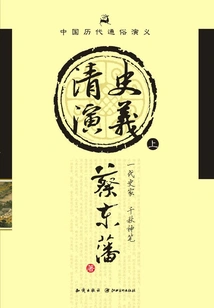
中国历代通俗演义:清史演义(上)
Cai Dongfan
This book tells the history from "the first chapter looking back on the past and talking about life experience, recounting the past dynasties and detailing the origins" to "the fiftieth chapter: the girl who drank poison became a suspect, and the burning of opium caused wars at home and abroad". As far back as the Zhao and Song Dynasties, after the Jin State was destroyed, the surviving Jurchen clan fled to the northeast and hid on the seashore. Taking the meaning of "residents under Changbai Mountain", they named themselves the "Aixinjueluo Clan" and established the Manchukuo Kingdom, so the whole family was renamed "Manchu". After hundreds of years and several generations, a man of outstanding wisdom and bravery emerged from the clan. Through the conquests of him and his next generation, he finally took control of the Central Plains from outside the customs, established political power, and the country was named Qing. Under the rule of his successors, the last flourishing age of feudal society appeared...
This book tells the history from "the first chapter looking back on the past and talking about life experience, recounting the past dynasties and detailing the origins" to "the fiftieth chapter: the girl who drank poison became a suspect, and the burning of opium caused wars at home and abroad". As far back as the Zhao and Song Dynasties, after the Jin State was destroyed, the surviving Jurchen clan fled to the northeast and hid on the seashore. Taking the meaning of "residents under Changbai Mountain", they named themselves the "Aixinjueluo Clan" and established the Manchukuo Kingdom, so the whole family was renamed "Manchu". After hundreds of years and several generations, a man of outstanding wisdom and bravery emerged from the clan. Through the conquests of him and his next generation, he finally took control of the Central Plains from outside the customs, established political power, and the country was named Qing. Under the rule of his successors, the last flourishing age of feudal society appeared...
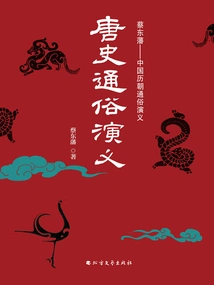
Popular Romance of Tang History (two Volumes)
General Fiction唐史通俗演义(全二册)
Cai Dongfan
"Popular Romance of Tang History (Part 1 and 2)" narrates the historical facts of the Tang Dynasty during its 290 years, from prosperity to decline, and experienced disasters such as women's disasters, eunuchships, and feudal lordships. It has plain views, rich content, methodical exposition, elegant language, self-evaluation and self-annotation, and a balance of theory and interest. It is regarded as a classic of popular history. The book is careful in selecting materials, mainly focusing on authentic history and side by side with unofficial history, allowing people to get started with the history of the nation.
"Popular Romance of Tang History (Part 1 and 2)" narrates the historical facts of the Tang Dynasty during its 290 years, from prosperity to decline, and experienced disasters such as women's disasters, eunuchships, and feudal lordships. It has plain views, rich content, methodical exposition, elegant language, self-evaluation and self-annotation, and a balance of theory and interest. It is regarded as a classic of popular history. The book is careful in selecting materials, mainly focusing on authentic history and side by side with unofficial history, allowing people to get started with the history of the nation.
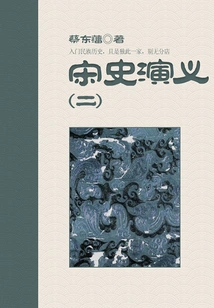
Cai Dongfan's Historical Novels: Romance of Song Dynasty (2)
General Fiction蔡东藩历史小说:宋史演义(2)
Cai Dongfan
This book mainly talks about how after the Five Dynasties and Ten Kingdoms, Zhao Kuangyin wore a yellow robe and used a glass of wine to release his military power and concentrate the power in his own hands. Under the basic national policy of strengthening the branches and strengthening the branches, civilian politics solved the opportunity for the military men of the previous dynasty to usurp the throne, and also created a humanistic empire at the cultural level. It was unable to break through the political chaos, and the political situation was disrupted. This book is structured in chapters, with popular articles and witty comments. It truly reproduces the magnificent historical evolution of Chinese civilization and narrates the rise and fall of the Song Dynasty. The northern part of the Great Wall was surrounded by powerful neighbors and foreign troubles continued, and half of the country was lost in the Jingkang disaster. After Jingkang, Emperor Gaozong and Zhao Gou rebuilt the empire in Suzhou and Hangzhou under heaven, and lost the illusion of returning to China. The author uses his personal history to tell the history of China in the form of a popular novel, hoping to help the Chinese people find a way to save the nation and survive from the enlightenment of history.
This book mainly talks about how after the Five Dynasties and Ten Kingdoms, Zhao Kuangyin wore a yellow robe and used a glass of wine to release his military power and concentrate the power in his own hands. Under the basic national policy of strengthening the branches and strengthening the branches, civilian politics solved the opportunity for the military men of the previous dynasty to usurp the throne, and also created a humanistic empire at the cultural level. It was unable to break through the political chaos, and the political situation was disrupted. This book is structured in chapters, with popular articles and witty comments. It truly reproduces the magnificent historical evolution of Chinese civilization and narrates the rise and fall of the Song Dynasty. The northern part of the Great Wall was surrounded by powerful neighbors and foreign troubles continued, and half of the country was lost in the Jingkang disaster. After Jingkang, Emperor Gaozong and Zhao Gou rebuilt the empire in Suzhou and Hangzhou under heaven, and lost the illusion of returning to China. The author uses his personal history to tell the history of China in the form of a popular novel, hoping to help the Chinese people find a way to save the nation and survive from the enlightenment of history.
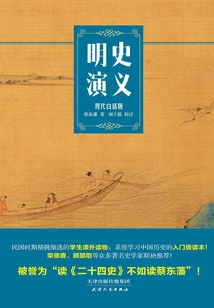
Romance of Ming Dynasty
General Fiction明史演义
Cai Dongfan
"The Romance of the Ming Dynasty" (modern vernacular version) is the Ming Dynasty part of the "Popular Romance of the Dynasties". It details the 276-year history of Zhu Yuanzhang from his rise as a commoner to the establishment of the Ming Dynasty to the demise of the Ming Dynasty. Cai Dongfan artistically reprocessed historical figures and vividly described the politics, economy, and military aspects of the Ming Dynasty in the form of character romances. He adopted many historical classics to chant the rise and fall of the Ming Dynasty, and inspired future generations to learn from it.
"The Romance of the Ming Dynasty" (modern vernacular version) is the Ming Dynasty part of the "Popular Romance of the Dynasties". It details the 276-year history of Zhu Yuanzhang from his rise as a commoner to the establishment of the Ming Dynasty to the demise of the Ming Dynasty. Cai Dongfan artistically reprocessed historical figures and vividly described the politics, economy, and military aspects of the Ming Dynasty in the form of character romances. He adopted many historical classics to chant the rise and fall of the Ming Dynasty, and inspired future generations to learn from it.
民国通俗演义(历朝通俗演义)
Cai Dongfan
With more than 2,000 years of history from the Qin Dynasty to the Republic of China, Cai Dongfan used official history as the classic and anecdotes as the weft, and used the language of "The Romance of the Three Kingdoms", which is not very profound in writing and not very vulgar in language, to write this most complete set of historical novels in China. From the creation of "Popular Romance of Qing History" in 1915 to the publication of "Popular Romance of Later Han Dynasty" in 1936, the entire set of "Popular Romance of Historical Dynasties" took ten years to complete. In addition to being very story-telling and interesting, this set of novels also attaches great importance to the authenticity of historical materials. Not only can it be used as a general leisure reading, but it can also be used as a reference book for history lovers.
With more than 2,000 years of history from the Qin Dynasty to the Republic of China, Cai Dongfan used official history as the classic and anecdotes as the weft, and used the language of "The Romance of the Three Kingdoms", which is not very profound in writing and not very vulgar in language, to write this most complete set of historical novels in China. From the creation of "Popular Romance of Qing History" in 1915 to the publication of "Popular Romance of Later Han Dynasty" in 1936, the entire set of "Popular Romance of Historical Dynasties" took ten years to complete. In addition to being very story-telling and interesting, this set of novels also attaches great importance to the authenticity of historical materials. Not only can it be used as a general leisure reading, but it can also be used as a reference book for history lovers.
元史通俗演义(历朝通俗演义)
Cai Dongfan
With more than 2,000 years of history from the Qin Dynasty to the Republic of China, Cai Dongfan used official history as the classic and anecdotes as the weft, and used the language of "The Romance of the Three Kingdoms", which is not very profound in writing and not very vulgar in language, to write this most complete set of historical novels in China. From the creation of "Popular Romance of Qing History" in 1915 to the publication of "Popular Romance of Later Han Dynasty" in 1933, the entire set of "Popular Romance of Historical Dynasties" took ten years to complete. In addition to being very story-telling and interesting, this set of novels also attaches great importance to the authenticity of historical materials. Not only can it be used as a general leisure reading, but it can also be used as a reference book for history lovers.
With more than 2,000 years of history from the Qin Dynasty to the Republic of China, Cai Dongfan used official history as the classic and anecdotes as the weft, and used the language of "The Romance of the Three Kingdoms", which is not very profound in writing and not very vulgar in language, to write this most complete set of historical novels in China. From the creation of "Popular Romance of Qing History" in 1915 to the publication of "Popular Romance of Later Han Dynasty" in 1933, the entire set of "Popular Romance of Historical Dynasties" took ten years to complete. In addition to being very story-telling and interesting, this set of novels also attaches great importance to the authenticity of historical materials. Not only can it be used as a general leisure reading, but it can also be used as a reference book for history lovers.
Tang History Romance
General Fiction唐史演义
Cai Dongfan
This book is one of the "Popular Romance of Chinese Dynasties". The book has a total of one hundred chapters, describing the history of the Tang Dynasty from the time of Emperor Gaozu to the twenty-one emperors and fourteen generations in total, a total of 289 years.
This book is one of the "Popular Romance of Chinese Dynasties". The book has a total of one hundred chapters, describing the history of the Tang Dynasty from the time of Emperor Gaozu to the twenty-one emperors and fourteen generations in total, a total of 289 years.
Popular Romance of Qing History (part 1)
General Fiction清史通俗演义(上)
Cai Dongfan
The content of this book begins with the Jurchen aristocrat Nurhaci establishing the Later Jin regime, Huang Taiji changing the name of the country to Qing, the Qing founder establishing his capital in Beijing and unifying China, and ending with the overthrow of the Qing Dynasty by the Xinke Revolution. The author compiled the major historical events of the Qing Dynasty in the past three hundred years into a hundred chapters of popular romance, which reflects the historical situation of the Qing Dynasty to a certain extent and has a reference value for readers to understand the history of the Qing Dynasty.
The content of this book begins with the Jurchen aristocrat Nurhaci establishing the Later Jin regime, Huang Taiji changing the name of the country to Qing, the Qing founder establishing his capital in Beijing and unifying China, and ending with the overthrow of the Qing Dynasty by the Xinke Revolution. The author compiled the major historical events of the Qing Dynasty in the past three hundred years into a hundred chapters of popular romance, which reflects the historical situation of the Qing Dynasty to a certain extent and has a reference value for readers to understand the history of the Qing Dynasty.
Popular Romance of Ming Dynasty (two Volumes)
General Fiction明史通俗演义(全二册)
Cai Dongfan
This book starts from "exposing the outline of history, opening up the sect and clarifying the true meaning, taking refuge in a monk's life" to "begging for foreign aid for the Qing army to quell chaos and end up destroying half of the history of the Ming Dynasty". One hundred volumes of works cover 276 years of Ming Dynasty history. The author highly portrays the all-powerful historical figures of the Ming Dynasty, such as Zhu Yuanzhang who rose to the occasion, Zheng He who made seven voyages to the West, and Wei Zhongxian who tortured Zhongliang and finally got his due end. The book is written fluently and the story is vivid. It is a masterpiece for those who study the history of the Ming Dynasty.
This book starts from "exposing the outline of history, opening up the sect and clarifying the true meaning, taking refuge in a monk's life" to "begging for foreign aid for the Qing army to quell chaos and end up destroying half of the history of the Ming Dynasty". One hundred volumes of works cover 276 years of Ming Dynasty history. The author highly portrays the all-powerful historical figures of the Ming Dynasty, such as Zhu Yuanzhang who rose to the occasion, Zheng He who made seven voyages to the West, and Wei Zhongxian who tortured Zhongliang and finally got his due end. The book is written fluently and the story is vivid. It is a masterpiece for those who study the history of the Ming Dynasty.
Romance of the Two Jin Dynasties (part 1)
General Fiction两晋演义(上)
Cai Dongfan
"The Romance of the Two Jin Dynasties" uses a chapter-like structure, popular articles, and witty comments to truly reproduce the magnificent historical evolution of Chinese civilization and narrate the rise and fall of the Jin Dynasty. There are one hundred chapters in total, starting from the Sima Yan Dynasty in the Wei Dynasty and ending in the Liu Song Dynasty in the Jin Dynasty, which lasted for 156 years. The Western Jin Dynasty ended nearly a hundred years of division. However, the Eight Kings Rebellion depleted the country's capital and the Hu people, who were mixed with the Han people, took the opportunity to launch attacks one after another, leading to the fall of the Western Jin Dynasty. The Eastern Jin Dynasty rebuilt in Jiangdong, accumulated energy, and launched the difficult task of the Northern Expedition, but its strength was lost due to internal power struggles. General Liu Yu stood out and made two Northern Expeditions to recapture Chang'an. After that, he deposed two emperors one after another, founded the Song Dynasty, and fell to the Eastern Jin Dynasty. This book is the first part of "The Romance of the Two Jin Dynasties". It tells the history from "the first chapter, sacrificing Sima Kaiji in the southern suburbs, setting up the East Palace to prevent disasters" to "the fiftieth chapter, selecting generals in Liangzhou to defeat the enemy, building a palace and seducing the Shi family to promote prostitution".
"The Romance of the Two Jin Dynasties" uses a chapter-like structure, popular articles, and witty comments to truly reproduce the magnificent historical evolution of Chinese civilization and narrate the rise and fall of the Jin Dynasty. There are one hundred chapters in total, starting from the Sima Yan Dynasty in the Wei Dynasty and ending in the Liu Song Dynasty in the Jin Dynasty, which lasted for 156 years. The Western Jin Dynasty ended nearly a hundred years of division. However, the Eight Kings Rebellion depleted the country's capital and the Hu people, who were mixed with the Han people, took the opportunity to launch attacks one after another, leading to the fall of the Western Jin Dynasty. The Eastern Jin Dynasty rebuilt in Jiangdong, accumulated energy, and launched the difficult task of the Northern Expedition, but its strength was lost due to internal power struggles. General Liu Yu stood out and made two Northern Expeditions to recapture Chang'an. After that, he deposed two emperors one after another, founded the Song Dynasty, and fell to the Eastern Jin Dynasty. This book is the first part of "The Romance of the Two Jin Dynasties". It tells the history from "the first chapter, sacrificing Sima Kaiji in the southern suburbs, setting up the East Palace to prevent disasters" to "the fiftieth chapter, selecting generals in Liangzhou to defeat the enemy, building a palace and seducing the Shi family to promote prostitution".
蔡东藩经典历史小说:民国演义(20)
Cai Dongfan
This book is a must-read historical novel of the Republic of China. The author is Cai Dongfan, a famous historian and novelist of the Republic of China. This book describes in relatively detail the beginning and end of major historical events such as the Revolution of 1911, Sun Yat-sen's resignation, Yuan Shikai's proclaimed emperor, Cai E's campaign against Yuan, Zhang Xun's restoration, the May Fourth Movement, Sun Yat-sen's reorganization of the Kuomintang, and other major historical events. This book is the Republic of China part of "Popular Romance of Chinese History". "Popular Romance of Chinese History" dates from the Qin and Han dynasties to the Republic of China. Two thousand years of Chinese history are vividly displayed in front of us. The book tells the history of the Republic of China in a detailed and easy-to-understand way, and has been widely praised by people since its publication. The work is based on historical facts and side by side with unofficial history. It is prudent in selecting materials, has plain viewpoints, is rich in content, has a methodical narrative, elegant language, self-evaluation and self-annotation, and has both reason and interest. It is regarded as a classic of popular history and is deeply favored by readers. In the selection and use of historical materials, Cai Dongfan mainly focused on "official history" and also collected anecdotes and anecdotes. He claimed that the historical romance he compiled "takes official history as the classic and strives for certainty; uses anecdotes as the latitude and does not make false accusations." He is extremely cautious in the use of historical materials such as anecdotes and anecdotes, and often requires "several rounds of textual research."
This book is a must-read historical novel of the Republic of China. The author is Cai Dongfan, a famous historian and novelist of the Republic of China. This book describes in relatively detail the beginning and end of major historical events such as the Revolution of 1911, Sun Yat-sen's resignation, Yuan Shikai's proclaimed emperor, Cai E's campaign against Yuan, Zhang Xun's restoration, the May Fourth Movement, Sun Yat-sen's reorganization of the Kuomintang, and other major historical events. This book is the Republic of China part of "Popular Romance of Chinese History". "Popular Romance of Chinese History" dates from the Qin and Han dynasties to the Republic of China. Two thousand years of Chinese history are vividly displayed in front of us. The book tells the history of the Republic of China in a detailed and easy-to-understand way, and has been widely praised by people since its publication. The work is based on historical facts and side by side with unofficial history. It is prudent in selecting materials, has plain viewpoints, is rich in content, has a methodical narrative, elegant language, self-evaluation and self-annotation, and has both reason and interest. It is regarded as a classic of popular history and is deeply favored by readers. In the selection and use of historical materials, Cai Dongfan mainly focused on "official history" and also collected anecdotes and anecdotes. He claimed that the historical romance he compiled "takes official history as the classic and strives for certainty; uses anecdotes as the latitude and does not make false accusations." He is extremely cautious in the use of historical materials such as anecdotes and anecdotes, and often requires "several rounds of textual research."
后汉通俗演义(历朝通俗演义)
Cai Dongfan
With more than 2,000 years of history from the Qin Dynasty to the Republic of China, Cai Dongfan used official history as the classic and anecdotes as the weft, and used the language of "The Romance of the Three Kingdoms", which is not very profound in writing and not very vulgar in language, to write this most complete set of historical novels in China. From the creation of "Popular Romance of Qing History" in 1915 to the publication of "Popular Romance of Later Han Dynasty" in 1927, the entire set of "Popular Romance of Historical Dynasties" took ten years to complete. In addition to being very story-telling and interesting, this set of novels also attaches great importance to the authenticity of historical materials. Not only can it be used as a general leisure reading, but it can also be used as a reference book for history lovers.
With more than 2,000 years of history from the Qin Dynasty to the Republic of China, Cai Dongfan used official history as the classic and anecdotes as the weft, and used the language of "The Romance of the Three Kingdoms", which is not very profound in writing and not very vulgar in language, to write this most complete set of historical novels in China. From the creation of "Popular Romance of Qing History" in 1915 to the publication of "Popular Romance of Later Han Dynasty" in 1927, the entire set of "Popular Romance of Historical Dynasties" took ten years to complete. In addition to being very story-telling and interesting, this set of novels also attaches great importance to the authenticity of historical materials. Not only can it be used as a general leisure reading, but it can also be used as a reference book for history lovers.
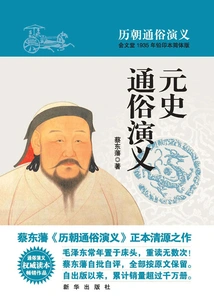
历朝通俗演义:元史通俗演义
Cai Dongfan
This book is the simplified version of "The Popular Romance of Cai Dongfan's Past Dynasties" printed by Huiwentang in 1935. The Great Yuan Dynasty began with Genghis Khan and ended with Zhu Yuanzhang. It was the first dynasty in history to establish and rule the country with the Mongolian minority. It was also the dynasty with the most extensive territory in history, and it was the first dynasty to conquer the entire country. First, Genghis Khan unified Mongolia, and then Emperor Shizu of the Yuan Dynasty defeated the Southern Song Dynasty and established the Yuan Dynasty. During the Yuan Dynasty, the Mongolian rulers repeatedly exploited the Han people, and even fought for years to expand their territory. As a result, the people were in dire straits and revolted one after another. In addition, they fought for power and war with each other internally, accelerating the demise of the Yuan Dynasty. Cai Gong discussed history and reproduced the rise and fall of the Yuan Dynasty with popular articles and witty comments.
This book is the simplified version of "The Popular Romance of Cai Dongfan's Past Dynasties" printed by Huiwentang in 1935. The Great Yuan Dynasty began with Genghis Khan and ended with Zhu Yuanzhang. It was the first dynasty in history to establish and rule the country with the Mongolian minority. It was also the dynasty with the most extensive territory in history, and it was the first dynasty to conquer the entire country. First, Genghis Khan unified Mongolia, and then Emperor Shizu of the Yuan Dynasty defeated the Southern Song Dynasty and established the Yuan Dynasty. During the Yuan Dynasty, the Mongolian rulers repeatedly exploited the Han people, and even fought for years to expand their territory. As a result, the people were in dire straits and revolted one after another. In addition, they fought for power and war with each other internally, accelerating the demise of the Yuan Dynasty. Cai Gong discussed history and reproduced the rise and fall of the Yuan Dynasty with popular articles and witty comments.
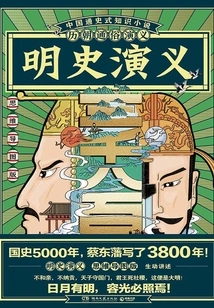
Popular Romance of the Past Dynasties: Romance of the Ming Dynasty (mind Map Version)
General Fiction历朝通俗演义:明史演义(思维导图版)
Cai Dongfan
"The Romance of the Ming Dynasty" is a newly compiled "mind map version" of Cai Dongfan's "Popular Romance of the Past Dynasties" series of books. This book depicts the entire process of the rise and fall of the Ming Dynasty and tells the story of famous historical figures such as Zhu Yuanzhang and Zhu Di, allowing readers to understand the history of the Ming Dynasty. The book is carefully edited and edited, adding annotations and phonetic notations for rare words based on the latest "General Standard Chinese Character List", and redrawing the character embroidery and text illustrations. As the core feature of the book, the "Reading Mind Map" was reviewed by experts and scholars. It uses multiple modules such as "Emperors, Generals and Prime Ministers" to sort out more than a hundred knowledge points involved in the history of the Ming Dynasty, bringing great reading convenience to readers. This book is an in-depth update of a classic literary work. It aims to use big data and other new forms to allow readers to quickly understand historical development trends, clarify the roots of the formation of national culture, and greatly enhance the national pride of young people.
"The Romance of the Ming Dynasty" is a newly compiled "mind map version" of Cai Dongfan's "Popular Romance of the Past Dynasties" series of books. This book depicts the entire process of the rise and fall of the Ming Dynasty and tells the story of famous historical figures such as Zhu Yuanzhang and Zhu Di, allowing readers to understand the history of the Ming Dynasty. The book is carefully edited and edited, adding annotations and phonetic notations for rare words based on the latest "General Standard Chinese Character List", and redrawing the character embroidery and text illustrations. As the core feature of the book, the "Reading Mind Map" was reviewed by experts and scholars. It uses multiple modules such as "Emperors, Generals and Prime Ministers" to sort out more than a hundred knowledge points involved in the history of the Ming Dynasty, bringing great reading convenience to readers. This book is an in-depth update of a classic literary work. It aims to use big data and other new forms to allow readers to quickly understand historical development trends, clarify the roots of the formation of national culture, and greatly enhance the national pride of young people.
Popular Romance of Ming History (part 1)
General Fiction明史通俗演义(上)
Cai Dongfan
This book starts from "exposing the outline of history, opening up the sect and clarifying the true meaning, taking refuge in a monk's life" to "begging for foreign aid for the Qing army to quell chaos and end up destroying half of the history of the Ming Dynasty". One hundred volumes of works cover 276 years of Ming Dynasty history. The author highly portrays the all-powerful historical figures of the Ming Dynasty, such as Zhu Yuanzhang who rose to the occasion, Zheng He who made seven voyages to the West, and Wei Zhongxian who tortured Zhongliang and finally got his due end. The book is written fluently and the story is vivid. It is a masterpiece for those who study the history of the Ming Dynasty.
This book starts from "exposing the outline of history, opening up the sect and clarifying the true meaning, taking refuge in a monk's life" to "begging for foreign aid for the Qing army to quell chaos and end up destroying half of the history of the Ming Dynasty". One hundred volumes of works cover 276 years of Ming Dynasty history. The author highly portrays the all-powerful historical figures of the Ming Dynasty, such as Zhu Yuanzhang who rose to the occasion, Zheng He who made seven voyages to the West, and Wei Zhongxian who tortured Zhongliang and finally got his due end. The book is written fluently and the story is vivid. It is a masterpiece for those who study the history of the Ming Dynasty.
中国历代通俗演义:宋史演义(下)
Cai Dongfan
This book tells the history from "Chapter 51: Cleverly squeezing out and poisoning the auxiliary ministers, and happily recruiting Lai Zai to return to the foreign race" to "Chapter 100: Supporting the two kings to survive the end of the game, overthrowing the two palaces and crossing the ocean". When the Northern Song Dynasty was dying, the royal family Kang Wang Zhaogou, with the help of a group of civil and military ministers, crossed the Yangtze River south to continue the Song Dynasty ancestral temple. However, the Southern Song Dynasty court remained in peace, and under the control of a group of treacherous ministers, designed to frame the generals who resisted the Jin Dynasty, and finally repeated the mistakes of the Northern Song Dynasty. As the Mongolian army advanced step by step, the three emperors were either captured, died on the way to escape, or were buried in the sea...
This book tells the history from "Chapter 51: Cleverly squeezing out and poisoning the auxiliary ministers, and happily recruiting Lai Zai to return to the foreign race" to "Chapter 100: Supporting the two kings to survive the end of the game, overthrowing the two palaces and crossing the ocean". When the Northern Song Dynasty was dying, the royal family Kang Wang Zhaogou, with the help of a group of civil and military ministers, crossed the Yangtze River south to continue the Song Dynasty ancestral temple. However, the Southern Song Dynasty court remained in peace, and under the control of a group of treacherous ministers, designed to frame the generals who resisted the Jin Dynasty, and finally repeated the mistakes of the Northern Song Dynasty. As the Mongolian army advanced step by step, the three emperors were either captured, died on the way to escape, or were buried in the sea...
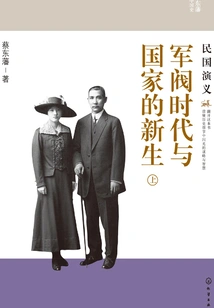
The Age of Warlords and the Rebirth of the Country: Romance of the Republic of China (part 1)
General Fiction军阀时代与国家的新生:民国演义(上)
Cai Dongfan
This book is a popular romance of the Republic of China, "Cai Dongfan Talks about the History of China", with a total of 160 chapters in the first, middle and second volumes. From the Revolution of 1911 and Yuan's proclaiming the emperor, to Cai E's rebellion against Yuan and Zhang Xun's restoration, to the May Fourth Movement and Sun Yat-sen's reorganization of the Kuomintang, it wonderfully interprets the historical events of more than ten years from the establishment of the Republic of China to 1924, when Sun Yat-sen pledged to fight for the Northern Expedition. The author draws extensively from official history, occasionally from officials and wild officials, and his narrative is plain, smooth, and methodical; he makes self-evaluations and annotations, and his language is humorous and both reasonable and reasonable. The last forty chapters were continued by Xu Genfu, which also continued the characteristics of Cai Dongfan's writings. Reading through this book, it is like a historical picture of the early years of the Republic of China slowly unfolding in front of you. Sometimes it is a fierce battle, sometimes it is gentle and affectionate, sometimes it is a dispute between warlords, sometimes it is a game of loyalty and traitor... It makes people dizzy and full of emotions.
This book is a popular romance of the Republic of China, "Cai Dongfan Talks about the History of China", with a total of 160 chapters in the first, middle and second volumes. From the Revolution of 1911 and Yuan's proclaiming the emperor, to Cai E's rebellion against Yuan and Zhang Xun's restoration, to the May Fourth Movement and Sun Yat-sen's reorganization of the Kuomintang, it wonderfully interprets the historical events of more than ten years from the establishment of the Republic of China to 1924, when Sun Yat-sen pledged to fight for the Northern Expedition. The author draws extensively from official history, occasionally from officials and wild officials, and his narrative is plain, smooth, and methodical; he makes self-evaluations and annotations, and his language is humorous and both reasonable and reasonable. The last forty chapters were continued by Xu Genfu, which also continued the characteristics of Cai Dongfan's writings. Reading through this book, it is like a historical picture of the early years of the Republic of China slowly unfolding in front of you. Sometimes it is a fierce battle, sometimes it is gentle and affectionate, sometimes it is a dispute between warlords, sometimes it is a game of loyalty and traitor... It makes people dizzy and full of emotions.
中国历代通俗演义:宋史演义(上)
Cai Dongfan
This book tells the history from "the first chapter: the birth of the magical child from Heluo, and the return of Hu Shi to see Zhi wandering away from home" to the "fiftieth chapter, the enshrinement of Zhu Meng's mission, and the restoration of Cai Jing's prime ministership with Austrian aid". Zhao Kuangyin, who was born as a warrior, took advantage of the opportunity of being in charge of the young country to create a mutiny in Chenqiao. He wore a yellow robe and then staged a scene of drinking wine to release his military power, which consolidated the Zhao family's regime. The country was gradually becoming unified, martial arts was practiced, and culture was cultivated. The economy and culture of the Song Dynasty made more brilliant achievements. However, Liao, Jin, and Xia successively emerged in the north, and Huayi fought repeatedly. The Song Dynasty was so weak that it was difficult to recover, and the reforms initiated by Shenzong and Wang Anshi ended in failure. Deceived by some treacherous ministers who wanted to restore the new law, the two emperors of the Northern Song Dynasty were both taken prisoner and eventually perished...
This book tells the history from "the first chapter: the birth of the magical child from Heluo, and the return of Hu Shi to see Zhi wandering away from home" to the "fiftieth chapter, the enshrinement of Zhu Meng's mission, and the restoration of Cai Jing's prime ministership with Austrian aid". Zhao Kuangyin, who was born as a warrior, took advantage of the opportunity of being in charge of the young country to create a mutiny in Chenqiao. He wore a yellow robe and then staged a scene of drinking wine to release his military power, which consolidated the Zhao family's regime. The country was gradually becoming unified, martial arts was practiced, and culture was cultivated. The economy and culture of the Song Dynasty made more brilliant achievements. However, Liao, Jin, and Xia successively emerged in the north, and Huayi fought repeatedly. The Song Dynasty was so weak that it was difficult to recover, and the reforms initiated by Shenzong and Wang Anshi ended in failure. Deceived by some treacherous ministers who wanted to restore the new law, the two emperors of the Northern Song Dynasty were both taken prisoner and eventually perished...
蔡东藩经典历史小说:民国演义(19)
Cai Dongfan
This book is a must-read historical novel of the Republic of China. The author is Cai Dongfan, a famous historian and novelist of the Republic of China. This book describes in relatively detail the beginning and end of major historical events such as the Revolution of 1911, Sun Yat-sen's resignation, Yuan Shikai's proclaimed emperor, Cai E's campaign against Yuan, Zhang Xun's restoration, the May Fourth Movement, Sun Yat-sen's reorganization of the Kuomintang, and other major historical events. This book is the Republic of China part of "Popular Romance of Chinese History". "Popular Romance of Chinese History" dates from the Qin and Han dynasties to the Republic of China. Two thousand years of Chinese history are vividly displayed in front of us. The book tells the history of the Republic of China in a detailed and easy-to-understand way, and has been widely praised by people since its publication. The work is based on historical facts and side by side with unofficial history. It is prudent in selecting materials, has plain viewpoints, is rich in content, has a methodical narrative, elegant language, self-evaluation and self-annotation, and has both reason and interest. It is regarded as a classic of popular history and is deeply favored by readers. In the selection and use of historical materials, Cai Dongfan mainly focused on "official history" and also collected anecdotes and anecdotes. He claimed that the historical romance he compiled "takes official history as the classic and strives for certainty; uses anecdotes as the latitude and does not make false accusations." He is extremely cautious in the use of historical materials such as anecdotes and anecdotes, and often requires "several rounds of textual research."
This book is a must-read historical novel of the Republic of China. The author is Cai Dongfan, a famous historian and novelist of the Republic of China. This book describes in relatively detail the beginning and end of major historical events such as the Revolution of 1911, Sun Yat-sen's resignation, Yuan Shikai's proclaimed emperor, Cai E's campaign against Yuan, Zhang Xun's restoration, the May Fourth Movement, Sun Yat-sen's reorganization of the Kuomintang, and other major historical events. This book is the Republic of China part of "Popular Romance of Chinese History". "Popular Romance of Chinese History" dates from the Qin and Han dynasties to the Republic of China. Two thousand years of Chinese history are vividly displayed in front of us. The book tells the history of the Republic of China in a detailed and easy-to-understand way, and has been widely praised by people since its publication. The work is based on historical facts and side by side with unofficial history. It is prudent in selecting materials, has plain viewpoints, is rich in content, has a methodical narrative, elegant language, self-evaluation and self-annotation, and has both reason and interest. It is regarded as a classic of popular history and is deeply favored by readers. In the selection and use of historical materials, Cai Dongfan mainly focused on "official history" and also collected anecdotes and anecdotes. He claimed that the historical romance he compiled "takes official history as the classic and strives for certainty; uses anecdotes as the latitude and does not make false accusations." He is extremely cautious in the use of historical materials such as anecdotes and anecdotes, and often requires "several rounds of textual research."
中国历代通俗演义:明史演义(上)
Cai Dongfan
"The Romance of the Ming Dynasty" is one of the "Popular Romance of Chinese Dynasties". It tells the historical events and various characters of the Ming Dynasty. The story is full of ups and downs and exciting. It is a classic book for history lovers and literature lovers. This book tells the history from "The first chapter: Revealing the outline of history and establishing the sect's clarification; He took refuge in a dry road and became a monk" to "The fiftieth chapter: Looking for a beautiful woman and luckily meeting a singer, and he directly remonstrated with the official and killed him". On the fourth day of the first lunar month in 1368, Zhu Yuanzhang ascended the throne in Yingtian, which is today's Nanjing. His reign was named Hongwu and his country was named Ming. At this point, the Yuan Dynasty perished. Zhu Yuanzhang's series of actions after establishing the Ming Dynasty have always been criticized by many: killing meritorious officials, deposing prime ministers, establishing secret spy organizations, etc. Taizu died, and then there was the rule of Renxuan, Hongzhi Zhongxing, Longqing New Deal...
"The Romance of the Ming Dynasty" is one of the "Popular Romance of Chinese Dynasties". It tells the historical events and various characters of the Ming Dynasty. The story is full of ups and downs and exciting. It is a classic book for history lovers and literature lovers. This book tells the history from "The first chapter: Revealing the outline of history and establishing the sect's clarification; He took refuge in a dry road and became a monk" to "The fiftieth chapter: Looking for a beautiful woman and luckily meeting a singer, and he directly remonstrated with the official and killed him". On the fourth day of the first lunar month in 1368, Zhu Yuanzhang ascended the throne in Yingtian, which is today's Nanjing. His reign was named Hongwu and his country was named Ming. At this point, the Yuan Dynasty perished. Zhu Yuanzhang's series of actions after establishing the Ming Dynasty have always been criticized by many: killing meritorious officials, deposing prime ministers, establishing secret spy organizations, etc. Taizu died, and then there was the rule of Renxuan, Hongzhi Zhongxing, Longqing New Deal...
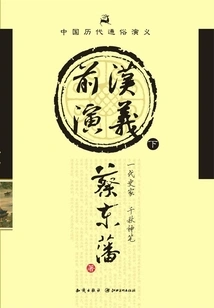
中国历代通俗演义:前汉演义(下)
Cai Dongfan
The dynasties described in "The Romance of the Former Han Dynasty" include the Qin and the Western Han Dynasty, starting from the birth of King Yingzheng of Qin to the usurpation of the Western Han Dynasty by Wang Mang, a total of two and a half centuries. The book describes in detail the tyranny of the Qin Dynasty, the conflict between Chu and Han, and the expansion of territory by Emperor Wu of the Han Dynasty. It also teases Emperor Qin and Han Wu who wanted to become immortals, and reveals Wang Mang's insidiousness and cunning. "The Romance of the Former Han Dynasty" better describes the appearance of the early unified feudal empire. This book tells the history from "The 51st chapter, when Lao Lang's official convict Yan saved Wei Shang, and Xian Cheng impeached Deng Tong," to the "100th chapter, when King Mang, who stole the country's power, killed the emperor, and surrendered the imperial seal to the Yuan Dynasty to restore the clan." From the first prosperous period of the feudal dynasty, the "Government of Wenjing" to the Rebellion of the Seven Kingdoms, from the pursuit of the Xiongnu in the Han Dynasty to the north to Zhang Qian's passage to the Western Regions, from Zhaojun's departure to the power of his relatives in the late Western Han Dynasty, to Wang Mang's usurpation of the dynasty, the history is laid out one by one...
The dynasties described in "The Romance of the Former Han Dynasty" include the Qin and the Western Han Dynasty, starting from the birth of King Yingzheng of Qin to the usurpation of the Western Han Dynasty by Wang Mang, a total of two and a half centuries. The book describes in detail the tyranny of the Qin Dynasty, the conflict between Chu and Han, and the expansion of territory by Emperor Wu of the Han Dynasty. It also teases Emperor Qin and Han Wu who wanted to become immortals, and reveals Wang Mang's insidiousness and cunning. "The Romance of the Former Han Dynasty" better describes the appearance of the early unified feudal empire. This book tells the history from "The 51st chapter, when Lao Lang's official convict Yan saved Wei Shang, and Xian Cheng impeached Deng Tong," to the "100th chapter, when King Mang, who stole the country's power, killed the emperor, and surrendered the imperial seal to the Yuan Dynasty to restore the clan." From the first prosperous period of the feudal dynasty, the "Government of Wenjing" to the Rebellion of the Seven Kingdoms, from the pursuit of the Xiongnu in the Han Dynasty to the north to Zhang Qian's passage to the Western Regions, from Zhaojun's departure to the power of his relatives in the late Western Han Dynasty, to Wang Mang's usurpation of the dynasty, the history is laid out one by one...
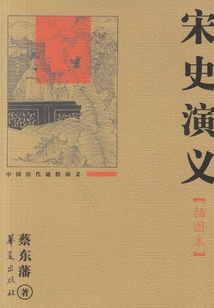
Song History Romance
General Fiction宋史演义
Cai Dongfan
The author of this book compiles the historical facts of the three hundred and twenty years of the Northern and Southern Song Dynasties into a hundred chapters of romance. During this period, the rise and fall of chaos, good and evil, and good and evil are all listed.
The author of this book compiles the historical facts of the three hundred and twenty years of the Northern and Southern Song Dynasties into a hundred chapters of romance. During this period, the rise and fall of chaos, good and evil, and good and evil are all listed.
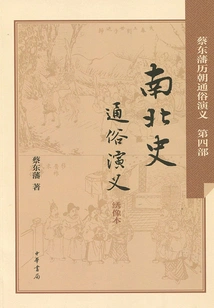
Popular Romance of Northern and Southern History (popular Romance of Cai Dongfan's Past Dynasties)
General Fiction南北史通俗演义(蔡东藩历朝通俗演义)
Cai Dongfan
"Popular Romance of Northern and Southern History" is one of the series of books "Popular Romance of Cai Dongfan Dynasties". It describes the split and confrontation situation during the 170 years of the Southern and Northern Dynasties when "rebellious ministers and traitors filled the world". Following the old example of Li Yanshou of the Tang Dynasty, Song, Qi, Liang, and Chen were classified as Southern History, and Wei, Qi, Zhou, and Sui were Northern History. The writing is a parallel narration of the history of the north and the south, without praising the emperors or omitting the shining points of the little people. The content is rich, the discussion is objective, and the comments and annotations are particularly interesting. It can be called a classic of popular history.
"Popular Romance of Northern and Southern History" is one of the series of books "Popular Romance of Cai Dongfan Dynasties". It describes the split and confrontation situation during the 170 years of the Southern and Northern Dynasties when "rebellious ministers and traitors filled the world". Following the old example of Li Yanshou of the Tang Dynasty, Song, Qi, Liang, and Chen were classified as Southern History, and Wei, Qi, Zhou, and Sui were Northern History. The writing is a parallel narration of the history of the north and the south, without praising the emperors or omitting the shining points of the little people. The content is rich, the discussion is objective, and the comments and annotations are particularly interesting. It can be called a classic of popular history.
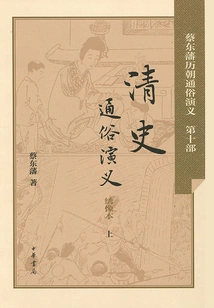
清史通俗演义(蔡东藩历朝通俗演义)
Cai Dongfan
"Popular Romance of Qing History" is one of the series of books "Popular Romance of Cai Dongfan's Past Dynasties", which tells the history of the Qing Dynasty from the founding of Manchuria to the Revolution of 1911 for nearly three hundred years. The author summarizes the lessons and laws of history from the chaos, rise and fall, praises virtuous ministers, famous generals, and national heroes, and lashes out at the arrogance and mediocrity of rulers. While telling history, the author also expressed his deep worries and deep expectations for the future of the nation and country, and expressed his own progressive thoughts. "Popular Romance of Qing History" focuses on the authentic history and collects unconventional history. It draws materials carefully, discusses methodically, uses elegant and clean language, and combines both theory and interest. It can be regarded as a classic of popular history and an introductory book for understanding the history of the Qing Dynasty.
"Popular Romance of Qing History" is one of the series of books "Popular Romance of Cai Dongfan's Past Dynasties", which tells the history of the Qing Dynasty from the founding of Manchuria to the Revolution of 1911 for nearly three hundred years. The author summarizes the lessons and laws of history from the chaos, rise and fall, praises virtuous ministers, famous generals, and national heroes, and lashes out at the arrogance and mediocrity of rulers. While telling history, the author also expressed his deep worries and deep expectations for the future of the nation and country, and expressed his own progressive thoughts. "Popular Romance of Qing History" focuses on the authentic history and collects unconventional history. It draws materials carefully, discusses methodically, uses elegant and clean language, and combines both theory and interest. It can be regarded as a classic of popular history and an introductory book for understanding the history of the Qing Dynasty.
Cai Dongfan's Historical Novels: Romance of Song Dynasty (4)
General Fiction蔡东藩历史小说:宋史演义(4)
Cai Dongfan
This book mainly talks about how after the Five Dynasties and Ten Kingdoms, Zhao Kuangyin wore a yellow robe and used a glass of wine to release his military power and concentrate the power in his own hands. Under the basic national policy of strengthening the cadres and weakening the branches, literati politics solved the opportunity for the warriors of the previous dynasty to usurp the throne, and also shaped a humanistic empire at the cultural level. But it was unable to break through the political chaos, and the political situation was disrupted. This book is structured in chapters, with popular articles and witty comments. It truly reproduces the magnificent historical evolution of Chinese civilization and narrates the rise and fall of the Song Dynasty. The northern part of the Great Wall was surrounded by powerful neighbors and foreign troubles continued, and half of the country was lost in the Jingkang disaster. After Jingkang, Emperor Gaozong and Zhao Gou rebuilt the empire in Suzhou and Hangzhou under heaven, and lost the illusion of returning to China. The author uses his personal history to tell the history of China in the form of a popular novel, hoping to help the Chinese people find a way to save the nation and survive from the enlightenment of history.
This book mainly talks about how after the Five Dynasties and Ten Kingdoms, Zhao Kuangyin wore a yellow robe and used a glass of wine to release his military power and concentrate the power in his own hands. Under the basic national policy of strengthening the cadres and weakening the branches, literati politics solved the opportunity for the warriors of the previous dynasty to usurp the throne, and also shaped a humanistic empire at the cultural level. But it was unable to break through the political chaos, and the political situation was disrupted. This book is structured in chapters, with popular articles and witty comments. It truly reproduces the magnificent historical evolution of Chinese civilization and narrates the rise and fall of the Song Dynasty. The northern part of the Great Wall was surrounded by powerful neighbors and foreign troubles continued, and half of the country was lost in the Jingkang disaster. After Jingkang, Emperor Gaozong and Zhao Gou rebuilt the empire in Suzhou and Hangzhou under heaven, and lost the illusion of returning to China. The author uses his personal history to tell the history of China in the form of a popular novel, hoping to help the Chinese people find a way to save the nation and survive from the enlightenment of history.
蔡东藩历史小说:唐史演义(14)
Cai Dongfan
This book is a must-read historical novel about the Tang Dynasty, telling the story of the rise and fall of the Tang Dynasty. The history begins from the Tang emperor Li Yuan who won the world in one fell swoop in the late Sui Dynasty to the usurpation of the Tang Dynasty by Zhu Quanzhong. The whole book reproduces the rise and fall of the Tang Empire, which once dominated the world, from its rise to strength to its final demise. For readers who like the history of the Tang Dynasty, this book is not to be missed. This book is the Tang Dynasty part of "Popular Romance of Chinese History". Careful selection of materials, focusing on the main sources and trusting history, and supplementing unofficial histories can help people gain an introduction to national history. The work narrates the 290-year history of the Tang Dynasty from prosperity to decline, and experienced historical facts such as the tragedy of women, castration, and feudal lordship. It has plain views, rich content, methodical exposition, elegant language, self-evaluation and self-annotation, and has both reason and interest. It is indeed a classic of popular history. In the selection and use of historical materials, Cai Dongfan mainly focused on "official history" and also collected anecdotes and anecdotes. He claimed that the historical romance he compiled "takes official history as the classic and strives for certainty; uses anecdotes as the latitude and does not make false accusations." He is extremely cautious in the use of historical materials such as anecdotes and anecdotes, and often requires "several rounds of textual research."
This book is a must-read historical novel about the Tang Dynasty, telling the story of the rise and fall of the Tang Dynasty. The history begins from the Tang emperor Li Yuan who won the world in one fell swoop in the late Sui Dynasty to the usurpation of the Tang Dynasty by Zhu Quanzhong. The whole book reproduces the rise and fall of the Tang Empire, which once dominated the world, from its rise to strength to its final demise. For readers who like the history of the Tang Dynasty, this book is not to be missed. This book is the Tang Dynasty part of "Popular Romance of Chinese History". Careful selection of materials, focusing on the main sources and trusting history, and supplementing unofficial histories can help people gain an introduction to national history. The work narrates the 290-year history of the Tang Dynasty from prosperity to decline, and experienced historical facts such as the tragedy of women, castration, and feudal lordship. It has plain views, rich content, methodical exposition, elegant language, self-evaluation and self-annotation, and has both reason and interest. It is indeed a classic of popular history. In the selection and use of historical materials, Cai Dongfan mainly focused on "official history" and also collected anecdotes and anecdotes. He claimed that the historical romance he compiled "takes official history as the classic and strives for certainty; uses anecdotes as the latitude and does not make false accusations." He is extremely cautious in the use of historical materials such as anecdotes and anecdotes, and often requires "several rounds of textual research."
Popular Romance of the Five Dynasties History
General Fiction五代史通俗演义
Cai Dongfan
"Popular Romance of Chinese Dynasties: Popular Romance of Five Dynasties" was written from the Qin and Han Dynasties to the Republic of China. The book has more than a thousand chapters and more than 5 million words, covering nearly 2,200 years of history.
"Popular Romance of Chinese Dynasties: Popular Romance of Five Dynasties" was written from the Qin and Han Dynasties to the Republic of China. The book has more than a thousand chapters and more than 5 million words, covering nearly 2,200 years of history.
Cai Dongfan's Historical Novels: Romance of Song Dynasty (3)
General Fiction蔡东藩历史小说:宋史演义(3)
Cai Dongfan
This book mainly talks about how after the Five Dynasties and Ten Kingdoms, Zhao Kuangyin wore a yellow robe and used a glass of wine to release his military power and concentrate the power in his own hands. Under the basic national policy of strengthening the branches and strengthening the branches, civilian politics solved the opportunity for the military men of the previous dynasty to usurp the throne, and also created a humanistic empire at the cultural level. It was unable to break through the political chaos, and the political situation was disrupted. This book is structured in chapters, with popular articles and witty comments. It truly reproduces the magnificent historical evolution of Chinese civilization and narrates the rise and fall of the Song Dynasty. The northern part of the Great Wall was surrounded by powerful neighbors and foreign troubles continued, and half of the country was lost in the Jingkang disaster. After Jingkang, Emperor Gaozong and Zhao Gou rebuilt the empire in Suzhou and Hangzhou under heaven, and lost the illusion of returning to China. The author uses his personal history to tell the history of China in the form of a popular novel, hoping to help the Chinese people find a way to save the nation and survive from the enlightenment of history.
This book mainly talks about how after the Five Dynasties and Ten Kingdoms, Zhao Kuangyin wore a yellow robe and used a glass of wine to release his military power and concentrate the power in his own hands. Under the basic national policy of strengthening the branches and strengthening the branches, civilian politics solved the opportunity for the military men of the previous dynasty to usurp the throne, and also created a humanistic empire at the cultural level. It was unable to break through the political chaos, and the political situation was disrupted. This book is structured in chapters, with popular articles and witty comments. It truly reproduces the magnificent historical evolution of Chinese civilization and narrates the rise and fall of the Song Dynasty. The northern part of the Great Wall was surrounded by powerful neighbors and foreign troubles continued, and half of the country was lost in the Jingkang disaster. After Jingkang, Emperor Gaozong and Zhao Gou rebuilt the empire in Suzhou and Hangzhou under heaven, and lost the illusion of returning to China. The author uses his personal history to tell the history of China in the form of a popular novel, hoping to help the Chinese people find a way to save the nation and survive from the enlightenment of history.
蔡东藩经典历史小说:两晋演义(8)
Cai Dongfan
"The Romance of the Two Jin Dynasties" is one of the "Popular Romance of the Past Dynasties". This book uses a chapter structure, popular articles, and witty comments to truly reproduce the magnificent historical evolution of Chinese civilization and narrate the rise and fall of the Jin Dynasty. It started from Sima Yan in the Wei Dynasty and ended in the Liu Song Dynasty in the Jin Dynasty, which lasted for 156 years. The Western Jin Dynasty ended nearly a century of division. However, the Eight Kings Rebellion depleted the country's capital, and the Hu people, who were mixed with the Han people, took the opportunity to attack one after another, leading to the fall of the Western Jin Dynasty. The Eastern Jin Dynasty rebuilt in Jiangdong, accumulated energy, and launched the difficult task of the Northern Expedition, but its strength was lost due to internal power struggles. General Liu Yu stood out and made two Northern Expeditions to recapture Chang'an. After that, he deposed two emperors one after another, founded the Song Dynasty, and fell to the Eastern Jin Dynasty. This book is easy to understand and has witty comments. It is a good helper for understanding history.
"The Romance of the Two Jin Dynasties" is one of the "Popular Romance of the Past Dynasties". This book uses a chapter structure, popular articles, and witty comments to truly reproduce the magnificent historical evolution of Chinese civilization and narrate the rise and fall of the Jin Dynasty. It started from Sima Yan in the Wei Dynasty and ended in the Liu Song Dynasty in the Jin Dynasty, which lasted for 156 years. The Western Jin Dynasty ended nearly a century of division. However, the Eight Kings Rebellion depleted the country's capital, and the Hu people, who were mixed with the Han people, took the opportunity to attack one after another, leading to the fall of the Western Jin Dynasty. The Eastern Jin Dynasty rebuilt in Jiangdong, accumulated energy, and launched the difficult task of the Northern Expedition, but its strength was lost due to internal power struggles. General Liu Yu stood out and made two Northern Expeditions to recapture Chang'an. After that, he deposed two emperors one after another, founded the Song Dynasty, and fell to the Eastern Jin Dynasty. This book is easy to understand and has witty comments. It is a good helper for understanding history.
Popular Romance of the Yuan Dynasty
General Fiction元史通俗演义
Cai Dongfan
Mr. Cai Dongfan's "Popular Romance of Chinese Dynasties" was written from the Qin and Han dynasties to the Republic of China. It has more than 1,000 chapters and more than 5 million words, covering nearly 2,200 years of history. "Popular Romance of the Former Han Dynasty" is one of the "Popular Romance of Chinese Past Dynasties". It writes about the history of the heroes vying for the throne at the end of the Qin Dynasty, from Liu Bang's founding of the Han Dynasty to Wang Mang's compilation of the Han Dynasty. This is a masterpiece of romance with official history as its backbone and anecdotes as its weft, with a special style and self-commentary. The writing style of the book is friendly and natural, and easy to understand.
Mr. Cai Dongfan's "Popular Romance of Chinese Dynasties" was written from the Qin and Han dynasties to the Republic of China. It has more than 1,000 chapters and more than 5 million words, covering nearly 2,200 years of history. "Popular Romance of the Former Han Dynasty" is one of the "Popular Romance of Chinese Past Dynasties". It writes about the history of the heroes vying for the throne at the end of the Qin Dynasty, from Liu Bang's founding of the Han Dynasty to Wang Mang's compilation of the Han Dynasty. This is a masterpiece of romance with official history as its backbone and anecdotes as its weft, with a special style and self-commentary. The writing style of the book is friendly and natural, and easy to understand.
Popular Romance of the Former Han Dynasty (popular Romance of Cai Dongfan in the Past Dynasties)
General Fiction前汉通俗演义(蔡东藩历朝通俗演义)
Cai Dongfan
"Popular Romance of the Former Han Dynasty" is one of the series of books "Popular Romance of Cai Dongfan Dynasties". It narrates the nearly 270 years of history from the birth of Qin Shihuang Yingzheng to Wang Mang's usurpation of the Han Dynasty. The book has plain viewpoints, rich content, methodical exposition, elegant language, self-evaluation and self-annotation, and is both rational and interesting. It can be regarded as a classic of popular history. The book draws its material cautiously, mainly focusing on trustworthy history and side by side with unofficial histories. It is an introductory book for understanding relevant history.
"Popular Romance of the Former Han Dynasty" is one of the series of books "Popular Romance of Cai Dongfan Dynasties". It narrates the nearly 270 years of history from the birth of Qin Shihuang Yingzheng to Wang Mang's usurpation of the Han Dynasty. The book has plain viewpoints, rich content, methodical exposition, elegant language, self-evaluation and self-annotation, and is both rational and interesting. It can be regarded as a classic of popular history. The book draws its material cautiously, mainly focusing on trustworthy history and side by side with unofficial histories. It is an introductory book for understanding relevant history.
Popular Romance of the Two Jin Dynasties (part 2)
General Fiction两晋通俗演义(下)
Cai Dongfan
The author summarizes the 156-year history of the two Jin Dynasties as a history of internal strife and external humiliation, as a lesson for today. This book is rich in content, elegant in language, self-evaluating and annotating, and is both rational and interesting. It can be regarded as a classic of popular history. It retains the preface, lineage diagram, Mr. Cai Dongfan's own annotations, included batches and subsequent batches. Promote an authentic reading experience.
The author summarizes the 156-year history of the two Jin Dynasties as a history of internal strife and external humiliation, as a lesson for today. This book is rich in content, elegant in language, self-evaluating and annotating, and is both rational and interesting. It can be regarded as a classic of popular history. It retains the preface, lineage diagram, Mr. Cai Dongfan's own annotations, included batches and subsequent batches. Promote an authentic reading experience.
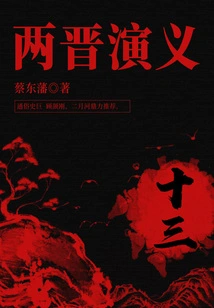
蔡东藩经典历史小说:两晋演义(13)
Cai Dongfan
"The Romance of the Two Jin Dynasties" is one of the "Popular Romance of the Past Dynasties". This book uses a chapter structure, popular articles, and witty comments to truly reproduce the magnificent historical evolution of Chinese civilization and narrate the rise and fall of the Jin Dynasty. It started from Sima Yan in the Wei Dynasty and ended in the Liu Song Dynasty in the Jin Dynasty, which lasted for 156 years. The Western Jin Dynasty ended nearly a century of division. However, the Eight Kings Rebellion depleted the country's capital, and the Hu people, who were mixed with the Han people, took the opportunity to attack one after another, leading to the fall of the Western Jin Dynasty. The Eastern Jin Dynasty rebuilt in Jiangdong, accumulated energy, and launched the difficult task of the Northern Expedition, but its strength was lost due to internal power struggles. General Liu Yu stood out and made two Northern Expeditions to recapture Chang'an. After that, he deposed two emperors one after another, founded the Song Dynasty, and fell to the Eastern Jin Dynasty. This book is easy to understand and has witty comments. It is a good helper for understanding history.
"The Romance of the Two Jin Dynasties" is one of the "Popular Romance of the Past Dynasties". This book uses a chapter structure, popular articles, and witty comments to truly reproduce the magnificent historical evolution of Chinese civilization and narrate the rise and fall of the Jin Dynasty. It started from Sima Yan in the Wei Dynasty and ended in the Liu Song Dynasty in the Jin Dynasty, which lasted for 156 years. The Western Jin Dynasty ended nearly a century of division. However, the Eight Kings Rebellion depleted the country's capital, and the Hu people, who were mixed with the Han people, took the opportunity to attack one after another, leading to the fall of the Western Jin Dynasty. The Eastern Jin Dynasty rebuilt in Jiangdong, accumulated energy, and launched the difficult task of the Northern Expedition, but its strength was lost due to internal power struggles. General Liu Yu stood out and made two Northern Expeditions to recapture Chang'an. After that, he deposed two emperors one after another, founded the Song Dynasty, and fell to the Eastern Jin Dynasty. This book is easy to understand and has witty comments. It is a good helper for understanding history.