Library
Browse and search books
350 novels found
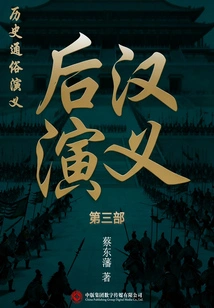
历史通俗演义:后汉演义(第三部)
Cai Dongfan
This book describes the history from the establishment of the Eastern Han Dynasty by Emperor Guangwu Liu Xiu's "Guangwu Zhongxing" to the time when Emperor Xian of the Han Dynasty settled in Cao Pi, and the three kingdoms were initially formed. The work vividly reproduces the scene of political clarity and restoration of national power in the early Eastern Han Dynasty, the chaos of alternating power between relatives and eunuchs in the middle period, and the chaotic times of the Yellow Turban Uprising and the rise of heroes in the late Eastern Han Dynasty. There are detailed descriptions of the deeds of outstanding figures such as Liu Xiu, Ban Chao, Cai Lun, and Zhang Heng, as well as major events such as the "Disaster of Party Imprisonment" and the "Battle of Guandu", clearly outlining the historical trajectory of the Later Han Dynasty from prosperity to decline, and finally to division. This is the third part.
This book describes the history from the establishment of the Eastern Han Dynasty by Emperor Guangwu Liu Xiu's "Guangwu Zhongxing" to the time when Emperor Xian of the Han Dynasty settled in Cao Pi, and the three kingdoms were initially formed. The work vividly reproduces the scene of political clarity and restoration of national power in the early Eastern Han Dynasty, the chaos of alternating power between relatives and eunuchs in the middle period, and the chaotic times of the Yellow Turban Uprising and the rise of heroes in the late Eastern Han Dynasty. There are detailed descriptions of the deeds of outstanding figures such as Liu Xiu, Ban Chao, Cai Lun, and Zhang Heng, as well as major events such as the "Disaster of Party Imprisonment" and the "Battle of Guandu", clearly outlining the historical trajectory of the Later Han Dynasty from prosperity to decline, and finally to division. This is the third part.
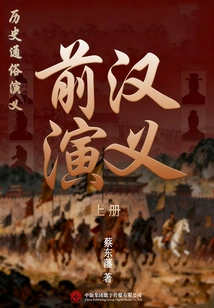
历史通俗演义:前汉演义(上)
Cai Dongfan
This book begins with Qin Shihuang's unification of the six kingdoms and ends with Wang Mang's usurpation of the Han Dynasty. It brilliantly interprets the rise and fall of the Han Dynasty over more than two hundred years. The author vividly describes the magnificent conflict between Chu and Han, the recuperating Wenjing rule in the early Han Dynasty, the heroic strategy of Emperor Wu of the Han Dynasty in opening up territories, and the political darkness of the autocratic power of foreign relatives in the later period. Among them, the depictions of historical figures such as Liu Bang, Han Xin, Zhang Liang, Emperor Wu of the Han Dynasty, and Sima Qian are particularly vivid. This book not only tells the story of the merits and demerits of the emperors, generals and ministers, but also incorporates rich regulations and social customs, providing readers with a comprehensive understanding of the strength and hidden worries of the Han Dynasty. This is the first volume.
This book begins with Qin Shihuang's unification of the six kingdoms and ends with Wang Mang's usurpation of the Han Dynasty. It brilliantly interprets the rise and fall of the Han Dynasty over more than two hundred years. The author vividly describes the magnificent conflict between Chu and Han, the recuperating Wenjing rule in the early Han Dynasty, the heroic strategy of Emperor Wu of the Han Dynasty in opening up territories, and the political darkness of the autocratic power of foreign relatives in the later period. Among them, the depictions of historical figures such as Liu Bang, Han Xin, Zhang Liang, Emperor Wu of the Han Dynasty, and Sima Qian are particularly vivid. This book not only tells the story of the merits and demerits of the emperors, generals and ministers, but also incorporates rich regulations and social customs, providing readers with a comprehensive understanding of the strength and hidden worries of the Han Dynasty. This is the first volume.
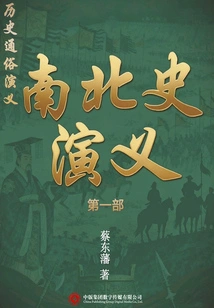
历史通俗演义:南北史演义(第一部)
Cai Dongfan
This book focuses on an era of great turmoil and integration in Chinese history - the Wei, Jin, Southern and Northern Dynasties. During this period of history, political power changed frequently, ethnic conflicts and integration intertwined, and the ideology and culture were extremely active. In a clear context, the author sorts out the confrontation and ups and downs between the Song, Qi, Liang, and Chen Dynasties in the Southern Dynasties and the Northern Wei, Eastern Wei, Western Wei, Northern Qi, and Northern Zhou Dynasties. He vividly depicts emperors with different personalities such as Liu Yu, Tuoba Tao, Emperor Wu of Liang, and Emperor Xiaowen, as well as famous battles such as the "Battle of Feishui" to help readers understand how this complex and critical historical period laid the foundation for the prosperity of the Sui and Tang Dynasties. This is the first one.
This book focuses on an era of great turmoil and integration in Chinese history - the Wei, Jin, Southern and Northern Dynasties. During this period of history, political power changed frequently, ethnic conflicts and integration intertwined, and the ideology and culture were extremely active. In a clear context, the author sorts out the confrontation and ups and downs between the Song, Qi, Liang, and Chen Dynasties in the Southern Dynasties and the Northern Wei, Eastern Wei, Western Wei, Northern Qi, and Northern Zhou Dynasties. He vividly depicts emperors with different personalities such as Liu Yu, Tuoba Tao, Emperor Wu of Liang, and Emperor Xiaowen, as well as famous battles such as the "Battle of Feishui" to help readers understand how this complex and critical historical period laid the foundation for the prosperity of the Sui and Tang Dynasties. This is the first one.
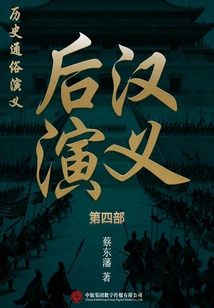
历史通俗演义:后汉演义(第四部)
Cai Dongfan
This book describes the history from the establishment of the Eastern Han Dynasty by Emperor Guangwu Liu Xiu's "Guangwu Zhongxing" to the time when Emperor Xian of the Han Dynasty settled in Cao Pi, and the three kingdoms were initially formed. The work vividly reproduces the scene of political clarity and restoration of national power in the early Eastern Han Dynasty, the chaos of alternating power between relatives and eunuchs in the middle period, and the chaotic times of the Yellow Turban Uprising and the rise of heroes in the late Eastern Han Dynasty. There are detailed descriptions of the deeds of outstanding figures such as Liu Xiu, Ban Chao, Cai Lun, and Zhang Heng, as well as major events such as the "Disaster of Party Imprisonment" and the "Battle of Guandu", clearly outlining the historical trajectory of the Later Han Dynasty from prosperity to decline, and finally to division. This is the fourth part.
This book describes the history from the establishment of the Eastern Han Dynasty by Emperor Guangwu Liu Xiu's "Guangwu Zhongxing" to the time when Emperor Xian of the Han Dynasty settled in Cao Pi, and the three kingdoms were initially formed. The work vividly reproduces the scene of political clarity and restoration of national power in the early Eastern Han Dynasty, the chaos of alternating power between relatives and eunuchs in the middle period, and the chaotic times of the Yellow Turban Uprising and the rise of heroes in the late Eastern Han Dynasty. There are detailed descriptions of the deeds of outstanding figures such as Liu Xiu, Ban Chao, Cai Lun, and Zhang Heng, as well as major events such as the "Disaster of Party Imprisonment" and the "Battle of Guandu", clearly outlining the historical trajectory of the Later Han Dynasty from prosperity to decline, and finally to division. This is the fourth part.
Popular Historical Romance: Romance of Qing History (Part 2)
General Fiction历史通俗演义:清史演义(下)
Cai Dongfan
This book narrates the complete history of the Qing Dynasty from the beginning of Nurhachi's Thirteen Relics to the abdication of Emperor Xuantong. The works cover a series of major events such as the entry of Qing troops into the country, the heyday of Kangxi and Qianlong, the Literary Prison, the Opium War, the Taiping Rebellion, the Westernization Movement, the Sino-Japanese War of 1888-1898, the Reform Movement of 1898, and the Revolution of 1911. The author lived in the Republic of China and was particularly touched by the historical events of the late Qing Dynasty. While describing the martial arts and prosperity of the Qing Dynasty, he also used a lot of pen and ink to deeply expose the national crisis caused by the political corruption and isolation of the country in the late Qing Dynasty. It showed the process of modern China's difficult change under the impact of the West, which has a strong warning significance. This is the next volume.
This book narrates the complete history of the Qing Dynasty from the beginning of Nurhachi's Thirteen Relics to the abdication of Emperor Xuantong. The works cover a series of major events such as the entry of Qing troops into the country, the heyday of Kangxi and Qianlong, the Literary Prison, the Opium War, the Taiping Rebellion, the Westernization Movement, the Sino-Japanese War of 1888-1898, the Reform Movement of 1898, and the Revolution of 1911. The author lived in the Republic of China and was particularly touched by the historical events of the late Qing Dynasty. While describing the martial arts and prosperity of the Qing Dynasty, he also used a lot of pen and ink to deeply expose the national crisis caused by the political corruption and isolation of the country in the late Qing Dynasty. It showed the process of modern China's difficult change under the impact of the West, which has a strong warning significance. This is the next volume.
历史通俗演义:后汉演义(第一部)
Cai Dongfan
This book describes the history from the establishment of the Eastern Han Dynasty by Emperor Guangwu Liu Xiu's "Guangwu Zhongxing" to the time when Emperor Xian of the Han Dynasty settled in Cao Pi, and the three kingdoms were initially formed. The work vividly reproduces the scene of political clarity and restoration of national power in the early Eastern Han Dynasty, the chaos of alternating power between relatives and eunuchs in the middle period, and the chaotic times of the Yellow Turban Uprising and the rise of heroes in the late Eastern Han Dynasty. There are detailed descriptions of the deeds of outstanding figures such as Liu Xiu, Ban Chao, Cai Lun, and Zhang Heng, as well as major events such as the "Disaster of Party Imprisonment" and the "Battle of Guandu", clearly outlining the historical trajectory of the Later Han Dynasty from prosperity to decline, and finally to division. This is the first one.
This book describes the history from the establishment of the Eastern Han Dynasty by Emperor Guangwu Liu Xiu's "Guangwu Zhongxing" to the time when Emperor Xian of the Han Dynasty settled in Cao Pi, and the three kingdoms were initially formed. The work vividly reproduces the scene of political clarity and restoration of national power in the early Eastern Han Dynasty, the chaos of alternating power between relatives and eunuchs in the middle period, and the chaotic times of the Yellow Turban Uprising and the rise of heroes in the late Eastern Han Dynasty. There are detailed descriptions of the deeds of outstanding figures such as Liu Xiu, Ban Chao, Cai Lun, and Zhang Heng, as well as major events such as the "Disaster of Party Imprisonment" and the "Battle of Guandu", clearly outlining the historical trajectory of the Later Han Dynasty from prosperity to decline, and finally to division. This is the first one.
历史通俗演义:南北史演义(第三部)
Cai Dongfan
This book focuses on an era of great turmoil and integration in Chinese history - the Wei, Jin, Southern and Northern Dynasties. During this period of history, political power changed frequently, ethnic conflicts and integration intertwined, and the ideology and culture were extremely active. In a clear context, the author sorts out the confrontation and ups and downs between the Song, Qi, Liang, and Chen Dynasties in the Southern Dynasties and the Northern Wei, Eastern Wei, Western Wei, Northern Qi, and Northern Zhou Dynasties. He vividly depicts emperors with different personalities such as Liu Yu, Tuoba Tao, Emperor Wu of Liang, and Emperor Xiaowen, as well as famous battles such as the "Battle of Feishui" to help readers understand how this complex and critical historical period laid the foundation for the prosperity of the Sui and Tang Dynasties. This is the third part.
This book focuses on an era of great turmoil and integration in Chinese history - the Wei, Jin, Southern and Northern Dynasties. During this period of history, political power changed frequently, ethnic conflicts and integration intertwined, and the ideology and culture were extremely active. In a clear context, the author sorts out the confrontation and ups and downs between the Song, Qi, Liang, and Chen Dynasties in the Southern Dynasties and the Northern Wei, Eastern Wei, Western Wei, Northern Qi, and Northern Zhou Dynasties. He vividly depicts emperors with different personalities such as Liu Yu, Tuoba Tao, Emperor Wu of Liang, and Emperor Xiaowen, as well as famous battles such as the "Battle of Feishui" to help readers understand how this complex and critical historical period laid the foundation for the prosperity of the Sui and Tang Dynasties. This is the third part.
Popular Historical Romance: Romance of Yuan Dynasty (Part 1)
General Fiction历史通俗演义:元史演义(上)
Cai Dongfan
This book tells the story of the rise and fall of the Yuan Dynasty established by the Mongolian people in the past hundred years. From Genghis Khan's unification of Mongolia, Kublai Khan's establishment of the Yuan Dynasty and the destruction of the Southern Song Dynasty, to the peasant uprising at the end of the Yuan Dynasty, and the establishment of the Ming Dynasty by Zhu Yuanzhang. The author uses a novelistic style to vividly reproduce the fierceness of the Mongolian cavalry, the vast territory of the Yuan Dynasty, the ethnic differentiation policy of the Fourth Class, as well as the achievements of Yuan opera and other cultures. The book is full of characters such as Kublai Khan, Wen Tianxiang, and Guo Shoujing, and it also profoundly reveals the internal reasons for the rapid collapse of the Yuan Dynasty due to improper governance, intensified class conflicts, and ethnic conflicts. This is the first volume.
This book tells the story of the rise and fall of the Yuan Dynasty established by the Mongolian people in the past hundred years. From Genghis Khan's unification of Mongolia, Kublai Khan's establishment of the Yuan Dynasty and the destruction of the Southern Song Dynasty, to the peasant uprising at the end of the Yuan Dynasty, and the establishment of the Ming Dynasty by Zhu Yuanzhang. The author uses a novelistic style to vividly reproduce the fierceness of the Mongolian cavalry, the vast territory of the Yuan Dynasty, the ethnic differentiation policy of the Fourth Class, as well as the achievements of Yuan opera and other cultures. The book is full of characters such as Kublai Khan, Wen Tianxiang, and Guo Shoujing, and it also profoundly reveals the internal reasons for the rapid collapse of the Yuan Dynasty due to improper governance, intensified class conflicts, and ethnic conflicts. This is the first volume.
历史通俗演义:宋史演义(上)
Cai Dongfan
This book comprehensively presents the history of the Song Dynasty for more than three hundred years, which is divided into two stages: the Northern Song Dynasty and the Southern Song Dynasty. The work not only depicts major political and military events such as Song Taizu's drinking of wine to release military power, Wang Anshi's reform, and Yue Fei's resistance to the Jin Dynasty, but also shows the high economic and cultural prosperity of the Song Dynasty (such as movable type printing, Song poetry, calligraphy and painting). The author's narrative is full of emotion. He not only praises the integrity of loyal ministers and righteous men such as Fan Zhongyan, Bao Zheng, Su Shi, and Wen Tianxiang, but also criticizes the imperial court's poverty and weakness, constant party disputes, and the humiliating national policy of seeking peace. It presents readers with a complex image of a dynasty that coexists with the prosperity of civilization and the weakness of martial arts, which is both admirable and regrettable. This is the first volume.
This book comprehensively presents the history of the Song Dynasty for more than three hundred years, which is divided into two stages: the Northern Song Dynasty and the Southern Song Dynasty. The work not only depicts major political and military events such as Song Taizu's drinking of wine to release military power, Wang Anshi's reform, and Yue Fei's resistance to the Jin Dynasty, but also shows the high economic and cultural prosperity of the Song Dynasty (such as movable type printing, Song poetry, calligraphy and painting). The author's narrative is full of emotion. He not only praises the integrity of loyal ministers and righteous men such as Fan Zhongyan, Bao Zheng, Su Shi, and Wen Tianxiang, but also criticizes the imperial court's poverty and weakness, constant party disputes, and the humiliating national policy of seeking peace. It presents readers with a complex image of a dynasty that coexists with the prosperity of civilization and the weakness of martial arts, which is both admirable and regrettable. This is the first volume.
历史通俗演义:宋史演义(中)
Cai Dongfan
This book comprehensively presents the history of the Song Dynasty for more than three hundred years, which is divided into two stages: the Northern Song Dynasty and the Southern Song Dynasty. The work not only depicts major political and military events such as Song Taizu's drinking of wine to release military power, Wang Anshi's reform, and Yue Fei's resistance to the Jin Dynasty, but also shows the high economic and cultural prosperity of the Song Dynasty (such as movable type printing, Song poetry, calligraphy and painting). The author's narrative is full of emotion. He not only praises the integrity of loyal ministers and righteous men such as Fan Zhongyan, Bao Zheng, Su Shi, and Wen Tianxiang, but also criticizes the imperial court's poverty and weakness, constant party disputes, and the humiliating national policy of seeking peace. It presents readers with a complex image of a dynasty that coexists with the prosperity of civilization and the weakness of martial arts, which is both admirable and regrettable. This is the middle volume.
This book comprehensively presents the history of the Song Dynasty for more than three hundred years, which is divided into two stages: the Northern Song Dynasty and the Southern Song Dynasty. The work not only depicts major political and military events such as Song Taizu's drinking of wine to release military power, Wang Anshi's reform, and Yue Fei's resistance to the Jin Dynasty, but also shows the high economic and cultural prosperity of the Song Dynasty (such as movable type printing, Song poetry, calligraphy and painting). The author's narrative is full of emotion. He not only praises the integrity of loyal ministers and righteous men such as Fan Zhongyan, Bao Zheng, Su Shi, and Wen Tianxiang, but also criticizes the imperial court's poverty and weakness, constant party disputes, and the humiliating national policy of seeking peace. It presents readers with a complex image of a dynasty that coexists with the prosperity of civilization and the weakness of martial arts, which is both admirable and regrettable. This is the middle volume.
Popular Historical Romance: Romance of Yuan Dynasty (Part 2)
General Fiction历史通俗演义:元史演义(下)
Cai Dongfan
This book tells the story of the rise and fall of the Yuan Dynasty established by the Mongolian people in the past hundred years. From Genghis Khan's unification of Mongolia, Kublai Khan's establishment of the Yuan Dynasty and the destruction of the Southern Song Dynasty, to the peasant uprising at the end of the Yuan Dynasty, and the establishment of the Ming Dynasty by Zhu Yuanzhang. The author uses a novelistic style to vividly reproduce the fierceness of the Mongolian cavalry, the vast territory of the Yuan Dynasty, the ethnic differentiation policy of the Fourth Class, as well as the achievements of Yuan opera and other cultures. The book is full of characters such as Kublai Khan, Wen Tianxiang, and Guo Shoujing, and it also profoundly reveals the internal reasons for the rapid collapse of the Yuan Dynasty due to improper governance, intensified class conflicts, and ethnic conflicts. This is the next volume.
This book tells the story of the rise and fall of the Yuan Dynasty established by the Mongolian people in the past hundred years. From Genghis Khan's unification of Mongolia, Kublai Khan's establishment of the Yuan Dynasty and the destruction of the Southern Song Dynasty, to the peasant uprising at the end of the Yuan Dynasty, and the establishment of the Ming Dynasty by Zhu Yuanzhang. The author uses a novelistic style to vividly reproduce the fierceness of the Mongolian cavalry, the vast territory of the Yuan Dynasty, the ethnic differentiation policy of the Fourth Class, as well as the achievements of Yuan opera and other cultures. The book is full of characters such as Kublai Khan, Wen Tianxiang, and Guo Shoujing, and it also profoundly reveals the internal reasons for the rapid collapse of the Yuan Dynasty due to improper governance, intensified class conflicts, and ethnic conflicts. This is the next volume.
Popular Historical Romance: Romance of Ming Dynasty (Part 2)
General Fiction历史通俗演义:明史演义(中)
Cai Dongfan
This book begins with Zhu Yuanzhang participating in the Red Turban Uprising and establishing the Ming Dynasty, until Li Zicheng invades Beijing, Emperor Chongzhen hangs himself on Meishan Mountain, and the Qing Dynasty enters the Pass. The work is large in scale and details the political situation of the Ming Dynasty for nearly three hundred years, including the Hongwu period, the Yongle era, Zheng He's voyages to the West, the Renxuan period, the Tumubao Incident, Zhang Juzheng's reforms, the Donglin party struggle, Chongzhen's efforts to save the nation and other key nodes. It deeply depicts the fate of Zhu Yuanzhang, Zhu Di, Yu Qian, Hai Rui, Zhang Juzheng, Wei Zhongxian, Yuan Chonghuan and many other historical figures, and comprehensively analyzes the profound lessons of the Ming Dynasty from prosperity to decline and finally to its demise. This is the middle volume.
This book begins with Zhu Yuanzhang participating in the Red Turban Uprising and establishing the Ming Dynasty, until Li Zicheng invades Beijing, Emperor Chongzhen hangs himself on Meishan Mountain, and the Qing Dynasty enters the Pass. The work is large in scale and details the political situation of the Ming Dynasty for nearly three hundred years, including the Hongwu period, the Yongle era, Zheng He's voyages to the West, the Renxuan period, the Tumubao Incident, Zhang Juzheng's reforms, the Donglin party struggle, Chongzhen's efforts to save the nation and other key nodes. It deeply depicts the fate of Zhu Yuanzhang, Zhu Di, Yu Qian, Hai Rui, Zhang Juzheng, Wei Zhongxian, Yuan Chonghuan and many other historical figures, and comprehensively analyzes the profound lessons of the Ming Dynasty from prosperity to decline and finally to its demise. This is the middle volume.
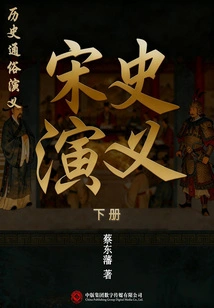
历史通俗演义:宋史演义(下)
Cai Dongfan
This book comprehensively presents the history of the Song Dynasty for more than three hundred years, which is divided into two stages: the Northern Song Dynasty and the Southern Song Dynasty. The work not only depicts major political and military events such as Song Taizu's drinking of wine to release military power, Wang Anshi's reform, and Yue Fei's resistance to the Jin Dynasty, but also shows the high economic and cultural prosperity of the Song Dynasty (such as movable type printing, Song poetry, calligraphy and painting). The author's narrative is full of emotion. He not only praises the integrity of loyal ministers and righteous men such as Fan Zhongyan, Bao Zheng, Su Shi, and Wen Tianxiang, but also criticizes the imperial court's poverty and weakness, constant party disputes, and the humiliating national policy of seeking peace. It presents readers with a complex image of a dynasty that coexists with the prosperity of civilization and the weakness of martial arts, which is both admirable and regrettable. This is the next volume.
This book comprehensively presents the history of the Song Dynasty for more than three hundred years, which is divided into two stages: the Northern Song Dynasty and the Southern Song Dynasty. The work not only depicts major political and military events such as Song Taizu's drinking of wine to release military power, Wang Anshi's reform, and Yue Fei's resistance to the Jin Dynasty, but also shows the high economic and cultural prosperity of the Song Dynasty (such as movable type printing, Song poetry, calligraphy and painting). The author's narrative is full of emotion. He not only praises the integrity of loyal ministers and righteous men such as Fan Zhongyan, Bao Zheng, Su Shi, and Wen Tianxiang, but also criticizes the imperial court's poverty and weakness, constant party disputes, and the humiliating national policy of seeking peace. It presents readers with a complex image of a dynasty that coexists with the prosperity of civilization and the weakness of martial arts, which is both admirable and regrettable. This is the next volume.
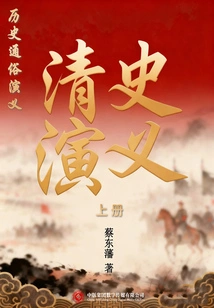
Popular Historical Romance: Romance of Qing History (Part 1)
General Fiction历史通俗演义:清史演义(上)
Cai Dongfan
This book narrates the complete history of the Qing Dynasty from the beginning of Nurhachi's Thirteen Relics to the abdication of Emperor Xuantong. The works cover a series of major events such as the entry of Qing troops into the country, the heyday of Kangxi and Qianlong, the Literary Prison, the Opium War, the Taiping Rebellion, the Westernization Movement, the Sino-Japanese War of 1888-1898, the Reform Movement of 1898, and the Revolution of 1911. The author lived in the Republic of China and was particularly touched by the historical events of the late Qing Dynasty. While describing the martial arts and prosperity of the Qing Dynasty, he also used a lot of pen and ink to deeply expose the national crisis caused by the political corruption and isolation of the country in the late Qing Dynasty. It showed the process of modern China's difficult change under the impact of the West, which has a strong warning significance. This is the first volume.
This book narrates the complete history of the Qing Dynasty from the beginning of Nurhachi's Thirteen Relics to the abdication of Emperor Xuantong. The works cover a series of major events such as the entry of Qing troops into the country, the heyday of Kangxi and Qianlong, the Literary Prison, the Opium War, the Taiping Rebellion, the Westernization Movement, the Sino-Japanese War of 1888-1898, the Reform Movement of 1898, and the Revolution of 1911. The author lived in the Republic of China and was particularly touched by the historical events of the late Qing Dynasty. While describing the martial arts and prosperity of the Qing Dynasty, he also used a lot of pen and ink to deeply expose the national crisis caused by the political corruption and isolation of the country in the late Qing Dynasty. It showed the process of modern China's difficult change under the impact of the West, which has a strong warning significance. This is the first volume.
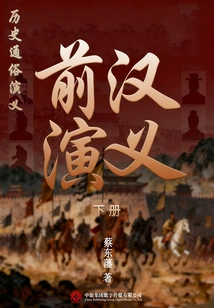
历史通俗演义:前汉演义(下)
Cai Dongfan
This book begins with Qin Shihuang's unification of the six kingdoms and ends with Wang Mang's usurpation of the Han Dynasty. It brilliantly interprets the rise and fall of the Han Dynasty over more than two hundred years. The author vividly describes the magnificent conflict between Chu and Han, the recuperating Wenjing rule in the early Han Dynasty, the heroic strategy of Emperor Wu of the Han Dynasty in opening up territories, and the political darkness of the autocratic power of foreign relatives in the later period. Among them, the depictions of historical figures such as Liu Bang, Han Xin, Zhang Liang, Emperor Wu of the Han Dynasty, and Sima Qian are particularly vivid. This book not only tells the story of the merits and demerits of the emperors, generals and ministers, but also incorporates rich regulations and social customs, providing readers with a comprehensive understanding of the strength and hidden worries of the Han Dynasty. This is the next volume.
This book begins with Qin Shihuang's unification of the six kingdoms and ends with Wang Mang's usurpation of the Han Dynasty. It brilliantly interprets the rise and fall of the Han Dynasty over more than two hundred years. The author vividly describes the magnificent conflict between Chu and Han, the recuperating Wenjing rule in the early Han Dynasty, the heroic strategy of Emperor Wu of the Han Dynasty in opening up territories, and the political darkness of the autocratic power of foreign relatives in the later period. Among them, the depictions of historical figures such as Liu Bang, Han Xin, Zhang Liang, Emperor Wu of the Han Dynasty, and Sima Qian are particularly vivid. This book not only tells the story of the merits and demerits of the emperors, generals and ministers, but also incorporates rich regulations and social customs, providing readers with a comprehensive understanding of the strength and hidden worries of the Han Dynasty. This is the next volume.
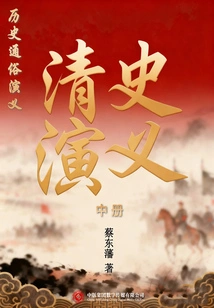
Popular Historical Romance: Romance of Qing History (Part 2)
General Fiction历史通俗演义:清史演义(中)
Cai Dongfan
This book narrates the complete history of the Qing Dynasty from the beginning of Nurhachi's Thirteen Relics to the abdication of Emperor Xuantong. The works cover a series of major events such as the entry of Qing troops into the country, the heyday of Kangxi and Qianlong, the Literary Prison, the Opium War, the Taiping Rebellion, the Westernization Movement, the Sino-Japanese War of 1888-1898, the Reform Movement of 1898, and the Revolution of 1911. The author lived in the Republic of China and was particularly touched by the historical events of the late Qing Dynasty. While describing the martial arts and prosperity of the Qing Dynasty, he also used a lot of pen and ink to deeply expose the national crisis caused by the political corruption and isolation of the country in the late Qing Dynasty. It showed the process of modern China's difficult change under the impact of the West, which has a strong warning significance. This is the middle volume.
This book narrates the complete history of the Qing Dynasty from the beginning of Nurhachi's Thirteen Relics to the abdication of Emperor Xuantong. The works cover a series of major events such as the entry of Qing troops into the country, the heyday of Kangxi and Qianlong, the Literary Prison, the Opium War, the Taiping Rebellion, the Westernization Movement, the Sino-Japanese War of 1888-1898, the Reform Movement of 1898, and the Revolution of 1911. The author lived in the Republic of China and was particularly touched by the historical events of the late Qing Dynasty. While describing the martial arts and prosperity of the Qing Dynasty, he also used a lot of pen and ink to deeply expose the national crisis caused by the political corruption and isolation of the country in the late Qing Dynasty. It showed the process of modern China's difficult change under the impact of the West, which has a strong warning significance. This is the middle volume.
历史通俗演义:五代史演义(上)
Cai Dongfan
This book describes the troubled times of just over fifty years between the fall of the Tang Dynasty and the rise of the Song Dynasty - the Five Dynasties and Ten Kingdoms. This was a period of extreme chaos in which "the capital changed its banner". Short-lived dynasties such as the Later Liang, the Later Tang, the Later Jin, the Later Han, and the Later Wu emerged in the Central Plains, and more than ten separatist regimes coexisted in the surrounding areas. Taking history as the outline, the author vividly depicts the complex faces of the heroes of troubled times such as Zhu Wen, Li Keyong, Shi Jingtang, Guo Wei, Chai Rong, etc., Focusing on major events such as the warlords' melee, the Khitan's southern invasion, and the cession of the Sixteen Prefectures of Yanyun by the Emperor Er. It profoundly reveals the huge trauma caused by division and separatism to society, and foreshadows the inevitable trend of unification. This is the first volume.
This book describes the troubled times of just over fifty years between the fall of the Tang Dynasty and the rise of the Song Dynasty - the Five Dynasties and Ten Kingdoms. This was a period of extreme chaos in which "the capital changed its banner". Short-lived dynasties such as the Later Liang, the Later Tang, the Later Jin, the Later Han, and the Later Wu emerged in the Central Plains, and more than ten separatist regimes coexisted in the surrounding areas. Taking history as the outline, the author vividly depicts the complex faces of the heroes of troubled times such as Zhu Wen, Li Keyong, Shi Jingtang, Guo Wei, Chai Rong, etc., Focusing on major events such as the warlords' melee, the Khitan's southern invasion, and the cession of the Sixteen Prefectures of Yanyun by the Emperor Er. It profoundly reveals the huge trauma caused by division and separatism to society, and foreshadows the inevitable trend of unification. This is the first volume.
历史通俗演义:前汉演义(中)
Cai Dongfan
This book begins with Qin Shihuang's unification of the six kingdoms and ends with Wang Mang's usurpation of the Han Dynasty. It brilliantly interprets the rise and fall of the Han Dynasty over more than two hundred years. The author vividly describes the magnificent conflict between Chu and Han, the recuperating Wenjing rule in the early Han Dynasty, the heroic strategy of Emperor Wu of the Han Dynasty in opening up territories, and the political darkness of the autocratic power of foreign relatives in the later period. Among them, the depictions of historical figures such as Liu Bang, Han Xin, Zhang Liang, Emperor Wu of the Han Dynasty, and Sima Qian are particularly vivid. This book not only tells the story of the merits and demerits of the emperors, generals and ministers, but also incorporates rich regulations and social customs, providing readers with a comprehensive understanding of the strength and hidden worries of the Han Dynasty. This is the middle volume.
This book begins with Qin Shihuang's unification of the six kingdoms and ends with Wang Mang's usurpation of the Han Dynasty. It brilliantly interprets the rise and fall of the Han Dynasty over more than two hundred years. The author vividly describes the magnificent conflict between Chu and Han, the recuperating Wenjing rule in the early Han Dynasty, the heroic strategy of Emperor Wu of the Han Dynasty in opening up territories, and the political darkness of the autocratic power of foreign relatives in the later period. Among them, the depictions of historical figures such as Liu Bang, Han Xin, Zhang Liang, Emperor Wu of the Han Dynasty, and Sima Qian are particularly vivid. This book not only tells the story of the merits and demerits of the emperors, generals and ministers, but also incorporates rich regulations and social customs, providing readers with a comprehensive understanding of the strength and hidden worries of the Han Dynasty. This is the middle volume.
历史通俗演义:五代史演义(下)
Cai Dongfan
This book describes the troubled times of just over fifty years between the fall of the Tang Dynasty and the rise of the Song Dynasty - the Five Dynasties and Ten Kingdoms. This was a period of extreme chaos in which "the capital changed its banner". Short-lived dynasties such as the Later Liang, the Later Tang, the Later Jin, the Later Han, and the Later Wu emerged in the Central Plains, and more than ten separatist regimes coexisted in the surrounding areas. Taking history as the outline, the author vividly depicts the complex faces of the heroes of troubled times such as Zhu Wen, Li Keyong, Shi Jingtang, Guo Wei, Chai Rong, etc., Focusing on major events such as the warlords' melee, the Khitan's southern invasion, and the cession of the Sixteen Prefectures of Yanyun by the Emperor Er. It profoundly reveals the huge trauma caused by division and separatism to society, and foreshadows the inevitable trend of unification. This is the next volume.
This book describes the troubled times of just over fifty years between the fall of the Tang Dynasty and the rise of the Song Dynasty - the Five Dynasties and Ten Kingdoms. This was a period of extreme chaos in which "the capital changed its banner". Short-lived dynasties such as the Later Liang, the Later Tang, the Later Jin, the Later Han, and the Later Wu emerged in the Central Plains, and more than ten separatist regimes coexisted in the surrounding areas. Taking history as the outline, the author vividly depicts the complex faces of the heroes of troubled times such as Zhu Wen, Li Keyong, Shi Jingtang, Guo Wei, Chai Rong, etc., Focusing on major events such as the warlords' melee, the Khitan's southern invasion, and the cession of the Sixteen Prefectures of Yanyun by the Emperor Er. It profoundly reveals the huge trauma caused by division and separatism to society, and foreshadows the inevitable trend of unification. This is the next volume.
历史通俗演义:后汉演义(第二部)
Cai Dongfan
This book describes the history from the establishment of the Eastern Han Dynasty by Emperor Guangwu Liu Xiu's "Guangwu Zhongxing" to the time when Emperor Xian of the Han Dynasty settled in Cao Pi, and the three kingdoms were initially formed. The work vividly reproduces the scene of political clarity and restoration of national power in the early Eastern Han Dynasty, the chaos of alternating power between relatives and eunuchs in the middle period, and the chaotic times of the Yellow Turban Uprising and the rise of heroes in the late Eastern Han Dynasty. There are detailed descriptions of the deeds of outstanding figures such as Liu Xiu, Ban Chao, Cai Lun, and Zhang Heng, as well as major events such as the "Disaster of Party Imprisonment" and the "Battle of Guandu", clearly outlining the historical trajectory of the Later Han Dynasty from prosperity to decline, and finally to division. This is the second part.
This book describes the history from the establishment of the Eastern Han Dynasty by Emperor Guangwu Liu Xiu's "Guangwu Zhongxing" to the time when Emperor Xian of the Han Dynasty settled in Cao Pi, and the three kingdoms were initially formed. The work vividly reproduces the scene of political clarity and restoration of national power in the early Eastern Han Dynasty, the chaos of alternating power between relatives and eunuchs in the middle period, and the chaotic times of the Yellow Turban Uprising and the rise of heroes in the late Eastern Han Dynasty. There are detailed descriptions of the deeds of outstanding figures such as Liu Xiu, Ban Chao, Cai Lun, and Zhang Heng, as well as major events such as the "Disaster of Party Imprisonment" and the "Battle of Guandu", clearly outlining the historical trajectory of the Later Han Dynasty from prosperity to decline, and finally to division. This is the second part.
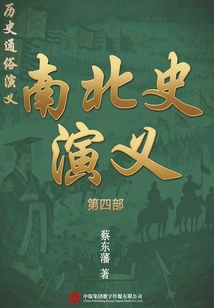
历史通俗演义:南北史演义(第四部)
Cai Dongfan
This book focuses on an era of great turmoil and integration in Chinese history - the Wei, Jin, Southern and Northern Dynasties. During this period of history, political power changed frequently, ethnic conflicts and integration intertwined, and the ideology and culture were extremely active. In a clear context, the author sorts out the confrontation and ups and downs between the Song, Qi, Liang, and Chen Dynasties in the Southern Dynasties and the Northern Wei, Eastern Wei, Western Wei, Northern Qi, and Northern Zhou Dynasties. He vividly depicts emperors with different personalities such as Liu Yu, Tuoba Tao, Emperor Wu of Liang, and Emperor Xiaowen, as well as famous battles such as the "Battle of Feishui" to help readers understand how this complex and critical historical period laid the foundation for the prosperity of the Sui and Tang Dynasties. This is the fourth part.
This book focuses on an era of great turmoil and integration in Chinese history - the Wei, Jin, Southern and Northern Dynasties. During this period of history, political power changed frequently, ethnic conflicts and integration intertwined, and the ideology and culture were extremely active. In a clear context, the author sorts out the confrontation and ups and downs between the Song, Qi, Liang, and Chen Dynasties in the Southern Dynasties and the Northern Wei, Eastern Wei, Western Wei, Northern Qi, and Northern Zhou Dynasties. He vividly depicts emperors with different personalities such as Liu Yu, Tuoba Tao, Emperor Wu of Liang, and Emperor Xiaowen, as well as famous battles such as the "Battle of Feishui" to help readers understand how this complex and critical historical period laid the foundation for the prosperity of the Sui and Tang Dynasties. This is the fourth part.
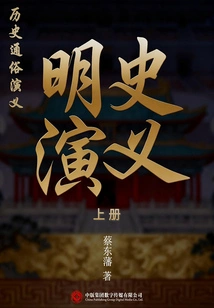
Popular Historical Romance: Romance of Ming Dynasty (Part 1)
General Fiction历史通俗演义:明史演义(上)
Cai Dongfan
This book begins with Zhu Yuanzhang participating in the Red Turban Uprising and establishing the Ming Dynasty, until Li Zicheng invades Beijing, Emperor Chongzhen hangs himself on Meishan Mountain, and the Qing Dynasty enters the Pass. The work is large in scale and details the political situation of the Ming Dynasty for nearly three hundred years, including the Hongwu period, the Yongle era, Zheng He's voyages to the West, the Renxuan period, the Tumubao Incident, Zhang Juzheng's reforms, the Donglin party struggle, Chongzhen's efforts to save the nation and other key nodes. It deeply depicts the fate of Zhu Yuanzhang, Zhu Di, Yu Qian, Hai Rui, Zhang Juzheng, Wei Zhongxian, Yuan Chonghuan and many other historical figures, and comprehensively analyzes the profound lessons of the Ming Dynasty from prosperity to decline and finally to its demise. This is the first volume.
This book begins with Zhu Yuanzhang participating in the Red Turban Uprising and establishing the Ming Dynasty, until Li Zicheng invades Beijing, Emperor Chongzhen hangs himself on Meishan Mountain, and the Qing Dynasty enters the Pass. The work is large in scale and details the political situation of the Ming Dynasty for nearly three hundred years, including the Hongwu period, the Yongle era, Zheng He's voyages to the West, the Renxuan period, the Tumubao Incident, Zhang Juzheng's reforms, the Donglin party struggle, Chongzhen's efforts to save the nation and other key nodes. It deeply depicts the fate of Zhu Yuanzhang, Zhu Di, Yu Qian, Hai Rui, Zhang Juzheng, Wei Zhongxian, Yuan Chonghuan and many other historical figures, and comprehensively analyzes the profound lessons of the Ming Dynasty from prosperity to decline and finally to its demise. This is the first volume.
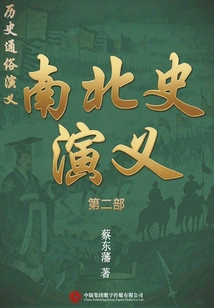
历史通俗演义:南北史演义(第二部)
Cai Dongfan
This book focuses on an era of great turmoil and integration in Chinese history - the Wei, Jin, Southern and Northern Dynasties. During this period of history, political power changed frequently, ethnic conflicts and integration intertwined, and the ideology and culture were extremely active. In a clear context, the author sorts out the confrontation and ups and downs between the Song, Qi, Liang, and Chen Dynasties in the Southern Dynasties and the Northern Wei, Eastern Wei, Western Wei, Northern Qi, and Northern Zhou Dynasties. He vividly depicts emperors with different personalities such as Liu Yu, Tuoba Tao, Emperor Wu of Liang, and Emperor Xiaowen, as well as famous battles such as the "Battle of Feishui" to help readers understand how this complex and critical historical period laid the foundation for the prosperity of the Sui and Tang Dynasties. This is the second part.
This book focuses on an era of great turmoil and integration in Chinese history - the Wei, Jin, Southern and Northern Dynasties. During this period of history, political power changed frequently, ethnic conflicts and integration intertwined, and the ideology and culture were extremely active. In a clear context, the author sorts out the confrontation and ups and downs between the Song, Qi, Liang, and Chen Dynasties in the Southern Dynasties and the Northern Wei, Eastern Wei, Western Wei, Northern Qi, and Northern Zhou Dynasties. He vividly depicts emperors with different personalities such as Liu Yu, Tuoba Tao, Emperor Wu of Liang, and Emperor Xiaowen, as well as famous battles such as the "Battle of Feishui" to help readers understand how this complex and critical historical period laid the foundation for the prosperity of the Sui and Tang Dynasties. This is the second part.
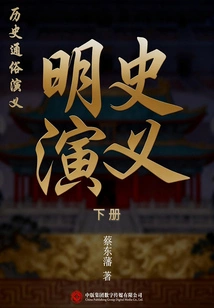
Popular Historical Romance: Romance of Ming Dynasty (Part 2)
General Fiction历史通俗演义:明史演义(下)
Cai Dongfan
This book begins with Zhu Yuanzhang participating in the Red Turban Uprising and establishing the Ming Dynasty, until Li Zicheng invades Beijing, Emperor Chongzhen hangs himself on Meishan Mountain, and the Qing Dynasty enters the Pass. The work is large in scale and details the political situation of the Ming Dynasty for nearly three hundred years, including the Hongwu period, the Yongle era, Zheng He's voyages to the West, the Renxuan period, the Tumubao Incident, Zhang Juzheng's reforms, the Donglin party struggle, Chongzhen's efforts to save the nation and other key nodes. It deeply depicts the fate of Zhu Yuanzhang, Zhu Di, Yu Qian, Hai Rui, Zhang Juzheng, Wei Zhongxian, Yuan Chonghuan and many other historical figures, and comprehensively analyzes the profound lessons of the Ming Dynasty from prosperity to decline and finally to its demise. This is the next volume.
This book begins with Zhu Yuanzhang participating in the Red Turban Uprising and establishing the Ming Dynasty, until Li Zicheng invades Beijing, Emperor Chongzhen hangs himself on Meishan Mountain, and the Qing Dynasty enters the Pass. The work is large in scale and details the political situation of the Ming Dynasty for nearly three hundred years, including the Hongwu period, the Yongle era, Zheng He's voyages to the West, the Renxuan period, the Tumubao Incident, Zhang Juzheng's reforms, the Donglin party struggle, Chongzhen's efforts to save the nation and other key nodes. It deeply depicts the fate of Zhu Yuanzhang, Zhu Di, Yu Qian, Hai Rui, Zhang Juzheng, Wei Zhongxian, Yuan Chonghuan and many other historical figures, and comprehensively analyzes the profound lessons of the Ming Dynasty from prosperity to decline and finally to its demise. This is the next volume.
蔡东藩历史小说:唐史演义(5)
Cai Dongfan
This book is a must-read historical novel about the Tang Dynasty, telling the story of the rise and fall of the Tang Dynasty. The history begins from the Tang emperor Li Yuan who won the world in one fell swoop in the late Sui Dynasty to the usurpation of the Tang Dynasty by Zhu Quanzhong. The whole book reproduces the rise and fall of the Tang Empire, which once dominated the world, from its rise to strength to its final demise. For readers who like the history of the Tang Dynasty, this book is not to be missed. This book is the Tang Dynasty part of "Popular Romance of Chinese History". Careful selection of materials, focusing on the main sources and trusting history, and supplementing unofficial histories can help people gain an introduction to national history. The work narrates the 290-year history of the Tang Dynasty from prosperity to decline, and experienced historical facts such as the tragedy of women, castration, and feudal lordship. It has plain views, rich content, methodical exposition, elegant language, self-evaluation and self-annotation, and has both reason and interest. It is indeed a classic of popular history. In the selection and use of historical materials, Cai Dongfan mainly focused on "official history" and also collected anecdotes and anecdotes. He claimed that the historical romance he compiled "takes official history as the classic and strives for certainty; uses anecdotes as the latitude and does not make false accusations." He is extremely cautious in the use of historical materials such as anecdotes and anecdotes, and often requires "several rounds of textual research."
This book is a must-read historical novel about the Tang Dynasty, telling the story of the rise and fall of the Tang Dynasty. The history begins from the Tang emperor Li Yuan who won the world in one fell swoop in the late Sui Dynasty to the usurpation of the Tang Dynasty by Zhu Quanzhong. The whole book reproduces the rise and fall of the Tang Empire, which once dominated the world, from its rise to strength to its final demise. For readers who like the history of the Tang Dynasty, this book is not to be missed. This book is the Tang Dynasty part of "Popular Romance of Chinese History". Careful selection of materials, focusing on the main sources and trusting history, and supplementing unofficial histories can help people gain an introduction to national history. The work narrates the 290-year history of the Tang Dynasty from prosperity to decline, and experienced historical facts such as the tragedy of women, castration, and feudal lordship. It has plain views, rich content, methodical exposition, elegant language, self-evaluation and self-annotation, and has both reason and interest. It is indeed a classic of popular history. In the selection and use of historical materials, Cai Dongfan mainly focused on "official history" and also collected anecdotes and anecdotes. He claimed that the historical romance he compiled "takes official history as the classic and strives for certainty; uses anecdotes as the latitude and does not make false accusations." He is extremely cautious in the use of historical materials such as anecdotes and anecdotes, and often requires "several rounds of textual research."
蔡东藩历史小说:唐史演义(4)
Cai Dongfan
This book is a must-read historical novel about the Tang Dynasty, telling the story of the rise and fall of the Tang Dynasty. The history begins from the Tang emperor Li Yuan who won the world in one fell swoop in the late Sui Dynasty to the usurpation of the Tang Dynasty by Zhu Quanzhong. The whole book reproduces the rise and fall of the Tang Empire, which once dominated the world, from its rise to strength to its final demise. For readers who like the history of the Tang Dynasty, this book is not to be missed. This book is the Tang Dynasty part of "Popular Romance of Chinese History". Careful selection of materials, focusing on the main sources and trusting history, and supplementing unofficial histories can help people gain an introduction to national history. The work narrates the 290-year history of the Tang Dynasty from prosperity to decline, and experienced historical facts such as the tragedy of women, castration, and feudal lordship. It has plain views, rich content, methodical exposition, elegant language, self-evaluation and self-annotation, and has both reason and interest. It is indeed a classic of popular history. In the selection and use of historical materials, Cai Dongfan mainly focused on "official history" and also collected anecdotes and anecdotes. He claimed that the historical romance he compiled "takes official history as the classic and strives for certainty; uses anecdotes as the latitude and does not make false accusations." He is extremely cautious in the use of historical materials such as anecdotes and anecdotes, and often requires "several rounds of textual research."
This book is a must-read historical novel about the Tang Dynasty, telling the story of the rise and fall of the Tang Dynasty. The history begins from the Tang emperor Li Yuan who won the world in one fell swoop in the late Sui Dynasty to the usurpation of the Tang Dynasty by Zhu Quanzhong. The whole book reproduces the rise and fall of the Tang Empire, which once dominated the world, from its rise to strength to its final demise. For readers who like the history of the Tang Dynasty, this book is not to be missed. This book is the Tang Dynasty part of "Popular Romance of Chinese History". Careful selection of materials, focusing on the main sources and trusting history, and supplementing unofficial histories can help people gain an introduction to national history. The work narrates the 290-year history of the Tang Dynasty from prosperity to decline, and experienced historical facts such as the tragedy of women, castration, and feudal lordship. It has plain views, rich content, methodical exposition, elegant language, self-evaluation and self-annotation, and has both reason and interest. It is indeed a classic of popular history. In the selection and use of historical materials, Cai Dongfan mainly focused on "official history" and also collected anecdotes and anecdotes. He claimed that the historical romance he compiled "takes official history as the classic and strives for certainty; uses anecdotes as the latitude and does not make false accusations." He is extremely cautious in the use of historical materials such as anecdotes and anecdotes, and often requires "several rounds of textual research."
蔡东藩经典历史小说:民国演义(1)
Cai Dongfan
This book is a must-read historical novel of the Republic of China. The author is Cai Dongfan, a famous historian and novelist of the Republic of China. This book describes in relatively detail the beginning and end of major historical events such as the Revolution of 1911, Sun Yat-sen's resignation, Yuan Shikai's proclaimed emperor, Cai E's campaign against Yuan, Zhang Xun's restoration, the May Fourth Movement, Sun Yat-sen's reorganization of the Kuomintang, and other major historical events. This book is the Republic of China part of "Popular Romance of Chinese History". "Popular Romance of Chinese History" dates from the Qin and Han dynasties to the Republic of China. Two thousand years of Chinese history are vividly displayed in front of us. The book tells the history of the Republic of China in a detailed and easy-to-understand way, and has been widely praised by people since its publication. The work is based on historical facts and side by side with unofficial history. It is prudent in selecting materials, has plain viewpoints, is rich in content, has a methodical narrative, elegant language, self-evaluation and self-annotation, and has both reason and interest. It is regarded as a classic of popular history and is deeply favored by readers. In the selection and use of historical materials, Cai Dongfan mainly focused on "official history" and also collected anecdotes and anecdotes. He claimed that the historical romance he compiled "takes official history as the classic and strives for certainty; uses anecdotes as the latitude and does not make false accusations." He is extremely cautious in the use of historical materials such as anecdotes and anecdotes, and often requires "several rounds of textual research."
This book is a must-read historical novel of the Republic of China. The author is Cai Dongfan, a famous historian and novelist of the Republic of China. This book describes in relatively detail the beginning and end of major historical events such as the Revolution of 1911, Sun Yat-sen's resignation, Yuan Shikai's proclaimed emperor, Cai E's campaign against Yuan, Zhang Xun's restoration, the May Fourth Movement, Sun Yat-sen's reorganization of the Kuomintang, and other major historical events. This book is the Republic of China part of "Popular Romance of Chinese History". "Popular Romance of Chinese History" dates from the Qin and Han dynasties to the Republic of China. Two thousand years of Chinese history are vividly displayed in front of us. The book tells the history of the Republic of China in a detailed and easy-to-understand way, and has been widely praised by people since its publication. The work is based on historical facts and side by side with unofficial history. It is prudent in selecting materials, has plain viewpoints, is rich in content, has a methodical narrative, elegant language, self-evaluation and self-annotation, and has both reason and interest. It is regarded as a classic of popular history and is deeply favored by readers. In the selection and use of historical materials, Cai Dongfan mainly focused on "official history" and also collected anecdotes and anecdotes. He claimed that the historical romance he compiled "takes official history as the classic and strives for certainty; uses anecdotes as the latitude and does not make false accusations." He is extremely cautious in the use of historical materials such as anecdotes and anecdotes, and often requires "several rounds of textual research."
Cai Dongfan's Historical Novels: Romance of Ming Dynasty (7)
General Fiction蔡东藩历史小说:明史演义(7)
Cai Dongfan
"The Romance of the Ming Dynasty" is informative and tells us the history of the Ming Dynasty in a simple and easy-to-understand way. It took 276 years from the founding of the country by the civilian emperor Zhu Yuanzhang to the death of Sizong in the Ming Dynasty. Zhu Yuanzhang rose to the occasion, and within a few years he expelled Emperor Yuan and unified China. He finally drove the foreigners out of China, but he was afraid of constant harassment, so he had to build the Great Wall high and thick. It was only at this time that Zheng He, who made seven voyages to the West, appeared, bringing with him the highest technology at the time and a huge fleet to greatly promote the power of the Ming Empire. Cai Dongfan's book romance emphasizes history over prose. Although it is slightly inferior to literary talent, it provides a vast and popular general history of the Ming Dynasty and made an indelible contribution to the popularization of Chinese historical knowledge. The author Cai Dongfan was a historian and novelist in the late Qing Dynasty and the early Republic of China. When writing this historical romance, Cai Dongfan followed the principle of "taking official history as the basis, striving for conclusiveness, using anecdotes as the basis, and not making false accusations" in historical materials. He paid great attention to the authenticity of history and carefully examined the selection and use of historical materials. The work is highly readable and is a classic that history lovers cannot miss.
"The Romance of the Ming Dynasty" is informative and tells us the history of the Ming Dynasty in a simple and easy-to-understand way. It took 276 years from the founding of the country by the civilian emperor Zhu Yuanzhang to the death of Sizong in the Ming Dynasty. Zhu Yuanzhang rose to the occasion, and within a few years he expelled Emperor Yuan and unified China. He finally drove the foreigners out of China, but he was afraid of constant harassment, so he had to build the Great Wall high and thick. It was only at this time that Zheng He, who made seven voyages to the West, appeared, bringing with him the highest technology at the time and a huge fleet to greatly promote the power of the Ming Empire. Cai Dongfan's book romance emphasizes history over prose. Although it is slightly inferior to literary talent, it provides a vast and popular general history of the Ming Dynasty and made an indelible contribution to the popularization of Chinese historical knowledge. The author Cai Dongfan was a historian and novelist in the late Qing Dynasty and the early Republic of China. When writing this historical romance, Cai Dongfan followed the principle of "taking official history as the basis, striving for conclusiveness, using anecdotes as the basis, and not making false accusations" in historical materials. He paid great attention to the authenticity of history and carefully examined the selection and use of historical materials. The work is highly readable and is a classic that history lovers cannot miss.
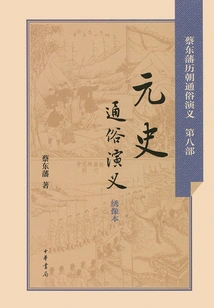
元史通俗演义(蔡东藩历朝通俗演义)
Cai Dongfan
"Popular Romance of Yuan History" is one of the series of books "Popular Romance of Cai Dongfan Dynasties". It describes the ups and downs and exciting history of the Yuan Dynasty for nearly 100 years, and can be regarded as a classic of popular history. The book draws its material carefully, mainly focusing on historical facts and supplementing unofficial historical records. It is an introductory book for understanding the history of the Yuan Dynasty.
"Popular Romance of Yuan History" is one of the series of books "Popular Romance of Cai Dongfan Dynasties". It describes the ups and downs and exciting history of the Yuan Dynasty for nearly 100 years, and can be regarded as a classic of popular history. The book draws its material carefully, mainly focusing on historical facts and supplementing unofficial historical records. It is an introductory book for understanding the history of the Yuan Dynasty.
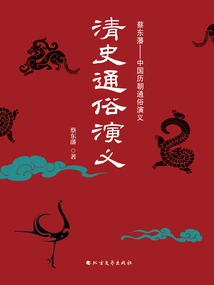
Popular Romance of Qing History (two Volumes)
General Fiction清史通俗演义(全二册)
Cai Dongfan
The content of this book begins with the Jurchen aristocrat Nurhaci establishing the Later Jin regime, Huang Taiji changing the name of the country to Qing, the Qing founder establishing his capital in Beijing and unifying China, and ending with the overthrow of the Qing Dynasty by the Xinke Revolution. The author compiled the major historical events of the Qing Dynasty in the past three hundred years into a hundred chapters of popular romance, which reflects the historical situation of the Qing Dynasty to a certain extent and has a reference value for readers to understand the history of the Qing Dynasty.
The content of this book begins with the Jurchen aristocrat Nurhaci establishing the Later Jin regime, Huang Taiji changing the name of the country to Qing, the Qing founder establishing his capital in Beijing and unifying China, and ending with the overthrow of the Qing Dynasty by the Xinke Revolution. The author compiled the major historical events of the Qing Dynasty in the past three hundred years into a hundred chapters of popular romance, which reflects the historical situation of the Qing Dynasty to a certain extent and has a reference value for readers to understand the history of the Qing Dynasty.
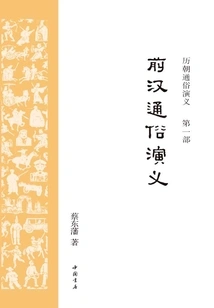
前汉通俗演义(历朝通俗演义)
Cai Dongfan
With more than 2,000 years of history from the Qin Dynasty to the Republic of China, Cai Dongfan used official history as the classic and anecdotes as the weft, and used the language of "The Romance of the Three Kingdoms", which is not very profound in writing and not very vulgar in language, to write this most complete set of historical novels in China. From the creation of "Popular Romance of Qing History" in 1915 to the publication of "Popular Romance of Later Han Dynasty" in 1926, the entire set of "Popular Romance of Historical Dynasties" took ten years to complete. In addition to being very story-telling and interesting, this set of novels also attaches great importance to the authenticity of historical materials. Not only can it be used as a general leisure reading, but it can also be used as a reference book for history lovers.
With more than 2,000 years of history from the Qin Dynasty to the Republic of China, Cai Dongfan used official history as the classic and anecdotes as the weft, and used the language of "The Romance of the Three Kingdoms", which is not very profound in writing and not very vulgar in language, to write this most complete set of historical novels in China. From the creation of "Popular Romance of Qing History" in 1915 to the publication of "Popular Romance of Later Han Dynasty" in 1926, the entire set of "Popular Romance of Historical Dynasties" took ten years to complete. In addition to being very story-telling and interesting, this set of novels also attaches great importance to the authenticity of historical materials. Not only can it be used as a general leisure reading, but it can also be used as a reference book for history lovers.
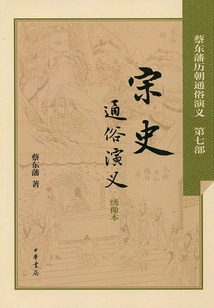
宋史通俗演义(蔡东藩历朝通俗演义)
Cai Dongfan
"Popular Romance of Song History" is one of the series of books "Popular Romance of Cai Dongfan Dynasties". It narrates the history of the Song Dynasty from its founding to its demise during the 320 years of the Song Dynasty and its 18 emperors. The author draws extensively from official history and occasionally from officials and wild officials, and his narrative is plain, smooth, and methodical. He makes self-evaluations and notes, and his language is humorous and full of both emotion and reason. The author's true temperament can be seen in the text. Reading through this book, it is like a historical picture of the Song Dynasty slowly unfolding before your eyes. Sometimes it is a fierce battle, sometimes it is gentle and affectionate, sometimes it is a dispute between countries, sometimes it is a game of loyalty and traitor... It makes people dizzy and full of emotions. If you are interested in the history of the Song Dynasty, then "Popular Romance of the History of the Song Dynasty" is your first choice for introductory popular reading.
"Popular Romance of Song History" is one of the series of books "Popular Romance of Cai Dongfan Dynasties". It narrates the history of the Song Dynasty from its founding to its demise during the 320 years of the Song Dynasty and its 18 emperors. The author draws extensively from official history and occasionally from officials and wild officials, and his narrative is plain, smooth, and methodical. He makes self-evaluations and notes, and his language is humorous and full of both emotion and reason. The author's true temperament can be seen in the text. Reading through this book, it is like a historical picture of the Song Dynasty slowly unfolding before your eyes. Sometimes it is a fierce battle, sometimes it is gentle and affectionate, sometimes it is a dispute between countries, sometimes it is a game of loyalty and traitor... It makes people dizzy and full of emotions. If you are interested in the history of the Song Dynasty, then "Popular Romance of the History of the Song Dynasty" is your first choice for introductory popular reading.
蔡东藩历史小说:明史演义(10)
Cai Dongfan
"The Romance of the Ming Dynasty" is informative and tells us the history of the Ming Dynasty in a simple and easy-to-understand way. It took 276 years from the founding of the country by the civilian emperor Zhu Yuanzhang to the death of Sizong in the Ming Dynasty. Zhu Yuanzhang rose to the occasion, and within a few years he expelled Emperor Yuan and unified China. He finally drove the foreigners out of China, but he was afraid of constant harassment, so he had to build the Great Wall high and thick. It was only at this time that Zheng He, who made seven voyages to the West, appeared, bringing with him the highest technology at the time and a huge fleet to greatly promote the power of the Ming Empire. Cai Dongfan's book romance emphasizes history over prose. Although it is slightly inferior to literary talent, it provides a vast and popular general history of the Ming Dynasty and made an indelible contribution to the popularization of Chinese historical knowledge. The author Cai Dongfan was a historian and novelist in the late Qing Dynasty and the early Republic of China. When writing this historical romance, Cai Dongfan followed the principle of "taking official history as the basis, striving for conclusiveness, using anecdotes as the basis, and not making false accusations" in historical materials. He paid great attention to the authenticity of history and carefully examined the selection and use of historical materials. The work is highly readable and is a classic that history lovers cannot miss.
"The Romance of the Ming Dynasty" is informative and tells us the history of the Ming Dynasty in a simple and easy-to-understand way. It took 276 years from the founding of the country by the civilian emperor Zhu Yuanzhang to the death of Sizong in the Ming Dynasty. Zhu Yuanzhang rose to the occasion, and within a few years he expelled Emperor Yuan and unified China. He finally drove the foreigners out of China, but he was afraid of constant harassment, so he had to build the Great Wall high and thick. It was only at this time that Zheng He, who made seven voyages to the West, appeared, bringing with him the highest technology at the time and a huge fleet to greatly promote the power of the Ming Empire. Cai Dongfan's book romance emphasizes history over prose. Although it is slightly inferior to literary talent, it provides a vast and popular general history of the Ming Dynasty and made an indelible contribution to the popularization of Chinese historical knowledge. The author Cai Dongfan was a historian and novelist in the late Qing Dynasty and the early Republic of China. When writing this historical romance, Cai Dongfan followed the principle of "taking official history as the basis, striving for conclusiveness, using anecdotes as the basis, and not making false accusations" in historical materials. He paid great attention to the authenticity of history and carefully examined the selection and use of historical materials. The work is highly readable and is a classic that history lovers cannot miss.
蔡东藩经典历史小说:民国演义(8)
Cai Dongfan
This book is a must-read historical novel of the Republic of China. The author is Cai Dongfan, a famous historian and novelist of the Republic of China. This book describes in relatively detail the beginning and end of major historical events such as the Revolution of 1911, Sun Yat-sen's resignation, Yuan Shikai's proclaimed emperor, Cai E's campaign against Yuan, Zhang Xun's restoration, the May Fourth Movement, Sun Yat-sen's reorganization of the Kuomintang, and other major historical events. This book is the Republic of China part of "Popular Romance of Chinese History". "Popular Romance of Chinese History" dates from the Qin and Han dynasties to the Republic of China. Two thousand years of Chinese history are vividly displayed in front of us. The book tells the history of the Republic of China in a detailed and easy-to-understand way, and has been widely praised by people since its publication. The work is based on historical facts and side by side with unofficial history. It is prudent in selecting materials, has plain viewpoints, is rich in content, has a methodical narrative, elegant language, self-evaluation and self-annotation, and has both reason and interest. It is regarded as a classic of popular history and is deeply favored by readers. In the selection and use of historical materials, Cai Dongfan mainly focused on "official history" and also collected anecdotes and anecdotes. He claimed that the historical romance he compiled "takes official history as the classic and strives for certainty; uses anecdotes as the latitude and does not make false accusations." He is extremely cautious in the use of historical materials such as anecdotes and anecdotes, and often requires "several rounds of textual research."
This book is a must-read historical novel of the Republic of China. The author is Cai Dongfan, a famous historian and novelist of the Republic of China. This book describes in relatively detail the beginning and end of major historical events such as the Revolution of 1911, Sun Yat-sen's resignation, Yuan Shikai's proclaimed emperor, Cai E's campaign against Yuan, Zhang Xun's restoration, the May Fourth Movement, Sun Yat-sen's reorganization of the Kuomintang, and other major historical events. This book is the Republic of China part of "Popular Romance of Chinese History". "Popular Romance of Chinese History" dates from the Qin and Han dynasties to the Republic of China. Two thousand years of Chinese history are vividly displayed in front of us. The book tells the history of the Republic of China in a detailed and easy-to-understand way, and has been widely praised by people since its publication. The work is based on historical facts and side by side with unofficial history. It is prudent in selecting materials, has plain viewpoints, is rich in content, has a methodical narrative, elegant language, self-evaluation and self-annotation, and has both reason and interest. It is regarded as a classic of popular history and is deeply favored by readers. In the selection and use of historical materials, Cai Dongfan mainly focused on "official history" and also collected anecdotes and anecdotes. He claimed that the historical romance he compiled "takes official history as the classic and strives for certainty; uses anecdotes as the latitude and does not make false accusations." He is extremely cautious in the use of historical materials such as anecdotes and anecdotes, and often requires "several rounds of textual research."
蔡东藩经典历史小说:两晋演义(1)
Cai Dongfan
"The Romance of the Two Jin Dynasties" is one of the "Popular Romance of the Past Dynasties". This book uses a chapter structure, popular articles, and witty comments to truly reproduce the magnificent historical evolution of Chinese civilization and narrate the rise and fall of the Jin Dynasty. It started from Sima Yan in the Wei Dynasty and ended in the Liu Song Dynasty in the Jin Dynasty, which lasted for 156 years. The Western Jin Dynasty ended nearly a century of division. However, the Eight Kings Rebellion depleted the country's capital, and the Hu people, who were mixed with the Han people, took the opportunity to attack one after another, leading to the fall of the Western Jin Dynasty. The Eastern Jin Dynasty rebuilt in Jiangdong, accumulated energy, and launched the difficult task of the Northern Expedition, but its strength was lost due to internal power struggles. General Liu Yu stood out and made two Northern Expeditions to recapture Chang'an. After that, he deposed two emperors one after another, founded the Song Dynasty, and fell to the Eastern Jin Dynasty. This book is easy to understand and has witty comments. It is a good helper for understanding history.
"The Romance of the Two Jin Dynasties" is one of the "Popular Romance of the Past Dynasties". This book uses a chapter structure, popular articles, and witty comments to truly reproduce the magnificent historical evolution of Chinese civilization and narrate the rise and fall of the Jin Dynasty. It started from Sima Yan in the Wei Dynasty and ended in the Liu Song Dynasty in the Jin Dynasty, which lasted for 156 years. The Western Jin Dynasty ended nearly a century of division. However, the Eight Kings Rebellion depleted the country's capital, and the Hu people, who were mixed with the Han people, took the opportunity to attack one after another, leading to the fall of the Western Jin Dynasty. The Eastern Jin Dynasty rebuilt in Jiangdong, accumulated energy, and launched the difficult task of the Northern Expedition, but its strength was lost due to internal power struggles. General Liu Yu stood out and made two Northern Expeditions to recapture Chang'an. After that, he deposed two emperors one after another, founded the Song Dynasty, and fell to the Eastern Jin Dynasty. This book is easy to understand and has witty comments. It is a good helper for understanding history.
Romance of the Two Jin Dynasties (part 2)
General Fiction两晋演义(下)
Cai Dongfan
"The Romance of the Two Jin Dynasties" uses a chapter-like structure, popular articles, and witty comments to truly reproduce the magnificent historical evolution of Chinese civilization and narrate the rise and fall of the Jin Dynasty. There are one hundred chapters in total, starting from the Sima Yan Dynasty in the Wei Dynasty and ending in the Liu Song Dynasty in the Jin Dynasty, which lasted for 156 years. The Western Jin Dynasty ended nearly a hundred years of division. However, the Eight Kings Rebellion depleted the country's capital and the Hu people, who were mixed with the Han people, took the opportunity to launch attacks one after another, leading to the fall of the Western Jin Dynasty. The Eastern Jin Dynasty rebuilt in Jiangdong, accumulated energy, and launched the difficult task of the Northern Expedition, but its strength was lost due to internal power struggles. General Liu Yu stood out and made two Northern Expeditions to recapture Chang'an. After that, he deposed two emperors one after another, founded the Song Dynasty, and fell to the Eastern Jin Dynasty. This book is the second part of "Romance of the Two Jin Dynasties". It tells the history from "Chapter 51: Punishing the Nizi, setting fire to the body and blaming the patient for resisting Yan Ji's remonstrance" to "Chapter 100: Inciting bandits to invade the Qin Pass and then losing the throne, forcing him to take the Zen position of Jin Zuo and end his life".
"The Romance of the Two Jin Dynasties" uses a chapter-like structure, popular articles, and witty comments to truly reproduce the magnificent historical evolution of Chinese civilization and narrate the rise and fall of the Jin Dynasty. There are one hundred chapters in total, starting from the Sima Yan Dynasty in the Wei Dynasty and ending in the Liu Song Dynasty in the Jin Dynasty, which lasted for 156 years. The Western Jin Dynasty ended nearly a hundred years of division. However, the Eight Kings Rebellion depleted the country's capital and the Hu people, who were mixed with the Han people, took the opportunity to launch attacks one after another, leading to the fall of the Western Jin Dynasty. The Eastern Jin Dynasty rebuilt in Jiangdong, accumulated energy, and launched the difficult task of the Northern Expedition, but its strength was lost due to internal power struggles. General Liu Yu stood out and made two Northern Expeditions to recapture Chang'an. After that, he deposed two emperors one after another, founded the Song Dynasty, and fell to the Eastern Jin Dynasty. This book is the second part of "Romance of the Two Jin Dynasties". It tells the history from "Chapter 51: Punishing the Nizi, setting fire to the body and blaming the patient for resisting Yan Ji's remonstrance" to "Chapter 100: Inciting bandits to invade the Qin Pass and then losing the throne, forcing him to take the Zen position of Jin Zuo and end his life".
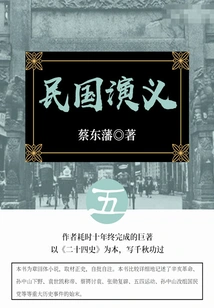
蔡东藩经典历史小说:民国演义(5)
Cai Dongfan
This book is a must-read historical novel of the Republic of China. The author is Cai Dongfan, a famous historian and novelist of the Republic of China. This book describes in relatively detail the beginning and end of major historical events such as the Revolution of 1911, Sun Yat-sen's resignation, Yuan Shikai's proclaimed emperor, Cai E's campaign against Yuan, Zhang Xun's restoration, the May Fourth Movement, Sun Yat-sen's reorganization of the Kuomintang, and other major historical events. This book is the Republic of China part of "Popular Romance of Chinese History". "Popular Romance of Chinese History" dates from the Qin and Han dynasties to the Republic of China. Two thousand years of Chinese history are vividly displayed in front of us. The book tells the history of the Republic of China in a detailed and easy-to-understand way, and has been widely praised by people since its publication. The work is based on historical facts and side by side with unofficial history. It is prudent in selecting materials, has plain viewpoints, is rich in content, has a methodical narrative, elegant language, self-evaluation and self-annotation, and has both reason and interest. It is regarded as a classic of popular history and is deeply favored by readers. In the selection and use of historical materials, Cai Dongfan mainly focused on "official history" and also collected anecdotes and anecdotes. He claimed that the historical romance he compiled "takes official history as the classic and strives for certainty; uses anecdotes as the latitude and does not make false accusations." He is extremely cautious in the use of historical materials such as anecdotes and anecdotes, and often requires "several rounds of textual research."
This book is a must-read historical novel of the Republic of China. The author is Cai Dongfan, a famous historian and novelist of the Republic of China. This book describes in relatively detail the beginning and end of major historical events such as the Revolution of 1911, Sun Yat-sen's resignation, Yuan Shikai's proclaimed emperor, Cai E's campaign against Yuan, Zhang Xun's restoration, the May Fourth Movement, Sun Yat-sen's reorganization of the Kuomintang, and other major historical events. This book is the Republic of China part of "Popular Romance of Chinese History". "Popular Romance of Chinese History" dates from the Qin and Han dynasties to the Republic of China. Two thousand years of Chinese history are vividly displayed in front of us. The book tells the history of the Republic of China in a detailed and easy-to-understand way, and has been widely praised by people since its publication. The work is based on historical facts and side by side with unofficial history. It is prudent in selecting materials, has plain viewpoints, is rich in content, has a methodical narrative, elegant language, self-evaluation and self-annotation, and has both reason and interest. It is regarded as a classic of popular history and is deeply favored by readers. In the selection and use of historical materials, Cai Dongfan mainly focused on "official history" and also collected anecdotes and anecdotes. He claimed that the historical romance he compiled "takes official history as the classic and strives for certainty; uses anecdotes as the latitude and does not make false accusations." He is extremely cautious in the use of historical materials such as anecdotes and anecdotes, and often requires "several rounds of textual research."
Cai Dongfan's Historical Novels: Romance of Qing History (3)
General Fiction蔡东藩历史小说:清史演义(3)
Cai Dongfan
This book is a must-read historical novel of the Qing Dynasty. It mainly tells the history of 294 years starting from the Manchu Qing Dynasty and ending with the abdication of Emperor Xuantong. For readers who like the history of the Qing Dynasty, this book is not to be missed. After the Manchus entered the customs, they became the second foreign power after the Mongols, and the territory of modern China was roughly determined. While the Western world was undergoing rapid changes due to the Industrial Revolution, the stagnant Qing Empire closed its doors to the outside world. The Opium War brought Chinese history into the category of modern history. For the next half century, the Qing Empire suffered from internal and external troubles. Although reforms such as the Westernization Movement and the Restoration were implemented later, they ended due to the obstruction of the conservative forces. The anti-foreign movement of the Boxer Rebellion led to the invasion of the Eight-Power Allied Forces, and the Qing Empire was unable to revive after the Boxer Indemnity. The Battle of Wuchang not only ended the Qing Empire's national lineage, but also ended the imperial era of more than two thousand years.
This book is a must-read historical novel of the Qing Dynasty. It mainly tells the history of 294 years starting from the Manchu Qing Dynasty and ending with the abdication of Emperor Xuantong. For readers who like the history of the Qing Dynasty, this book is not to be missed. After the Manchus entered the customs, they became the second foreign power after the Mongols, and the territory of modern China was roughly determined. While the Western world was undergoing rapid changes due to the Industrial Revolution, the stagnant Qing Empire closed its doors to the outside world. The Opium War brought Chinese history into the category of modern history. For the next half century, the Qing Empire suffered from internal and external troubles. Although reforms such as the Westernization Movement and the Restoration were implemented later, they ended due to the obstruction of the conservative forces. The anti-foreign movement of the Boxer Rebellion led to the invasion of the Eight-Power Allied Forces, and the Qing Empire was unable to revive after the Boxer Indemnity. The Battle of Wuchang not only ended the Qing Empire's national lineage, but also ended the imperial era of more than two thousand years.
蔡东藩历史小说:明史演义(12)
Cai Dongfan
"The Romance of the Ming Dynasty" is informative and tells us the history of the Ming Dynasty in a simple and easy-to-understand way. It took 276 years from the founding of the country by the civilian emperor Zhu Yuanzhang to the death of Sizong in the Ming Dynasty. Zhu Yuanzhang rose to the occasion, and within a few years he expelled Emperor Yuan and unified China. He finally drove the foreigners out of China, but he was afraid of constant harassment, so he had to build the Great Wall high and thick. It was only at this time that Zheng He, who made seven voyages to the West, appeared, bringing with him the highest technology at the time and a huge fleet to greatly promote the power of the Ming Empire. Cai Dongfan's book romance emphasizes history over prose. Although it is slightly inferior to literary talent, it provides a vast and popular general history of the Ming Dynasty and made an indelible contribution to the popularization of Chinese historical knowledge. The author Cai Dongfan was a historian and novelist in the late Qing Dynasty and the early Republic of China. When writing this historical romance, Cai Dongfan followed the principle of "taking official history as the basis, striving for conclusiveness, using anecdotes as the basis, and not making false accusations" in historical materials. He paid great attention to the authenticity of history and carefully examined the selection and use of historical materials. The work is highly readable and is a classic that history lovers cannot miss.
"The Romance of the Ming Dynasty" is informative and tells us the history of the Ming Dynasty in a simple and easy-to-understand way. It took 276 years from the founding of the country by the civilian emperor Zhu Yuanzhang to the death of Sizong in the Ming Dynasty. Zhu Yuanzhang rose to the occasion, and within a few years he expelled Emperor Yuan and unified China. He finally drove the foreigners out of China, but he was afraid of constant harassment, so he had to build the Great Wall high and thick. It was only at this time that Zheng He, who made seven voyages to the West, appeared, bringing with him the highest technology at the time and a huge fleet to greatly promote the power of the Ming Empire. Cai Dongfan's book romance emphasizes history over prose. Although it is slightly inferior to literary talent, it provides a vast and popular general history of the Ming Dynasty and made an indelible contribution to the popularization of Chinese historical knowledge. The author Cai Dongfan was a historian and novelist in the late Qing Dynasty and the early Republic of China. When writing this historical romance, Cai Dongfan followed the principle of "taking official history as the basis, striving for conclusiveness, using anecdotes as the basis, and not making false accusations" in historical materials. He paid great attention to the authenticity of history and carefully examined the selection and use of historical materials. The work is highly readable and is a classic that history lovers cannot miss.
Cai Dongfan's Historical Novels: Romance of Qing History (4)
General Fiction蔡东藩历史小说:清史演义(4)
Cai Dongfan
This book is a must-read historical novel of the Qing Dynasty. It mainly tells the history of 294 years starting from the Manchu Qing Dynasty and ending with the abdication of Emperor Xuantong. For readers who like the history of the Qing Dynasty, this book is not to be missed. After the Manchus entered the customs, they became the second foreign power after the Mongols, and the territory of modern China was roughly determined. While the Western world was undergoing rapid changes due to the Industrial Revolution, the stagnant Qing Empire closed its doors to the outside world. The Opium War brought Chinese history into the category of modern history. For the next half century, the Qing Empire suffered from internal and external troubles. Although reforms such as the Westernization Movement and the Restoration were implemented later, they ended due to the obstruction of the conservative forces. The anti-foreign movement of the Boxer Rebellion led to the invasion of the Eight-Power Allied Forces, and the Qing Empire was unable to revive after the Boxer Indemnity. The Battle of Wuchang not only ended the Qing Empire's national lineage, but also ended the imperial era of more than two thousand years.
This book is a must-read historical novel of the Qing Dynasty. It mainly tells the history of 294 years starting from the Manchu Qing Dynasty and ending with the abdication of Emperor Xuantong. For readers who like the history of the Qing Dynasty, this book is not to be missed. After the Manchus entered the customs, they became the second foreign power after the Mongols, and the territory of modern China was roughly determined. While the Western world was undergoing rapid changes due to the Industrial Revolution, the stagnant Qing Empire closed its doors to the outside world. The Opium War brought Chinese history into the category of modern history. For the next half century, the Qing Empire suffered from internal and external troubles. Although reforms such as the Westernization Movement and the Restoration were implemented later, they ended due to the obstruction of the conservative forces. The anti-foreign movement of the Boxer Rebellion led to the invasion of the Eight-Power Allied Forces, and the Qing Empire was unable to revive after the Boxer Indemnity. The Battle of Wuchang not only ended the Qing Empire's national lineage, but also ended the imperial era of more than two thousand years.
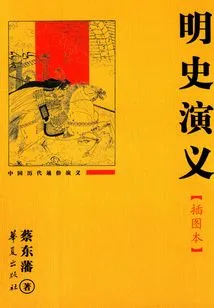
Romance of Ming Dynasty
General Fiction明史演义
Cai Dongfan
"The Romance of the Ming Dynasty" has a total of one hundred chapters, which spanned 276 years from the founding of the country by the civilian emperor Zhu Yuanzhang to the death of Emperor Sizong of the Ming Dynasty. Zhu Yuanzhang rose to the occasion, and within a few years he expelled Emperor Yuan and unified China. He finally drove the foreigners out of China, but he was afraid of constant harassment, so he had to build the Great Wall high and thick. It was only at this time that Zheng He, who made seven voyages to the West, appeared, bringing with him the highest technology at the time and a huge fleet to greatly promote the power of the Ming Empire. The writing style of the book is smooth and the story is vivid.
"The Romance of the Ming Dynasty" has a total of one hundred chapters, which spanned 276 years from the founding of the country by the civilian emperor Zhu Yuanzhang to the death of Emperor Sizong of the Ming Dynasty. Zhu Yuanzhang rose to the occasion, and within a few years he expelled Emperor Yuan and unified China. He finally drove the foreigners out of China, but he was afraid of constant harassment, so he had to build the Great Wall high and thick. It was only at this time that Zheng He, who made seven voyages to the West, appeared, bringing with him the highest technology at the time and a huge fleet to greatly promote the power of the Ming Empire. The writing style of the book is smooth and the story is vivid.
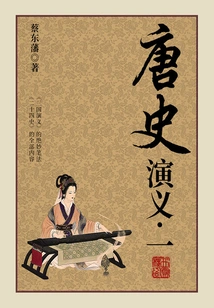
蔡东藩历史小说:唐史演义(1)
Cai Dongfan
This book is a must-read historical novel about the Tang Dynasty, telling the story of the rise and fall of the Tang Dynasty. The history begins from the Tang emperor Li Yuan who won the world in one fell swoop in the late Sui Dynasty to the usurpation of the Tang Dynasty by Zhu Quanzhong. The whole book reproduces the rise and fall of the Tang Empire, which once dominated the world, from its rise to strength to its final demise. For readers who like the history of the Tang Dynasty, this book is not to be missed. This book is the Tang Dynasty part of "Popular Romance of Chinese History". Careful selection of materials, focusing on the main sources and trusting history, and supplementing unofficial histories can help people gain an introduction to national history. The work narrates the 290-year history of the Tang Dynasty from prosperity to decline, and experienced historical facts such as the tragedy of women, castration, and feudal lordship. It has plain views, rich content, methodical exposition, elegant language, self-evaluation and self-annotation, and has both reason and interest. It is indeed a classic of popular history. In the selection and use of historical materials, Cai Dongfan mainly focused on "official history" and also collected anecdotes and anecdotes. He claimed that the historical romance he compiled "takes official history as the classic and strives for certainty; uses anecdotes as the latitude and does not make false accusations." He is extremely cautious in the use of historical materials such as anecdotes and anecdotes, and often requires "several rounds of textual research."
This book is a must-read historical novel about the Tang Dynasty, telling the story of the rise and fall of the Tang Dynasty. The history begins from the Tang emperor Li Yuan who won the world in one fell swoop in the late Sui Dynasty to the usurpation of the Tang Dynasty by Zhu Quanzhong. The whole book reproduces the rise and fall of the Tang Empire, which once dominated the world, from its rise to strength to its final demise. For readers who like the history of the Tang Dynasty, this book is not to be missed. This book is the Tang Dynasty part of "Popular Romance of Chinese History". Careful selection of materials, focusing on the main sources and trusting history, and supplementing unofficial histories can help people gain an introduction to national history. The work narrates the 290-year history of the Tang Dynasty from prosperity to decline, and experienced historical facts such as the tragedy of women, castration, and feudal lordship. It has plain views, rich content, methodical exposition, elegant language, self-evaluation and self-annotation, and has both reason and interest. It is indeed a classic of popular history. In the selection and use of historical materials, Cai Dongfan mainly focused on "official history" and also collected anecdotes and anecdotes. He claimed that the historical romance he compiled "takes official history as the classic and strives for certainty; uses anecdotes as the latitude and does not make false accusations." He is extremely cautious in the use of historical materials such as anecdotes and anecdotes, and often requires "several rounds of textual research."
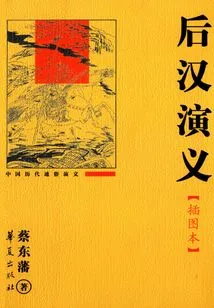
Romance of the Later Han Dynasty
General Fiction后汉演义
Cai Dongfan
During the Han dynasty, historians divided it into two dynasties, called the Later and Later Han, also known as the Eastern and Western Han. Because during the four hundred years of the Han Dynasty, Wang Mang usurped the country and usurped the throne for eighteen years, so the people before Wang Mang were called the Former Han Dynasty, and after Wang Mang, they were called the Later Han Dynasty. Moreover, the former Han Dynasty established its capital in Shaanxi, so it was known as the Western Han Dynasty, and the later Han Dynasty established its capital in Luoyang, so it was known as the Eastern Han Dynasty. "The Romance of the Later Han Dynasty" follows "The Romance of the Former Han Dynasty", starting from Wang Mang and ending with the Three Kingdoms. "The Romance of the Former Han Dynasty" is attached to the Qin Dynasty, and the "Romance of the Later Han Dynasty" is attached to the Three Kingdoms, but they are also unique creations. If we want to talk about the rise and fall of the Later Han Dynasty, it is more complicated than that of the Early Han Dynasty: Wang Mang usurped the country, and the disaster was caused by the Yuan Dynasty. Foreign relatives were harmed. As for this, Guangwu Zhongxing paid close attention to punishment and tried to prevent foreign relatives from intervening in the government. Emperor Ming was particularly paternal, and Emperor Zhang was very impressive in his early administration. After the emperor and the emperor, the national affairs deteriorated day by day. Foreign relatives and eunuchs fought and eventually died together. The power of the country was in the hands of the state pastors. The heroes competed for hegemony, and the weak and the strong preyed on each other. Thus, there were three kingdoms. In total, from Guangwu to Emperor Zhang, it was the era of the dictatorship of kings. From Emperor He to Emperor Huan, it was the era of relatives and eunuchs changing their powers. If Emperor Xian's reign was full of changes, it was an era of chaos and conflict at first, then an era of disputes in Fangzhen, and finally an era of competition among the Three Kingdoms...
During the Han dynasty, historians divided it into two dynasties, called the Later and Later Han, also known as the Eastern and Western Han. Because during the four hundred years of the Han Dynasty, Wang Mang usurped the country and usurped the throne for eighteen years, so the people before Wang Mang were called the Former Han Dynasty, and after Wang Mang, they were called the Later Han Dynasty. Moreover, the former Han Dynasty established its capital in Shaanxi, so it was known as the Western Han Dynasty, and the later Han Dynasty established its capital in Luoyang, so it was known as the Eastern Han Dynasty. "The Romance of the Later Han Dynasty" follows "The Romance of the Former Han Dynasty", starting from Wang Mang and ending with the Three Kingdoms. "The Romance of the Former Han Dynasty" is attached to the Qin Dynasty, and the "Romance of the Later Han Dynasty" is attached to the Three Kingdoms, but they are also unique creations. If we want to talk about the rise and fall of the Later Han Dynasty, it is more complicated than that of the Early Han Dynasty: Wang Mang usurped the country, and the disaster was caused by the Yuan Dynasty. Foreign relatives were harmed. As for this, Guangwu Zhongxing paid close attention to punishment and tried to prevent foreign relatives from intervening in the government. Emperor Ming was particularly paternal, and Emperor Zhang was very impressive in his early administration. After the emperor and the emperor, the national affairs deteriorated day by day. Foreign relatives and eunuchs fought and eventually died together. The power of the country was in the hands of the state pastors. The heroes competed for hegemony, and the weak and the strong preyed on each other. Thus, there were three kingdoms. In total, from Guangwu to Emperor Zhang, it was the era of the dictatorship of kings. From Emperor He to Emperor Huan, it was the era of relatives and eunuchs changing their powers. If Emperor Xian's reign was full of changes, it was an era of chaos and conflict at first, then an era of disputes in Fangzhen, and finally an era of competition among the Three Kingdoms...
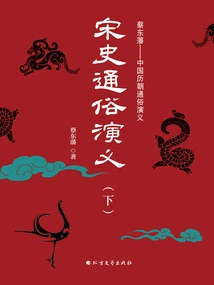
Popular Romance of Song Dynasty (part 2)
General Fiction宋史通俗演义(下)
Cai Dongfan
"Popular Romance of Song History": Chen Qiao's mutiny, wearing yellow robes, opened the curtain of the 320 years of the Song Dynasty. Dynasties change, the rise and fall of the ages, who is in charge of the ups and downs? I would not dare to say that everything about the rise and fall of chaos, the good and evil, and the good and evil has been dealt with in detail, but in the grand scheme of things, it has been revealed one by one without any omissions. In addition, the officials and the gangsters are recruited together, and those who trust and have the ability to win must be selected to write in the book.
"Popular Romance of Song History": Chen Qiao's mutiny, wearing yellow robes, opened the curtain of the 320 years of the Song Dynasty. Dynasties change, the rise and fall of the ages, who is in charge of the ups and downs? I would not dare to say that everything about the rise and fall of chaos, the good and evil, and the good and evil has been dealt with in detail, but in the grand scheme of things, it has been revealed one by one without any omissions. In addition, the officials and the gangsters are recruited together, and those who trust and have the ability to win must be selected to write in the book.
Cai Dongfan's Historical Novels: Romance of Qing History (6)
General Fiction蔡东藩历史小说:清史演义(6)
Cai Dongfan
This book is a must-read historical novel of the Qing Dynasty. It mainly tells the history of 294 years starting from the Manchu Qing Dynasty and ending with the abdication of Emperor Xuantong. For readers who like the history of the Qing Dynasty, this book is not to be missed. After the Manchus entered the customs, they became the second foreign power after the Mongols, and the territory of modern China was roughly determined. While the Western world was undergoing rapid changes due to the Industrial Revolution, the stagnant Qing Empire closed its doors to the outside world. The Opium War brought Chinese history into the category of modern history. For the next half century, the Qing Empire suffered from internal and external troubles. Although reforms such as the Westernization Movement and the Restoration were implemented later, they ended due to the obstruction of the conservative forces. The anti-foreign movement of the Boxer Rebellion led to the invasion of the Eight-Power Allied Forces, and the Qing Empire was unable to revive after the Boxer Indemnity. The Battle of Wuchang not only ended the Qing Empire's national lineage, but also ended the imperial era of more than two thousand years.
This book is a must-read historical novel of the Qing Dynasty. It mainly tells the history of 294 years starting from the Manchu Qing Dynasty and ending with the abdication of Emperor Xuantong. For readers who like the history of the Qing Dynasty, this book is not to be missed. After the Manchus entered the customs, they became the second foreign power after the Mongols, and the territory of modern China was roughly determined. While the Western world was undergoing rapid changes due to the Industrial Revolution, the stagnant Qing Empire closed its doors to the outside world. The Opium War brought Chinese history into the category of modern history. For the next half century, the Qing Empire suffered from internal and external troubles. Although reforms such as the Westernization Movement and the Restoration were implemented later, they ended due to the obstruction of the conservative forces. The anti-foreign movement of the Boxer Rebellion led to the invasion of the Eight-Power Allied Forces, and the Qing Empire was unable to revive after the Boxer Indemnity. The Battle of Wuchang not only ended the Qing Empire's national lineage, but also ended the imperial era of more than two thousand years.
Popular Romance of Ming History
General Fiction明史通俗演义
Cai Dongfan
"Popular Romance of Ming History" compiled by Cai Dongfan is one of the "Popular Romance of Chinese Dynasties", with a total of one hundred chapters, starting from the first chapter "Revealing the outline of history, opening up the sect, clarifying the meaning, taking refuge in the straits and becoming a monk" to the hundredth chapter "Begging for foreign aid, the Qing army settled the chaos and overturned half of the history of the Ming Dynasty". One hundred volumes of works cover 276 years of Ming Dynasty history. The author highly portrays the all-powerful historical figures of the Ming Dynasty, such as Zhu Yuanzhang who rose to the occasion, Zheng He who made seven voyages to the West, and Wei Zhongxian who killed loyal people and deserved their end, etc., In detail. The book is written fluently and the story is vivid. It is a masterpiece for those who study the history of the Ming Dynasty.
"Popular Romance of Ming History" compiled by Cai Dongfan is one of the "Popular Romance of Chinese Dynasties", with a total of one hundred chapters, starting from the first chapter "Revealing the outline of history, opening up the sect, clarifying the meaning, taking refuge in the straits and becoming a monk" to the hundredth chapter "Begging for foreign aid, the Qing army settled the chaos and overturned half of the history of the Ming Dynasty". One hundred volumes of works cover 276 years of Ming Dynasty history. The author highly portrays the all-powerful historical figures of the Ming Dynasty, such as Zhu Yuanzhang who rose to the occasion, Zheng He who made seven voyages to the West, and Wei Zhongxian who killed loyal people and deserved their end, etc., In detail. The book is written fluently and the story is vivid. It is a masterpiece for those who study the history of the Ming Dynasty.
蔡东藩经典历史小说:民国演义(7)
Cai Dongfan
This book is a must-read historical novel of the Republic of China. The author is Cai Dongfan, a famous historian and novelist of the Republic of China. This book describes in relatively detail the beginning and end of major historical events such as the Revolution of 1911, Sun Yat-sen's resignation, Yuan Shikai's proclaimed emperor, Cai E's campaign against Yuan, Zhang Xun's restoration, the May Fourth Movement, Sun Yat-sen's reorganization of the Kuomintang, and other major historical events. This book is the Republic of China part of "Popular Romance of Chinese History". "Popular Romance of Chinese History" dates from the Qin and Han dynasties to the Republic of China. Two thousand years of Chinese history are vividly displayed in front of us. The book tells the history of the Republic of China in a detailed and easy-to-understand way, and has been widely praised by people since its publication. The work is based on historical facts and side by side with unofficial history. It is prudent in selecting materials, has plain viewpoints, is rich in content, has a methodical narrative, elegant language, self-evaluation and self-annotation, and has both reason and interest. It is regarded as a classic of popular history and is deeply favored by readers. In the selection and use of historical materials, Cai Dongfan mainly focused on "official history" and also collected anecdotes and anecdotes. He claimed that the historical romance he compiled "takes official history as the classic and strives for certainty; uses anecdotes as the latitude and does not make false accusations." He is extremely cautious in the use of historical materials such as anecdotes and anecdotes, and often requires "several rounds of textual research."
This book is a must-read historical novel of the Republic of China. The author is Cai Dongfan, a famous historian and novelist of the Republic of China. This book describes in relatively detail the beginning and end of major historical events such as the Revolution of 1911, Sun Yat-sen's resignation, Yuan Shikai's proclaimed emperor, Cai E's campaign against Yuan, Zhang Xun's restoration, the May Fourth Movement, Sun Yat-sen's reorganization of the Kuomintang, and other major historical events. This book is the Republic of China part of "Popular Romance of Chinese History". "Popular Romance of Chinese History" dates from the Qin and Han dynasties to the Republic of China. Two thousand years of Chinese history are vividly displayed in front of us. The book tells the history of the Republic of China in a detailed and easy-to-understand way, and has been widely praised by people since its publication. The work is based on historical facts and side by side with unofficial history. It is prudent in selecting materials, has plain viewpoints, is rich in content, has a methodical narrative, elegant language, self-evaluation and self-annotation, and has both reason and interest. It is regarded as a classic of popular history and is deeply favored by readers. In the selection and use of historical materials, Cai Dongfan mainly focused on "official history" and also collected anecdotes and anecdotes. He claimed that the historical romance he compiled "takes official history as the classic and strives for certainty; uses anecdotes as the latitude and does not make false accusations." He is extremely cautious in the use of historical materials such as anecdotes and anecdotes, and often requires "several rounds of textual research."
蔡东藩经典历史小说:民国演义(4)
Cai Dongfan
This book is a must-read historical novel of the Republic of China. The author is Cai Dongfan, a famous historian and novelist of the Republic of China. This book describes in relatively detail the beginning and end of major historical events such as the Revolution of 1911, Sun Yat-sen's resignation, Yuan Shikai's proclaimed emperor, Cai E's campaign against Yuan, Zhang Xun's restoration, the May Fourth Movement, Sun Yat-sen's reorganization of the Kuomintang, and other major historical events. This book is the Republic of China part of "Popular Romance of Chinese History". "Popular Romance of Chinese History" dates from the Qin and Han dynasties to the Republic of China. Two thousand years of Chinese history are vividly displayed in front of us. The book tells the history of the Republic of China in a detailed and easy-to-understand way, and has been widely praised by people since its publication. The work is based on historical facts and side by side with unofficial history. It is prudent in selecting materials, has plain viewpoints, is rich in content, has a methodical narrative, elegant language, self-evaluation and self-annotation, and has both reason and interest. It is regarded as a classic of popular history and is deeply favored by readers. In the selection and use of historical materials, Cai Dongfan mainly focused on "official history" and also collected anecdotes and anecdotes. He claimed that the historical romance he compiled "takes official history as the classic and strives for certainty; uses anecdotes as the latitude and does not make false accusations." He is extremely cautious in the use of historical materials such as anecdotes and anecdotes, and often requires "several rounds of textual research."
This book is a must-read historical novel of the Republic of China. The author is Cai Dongfan, a famous historian and novelist of the Republic of China. This book describes in relatively detail the beginning and end of major historical events such as the Revolution of 1911, Sun Yat-sen's resignation, Yuan Shikai's proclaimed emperor, Cai E's campaign against Yuan, Zhang Xun's restoration, the May Fourth Movement, Sun Yat-sen's reorganization of the Kuomintang, and other major historical events. This book is the Republic of China part of "Popular Romance of Chinese History". "Popular Romance of Chinese History" dates from the Qin and Han dynasties to the Republic of China. Two thousand years of Chinese history are vividly displayed in front of us. The book tells the history of the Republic of China in a detailed and easy-to-understand way, and has been widely praised by people since its publication. The work is based on historical facts and side by side with unofficial history. It is prudent in selecting materials, has plain viewpoints, is rich in content, has a methodical narrative, elegant language, self-evaluation and self-annotation, and has both reason and interest. It is regarded as a classic of popular history and is deeply favored by readers. In the selection and use of historical materials, Cai Dongfan mainly focused on "official history" and also collected anecdotes and anecdotes. He claimed that the historical romance he compiled "takes official history as the classic and strives for certainty; uses anecdotes as the latitude and does not make false accusations." He is extremely cautious in the use of historical materials such as anecdotes and anecdotes, and often requires "several rounds of textual research."
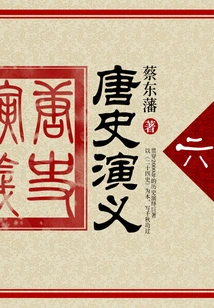
蔡东藩历史小说:唐史演义(6)
Cai Dongfan
This book is a must-read historical novel about the Tang Dynasty, telling the story of the rise and fall of the Tang Dynasty. The history begins from the Tang emperor Li Yuan who won the world in one fell swoop in the late Sui Dynasty to the usurpation of the Tang Dynasty by Zhu Quanzhong. The whole book reproduces the rise and fall of the Tang Empire, which once dominated the world, from its rise to strength to its final demise. For readers who like the history of the Tang Dynasty, this book is not to be missed. This book is the Tang Dynasty part of "Popular Romance of Chinese History". Careful selection of materials, focusing on the main sources and trusting history, and supplementing unofficial histories can help people gain an introduction to national history. The work narrates the 290-year history of the Tang Dynasty from prosperity to decline, and experienced historical facts such as the tragedy of women, castration, and feudal lordship. It has plain views, rich content, methodical exposition, elegant language, self-evaluation and self-annotation, and has both reason and interest. It is indeed a classic of popular history. In the selection and use of historical materials, Cai Dongfan mainly focused on "official history" and also collected anecdotes and anecdotes. He claimed that the historical romance he compiled "takes official history as the classic and strives for certainty; uses anecdotes as the latitude and does not make false accusations." He is extremely cautious in the use of historical materials such as anecdotes and anecdotes, and often requires "several rounds of textual research."
This book is a must-read historical novel about the Tang Dynasty, telling the story of the rise and fall of the Tang Dynasty. The history begins from the Tang emperor Li Yuan who won the world in one fell swoop in the late Sui Dynasty to the usurpation of the Tang Dynasty by Zhu Quanzhong. The whole book reproduces the rise and fall of the Tang Empire, which once dominated the world, from its rise to strength to its final demise. For readers who like the history of the Tang Dynasty, this book is not to be missed. This book is the Tang Dynasty part of "Popular Romance of Chinese History". Careful selection of materials, focusing on the main sources and trusting history, and supplementing unofficial histories can help people gain an introduction to national history. The work narrates the 290-year history of the Tang Dynasty from prosperity to decline, and experienced historical facts such as the tragedy of women, castration, and feudal lordship. It has plain views, rich content, methodical exposition, elegant language, self-evaluation and self-annotation, and has both reason and interest. It is indeed a classic of popular history. In the selection and use of historical materials, Cai Dongfan mainly focused on "official history" and also collected anecdotes and anecdotes. He claimed that the historical romance he compiled "takes official history as the classic and strives for certainty; uses anecdotes as the latitude and does not make false accusations." He is extremely cautious in the use of historical materials such as anecdotes and anecdotes, and often requires "several rounds of textual research."