Library
Browse and search novels
1 novel found
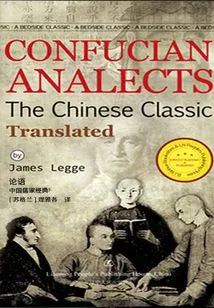
The Analects of Confucius
General Fiction论语
Bb
The demand for Confucius' teachings in Europe was so strong that someone finally devoted all his energy to translating the Analects. James Legge (1815-1897), a famous British sinologist and missionary of the London Missionary Society, served as the principal of the Anglo-Chinese College in Hong Kong in 1842. He was the first person to systematically study and translate ancient Chinese classics. In the 25 years from 1861 to 1886, with the assistance of his friend Wang Tao and assistant translator Huang Sheng, he translated 28 volumes of major Chinese classics such as the Four Books, the Five Classics, the Book of Songs, the Tao Te Ching, and the Li Sao. In his later years, he taught at Oxford University and devoted all his energy to the English translation of ancient Chinese classics. Although he was ill for a long time, he still worked for more than ten hours a day and kept writing. There are many translations of James Legge, and "The Analects of Confucius" is not the most outstanding one among them. However, if you want to learn to understand and try to appreciate the English translation of ancient Chinese classics by British scholars who have been immersed in Chinese culture for decades, quotation prose is a good start. In the field of translation, although most translators avoid the problem of "untranslatability", which makes translators feel powerless, they have to admit that the English translation of ancient Chinese classics has always been "painting the skin of a tiger, but it is difficult to paint the bones." A language has unique logic and charm. It is a miracle that it can continue to develop and enrich after thousands of years. It is also a blessing for the development of world languages. However, in the field of translation, the first thing a translator has to do is to break the "shackles" of the original language and recode it with his own understanding. The more unique a language is, and the greater the difference between the source language and the target language, the deeper the "shackles" will be, and the more of the true flavor of the original text will be lost in the translation process. Losing the original meaning supported by the logic and charm of the mother tongue will inevitably lead to the misfortune of fragmentation. This is one of the reasons why some foreign scholars believe that the Chinese analogy is too far-fetched and the connection is not strong. In this way, the value of the ancient Chinese classics translated by Chinese native English speakers is in a sense even greater than the original works themselves; and the combination of the two is far more than a simple stack of one plus one equals two. After reading it, one will have a glimpse of the outer world and regret one's own ignorance. In addition to the translation, Legge also wrote annotations, explaining words and meanings, introducing allusions, or explaining sources. It is interesting to read and can explain the heavy pain of renunciation in the ancient translation of Zi. However, due to the time and background, Legge's annotations are also full of inaccuracies. This also reminds us that no matter whether it is a saint or a famous person, his works are not equal to the standard. They can be seen and admired, and they can be praised and lamented. However, anything that has not been tested by time is not enough to be regarded as a standard. The same goes for translation. There is no standard answer to translation. No matter how good a translation is, it is just a family opinion and cannot be relied upon, and James Legge is no exception. But the valuable thing about Legge is that there are many scholars who translated "The Analects" into English. Although Legge is only one of them, he is the earliest one. The hardships are unimaginable, so his translation is also the most representative, showing the authentic British thinking and the taste of ancient English as the first person to translate hundreds of books. The latter is particularly valuable. Chinese is different from phonetic scripts like English. The pictographic nature and monosyllabic structure of Chinese characters can well retain and extend the meaning, allowing future generations to understand their meaning even if they do not know their pronunciation. As many ancient civilizations have been lost in the long river of history, Chinese has become the only script that has been used from ancient times to the present day, and it has also become the only "living" language that cannot find a corresponding style when translating ancient books to foreign countries. If we use modern foreign languages to translate ancient Chinese classics, we will inevitably suffer a lot of damage. In terms of the correspondence between language structure and style, Legge worked hard. Therefore, although he was a native British man, his translation is more acceptable to Chinese readers. It is catchy, simple and natural, and flows with elegance that does not need to be decorated. It will neither make people feel that the translation is too hard nor that it is insufficient. From ancient times to the present, "The Analects" has been the enlightenment textbook for Chinese students. The ancestors always shook their heads and rolled their heads with only a half-knowledge. How lucky are people today that they can read centuries-old translations and understand the Millennium-old Analects, which complement each other and live up to the ancient Confucian scholars' boast of "ruling the world with half of the Analects." All of this should really be admired by James Legge, the "first person to translate ancient books into English" who was still studying ancient books all the time despite being displaced by war and constantly translating them throughout his life. If the first person to eat crabs can be called brave, then the source of this courage is only the need for survival. And where did Legge's perseverance and determination to overcome all difficulties come from?
The demand for Confucius' teachings in Europe was so strong that someone finally devoted all his energy to translating the Analects. James Legge (1815-1897), a famous British sinologist and missionary of the London Missionary Society, served as the principal of the Anglo-Chinese College in Hong Kong in 1842. He was the first person to systematically study and translate ancient Chinese classics. In the 25 years from 1861 to 1886, with the assistance of his friend Wang Tao and assistant translator Huang Sheng, he translated 28 volumes of major Chinese classics such as the Four Books, the Five Classics, the Book of Songs, the Tao Te Ching, and the Li Sao. In his later years, he taught at Oxford University and devoted all his energy to the English translation of ancient Chinese classics. Although he was ill for a long time, he still worked for more than ten hours a day and kept writing. There are many translations of James Legge, and "The Analects of Confucius" is not the most outstanding one among them. However, if you want to learn to understand and try to appreciate the English translation of ancient Chinese classics by British scholars who have been immersed in Chinese culture for decades, quotation prose is a good start. In the field of translation, although most translators avoid the problem of "untranslatability", which makes translators feel powerless, they have to admit that the English translation of ancient Chinese classics has always been "painting the skin of a tiger, but it is difficult to paint the bones." A language has unique logic and charm. It is a miracle that it can continue to develop and enrich after thousands of years. It is also a blessing for the development of world languages. However, in the field of translation, the first thing a translator has to do is to break the "shackles" of the original language and recode it with his own understanding. The more unique a language is, and the greater the difference between the source language and the target language, the deeper the "shackles" will be, and the more of the true flavor of the original text will be lost in the translation process. Losing the original meaning supported by the logic and charm of the mother tongue will inevitably lead to the misfortune of fragmentation. This is one of the reasons why some foreign scholars believe that the Chinese analogy is too far-fetched and the connection is not strong. In this way, the value of the ancient Chinese classics translated by Chinese native English speakers is in a sense even greater than the original works themselves; and the combination of the two is far more than a simple stack of one plus one equals two. After reading it, one will have a glimpse of the outer world and regret one's own ignorance. In addition to the translation, Legge also wrote annotations, explaining words and meanings, introducing allusions, or explaining sources. It is interesting to read and can explain the heavy pain of renunciation in the ancient translation of Zi. However, due to the time and background, Legge's annotations are also full of inaccuracies. This also reminds us that no matter whether it is a saint or a famous person, his works are not equal to the standard. They can be seen and admired, and they can be praised and lamented. However, anything that has not been tested by time is not enough to be regarded as a standard. The same goes for translation. There is no standard answer to translation. No matter how good a translation is, it is just a family opinion and cannot be relied upon, and James Legge is no exception. But the valuable thing about Legge is that there are many scholars who translated "The Analects" into English. Although Legge is only one of them, he is the earliest one. The hardships are unimaginable, so his translation is also the most representative, showing the authentic British thinking and the taste of ancient English as the first person to translate hundreds of books. The latter is particularly valuable. Chinese is different from phonetic scripts like English. The pictographic nature and monosyllabic structure of Chinese characters can well retain and extend the meaning, allowing future generations to understand their meaning even if they do not know their pronunciation. As many ancient civilizations have been lost in the long river of history, Chinese has become the only script that has been used from ancient times to the present day, and it has also become the only "living" language that cannot find a corresponding style when translating ancient books to foreign countries. If we use modern foreign languages to translate ancient Chinese classics, we will inevitably suffer a lot of damage. In terms of the correspondence between language structure and style, Legge worked hard. Therefore, although he was a native British man, his translation is more acceptable to Chinese readers. It is catchy, simple and natural, and flows with elegance that does not need to be decorated. It will neither make people feel that the translation is too hard nor that it is insufficient. From ancient times to the present, "The Analects" has been the enlightenment textbook for Chinese students. The ancestors always shook their heads and rolled their heads with only a half-knowledge. How lucky are people today that they can read centuries-old translations and understand the Millennium-old Analects, which complement each other and live up to the ancient Confucian scholars' boast of "ruling the world with half of the Analects." All of this should really be admired by James Legge, the "first person to translate ancient books into English" who was still studying ancient books all the time despite being displaced by war and constantly translating them throughout his life. If the first person to eat crabs can be called brave, then the source of this courage is only the need for survival. And where did Legge's perseverance and determination to overcome all difficulties come from?