Library
Browse and search books
2 novels found
Leave a Reply Cancel Reply
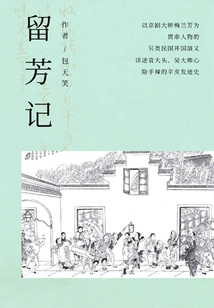
General Fiction留芳记
Bao Tianxiao
We are very honored to introduce to you a gripping long historical chapter novel - "The Story of a Fragrance", which is a work created by the talented Mr. Bao Tianxiao, the leader of popular literature during the Republic of China. This book is not only a record of historical events during the turbulent period of the late Qing Dynasty and the early Republic of China, but also a masterpiece that profoundly reveals the social changes and the fate of the characters in that era. When writing this book, Mr. Bao Tianxiao followed Zeng Pu's practice of using gold-colored flowers throughout "Flowers of the Sea of Sin", and selected the life stories of the three generations of Peking Opera master Mei Lanfang to be used throughout the book, describing the tumultuous years when the Revolution of 1911 began. "The Legend of Liu Fang" digs deeply into the true face of history and shows readers the complexity and multifaceted nature of Chinese society during that period. Through his writing, we see the other side of historical truth: a complex time woven together by power struggles, social changes and human struggles. This book has a very important documentary value for people today to understand and understand the history of that time. The literary value and historical significance of this work are self-evident. It is not only a photo review of the history of the late Qing Dynasty and the early Republic of China, but also a profound documentary excavation. Through delicate writing, the author brings readers into that era, allowing us to feel the heaviness of history and the joyful drama of the characters' fate.
We are very honored to introduce to you a gripping long historical chapter novel - "The Story of a Fragrance", which is a work created by the talented Mr. Bao Tianxiao, the leader of popular literature during the Republic of China. This book is not only a record of historical events during the turbulent period of the late Qing Dynasty and the early Republic of China, but also a masterpiece that profoundly reveals the social changes and the fate of the characters in that era. When writing this book, Mr. Bao Tianxiao followed Zeng Pu's practice of using gold-colored flowers throughout "Flowers of the Sea of Sin", and selected the life stories of the three generations of Peking Opera master Mei Lanfang to be used throughout the book, describing the tumultuous years when the Revolution of 1911 began. "The Legend of Liu Fang" digs deeply into the true face of history and shows readers the complexity and multifaceted nature of Chinese society during that period. Through his writing, we see the other side of historical truth: a complex time woven together by power struggles, social changes and human struggles. This book has a very important documentary value for people today to understand and understand the history of that time. The literary value and historical significance of this work are self-evident. It is not only a photo review of the history of the late Qing Dynasty and the early Republic of China, but also a profound documentary excavation. Through delicate writing, the author brings readers into that era, allowing us to feel the heaviness of history and the joyful drama of the characters' fate.
Memoirs of Chuanying Studio
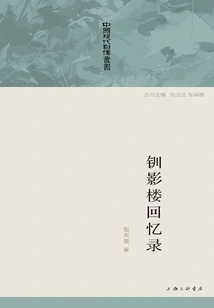
Literature钏影楼回忆录
Bao Tianxiao
"Memoirs of Chuanying Studio" is the memoirs of Bao Tianxiao, a famous journalist and novelist in my country. Bao Tianxiao's family fell into decline when he was young, so he studied at his cousin's father-in-law, Zhu Jinglan, and his second uncle, You Xunfu. He may be called a mere mortal, but he is unconventional and extraordinary. The pain of migrating and fleeing made him work harder, read widely, and master the knowledge of traditional Chinese culture through self-study. In order to make a living, he started teaching as an apprentice at the age of 17 and embarked on the road of self-reliance. When he was 31 years old, he officially moved to Shanghai and began to edit many influential publications, such as "Novel Times", "Women's Times", "Novel Review", "Novel Pictorial", etc. After the July 7th Incident, he actively wrote for "Shen Shen" and "Nanjing Evening News". In 1947, Bao Tianxiao left Shanghai to live in Taiwan, and then went to Hong Kong the following year. In 1973, Bao Tianxiao died of illness in the French Hospital in Hong Kong at the age of 98.
"Memoirs of Chuanying Studio" is the memoirs of Bao Tianxiao, a famous journalist and novelist in my country. Bao Tianxiao's family fell into decline when he was young, so he studied at his cousin's father-in-law, Zhu Jinglan, and his second uncle, You Xunfu. He may be called a mere mortal, but he is unconventional and extraordinary. The pain of migrating and fleeing made him work harder, read widely, and master the knowledge of traditional Chinese culture through self-study. In order to make a living, he started teaching as an apprentice at the age of 17 and embarked on the road of self-reliance. When he was 31 years old, he officially moved to Shanghai and began to edit many influential publications, such as "Novel Times", "Women's Times", "Novel Review", "Novel Pictorial", etc. After the July 7th Incident, he actively wrote for "Shen Shen" and "Nanjing Evening News". In 1947, Bao Tianxiao left Shanghai to live in Taiwan, and then went to Hong Kong the following year. In 1973, Bao Tianxiao died of illness in the French Hospital in Hong Kong at the age of 98.