Library
Browse and search books
11 novels found
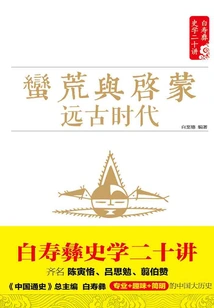
蛮荒与启蒙:远古时代
Bai Zhide
This book describes the exploration of primitive society before written records from archaeological data. Starting from the primitive human beings and connecting with the Xia, Shang and Zhou dynasties at the bottom, it touches on all aspects of the research objects of Chinese prehistoric archeology and related disciplines. Ancient Era mainly describes the glory of the ancient cultures of our ancient ancestors (about 1.8 Million years ago to 10,000 years ago), the Neolithic Age (about 10,000 BC to 1 3500 BC), the Chalcolithic Age (about 3500 BC to 1 2000 BC), and the surrounding areas (Northeast, Gansu and Qinghai, Southeast, South China, and Southwest). In ancient times, there were widespread human activities in China. They left traces of primitive society.
This book describes the exploration of primitive society before written records from archaeological data. Starting from the primitive human beings and connecting with the Xia, Shang and Zhou dynasties at the bottom, it touches on all aspects of the research objects of Chinese prehistoric archeology and related disciplines. Ancient Era mainly describes the glory of the ancient cultures of our ancient ancestors (about 1.8 Million years ago to 10,000 years ago), the Neolithic Age (about 10,000 BC to 1 3500 BC), the Chalcolithic Age (about 3500 BC to 1 2000 BC), and the surrounding areas (Northeast, Gansu and Qinghai, Southeast, South China, and Southwest). In ancient times, there were widespread human activities in China. They left traces of primitive society.
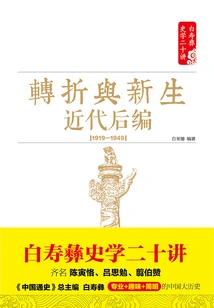
转折与新生:近代后编(1919—1949)
Bai Zhide
This book tells the story that after the May 4th Movement, the proletariat stepped onto the political stage, and then Marxism-Leninism was introduced into China. The great Communist Party of China was born and established the correct revolutionary guidelines, leading the people to achieve victory in the new-democratic revolution.
This book tells the story that after the May 4th Movement, the proletariat stepped onto the political stage, and then Marxism-Leninism was introduced into China. The great Communist Party of China was born and established the correct revolutionary guidelines, leading the people to achieve victory in the new-democratic revolution.
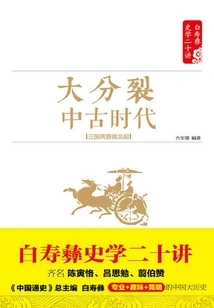
大分裂:中古时代:三国两晋南北朝
Bai Zhide
This is a period of nationwide national reorganization. During the Three Kingdoms, Jin, Southern and Northern Dynasties, the phenomenon of ethnic reorganization was unfolding, and during the Sui and Tang Dynasties, the phenomenon of ethnic reorganization gradually came to an end. The Three Kingdoms, Two Jins, Southern and Northern Dynasties period gives some people the impression that it is just a mess. In fact, this period of history has its own itinerary that can be examined. Roughly speaking, this period is equivalent to 196 to 589 AD and can be divided into four stages. First, the tripartite confrontation of the Three Kingdoms; second, the brief unification of the Western Jin Dynasty and the chaos of the Sixteen Kingdoms of the Eastern Jin Dynasty; third, the confrontation between the Southern and Northern Dynasties; fourth, the split from the Northern Wei to the unification of the Sui Dynasty. Judging from the division of these four stages, the historical formation of this period is quite clear. This volume also discusses this situation in more detail. This division is viewed from the overall perspective of historical development, rather than simply treated as the history of separate regimes.
This is a period of nationwide national reorganization. During the Three Kingdoms, Jin, Southern and Northern Dynasties, the phenomenon of ethnic reorganization was unfolding, and during the Sui and Tang Dynasties, the phenomenon of ethnic reorganization gradually came to an end. The Three Kingdoms, Two Jins, Southern and Northern Dynasties period gives some people the impression that it is just a mess. In fact, this period of history has its own itinerary that can be examined. Roughly speaking, this period is equivalent to 196 to 589 AD and can be divided into four stages. First, the tripartite confrontation of the Three Kingdoms; second, the brief unification of the Western Jin Dynasty and the chaos of the Sixteen Kingdoms of the Eastern Jin Dynasty; third, the confrontation between the Southern and Northern Dynasties; fourth, the split from the Northern Wei to the unification of the Sui Dynasty. Judging from the division of these four stages, the historical formation of this period is quite clear. This volume also discusses this situation in more detail. This division is viewed from the overall perspective of historical development, rather than simply treated as the history of separate regimes.
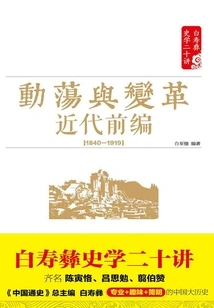
动荡与变革:近代前编(1840—1919)
Bai Zhide
In the "First Edition of Modern Times (1840-1919)", the word "new" is prominently reflected. The significance of academic research lies in innovation. The criterion for identifying the value of an academic work also depends on whether it is novel. If viewed from this point of view, Mr. Bai Shouyi's research on modern Chinese history is full of new ideas, embodying "new" characteristics in terms of content, style, etc. First of all, it reflects "communication", and the basic requirement is to achieve "communication". When talking about China's modern history, Mr. Bai said: "China's relevant literature, research status and other modern history are the history of the Chinese people being tested in the crucible of modern times. It is the history of a period when military, political, economic and cultural failures were suffered. In general, it is the history of hindering Western imperialism's eastward invasion." It can be seen that Mr. Bai broke the convention of previous writings and integrated all aspects of modern China into consideration.
In the "First Edition of Modern Times (1840-1919)", the word "new" is prominently reflected. The significance of academic research lies in innovation. The criterion for identifying the value of an academic work also depends on whether it is novel. If viewed from this point of view, Mr. Bai Shouyi's research on modern Chinese history is full of new ideas, embodying "new" characteristics in terms of content, style, etc. First of all, it reflects "communication", and the basic requirement is to achieve "communication". When talking about China's modern history, Mr. Bai said: "China's relevant literature, research status and other modern history are the history of the Chinese people being tested in the crucible of modern times. It is the history of a period when military, political, economic and cultural failures were suffered. In general, it is the history of hindering Western imperialism's eastward invasion." It can be seen that Mr. Bai broke the convention of previous writings and integrated all aspects of modern China into consideration.
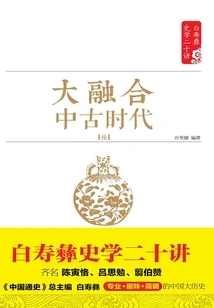
大融合:中古时代(元)
Bai Zhide
The Yuan Dynasty discussed in this volume is equivalent to the Chinese history from 1271 AD to 1368 AD. The Yuan Dynasty was a very important period in the history of the development of my country's unified multi-ethnic country. The vastness of its ruling territory, the number of ethnic groups, and the complexity and diversity of politics, economy, and culture were all unprecedented. This naturally brought about many questions about how to understand and evaluate it. Therefore, this volume should try to avoid cumbersome discussions and conclusions on these issues, but should focus on the analysis and induction of historical facts, striving to allow readers to gain a more appropriate understanding through a more comprehensive, sufficient and accurate examination of historical facts.
The Yuan Dynasty discussed in this volume is equivalent to the Chinese history from 1271 AD to 1368 AD. The Yuan Dynasty was a very important period in the history of the development of my country's unified multi-ethnic country. The vastness of its ruling territory, the number of ethnic groups, and the complexity and diversity of politics, economy, and culture were all unprecedented. This naturally brought about many questions about how to understand and evaluate it. Therefore, this volume should try to avoid cumbersome discussions and conclusions on these issues, but should focus on the analysis and induction of historical facts, striving to allow readers to gain a more appropriate understanding through a more comprehensive, sufficient and accurate examination of historical facts.
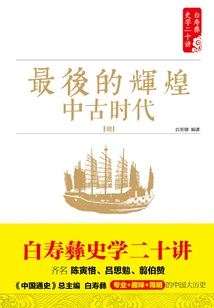
最后的辉煌:中古时代:明
Bai Zhide
The Ming Dynasty has a special status in the history of our country. No matter in terms of economy or culture, newcomers of one kind or another are constantly emerging. At the same time, the corruption of the feudal system is also deepening. During the more than 270 years of the Ming Dynasty, ethnic disputes existed, but there were no major disputes. Generally speaking, ethnic relations were relatively stable. The expansion of feudalization in ethnic areas and the Han nationality as the mainstream in national ethnic relations have been further clarified. The Ming Dynasty was a period when the advanced social forces demanded faster development, while the old social forces continued to intensify oppression and exploitation. Therefore, the social contradictions in the Ming Dynasty were sharp and complex. The "dead" holding back the "living" is a reflection of this era.
The Ming Dynasty has a special status in the history of our country. No matter in terms of economy or culture, newcomers of one kind or another are constantly emerging. At the same time, the corruption of the feudal system is also deepening. During the more than 270 years of the Ming Dynasty, ethnic disputes existed, but there were no major disputes. Generally speaking, ethnic relations were relatively stable. The expansion of feudalization in ethnic areas and the Han nationality as the mainstream in national ethnic relations have been further clarified. The Ming Dynasty was a period when the advanced social forces demanded faster development, while the old social forces continued to intensify oppression and exploitation. Therefore, the social contradictions in the Ming Dynasty were sharp and complex. The "dead" holding back the "living" is a reflection of this era.
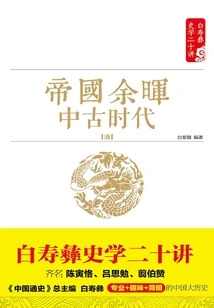
帝国余晖:中古时代:清
Bai Zhide
The Qing Dynasty was the last dynasty of my country's feudal society. In the process of historical development, the Qing Dynasty played a role as a link between the past and the future. On the one hand, the Qing Dynasty retained the basic characteristics of feudal society and was similar to its previous dynasties.
The Qing Dynasty was the last dynasty of my country's feudal society. In the process of historical development, the Qing Dynasty played a role as a link between the past and the future. On the one hand, the Qing Dynasty retained the basic characteristics of feudal society and was similar to its previous dynasties.
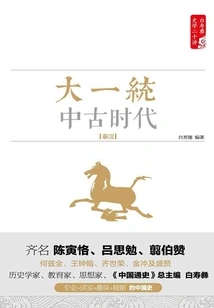
大一统:中古时代:秦汉
Bai Zhide
This book discusses the growth period of China's medieval era, which is roughly equivalent to the history of the Qin and Han dynasties. The so-called medieval era refers to the era when the feudal production method was dominant and other production methods existed. During the reign of the Qin and Han dynasties, the upper limit was from 221 BC when Qin Shihuang destroyed the six kingdoms, and the lower limit was from 196 AD when the Han Dynasty moved its capital to Xuchang. After moving the capital to Xuchang, the Han Dynasty still maintained its title as a dynasty, but in fact power was in the hands of Cao Cao, and history had entered another period.
This book discusses the growth period of China's medieval era, which is roughly equivalent to the history of the Qin and Han dynasties. The so-called medieval era refers to the era when the feudal production method was dominant and other production methods existed. During the reign of the Qin and Han dynasties, the upper limit was from 221 BC when Qin Shihuang destroyed the six kingdoms, and the lower limit was from 196 AD when the Han Dynasty moved its capital to Xuchang. After moving the capital to Xuchang, the Han Dynasty still maintained its title as a dynasty, but in fact power was in the hands of Cao Cao, and history had entered another period.
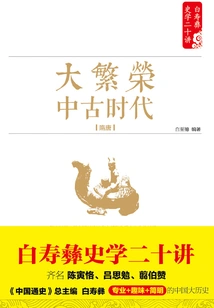
大繁荣:中古时代:隋唐
Bai Zhide
Medieval Era, Sui and Tang Dynasties, discusses the history of the late development period of China's feudal society in the Middle Ages, and mainly describes the history of the Sui and Tang dynasties, the prosperous and powerful era of China's feudal society. From it, we can see the development of historiography, the process of historical evolution and related focus issues of the Sui and Tang Dynasties, and explore the reasons for the strong development of the Sui and Tang Dynasties in many aspects and in depth.
Medieval Era, Sui and Tang Dynasties, discusses the history of the late development period of China's feudal society in the Middle Ages, and mainly describes the history of the Sui and Tang dynasties, the prosperous and powerful era of China's feudal society. From it, we can see the development of historiography, the process of historical evolution and related focus issues of the Sui and Tang Dynasties, and explore the reasons for the strong development of the Sui and Tang Dynasties in many aspects and in depth.
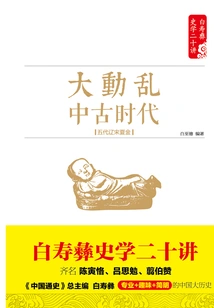
大动乱:中古时代(五代辽宋夏金)
Bai Zhide
This volume discusses the history of China from 906 AD to 1279 AD, which is the history of the Five Dynasties, Liao, Song, Xia and Jin periods. The status of this period in Chinese history has not been very high. Traditional historical views believe that this should be the second period of division in Chinese history after the Wei, Jin, Southern and Northern Dynasties. During this period of division, the cruel war and the suffering of the people left deep wounds in people's hearts. However, the "poor and weak" Song Dynasty also shone with the dazzling splendor of three of China's "four great inventions": the compass, gunpowder and printing. The emergence of the compass, gunpowder and printing promoted the great development of world civilization; Kaifeng in "Along the River During the Qingming Festival" was the most prosperous city in the world at that time. The Khitans and Jurchens on horseback are the entrepreneurs who built the capital in Beijing. In the description of "Medieval Era·Five Dynasties, Liao, Song, Xia and Jin Periods", we stand on the standpoint of national equality and reproduce the history of this period with a new vision and perspective.
This volume discusses the history of China from 906 AD to 1279 AD, which is the history of the Five Dynasties, Liao, Song, Xia and Jin periods. The status of this period in Chinese history has not been very high. Traditional historical views believe that this should be the second period of division in Chinese history after the Wei, Jin, Southern and Northern Dynasties. During this period of division, the cruel war and the suffering of the people left deep wounds in people's hearts. However, the "poor and weak" Song Dynasty also shone with the dazzling splendor of three of China's "four great inventions": the compass, gunpowder and printing. The emergence of the compass, gunpowder and printing promoted the great development of world civilization; Kaifeng in "Along the River During the Qingming Festival" was the most prosperous city in the world at that time. The Khitans and Jurchens on horseback are the entrepreneurs who built the capital in Beijing. In the description of "Medieval Era·Five Dynasties, Liao, Song, Xia and Jin Periods", we stand on the standpoint of national equality and reproduce the history of this period with a new vision and perspective.
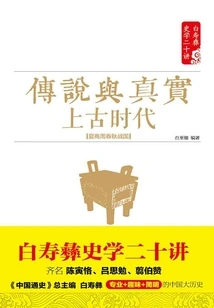
传说与真实:上古时代(夏商周春秋战国)
Bai Zhide
This book discusses the history of our country from the beginning of written records to the end of the Warring States Period. From the perspective of the sequence of historical development, it is roughly equivalent to the era of slavery mentioned in general historical writings. The history from Xia, Shang and Zhou to the Spring and Autumn Period and the Warring States Period is the history of the early formation and development of the Chinese nation, and it also discusses the process from a single nation to the unification of regional multi-ethnic groups.
This book discusses the history of our country from the beginning of written records to the end of the Warring States Period. From the perspective of the sequence of historical development, it is roughly equivalent to the era of slavery mentioned in general historical writings. The history from Xia, Shang and Zhou to the Spring and Autumn Period and the Warring States Period is the history of the early formation and development of the Chinese nation, and it also discusses the process from a single nation to the unification of regional multi-ethnic groups.