Library
Browse and search books
6 novels found
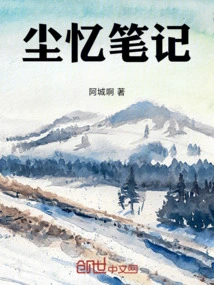
Chen Yi Notes
Realistic Fiction尘忆笔记
Acheng
The things that usually come to my mind are things that happened very, very early in the past. In fact, sometimes I wonder, if I say I go back now, what will they see like when they see me? Such a little kid grew up in almost countless days and months. They don't know yet. Quite bitter. Time goes too fast.
The things that usually come to my mind are things that happened very, very early in the past. In fact, sometimes I wonder, if I say I go back now, what will they see like when they see me? Such a little kid grew up in almost countless days and months. They don't know yet. Quite bitter. Time goes too fast.
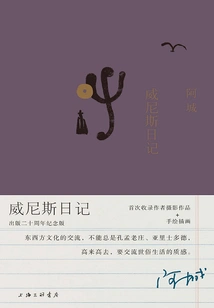
Diary of Venice
General Fiction威尼斯日记
Acheng
"Venice Diary" is a diary written by the writer Mr. Acheng during his three-month stay in Venice in 1992. Since its publication, this short book has become a classic that many writers and readers can't put down and recite casually. Utopia launches a 20th anniversary collector's edition, which includes 7 photographs and 3 hand-painted illustrations by the author, presenting you with the most beautiful Venice. "Venice is a small island. For tourism, a week is just right, and the impression will be full and detailed. If you stay for more than half a month, you will start to get bored and disgusted. I stayed for three months, and I should hate it in the end. If I don't hate it, I can only go to the secular life in Venice. I started buying things to cook. Ginger is not easy to buy, so I eat it every day. I got up early in the morning and went to the pier to see if anyone was selling ginger, and so on. The Venetians soon learned that this Oriental was not Japanese, but a Chinese. The exchange of Eastern and Western cultures cannot always be about Confucius, Mencius, and Aristotle. I hope to fill my diary with such things."
"Venice Diary" is a diary written by the writer Mr. Acheng during his three-month stay in Venice in 1992. Since its publication, this short book has become a classic that many writers and readers can't put down and recite casually. Utopia launches a 20th anniversary collector's edition, which includes 7 photographs and 3 hand-painted illustrations by the author, presenting you with the most beautiful Venice. "Venice is a small island. For tourism, a week is just right, and the impression will be full and detailed. If you stay for more than half a month, you will start to get bored and disgusted. I stayed for three months, and I should hate it in the end. If I don't hate it, I can only go to the secular life in Venice. I started buying things to cook. Ginger is not easy to buy, so I eat it every day. I got up early in the morning and went to the pier to see if anyone was selling ginger, and so on. The Venetians soon learned that this Oriental was not Japanese, but a Chinese. The exchange of Eastern and Western cultures cannot always be about Confucius, Mencius, and Aristotle. I hope to fill my diary with such things."
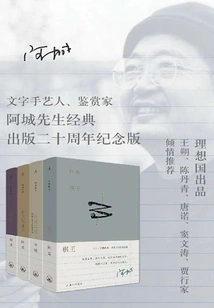
阿城作品典藏(二十周年纪念版)
Acheng
Utopia launches a collection of Mr. Acheng's works. "The King of Chess" includes the "Three Kings" novel classics, and the book presents precious documents, illustrations from the Star Art Exhibition, and talks about the mimeograph creation of "Today" magazine, etc. "Gossip" is a collection of talks about "Chinese secularity and Chinese novels", with a 10,000-word extension. The author revisited this booklet twenty years later in order to make more connections between Chinese culture and civilization. "Common Sense and General Education" is the twentieth anniversary edition of its publication. Talking about common sense often ruins the scenery. "Venice Diary" is Mr. Acheng's diary of his travels in Venice, Italy in 1992. The author's photography and hand-painted illustrations are presented for the first time.
Utopia launches a collection of Mr. Acheng's works. "The King of Chess" includes the "Three Kings" novel classics, and the book presents precious documents, illustrations from the Star Art Exhibition, and talks about the mimeograph creation of "Today" magazine, etc. "Gossip" is a collection of talks about "Chinese secularity and Chinese novels", with a 10,000-word extension. The author revisited this booklet twenty years later in order to make more connections between Chinese culture and civilization. "Common Sense and General Education" is the twentieth anniversary edition of its publication. Talking about common sense often ruins the scenery. "Venice Diary" is Mr. Acheng's diary of his travels in Venice, Italy in 1992. The author's photography and hand-painted illustrations are presented for the first time.
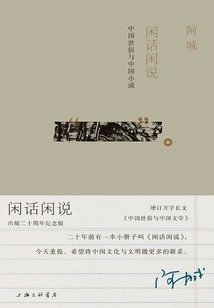
Gossip
Literature闲话闲说
Acheng
"Gossip" is a collection of Mr. Acheng's talks about Chinese secularity and Chinese novels. Using the writing style of literary history and the tone of chatting with friends and audiences, he looks at the various scenes of secular culture and Chinese literature and presents the "miscellaneous" and "tong" aspects of culture in Acheng. It is a masterpiece of his thoughts. Utopia launches the 20th anniversary commemorative edition with an additional 10,000-word article "Chinese Secularity and Chinese Literature". "Twenty years ago, there was a booklet called "Gossip". I mentioned it again today, hoping to make more connections between Chinese culture and civilization. "Chinese Secularity and Chinese Novels" is a collection of many talks. Speaking to the audience and chatting with friends, our common knowledge wealth is secular experience. Secular experience is the easiest to transform into a humanistic perspective. In this way, it is best to turn theory into gossip, hide professional terms in gossip, and not define "secular" throughout the article to make it easier for listeners to follow."
"Gossip" is a collection of Mr. Acheng's talks about Chinese secularity and Chinese novels. Using the writing style of literary history and the tone of chatting with friends and audiences, he looks at the various scenes of secular culture and Chinese literature and presents the "miscellaneous" and "tong" aspects of culture in Acheng. It is a masterpiece of his thoughts. Utopia launches the 20th anniversary commemorative edition with an additional 10,000-word article "Chinese Secularity and Chinese Literature". "Twenty years ago, there was a booklet called "Gossip". I mentioned it again today, hoping to make more connections between Chinese culture and civilization. "Chinese Secularity and Chinese Novels" is a collection of many talks. Speaking to the audience and chatting with friends, our common knowledge wealth is secular experience. Secular experience is the easiest to transform into a humanistic perspective. In this way, it is best to turn theory into gossip, hide professional terms in gossip, and not define "secular" throughout the article to make it easier for listeners to follow."
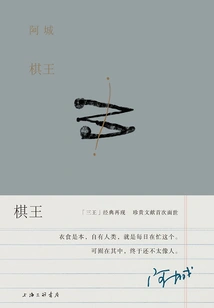
Chess King
General Fiction棋王
Acheng
"The King of Chess" includes the "Three Kings" novel classics, rare documents, illustrations from the Star Art Exhibition, and talks about the mimeograph creation of "Today" magazine, etc., Showing the warmth and demeanor of Mr. Acheng, a writer and craftsman. "In terms of the appearance of secular novels, "The King of Chess" contains "heroic legends" and "realistic romances." The "romance" is relatively obscure and critics are not familiar with the secular world, so it has not yet been deciphered. It will probably take twenty or thirty years. Many people mentioned the word "eat" in "The King of Chess" in their comments, which almost made them see the plain original meaning of "secular", but they were distracted by the big words they used to use. What is hidden in "The King of Trees" is an ignorant conscience, which is not scientific. , Is primitive, but what it faces is not science, but stupidity, which leads to failure. Stupidity has no conscience, so conscience is valuable to China. My favorite is "The Child King". It is clearly written in 1976 at the beginning of the novel. I don't know what will happen in the future. I was already a farmer, writing in my free time, and wasting paper. The state of life at that time was just uncooperative. "
"The King of Chess" includes the "Three Kings" novel classics, rare documents, illustrations from the Star Art Exhibition, and talks about the mimeograph creation of "Today" magazine, etc., Showing the warmth and demeanor of Mr. Acheng, a writer and craftsman. "In terms of the appearance of secular novels, "The King of Chess" contains "heroic legends" and "realistic romances." The "romance" is relatively obscure and critics are not familiar with the secular world, so it has not yet been deciphered. It will probably take twenty or thirty years. Many people mentioned the word "eat" in "The King of Chess" in their comments, which almost made them see the plain original meaning of "secular", but they were distracted by the big words they used to use. What is hidden in "The King of Trees" is an ignorant conscience, which is not scientific. , Is primitive, but what it faces is not science, but stupidity, which leads to failure. Stupidity has no conscience, so conscience is valuable to China. My favorite is "The Child King". It is clearly written in 1976 at the beginning of the novel. I don't know what will happen in the future. I was already a farmer, writing in my free time, and wasting paper. The state of life at that time was just uncooperative. "
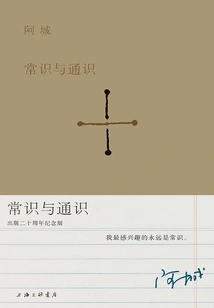
Common Sense and General Knowledge
Literature常识与通识
Acheng
The twelve articles in "Common Sense and General Knowledge" are the columns written by Mr. Acheng for "Harvest". The original title was "Destroying the Scenery" because talking about common sense often destroys the scenery. These articles are written in Los Angeles, Mexico, Shanghai, Taipei... Acheng, who has traveled around the world, tells readers "common sense" - you come from your hometown and you should know the things about your hometown. He took back the abstract knowledge and pondered it in his interesting secular world. His soothing prose style pays homage to "The Story of Humanity", the enlightenment book of life. "Homesickness and Protease", "Love and Chemistry", "Attack and Humanity"... These popular masterpieces are sober, humorous, beautiful and imaginative. Reading them still stimulates the brain. The Republic of China has launched a 20th anniversary commemorative edition, and Tang Nuo's accompanying article "A Qingming World, a Bright Universe" is included in the book.
The twelve articles in "Common Sense and General Knowledge" are the columns written by Mr. Acheng for "Harvest". The original title was "Destroying the Scenery" because talking about common sense often destroys the scenery. These articles are written in Los Angeles, Mexico, Shanghai, Taipei... Acheng, who has traveled around the world, tells readers "common sense" - you come from your hometown and you should know the things about your hometown. He took back the abstract knowledge and pondered it in his interesting secular world. His soothing prose style pays homage to "The Story of Humanity", the enlightenment book of life. "Homesickness and Protease", "Love and Chemistry", "Attack and Humanity"... These popular masterpieces are sober, humorous, beautiful and imaginative. Reading them still stimulates the brain. The Republic of China has launched a 20th anniversary commemorative edition, and Tang Nuo's accompanying article "A Qingming World, a Bright Universe" is included in the book.