Library
Browse and search books
7 novels found
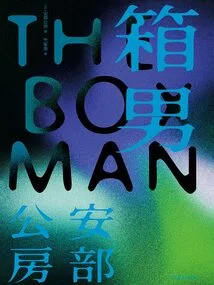
Box Man
General Fiction箱男
Abe Public House
"Box Men" are a kind of urban fringe characters: they carry cardboard boxes on their heads and build their own kingdoms in small cardboard boxes. They are completely isolated from society, wandering in the corners of the city, and only looking at the world through the peephole. How did "Box Man" come about? Why did they give up everything for what they wanted? What did you see through the peep window? The story is based on the notes written by the "Box Man", and is composed of articles written by other characters, suddenly inserted fables, news reports, poems and other various time and space fragments to form an experimental structure. It explores the invisibility of people living in the city, the relationship between "seeing" and "being seen", human beings' sense of belonging, and questioning of "writing" itself.
"Box Men" are a kind of urban fringe characters: they carry cardboard boxes on their heads and build their own kingdoms in small cardboard boxes. They are completely isolated from society, wandering in the corners of the city, and only looking at the world through the peephole. How did "Box Man" come about? Why did they give up everything for what they wanted? What did you see through the peep window? The story is based on the notes written by the "Box Man", and is composed of articles written by other characters, suddenly inserted fables, news reports, poems and other various time and space fragments to form an experimental structure. It explores the invisibility of people living in the city, the relationship between "seeing" and "being seen", human beings' sense of belonging, and questioning of "writing" itself.
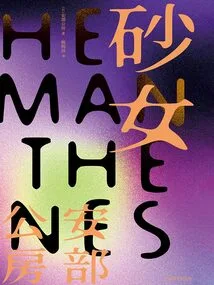
Sand Girl
General Fiction砂女
Abe Public House
A man who went to the seaside dunes to collect insects accidentally stumbled into a sand nest where only one woman lived. He was imprisoned there and could only dig in the sand day after day. He tried many ways to escape, but all failed. Later, when the man is finally given the chance to escape, he has given up trying. The novel presents surreal and incredible plots in a realistic way, depicting the boring absurdity of ordinary people's daily lives, as well as the essence and truth of life that exists in it. The novel was published in 1962 and won the Yomiuri Literature Prize the following year. It was adapted into a movie in 1964 and was translated and published in more than 30 countries and regions. Won the French 1967 Best Foreign Novel Award.
A man who went to the seaside dunes to collect insects accidentally stumbled into a sand nest where only one woman lived. He was imprisoned there and could only dig in the sand day after day. He tried many ways to escape, but all failed. Later, when the man is finally given the chance to escape, he has given up trying. The novel presents surreal and incredible plots in a realistic way, depicting the boring absurdity of ordinary people's daily lives, as well as the essence and truth of life that exists in it. The novel was published in 1962 and won the Yomiuri Literature Prize the following year. It was adapted into a movie in 1964 and was translated and published in more than 30 countries and regions. Won the French 1967 Best Foreign Novel Award.

Wall
General Fiction墙
Abe Public House
"The Wall" is a collection of Abe Kobo's early short stories. It includes the 25th Akutagawa Prize-winning work "The Crime of Mr. S. Karma" and the 2nd Post-War Literature Prize-winning work "The Red Cocoon". "The Wall" uses a surrealist approach to demonstrate Kobo Abe's subtle satire and criticism of human society and the material world.
"The Wall" is a collection of Abe Kobo's early short stories. It includes the 25th Akutagawa Prize-winning work "The Crime of Mr. S. Karma" and the 2nd Post-War Literature Prize-winning work "The Red Cocoon". "The Wall" uses a surrealist approach to demonstrate Kobo Abe's subtle satire and criticism of human society and the material world.
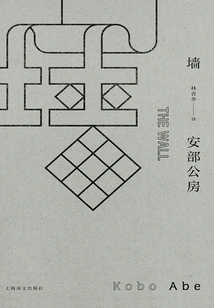
Wall
General Fiction墙
Abe Public House
"The Wall" is a collection of short stories and short stories by Kobo Abe. The whole book is divided into three parts. The first "The Crime of Mr. S. Karma" is Abe's earliest avant-garde masterpiece. It won the 25th Akutagawa Prize and established his position in the literary world. In the novel, the protagonist wakes up one night and realizes that he has forgotten his name. Losing his name caused him to directly lose his right to exist in reality, and he became the target of criticism. After experiencing various strange and irrational phenomena, he himself turned into a wall. In the second film, "The Raccoon of Babel," the protagonist's shadow was eaten by a strange beast, the raccoon, and turned into a transparent man with only his eyeballs left. The third volume contains four short stories. "The Red Cocoon" won the second Post-War Literature Prize and tells the story of a homeless man who eventually transforms into an empty cocoon. "The Flood" tells the story of humans turning into liquid and eventually flooding the entire world. The protagonist of "Magic Chalk" is a poor painter who accidentally discovers that things drawn with red chalk will become real objects without being exposed to sunlight, so he shuts himself up and attempts to design a new world. The last piece, "Career," satirizes capitalism for turning everything, even people themselves, into raw materials and processed into commodities. The concept of "wall" is consistent throughout the book. The author describes the "lonely person" in modern cities and civilized society through the protagonist who is transformed into a wall, an empty cocoon or a chalk drawing. Through absurd plots, he shows a real world that seems absurd but is actually real.
"The Wall" is a collection of short stories and short stories by Kobo Abe. The whole book is divided into three parts. The first "The Crime of Mr. S. Karma" is Abe's earliest avant-garde masterpiece. It won the 25th Akutagawa Prize and established his position in the literary world. In the novel, the protagonist wakes up one night and realizes that he has forgotten his name. Losing his name caused him to directly lose his right to exist in reality, and he became the target of criticism. After experiencing various strange and irrational phenomena, he himself turned into a wall. In the second film, "The Raccoon of Babel," the protagonist's shadow was eaten by a strange beast, the raccoon, and turned into a transparent man with only his eyeballs left. The third volume contains four short stories. "The Red Cocoon" won the second Post-War Literature Prize and tells the story of a homeless man who eventually transforms into an empty cocoon. "The Flood" tells the story of humans turning into liquid and eventually flooding the entire world. The protagonist of "Magic Chalk" is a poor painter who accidentally discovers that things drawn with red chalk will become real objects without being exposed to sunlight, so he shuts himself up and attempts to design a new world. The last piece, "Career," satirizes capitalism for turning everything, even people themselves, into raw materials and processed into commodities. The concept of "wall" is consistent throughout the book. The author describes the "lonely person" in modern cities and civilized society through the protagonist who is transformed into a wall, an empty cocoon or a chalk drawing. Through absurd plots, he shows a real world that seems absurd but is actually real.

Secret Meeting
General Fiction密会
Abe Public House
If Abe Kobo's "The Box Man" is a "voyeur's novel", then "Secret Meeting" is an "eavesdropper's novel". One summer dawn, the ambulance came to the home and took his wife away. In order to find his wife, "I" sneaked into the huge closed hospital. The deputy director there was rendered impotent due to a "neurosis of human relations." For treatment, the deputy director installed nearly 250 listening devices inside and outside the hospital. I have never been able to find out the whereabouts of my wife, but I have become friends with people such as Ma Er, the vice-president who pretends to be someone else's lower body, and his secretary, a girl with osteolytic disease. In order to rescue the girl with osteolytic disease from the control of the vice-dean, "I" was chased and had no place to stay. Knowing that the vice president could hear it, "I" began to shout into the bug, admitting that he had become a patient... The novel uses a unique method to analyze the relationship between the weak and power to readers, revealing the characteristics of modern human society.
If Abe Kobo's "The Box Man" is a "voyeur's novel", then "Secret Meeting" is an "eavesdropper's novel". One summer dawn, the ambulance came to the home and took his wife away. In order to find his wife, "I" sneaked into the huge closed hospital. The deputy director there was rendered impotent due to a "neurosis of human relations." For treatment, the deputy director installed nearly 250 listening devices inside and outside the hospital. I have never been able to find out the whereabouts of my wife, but I have become friends with people such as Ma Er, the vice-president who pretends to be someone else's lower body, and his secretary, a girl with osteolytic disease. In order to rescue the girl with osteolytic disease from the control of the vice-dean, "I" was chased and had no place to stay. Knowing that the vice president could hear it, "I" began to shout into the bug, admitting that he had become a patient... The novel uses a unique method to analyze the relationship between the weak and power to readers, revealing the characteristics of modern human society.
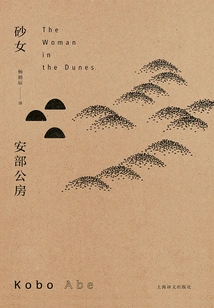
Sand Girl
General Fiction砂女
Abe Public House
"Sand Girl" is Kobo Abe's most representative novel and a representative masterpiece of modern Japanese literature. It has received high praise from around the world and is called "a great harvest of modern Japanese literature". A man who went to the seaside dunes to collect insects accidentally entered a sand cave home where only one woman lived. He was imprisoned in it and could only dig sand day after day. He tried many ways to escape. After repeated failures, the man gradually adapted to the life in the sand cave. When he finally got the chance to escape, he had given up trying. The novel uses realistic techniques to express unrealistic and incredible plots, depicting the boring absurdity of ordinary people's daily lives, as well as the essence and truth of life that exists in it. The novel was published in 1962 and won the Yomiuri Literature Prize the following year. It was adapted into a movie in 1964 and has been translated and published in more than 20 countries and regions. Won the French 1967 Best Foreign Literature Award.
"Sand Girl" is Kobo Abe's most representative novel and a representative masterpiece of modern Japanese literature. It has received high praise from around the world and is called "a great harvest of modern Japanese literature". A man who went to the seaside dunes to collect insects accidentally entered a sand cave home where only one woman lived. He was imprisoned in it and could only dig sand day after day. He tried many ways to escape. After repeated failures, the man gradually adapted to the life in the sand cave. When he finally got the chance to escape, he had given up trying. The novel uses realistic techniques to express unrealistic and incredible plots, depicting the boring absurdity of ordinary people's daily lives, as well as the essence and truth of life that exists in it. The novel was published in 1962 and won the Yomiuri Literature Prize the following year. It was adapted into a movie in 1964 and has been translated and published in more than 20 countries and regions. Won the French 1967 Best Foreign Literature Award.

Abe Kobo's Works Series (set of 4 Volumes in Total)
General Fiction安部公房作品系列(套装共4册)
Abe Public House
This collection of works by Kobo Abe, a representative figure in Japanese existentialist literature and "Japan's Kafka", shows the unique landscape of contemporary Japanese avant-garde literature. Kobo Abe (1924-1993) Japanese novelist and playwright. He graduated from the Medical Department of Tokyo University in 1948 and emerged in the literary world in the early 1950s. The short stories "Red Cocoon" and "The Wall - The Crime of Mr. S. Karma" won the Post-War Literature Prize and the Akutagawa Literary Prize respectively, establishing his position in the history of contemporary Japanese literature. In 1962, Kobo Abe published the novel "Sand Girl" and won the Yomiuri Literature Prize. In 1968, "Sand Girl" won France's Best Foreign Literature Award. There are also novels such as "The Face of Others", "The Burnt Map", "The Box Man" and "Secret Meeting". The novels and screenplays created by Kobo Abe have won many awards at home and abroad, and he was once one of the strong candidates for the Nobel Prize in Literature. His works have been translated and published in more than thirty countries and he is one of the most popular Japanese writers. This set includes Abe Kobo's most representative novels "Sand Girl", "Box Man" and "Secret Meeting", as well as a collection of short stories and short stories "The Wall".
This collection of works by Kobo Abe, a representative figure in Japanese existentialist literature and "Japan's Kafka", shows the unique landscape of contemporary Japanese avant-garde literature. Kobo Abe (1924-1993) Japanese novelist and playwright. He graduated from the Medical Department of Tokyo University in 1948 and emerged in the literary world in the early 1950s. The short stories "Red Cocoon" and "The Wall - The Crime of Mr. S. Karma" won the Post-War Literature Prize and the Akutagawa Literary Prize respectively, establishing his position in the history of contemporary Japanese literature. In 1962, Kobo Abe published the novel "Sand Girl" and won the Yomiuri Literature Prize. In 1968, "Sand Girl" won France's Best Foreign Literature Award. There are also novels such as "The Face of Others", "The Burnt Map", "The Box Man" and "Secret Meeting". The novels and screenplays created by Kobo Abe have won many awards at home and abroad, and he was once one of the strong candidates for the Nobel Prize in Literature. His works have been translated and published in more than thirty countries and he is one of the most popular Japanese writers. This set includes Abe Kobo's most representative novels "Sand Girl", "Box Man" and "Secret Meeting", as well as a collection of short stories and short stories "The Wall".