Library
Browse and search novels
2 novels found
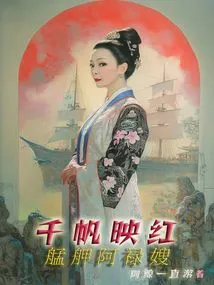
A Thousand Sails Reflect the Red: Monga Alu's Wife
Short Fiction千帆映红:艋舺阿禄嫂
A Whale Keeps Swimming
In Menga, the late Qing Dynasty, behind the bustling streets with fireworks was the undercurrent of competition between camphor and shipping. Her husband died suddenly and the family business was in jeopardy. Huang Alu's wife was originally regarded as a weak woman, but she cut off her hair in front of the mourning hall and vowed to support the largest business in Monga. What she wants to protect is not only the brand name of "Wanshun Materials", but also the dignity of the family. Faced with the pressure from the business war of the richest man Meng Ruhai, the competition for the docks, and the threats from big bosses, she gradually turned around with tenacity and wisdom. Liu Mingchuan's railway and military industry brought about by the New Deal pushed her to the forefront of even greater controversy. In the courtroom, she reversed the situation with words and words. At the dock, she formed a group to defend the countryside. Business battles, fights, and negotiations made her the most impressive proprietress in Menga. From a weak daughter-in-law to a businesswoman looked up to by the whole city, she single-handedly became the helmsman of the times. In the end, she won not only wealth, but also the glory that belongs to women. This is a magnificent epic that belongs to a woman: she is no one's vassal, but a legend who is at the forefront of Monga's trend. A widow who is soft on the outside but tough on the inside, becomes the mistress of the East Monga overnight; she looks gentle on the outside, but in reality she dares to cut off her hair to fight against the wealthy, tenderness and iron-blooded coexistence. The "Mengga Commercial War in the Late Qing Dynasty" was written as a novel with a female protagonist, who did not rely on the protection of a man, but relied on her own counterattacks in the court and the dock. A widow with broken hair and determination, she is good at negotiation and business war, and her gentle appearance hides her sharp skills. Emotion + business war + the trend of the times, an epic female counterattack; the heroine not only takes care of the family business, but also resonates with the times.
In Menga, the late Qing Dynasty, behind the bustling streets with fireworks was the undercurrent of competition between camphor and shipping. Her husband died suddenly and the family business was in jeopardy. Huang Alu's wife was originally regarded as a weak woman, but she cut off her hair in front of the mourning hall and vowed to support the largest business in Monga. What she wants to protect is not only the brand name of "Wanshun Materials", but also the dignity of the family. Faced with the pressure from the business war of the richest man Meng Ruhai, the competition for the docks, and the threats from big bosses, she gradually turned around with tenacity and wisdom. Liu Mingchuan's railway and military industry brought about by the New Deal pushed her to the forefront of even greater controversy. In the courtroom, she reversed the situation with words and words. At the dock, she formed a group to defend the countryside. Business battles, fights, and negotiations made her the most impressive proprietress in Menga. From a weak daughter-in-law to a businesswoman looked up to by the whole city, she single-handedly became the helmsman of the times. In the end, she won not only wealth, but also the glory that belongs to women. This is a magnificent epic that belongs to a woman: she is no one's vassal, but a legend who is at the forefront of Monga's trend. A widow who is soft on the outside but tough on the inside, becomes the mistress of the East Monga overnight; she looks gentle on the outside, but in reality she dares to cut off her hair to fight against the wealthy, tenderness and iron-blooded coexistence. The "Mengga Commercial War in the Late Qing Dynasty" was written as a novel with a female protagonist, who did not rely on the protection of a man, but relied on her own counterattacks in the court and the dock. A widow with broken hair and determination, she is good at negotiation and business war, and her gentle appearance hides her sharp skills. Emotion + business war + the trend of the times, an epic female counterattack; the heroine not only takes care of the family business, but also resonates with the times.
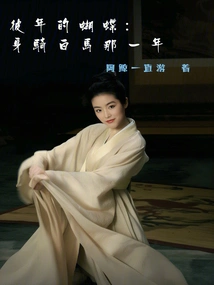
彼年的蝴蝶:身骑白马那一年
A Whale Keeps Swimming
In 1963, a Huangmei-diao film "Liang Shanbo and Zhu Yingtai" became popular across Taiwan. It made thousands of people star-chasing, and also brought the local traditional opera "Gezi Opera" to the edge of survival, facing a turning point in its fate of being replaced by images. This year, the three-generation theater troupe "Fengxianshe" set up a stage in front of the Xiahai City God's Temple to perform "Shan Bo Ying Tai". During the five-night series of the play, reporters wrote wars, actors were jealous, the stage exploded, the heroine disappeared, and red stars visited the team... The absurdity and true feelings inside and outside the play witnessed the afterglow of a period that belonged to the people and the times. This is not only an elegy to traditional opera, but also an affectionate look at Taiwan's common people's culture. "Butterflies of That Year" is a love letter written to the dusk of Taiwanese opera in the 1960s. At the corner of the times, the red stars of Huangmei Opera appeared on the stage, and the Gezai stage and backstage were once again in turmoil. Every gong and drum sounded at the crossroads of the times and emotions. "You said that Gezi opera has entered history? Then come to Dadaocheng and I will let you know what living opera is." ~Xu Lanxin "I have been in jail, but I have not lost myself. The stage is the only place I don't want to escape." ~ Chen Zhilong
In 1963, a Huangmei-diao film "Liang Shanbo and Zhu Yingtai" became popular across Taiwan. It made thousands of people star-chasing, and also brought the local traditional opera "Gezi Opera" to the edge of survival, facing a turning point in its fate of being replaced by images. This year, the three-generation theater troupe "Fengxianshe" set up a stage in front of the Xiahai City God's Temple to perform "Shan Bo Ying Tai". During the five-night series of the play, reporters wrote wars, actors were jealous, the stage exploded, the heroine disappeared, and red stars visited the team... The absurdity and true feelings inside and outside the play witnessed the afterglow of a period that belonged to the people and the times. This is not only an elegy to traditional opera, but also an affectionate look at Taiwan's common people's culture. "Butterflies of That Year" is a love letter written to the dusk of Taiwanese opera in the 1960s. At the corner of the times, the red stars of Huangmei Opera appeared on the stage, and the Gezai stage and backstage were once again in turmoil. Every gong and drum sounded at the crossroads of the times and emotions. "You said that Gezi opera has entered history? Then come to Dadaocheng and I will let you know what living opera is." ~Xu Lanxin "I have been in jail, but I have not lost myself. The stage is the only place I don't want to escape." ~ Chen Zhilong