Library
Browse and search books
6 novels found
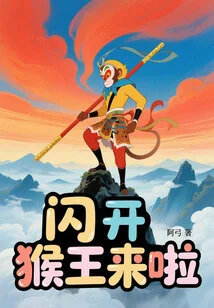
闪开,猴王来啦
A Gong
The work provides an in-depth analysis of the famous "Journey to the West", boldly questions Wu Chengen's authorship, and proposes that Feng Bao, the great eunuch of the Ming Dynasty, might be the real author. Through careful interpretation and analysis, the author points out that the image of Sun Wukong is consistent with the characteristics of eunuchs, such as his "castrated man" setting, as well as the many subtle allusions to Feng Bao's life and his relationship with Emperor Jiajing and the government in the book, especially the many clues found in the "Shidetang version", which support this novel view. In addition, the author A Gong also ranked and analyzed the strength of the immortals and Buddhas in "Journey to the West", and concluded that Taishang Laojun is the most powerful one in the book, believing that his status and ability are far above Tathagata Buddha. The writing is interesting and well worth reading.
The work provides an in-depth analysis of the famous "Journey to the West", boldly questions Wu Chengen's authorship, and proposes that Feng Bao, the great eunuch of the Ming Dynasty, might be the real author. Through careful interpretation and analysis, the author points out that the image of Sun Wukong is consistent with the characteristics of eunuchs, such as his "castrated man" setting, as well as the many subtle allusions to Feng Bao's life and his relationship with Emperor Jiajing and the government in the book, especially the many clues found in the "Shidetang version", which support this novel view. In addition, the author A Gong also ranked and analyzed the strength of the immortals and Buddhas in "Journey to the West", and concluded that Taishang Laojun is the most powerful one in the book, believing that his status and ability are far above Tathagata Buddha. The writing is interesting and well worth reading.
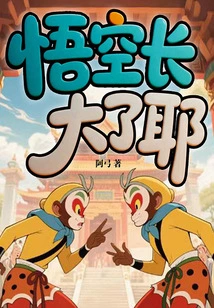
Wukong Has Grown Up
Literature悟空长大了耶
A Gong
The work deeply analyzes the "real and fake Monkey King" incident in "Journey to the West" and believes that it reflects the intensification of the conflict between master and disciple and the growth of Sun Wukong. The author points out that this plot is a turning point in which Sun Wukong gradually gets rid of his recklessness and irritability after being expelled many times, and becomes more mature, steady, decent and humane. He explores the possibility that the false Wukong is a clone of Sun Wukong's "two minds", and suggests that Guanyin Bodhisattva and Tathagata Buddha played subtle roles in it. In addition, the text also uses the story of the Flame Mountain and the Sacrifice Kingdom to show that in the confrontation with monsters such as the Bull Demon King and the Nine-Headed Insect, Sun Wukong's principles of life, communication methods and even his understanding of faith have been significantly improved, and his image has finally become closer to that of a "high monk". The writing is hearty and hearty, and the viewpoint is quite novel.
The work deeply analyzes the "real and fake Monkey King" incident in "Journey to the West" and believes that it reflects the intensification of the conflict between master and disciple and the growth of Sun Wukong. The author points out that this plot is a turning point in which Sun Wukong gradually gets rid of his recklessness and irritability after being expelled many times, and becomes more mature, steady, decent and humane. He explores the possibility that the false Wukong is a clone of Sun Wukong's "two minds", and suggests that Guanyin Bodhisattva and Tathagata Buddha played subtle roles in it. In addition, the text also uses the story of the Flame Mountain and the Sacrifice Kingdom to show that in the confrontation with monsters such as the Bull Demon King and the Nine-Headed Insect, Sun Wukong's principles of life, communication methods and even his understanding of faith have been significantly improved, and his image has finally become closer to that of a "high monk". The writing is hearty and hearty, and the viewpoint is quite novel.
Wukong's Final Battle
Literature悟空的终极之战
A Gong
"Wukong's Ultimate Battle" provides an in-depth analysis of the most terrifying and exciting plots of Shituoling and Shituo Kingdom in "Journey to the West". The author points out that the importance of this section lies in the monster's superior strength and profound background, and Taibai Jinxing's advance warning shows that it must pass the "graduation test". The three demons, the green lion, the white elephant, and the roc, have a close relationship with the Buddhist world and heaven, implying that this is not an ordinary demon causing trouble, but a test set by high-level officials. The Lion and Camel Kingdom was described as a bloody place completely ruled by demons, devouring its citizens and presenting an unprecedented horrific scene. Sun Wukong encountered an unprecedented setback here, and was so frightened that he even needed Tathagata Buddha to personally come forward to conquer Dapeng. The high-level intervention not only revealed Dapeng's special life experience, but also foreshadowed the success of the Buddhist scripture-seeking team, and everything was under the control of Buddhism.
"Wukong's Ultimate Battle" provides an in-depth analysis of the most terrifying and exciting plots of Shituoling and Shituo Kingdom in "Journey to the West". The author points out that the importance of this section lies in the monster's superior strength and profound background, and Taibai Jinxing's advance warning shows that it must pass the "graduation test". The three demons, the green lion, the white elephant, and the roc, have a close relationship with the Buddhist world and heaven, implying that this is not an ordinary demon causing trouble, but a test set by high-level officials. The Lion and Camel Kingdom was described as a bloody place completely ruled by demons, devouring its citizens and presenting an unprecedented horrific scene. Sun Wukong encountered an unprecedented setback here, and was so frightened that he even needed Tathagata Buddha to personally come forward to conquer Dapeng. The high-level intervention not only revealed Dapeng's special life experience, but also foreshadowed the success of the Buddhist scripture-seeking team, and everything was under the control of Buddhism.
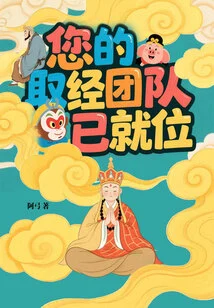
您的取经团队已就位
A Gong
The work deeply explores the early plot of "Journey to the West": analyzing the formation and integration of the scripture-gathering team. The author A Gong believes that Tang Monk was secretly assisted by Taibai Jinxing before heading west, implying that he was an undercover agent of the "Zhenren Sect". After Sun Wukong was subdued, he elaborated on the deep meaning of killing the "six thieves" to purify the six roots, as well as the discord and contradiction between him and Tang Monk. The addition of Xiao Bailong, Zhu Bajie, and Sha Seng is described as a gathering of abandoned generals from heaven. Among them, the "Gao" surname of Zhu Bajie and Gao Laozhuang is interpreted as the author's satire on Gao Gong, a political figure in the Ming Dynasty. The article repeatedly criticizes Tang Monk for his cowardice, hypocrisy, and tendency to seek the limelight. At the same time, he also analyzes the unique character of Black Bear Monster and Zhen Yuanzi's powerful strength, and believes that Zen Master Wuchao's prophecy has profound meaning, etc. The writing is so imaginative and the interpretation is so refreshing.
The work deeply explores the early plot of "Journey to the West": analyzing the formation and integration of the scripture-gathering team. The author A Gong believes that Tang Monk was secretly assisted by Taibai Jinxing before heading west, implying that he was an undercover agent of the "Zhenren Sect". After Sun Wukong was subdued, he elaborated on the deep meaning of killing the "six thieves" to purify the six roots, as well as the discord and contradiction between him and Tang Monk. The addition of Xiao Bailong, Zhu Bajie, and Sha Seng is described as a gathering of abandoned generals from heaven. Among them, the "Gao" surname of Zhu Bajie and Gao Laozhuang is interpreted as the author's satire on Gao Gong, a political figure in the Ming Dynasty. The article repeatedly criticizes Tang Monk for his cowardice, hypocrisy, and tendency to seek the limelight. At the same time, he also analyzes the unique character of Black Bear Monster and Zhen Yuanzi's powerful strength, and believes that Zen Master Wuchao's prophecy has profound meaning, etc. The writing is so imaginative and the interpretation is so refreshing.
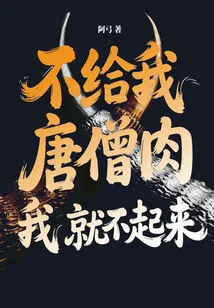
不给我唐僧肉我就不起来
A Gong
"I won't get up if you don't give me Tang Monk Meat" mainly analyzes the origin of the "Tang Monk Meat" legend in "Journey to the West", and believes that the King of Gold and Silver Horns is the monster who first explicitly raised this rumor. The article deeply explores the three strange features of this pair of monsters: possessing a portrait of Tang Monk, mastering many magic weapons, and having extensive connections. The author infers that the "Tang Monk Meat" rumor is actually a "serial plan" carefully planned by the Jade Emperor, aiming to use the demons to intercept the opportunity to learn scriptures, weaken the power of the "bureaucrats", support the "real people", and ensure the success of the scriptures. Through plot analysis, the author also reveals the image of Tang Monk as a narcissistic, timid and "cowardly" hypocrite, as well as Sun Wukong's witty but arrogant and cunning side, providing readers with a unique interpretation of the original characters and events.
"I won't get up if you don't give me Tang Monk Meat" mainly analyzes the origin of the "Tang Monk Meat" legend in "Journey to the West", and believes that the King of Gold and Silver Horns is the monster who first explicitly raised this rumor. The article deeply explores the three strange features of this pair of monsters: possessing a portrait of Tang Monk, mastering many magic weapons, and having extensive connections. The author infers that the "Tang Monk Meat" rumor is actually a "serial plan" carefully planned by the Jade Emperor, aiming to use the demons to intercept the opportunity to learn scriptures, weaken the power of the "bureaucrats", support the "real people", and ensure the success of the scriptures. Through plot analysis, the author also reveals the image of Tang Monk as a narcissistic, timid and "cowardly" hypocrite, as well as Sun Wukong's witty but arrogant and cunning side, providing readers with a unique interpretation of the original characters and events.
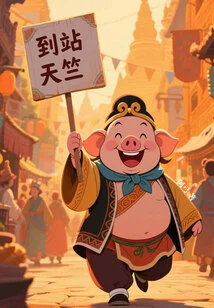
Arrival, Tianzhu!
Literature到站,天竺!
A Gong
The work depicts the adventures and growth of the Buddhist scriptures team as they approach the end. The article details Zhu Bajie's cuteness and rare bravery in the battle of "King of Nanshan", as well as the twists and turns of Princess Tianzhu's transfer in the "Jade Rabbit Spirit" section. The article also interestingly talks about the farce of the Wuji Kingdom. The four masters and disciples caused trouble because of their words, Sun Wukong shaved off all the civil and military officials of the dynasty, and humor was everywhere... When the Tongtian River was blocked, people made things difficult, and Buddhist scriptures were damaged, the author interpreted this as a wonderful response to "the incompleteness of heaven and earth", implying that there is no perfection in the world. In the end, Sun Wukong removed the golden hoop and achieved enlightenment. The full text concludes with a poem, and the topic is sublimated: Journey to the West, seeking Buddhist scriptures is not only about cultivating Buddhism, but also through endless sufferings, realizing the ultimate mystery of the impermanence of worldly affairs and the flow of fate - living is a practice, with no escape and no avoidance.
The work depicts the adventures and growth of the Buddhist scriptures team as they approach the end. The article details Zhu Bajie's cuteness and rare bravery in the battle of "King of Nanshan", as well as the twists and turns of Princess Tianzhu's transfer in the "Jade Rabbit Spirit" section. The article also interestingly talks about the farce of the Wuji Kingdom. The four masters and disciples caused trouble because of their words, Sun Wukong shaved off all the civil and military officials of the dynasty, and humor was everywhere... When the Tongtian River was blocked, people made things difficult, and Buddhist scriptures were damaged, the author interpreted this as a wonderful response to "the incompleteness of heaven and earth", implying that there is no perfection in the world. In the end, Sun Wukong removed the golden hoop and achieved enlightenment. The full text concludes with a poem, and the topic is sublimated: Journey to the West, seeking Buddhist scriptures is not only about cultivating Buddhism, but also through endless sufferings, realizing the ultimate mystery of the impermanence of worldly affairs and the flow of fate - living is a practice, with no escape and no avoidance.