Library
Browse and search books
6 novels found
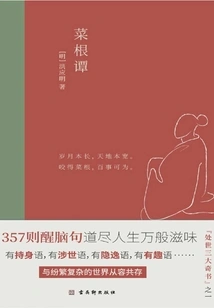
Cai Gentan
Literature菜根谭
Hong Yingming
"Cai Gen Tan" is a collection of quotations that discusses self-cultivation, life, dealing with others, and dealing with things. It is also known as the three great books on self-cultivation for Chinese people along with "The Notes of a Small Window" and "Night Talk around the Furnace". The title of the book "Cai Gen Tan" comes from the saying of Wang Ge, a Confucian scholar in the Song Dynasty: "If a person bites the vegetable root, he can do everything." The content adopts the essence of Confucianism, Taoism, and Buddhism, and contains the principles of self-cultivation, family management, and life.
"Cai Gen Tan" is a collection of quotations that discusses self-cultivation, life, dealing with others, and dealing with things. It is also known as the three great books on self-cultivation for Chinese people along with "The Notes of a Small Window" and "Night Talk around the Furnace". The title of the book "Cai Gen Tan" comes from the saying of Wang Ge, a Confucian scholar in the Song Dynasty: "If a person bites the vegetable root, he can do everything." The content adopts the essence of Confucianism, Taoism, and Buddhism, and contains the principles of self-cultivation, family management, and life.
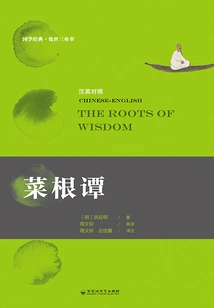
Cai Gen Tan (english-chinese)
Literature菜根谭(英汉对照)
Hong Yingming
This is a collection of short quotations on cultivating one's mind, cultivating one's character, and cultivating one's moral character, collected and compiled by Hong Yingming in the Ming Dynasty. This book is named after "caipeng", which expresses the idea that "everything can be done if you chew the cabbage root", that is, "people can acquire intelligence and cultivation through hard training." The writing is beautiful, the dialogues are neat, short, concise, and thought-provoking. It integrates the thoughts of Confucianism, Taoism, and Buddhism as well as the author's life experience. It contains profound philosophy and is the crystallization of the traditional culture of the Chinese nation. Along with the original works, it is accompanied by Chinese annotations, modern interpretations, English annotations and English translations, making it easier for Chinese and foreign readers of all levels to understand the meaning of the text and experience the exquisiteness of Chinese classical culture.
This is a collection of short quotations on cultivating one's mind, cultivating one's character, and cultivating one's moral character, collected and compiled by Hong Yingming in the Ming Dynasty. This book is named after "caipeng", which expresses the idea that "everything can be done if you chew the cabbage root", that is, "people can acquire intelligence and cultivation through hard training." The writing is beautiful, the dialogues are neat, short, concise, and thought-provoking. It integrates the thoughts of Confucianism, Taoism, and Buddhism as well as the author's life experience. It contains profound philosophy and is the crystallization of the traditional culture of the Chinese nation. Along with the original works, it is accompanied by Chinese annotations, modern interpretations, English annotations and English translations, making it easier for Chinese and foreign readers of all levels to understand the meaning of the text and experience the exquisiteness of Chinese classical culture.
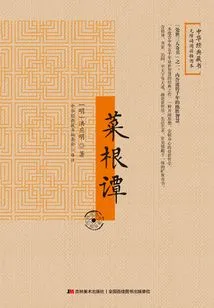
菜根谭(无障碍阅读插图本)
Hong Yingming
"Cai Gen Tan" is a collection of quotations that discuss cultivation, life, conduct, and rebirth. It is a wonderful book that contains five thousand years of Chinese wisdom in life. As a work rich in the life ethics of the Han nation, it draws on the essence of Confucianism, Taoism, and Buddhism, with Confucianism and Taoism as the core, and has the avenues of self-cultivation, family management, country governance, and world peace; it integrates philosophy of life, life art, and aesthetic taste; it is like a quotation, but it has an interest that a quotation does not; it is like an essay, but it has an order that an essay cannot. It is a reading with beautiful words and profound meaning. It is also a Chinese literary work that cultivates people's sentiments, tempers their will, and inspires people to work hard. "He who bites the roots of vegetables can do everything." "Cai Gen Tan" teaches the world with many famous and philosophical aphorisms.
"Cai Gen Tan" is a collection of quotations that discuss cultivation, life, conduct, and rebirth. It is a wonderful book that contains five thousand years of Chinese wisdom in life. As a work rich in the life ethics of the Han nation, it draws on the essence of Confucianism, Taoism, and Buddhism, with Confucianism and Taoism as the core, and has the avenues of self-cultivation, family management, country governance, and world peace; it integrates philosophy of life, life art, and aesthetic taste; it is like a quotation, but it has an interest that a quotation does not; it is like an essay, but it has an order that an essay cannot. It is a reading with beautiful words and profound meaning. It is also a Chinese literary work that cultivates people's sentiments, tempers their will, and inspires people to work hard. "He who bites the roots of vegetables can do everything." "Cai Gen Tan" teaches the world with many famous and philosophical aphorisms.
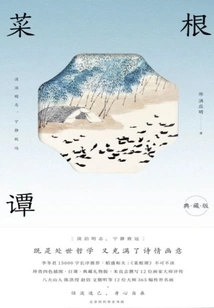
Cai Gentan
Literature菜根谭
Hong Yingming
"Cai Gen Tan", "Night Talk around the Fireplace" and "Xiao Chuang You Ji" are also known as "the three great books on life". "Cai Gen Tan" talks about how to treat people, do things, cultivate your mind, conduct yourself in the world, and accept things. The word "quiet" connects the whole book. A book that allows you to be calm and calm in the busy world. Regarding treating others: It is better to be silent than impatient, and to be clumsy rather than cunning. It's not appropriate to get angry, and it's not appropriate to give up lightly. When making friends, you need to be chivalrous, and when you are a person, you need to be honest. Regarding doing things: Where the wind is slanting and the rain is urgent, you must stand firm. Where the flowers are thick and the willows are bright, you must have a high eye. The road is dangerous and dangerous, so you have to turn back early. You should have a busy mind when you are free, and you should have leisurely fun when you are busy. Regarding cultivating the mind: The heart is pure and white, and the fragrance is pure and fragrant for generations. The secret of heaven is clear and the breasts are exquisite. Don't be surprised by favor or disgrace, just watch the flowers blooming and falling in front of the court; you have no intention of leaving or leaving, just follow the clouds rolling and relaxing in the sky. Regarding life: It is better to be simple than sophisticated. Rather than being cautious, it is better to be careless and wild. When things come, the mind begins to appear; when things go, the mind becomes empty. Regarding receiving things: The atmosphere should be high and open, but not too wild. The mind must be careful and not trivial. Interest should be diluted, not boring. Conduct must be strict but not violent. After reading "Cai Gen Tan", I hope you can live a more comfortable and pure life.
"Cai Gen Tan", "Night Talk around the Fireplace" and "Xiao Chuang You Ji" are also known as "the three great books on life". "Cai Gen Tan" talks about how to treat people, do things, cultivate your mind, conduct yourself in the world, and accept things. The word "quiet" connects the whole book. A book that allows you to be calm and calm in the busy world. Regarding treating others: It is better to be silent than impatient, and to be clumsy rather than cunning. It's not appropriate to get angry, and it's not appropriate to give up lightly. When making friends, you need to be chivalrous, and when you are a person, you need to be honest. Regarding doing things: Where the wind is slanting and the rain is urgent, you must stand firm. Where the flowers are thick and the willows are bright, you must have a high eye. The road is dangerous and dangerous, so you have to turn back early. You should have a busy mind when you are free, and you should have leisurely fun when you are busy. Regarding cultivating the mind: The heart is pure and white, and the fragrance is pure and fragrant for generations. The secret of heaven is clear and the breasts are exquisite. Don't be surprised by favor or disgrace, just watch the flowers blooming and falling in front of the court; you have no intention of leaving or leaving, just follow the clouds rolling and relaxing in the sky. Regarding life: It is better to be simple than sophisticated. Rather than being cautious, it is better to be careless and wild. When things come, the mind begins to appear; when things go, the mind becomes empty. Regarding receiving things: The atmosphere should be high and open, but not too wild. The mind must be careful and not trivial. Interest should be diluted, not boring. Conduct must be strict but not violent. After reading "Cai Gen Tan", I hope you can live a more comfortable and pure life.
Cai Gentan
Literature菜根谭
Hong Yingming
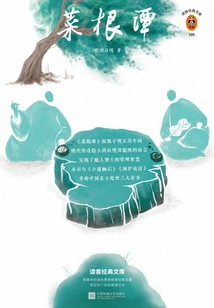
Open the reader's version of "Cai Gen Tan" and master the management wisdom of capable people! "Cai Gen Tan" adheres to Taoist culture and takes Tao as the basis, blends the golden mean, the thought of inaction and the thought of transcendence, and combines the author's own experience to form a set of rules for transcending the world. Based on the textbook "Cai Gen Tan", one of the "Two Types of Books Written by Huanchu Taoist" engraved by Wu Jin Taoxian in 1927, as the base text, the "Zun Sheng Qi Jian" published by Ya Shang Zhai in the Wanli period of the Ming Dynasty was supplemented with "Cai Gen Tan". Together with "Night Talk around the Fireplace" and "The Secret of the Small Window", it is also known as the three most wonderful books on the life of Chinese celebrities! Annotations of uncommon words to clear reading difficulties! You don't have to read monographs on business management, but you must read Cai Gen Tan. --Kazuo Inamori (Japanese industrialist)
Open the reader's version of "Cai Gen Tan" and master the management wisdom of capable people! "Cai Gen Tan" adheres to Taoist culture and takes Tao as the basis, blends the golden mean, the thought of inaction and the thought of transcendence, and combines the author's own experience to form a set of rules for transcending the world. Based on the textbook "Cai Gen Tan", one of the "Two Types of Books Written by Huanchu Taoist" engraved by Wu Jin Taoxian in 1927, as the base text, the "Zun Sheng Qi Jian" published by Ya Shang Zhai in the Wanli period of the Ming Dynasty was supplemented with "Cai Gen Tan". Together with "Night Talk around the Fireplace" and "The Secret of the Small Window", it is also known as the three most wonderful books on the life of Chinese celebrities! Annotations of uncommon words to clear reading difficulties! You don't have to read monographs on business management, but you must read Cai Gen Tan. --Kazuo Inamori (Japanese industrialist)
Classics Series: Cai Gen Tan
Literature经典名著丛书:菜根谭
Hong Yingming
"Cai Gen Tan" is a collection of aphorism-style sketches mainly focusing on life thoughts. It adopts the quotation style and combines the Confucian doctrine of the mean and the Buddhist philosophy of life and life. From a structural point of view, "Cai Gen Tan" has beautiful words, neat contrasts, far-reaching meanings and is thought-provoking. It is a popular reading that is helpful for people to cultivate their sentiments, temper their will and strive for progress. The author named this book after "Cai Gen", which means "human intelligence and cultivation can only be obtained through hard training." As the saying goes, "If you bite the root of the vegetable, you can do everything."
"Cai Gen Tan" is a collection of aphorism-style sketches mainly focusing on life thoughts. It adopts the quotation style and combines the Confucian doctrine of the mean and the Buddhist philosophy of life and life. From a structural point of view, "Cai Gen Tan" has beautiful words, neat contrasts, far-reaching meanings and is thought-provoking. It is a popular reading that is helpful for people to cultivate their sentiments, temper their will and strive for progress. The author named this book after "Cai Gen", which means "human intelligence and cultivation can only be obtained through hard training." As the saying goes, "If you bite the root of the vegetable, you can do everything."